
MemoryFuel Side Effects — What to Expect and Who Should Avoid It
A complete safety profile for MemoryFuel — creatine tolerability, magnesium GI effects, drug interactions to watch, and the specific groups that need medical clearance before starting.
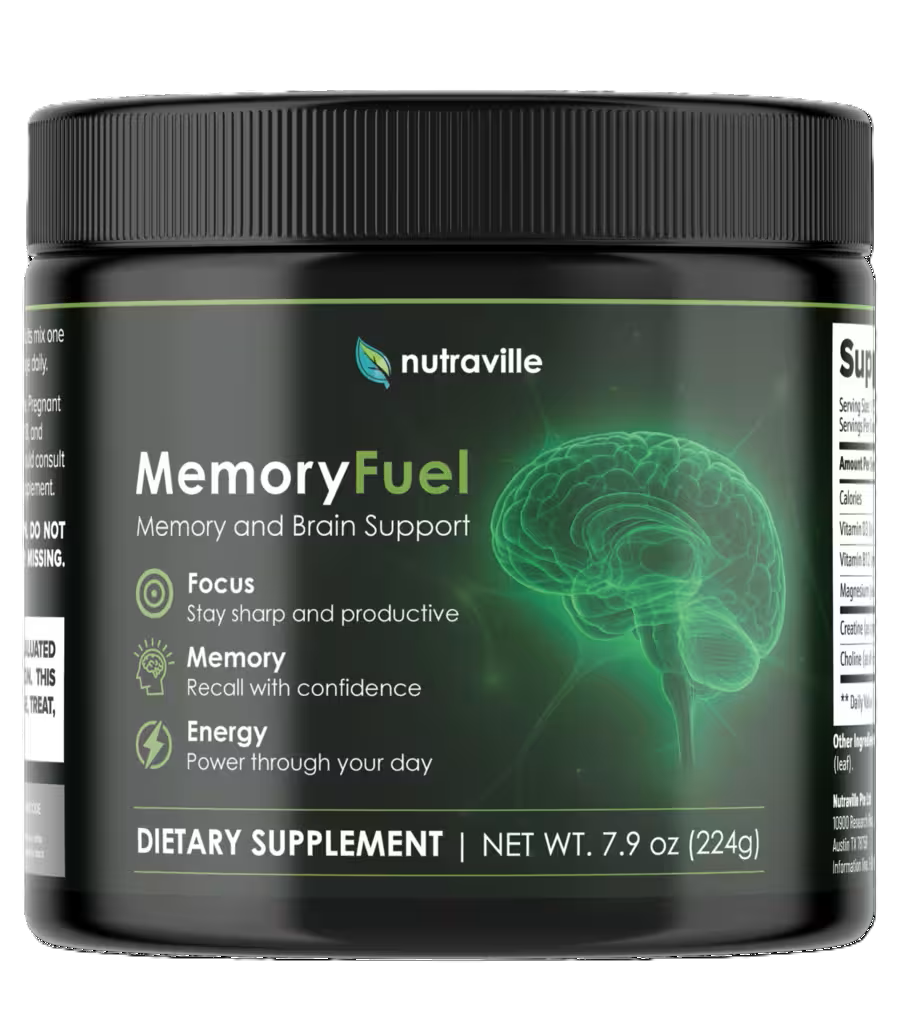
Safety profile — side effects, drug interactions, and who should check with a doctor before starting.
In This Article
Edited by Michael Anderson, Editor-in-Chief
Updated
Quick Answer
Generally well tolerated — most side effects are mild and temporary.
MemoryFuel is manufactured by Nutraville in an FDA-registered, GMP-certified facility in the USA. The most common side effect is mild bloating during the first week — a standard creatine loading response that resolves on its own. L-Theanine has no known side effects. Magnesium glycinate may cause loose stools in sensitive individuals. People with kidney disease, those on blood thinners or psychiatric medications, and anyone under 18 should get medical clearance first.
1. Manufacturing & Quality Standards
Before discussing specific side effects, the manufacturing context matters. MemoryFuel is formulated by Dr. Jesse Ropat, PharmD, based in Tallmadge, Ohio, and produced through Nutraville — a company with verifiable manufacturing credentials.
| Standard | What It Means for You |
|---|---|
| GMP-Certified | Good Manufacturing Practice certification ensures consistent quality, proper ingredient handling, and contamination controls at every stage of production. |
| FDA-Registered Facility | The manufacturing facility is registered with the U.S. Food and Drug Administration and subject to FDA oversight and inspection requirements. |
| Manufactured in the USA | Domestic production under U.S. regulatory standards — not outsourced to facilities with looser quality controls. |
| Pharmacist-Formulated | Developed by Dr. Jesse Ropat, PharmD — a licensed pharmacist with clinical training in drug-nutrient interactions and dosing protocols. |
| Stimulant-Free | Zero caffeine, zero stimulants. No jitters, no energy crashes, no sleep disruption — safe for evening use. |
| Powder Format | One scoop per day. Powder allows precise dosing and faster absorption compared to capsules — also easier to adjust dose if needed. |
These manufacturing credentials are relevant to safety because they reduce the risk of contamination, mislabeling, and inconsistent dosing — the three most common causes of adverse events in the supplement industry. For a dose-by-dose breakdown of active ingredients, see our MemoryFuel ingredient scorecard.
2. What Most Users Experience
The honest answer: most users experience nothing negative at all. The formula is built around well-researched compounds — creatine monohydrate, choline, magnesium glycinate, L-Theanine, and B vitamins — with long safety track records in both clinical and supplement contexts.
The most commonly reported adjustment during the first week is mild bloating. This is a standard creatine loading response. When you start supplementing creatine at 5g/day, your muscles and brain increase their phosphocreatine stores, which draws in additional water. The bloating is a sign the creatine is being absorbed and stored — not a sign of a problem. It typically resolves within 5-7 days as your body adjusts.
Beyond that initial adjustment period, the vast majority of users report smooth, uneventful daily use. Because the formula contains no caffeine, no stimulants, and no adaptogens that require cycling, there are no jitters, no energy crashes, and no disruption to sleep patterns. You can take it in the morning or evening without concern.
3. Possible Side Effects
While most people will not experience any of these, transparency matters. Here is the complete picture of what a small percentage of users have reported.
| Side Effect | Likelihood | What to Do |
|---|---|---|
| Mild bloating | Common (first week only) | Normal creatine loading response — your muscles and brain are increasing phosphocreatine stores. Drink extra water. Resolves within 5-7 days. |
| Increased water retention | Common (first week only) | Creatine draws water into cells as part of its mechanism. Weight may increase 1-2 lbs initially. This is intracellular water, not fat — and it stabilizes within days. |
| Loose stools | Occasional | Magnesium glycinate at 300mg can have a mild laxative effect in sensitive individuals. Take with food. Usually resolves within the first few days. |
| Digestive discomfort | Occasional | Creatine + magnesium together can cause mild GI upset on an empty stomach. Take with food or split into two half-scoops. |
| Headache | Rare | Usually linked to inadequate hydration alongside creatine. Increase water intake to 8-10 glasses per day. |
The first two items — bloating and water retention — are standard creatine responses that actually indicate the supplement is working as designed. They are temporary and resolve on their own. Loose stools from magnesium are dose-dependent and manageable by taking with food. None of these are serious or lasting.
4. Safety by Ingredient
Each active ingredient in MemoryFuel has a distinct safety profile. Here is what the research says about the specific doses in this formula.
Creatine Monohydrate (5,000 mg). Creatine is one of the most researched supplements in existence — with over 700 clinical studies examining its safety and efficacy. The common myth that creatine damages kidneys has been repeatedly debunked in healthy individuals. Multiple systematic reviews and meta-analyses confirm no adverse renal effects at 5g/day in people with normal kidney function, even over years of continuous use. The mild bloating and water retention during the first week are well-documented, temporary, and not medically concerning. However, if you have pre-existing kidney disease or reduced kidney function, creatine supplementation requires medical supervision — not because it causes kidney damage, but because it increases creatinine levels, which can complicate diagnostic monitoring.
Magnesium Glycinate (300 mg). Glycinate is the most gut-friendly form of magnesium, chosen specifically to minimize the laxative effects associated with cheaper forms like magnesium oxide or citrate. At 300 mg (71% DV), it sits comfortably within the daily recommended range. The main adjustment effect is mild GI loosening in the first few days, which is rarely an issue beyond week one. The glycinate form also crosses the blood-brain barrier, which is why it was selected for a brain-focused formula — but this also means it can have mild calming effects, which most users consider a benefit rather than a side effect.
L-Theanine (undisclosed dose). L-Theanine has an excellent safety profile at virtually any supplemental dose. It is the calming amino acid found naturally in green tea. There are no known serious side effects, no established toxicity threshold in human studies, and no drug interactions of clinical significance. Clinical research has used doses ranging from 100 mg to 400 mg with no adverse effects reported. The undisclosed dose is a transparency concern — not a safety concern.
Choline Bitartrate (300 mg). Well within safe limits. The upper tolerable intake for choline is 3,500 mg/day — this formula provides less than 10% of that ceiling. The only notable consideration with choline supplementation is TMAO (trimethylamine N-oxide) production at high doses over extended periods, which has been associated with cardiovascular risk in some studies. At 300 mg/day, this is not a practical concern.
Vitamin D3 (2,000 IU) and B12 (25 mcg). Both are within standard supplemental ranges and well below upper tolerable limits. Vitamin D3 toxicity does not occur below 10,000 IU/day in most adults. B12 is water-soluble — excess is simply excreted. Neither presents a safety concern at these doses.
5. Check With Your Doctor If...
Do NOT Use Without Medical Clearance:
- People with kidney disease or impaired kidney function — creatine at 5g/day requires healthy kidneys to process effectively. It raises creatinine levels, which complicates diagnostic monitoring.
- Pregnant or breastfeeding women — creatine and choline supplementation during pregnancy lacks sufficient safety data at these specific doses.
- Anyone under 18 years old — the formula is designed for adults. Adolescent brain development has different nutritional needs and supplementation thresholds.
Consult Your Doctor First If You:
- Take blood thinners (warfarin, heparin) — theoretical interaction with creatine affecting kidney clearance of some anticoagulants.
- Take psychiatric medications — particularly lithium, as magnesium may alter lithium excretion and blood levels.
- Take diabetes medications — both creatine and magnesium may affect blood sugar levels, which could enhance or interfere with glycemic control.
- Have a history of kidney stones — creatine increases creatinine levels, which may complicate monitoring.
- Are scheduled for surgery — discontinue 2 weeks before elective procedures due to potential interactions with anesthesia.
6. Drug Interactions
MemoryFuel's ingredients are generally safe alongside most medications, but a few specific combinations warrant attention.
| Medication Category | Ingredient Involved | Concern | Action |
|---|---|---|---|
| Lithium | Magnesium | Magnesium may alter lithium excretion and blood levels — critical for drugs with a narrow therapeutic window. | Consult your prescribing doctor. |
| Blood thinners (warfarin, heparin) | Creatine | Theoretical interaction — creatine may affect kidney clearance of some anticoagulants. | Consult your doctor before combining. |
| Diabetes medications | Creatine, Magnesium | Both may affect blood sugar levels — could enhance or interfere with glycemic control. | Monitor blood sugar closely; inform your doctor. |
| Diuretics | Magnesium, Creatine | Diuretics alter electrolyte and fluid balance — may increase or decrease magnesium levels unpredictably. | Consult your doctor; monitor electrolytes. |
| NSAIDs (ibuprofen, naproxen) | Creatine | Combining nephrotoxic agents with creatine may stress kidneys in susceptible individuals. | Avoid long-term concurrent use; stay hydrated. |
If none of the above applies to you, there is no pharmacological reason to hesitate. The formula uses well-established compounds at standard doses with extensive safety data. For a full breakdown of who benefits most from this formula, see our MemoryFuel pros and cons breakdown.
7. The Bottom Line on Safety
MemoryFuel has one of the cleaner safety profiles in the brain supplement category. It is GMP-certified, produced in an FDA-registered facility in the USA, pharmacist-formulated, stimulant-free, and built around ingredients with extensive clinical safety data. Creatine monohydrate at 5g/day is arguably the most studied supplement compound in existence. L-Theanine has no known side effects at any supplemental dose. Magnesium glycinate is the most gut-friendly magnesium form available.
The most common "side effects" — mild bloating and water retention during the first week — are standard creatine loading responses that actually indicate the supplement is being absorbed and stored correctly. They resolve on their own within days. For healthy adults not in the exclusion categories listed above, this is a low-risk supplement you can start with confidence. The 90-day money-back guarantee also means you are not locked in if the formula does not agree with you.
Pricing Options for MemoryFuel
MemoryFuel is available in multiple package options designed to support different usage timelines. Many users choose multi-bottle packages because consistent daily use typically delivers the best results. Longer supply options also reduce the cost per unit.
2 Bottles
60-Day Supply
- 90-day Money-Back Guarantee
- Secure Checkout
6 Bottles
180-Day Supply
- 90-day Money-Back Guarantee
- Free USA Shipping
- Secure Checkout
4 Bottles
120-Day Supply
- 90-day Money-Back Guarantee
- Free USA Shipping
- Secure Checkout
Every order is backed by a 90-day money-back guarantee. Only available through the official website.
Frequently Asked Questions
Is MemoryFuel safe to take every day?
Yes. The formula is GMP-manufactured, pharmacist-formulated, and designed for daily use at one scoop per day. Creatine monohydrate at 5g/day has been studied in long-term trials lasting months to years with no adverse effects in healthy individuals. Most adults experience no side effects at all. The only groups who need medical clearance are people with kidney disease, pregnant women, and anyone under 18.
Does the creatine in MemoryFuel cause kidney damage?
No — not in healthy individuals. This is one of the most persistent myths in supplement science, and it has been repeatedly debunked. Multiple systematic reviews and meta-analyses confirm that creatine at 5g/day does not harm kidneys in people with normal renal function. Creatine does increase creatinine levels (a kidney function marker), which can look concerning on a blood test — but this is a measurement artifact, not actual kidney damage. If you have pre-existing kidney disease, consult your doctor before using any creatine-containing supplement.
Can I take MemoryFuel with other supplements?
In most cases, yes. It pairs well with standard supplement stacks — multivitamins, omega-3s, protein. Avoid stacking with other high-dose creatine products (to stay within the 5g/day range) or additional magnesium supplements (to avoid exceeding the upper tolerable limit). When in doubt, consult your doctor.
When should I talk to a doctor before using MemoryFuel?
Consult your doctor if you take lithium, blood thinners, diabetes medications, diuretics, or psychiatric medications. Also get clearance if you have kidney disease, a history of kidney stones, liver disease, or are pregnant or breastfeeding. For everyone else, no medical clearance is needed — but mentioning any new supplement at your next checkup is always a sensible practice.
Research & Transparency
This content is based on publicly available ingredient research, manufacturer disclosures, and product labeling. We are not affiliated with the manufacturer.
(a) Effects of creatine supplementation on renal function: a systematic review and meta-analysis. PMC6769597
(b) Creatine Supplementation and Cognitive Function: Systematic Review and Meta-Analysis of 16 RCTs. PMC11275561
(c) Magnesium in neurological diseases: a narrative review. PMC6024559
(d) The role of choline in neurodevelopment and cognitive function. PMC7352907
About the Author
Emily Carter is a contributor at The Supplement Post and a research collaborator with the Smart Guide editorial group — an independent team dedicated to conducting deeper evaluations of supplements across major health categories. Her work covers brain health, neuro supplementation, blood sugar control, and evidence-aware supplement analysis. She is not a medical doctor — she analyzes publicly available research to provide consumer-friendly summaries for adults exploring cognitive support and neuroprotection options.
Disclosure
All content is for informational purposes only and is not a substitute for professional medical advice. Each product reviewed is a dietary supplement, not a prescription drug. Results may vary based on individual health status, consistency of use, and lifestyle. This page may contain affiliate links — if you purchase through them, we may earn a small commission at no additional cost to you. Read our Editorial Policy.