
MemoryFuel Ingredients — What's Actually Inside the Formula
Six ingredients targeting brain ATP, acetylcholine production, and neural stability. Here is what each one does, how the doses compare to clinical research, and why the creatine-first approach matters for cognitive support.
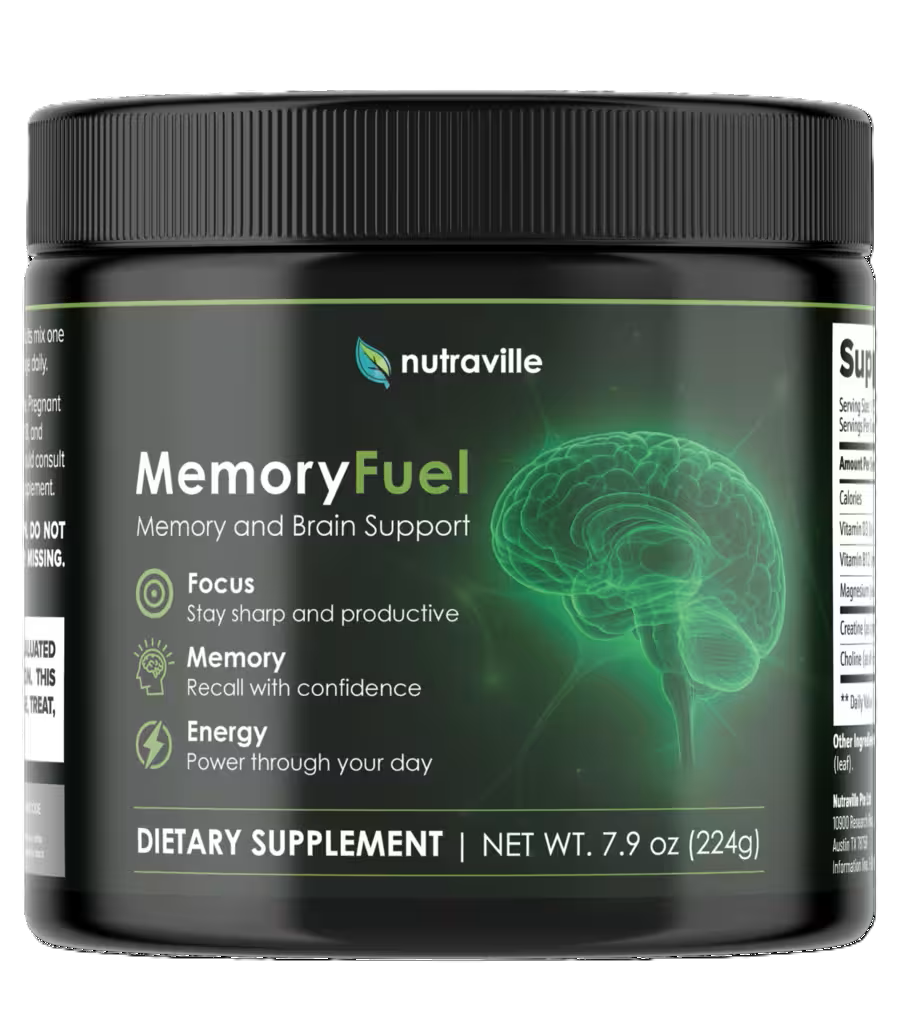
Full ingredient breakdown — what's inside and how the formula fuels brain energy.
In This Article
Edited by Michael Anderson, Editor-in-Chief
Updated
Quick Answer
MemoryFuel contains six active ingredients organized around three functional targets: brain energy (creatine monohydrate at the full 5,000 mg clinical dose), neurotransmitter support (choline 300 mg for acetylcholine + magnesium glycinate 300 mg that crosses the blood-brain barrier), and calm focus (L-Theanine + Vitamin D3 + Vitamin B12). The creatine dose alone would require 8-10 capsules, which is why the powder format exists. Five of six ingredients have fully disclosed dosages — L-Theanine is the exception.
1. Formula Overview
MemoryFuel takes a fundamentally different approach from most nootropics on the market. Instead of stacking 11-13 herbs and extracts at tiny, sub-clinical doses, the formula puts its weight behind one well-researched core — creatine monohydrate at the full clinical dose of 5,000 mg — and surrounds it with five supporting nutrients that address neurotransmitter production, neural stability, and neuroprotection.
The logic is straightforward. Your brain consumes roughly 20% of your body's total energy despite being only 2% of your body weight. It burns through approximately 4.7 kg of ATP per day. When ATP turnover slows — whether from aging, sleep deprivation, or chronic stress — cognitive performance drops. The "tip of the tongue" moments, the afternoon fog, the slower recall. Creatine monohydrate directly addresses this by donating phosphate groups to regenerate ATP in neurons.
The formula is designed by Dr. Jesse Ropat, PharmD, based on what he calls the "ATP Gap" theory: age-related cognitive decline is not primarily about losing memories — it is about your brain running out of energy to access them. For a broader look at the product and who it targets, see What Is MemoryFuel?
2. Full Ingredient Table
| Ingredient | Amount per Serving | Role in the Formula |
|---|---|---|
| Creatine Monohydrate | 5,000 mg | Core brain fuel — donates phosphate groups to regenerate ATP in neurons. This is the exact dose used in the 2024 meta-analysis of 16 RCTs that showed improvements in memory, attention, and processing speed. Creatine is the formula's foundation and the reason it exists as a powder. |
| Choline Bitartrate | 300 mg | Precursor to acetylcholine — the neurotransmitter essential for memory encoding, learning, and recall. Provides the raw material your brain uses to form and retrieve memories. Adequate dose, though citicoline (Cognizin) would be a more bioavailable form. |
| Magnesium Glycinate | 300 mg (71% DV) | Supports NMDA receptor function and synaptic plasticity — the mechanisms behind learning and memory consolidation. The glycinate form was chosen for two reasons: superior absorption with minimal GI irritation, and the ability to cross the blood-brain barrier more effectively than cheaper magnesium forms. |
| Vitamin D3 | 50 mcg (2,000 IU) | Neuroprotective vitamin that supports brain cell signaling, reduces neuroinflammation, and maintains neurotransmitter balance. Deficiency is linked to accelerated cognitive decline — and an estimated 42% of U.S. adults are deficient. |
| Vitamin B12 | 25 mcg (1,042% DV) | Supports myelin sheath integrity — the protective coating around nerve fibers that determines signal transmission speed. Critical for nerve health, mental energy production, and preventing the neurological symptoms of B12 deficiency. |
| L-Theanine | Not disclosed | Promotes alpha brain wave activity — the neurological state associated with calm, focused alertness. Found naturally in green tea. Balances the formula by reducing mental noise and stress-driven cortisol without causing drowsiness or sedation. |
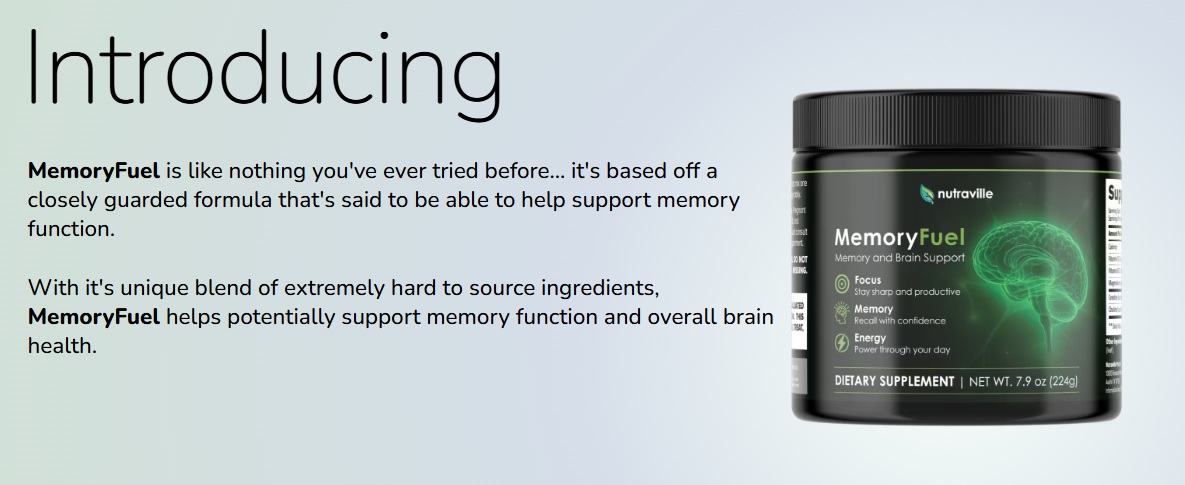
3. How They Work Together — The Brain ATP Model
The formula is designed in three functional layers, and understanding how they interact explains why the specific ingredients were chosen — and why certain popular nootropic compounds were intentionally left out.
Layer 1 — Brain Energy (Creatine Monohydrate). Your brain burns through ATP at an extraordinary rate. When a neuron fires, it uses ATP. When it encodes a memory, it uses ATP. When it retrieves information, it uses ATP. Creatine monohydrate acts as a phosphate donor, replenishing the ADP-to-ATP cycle faster than your mitochondria can do alone. The result: neurons fire more consistently, recall happens faster, and the "blanking" moments — the tip-of-the-tongue failures — become less frequent. At 5,000 mg, MemoryFuel matches the exact dose shown in a 2024 meta-analysis of 16 randomized controlled trials to improve short-term memory and processing speed. This is the formula's engine.
Layer 2 — Neurotransmitter Production (Choline + Magnesium Glycinate). Even with abundant energy, your brain needs the right chemical messengers to use it. Choline bitartrate at 300 mg provides the building blocks for acetylcholine — the neurotransmitter responsible for encoding and retrieving memories. Without adequate choline, your brain has the fuel but not the messenger. Magnesium glycinate at 300 mg supports NMDA receptor function, which governs synaptic plasticity — the mechanism behind learning new information and forming new neural connections. The glycinate form is significant because it crosses the blood-brain barrier more effectively than magnesium oxide or citrate, delivering magnesium where it actually needs to go: into the brain.
Layer 3 — Stability and Protection (L-Theanine + D3 + B12). L-Theanine promotes alpha wave activity — the brain state associated with calm, focused attention. This is what separates MemoryFuel from stimulant-based nootropics. Instead of forcing alertness through caffeine or other stimulants, L-Theanine creates the neurological conditions for focus without the jitters, crashes, or sleep disruption. Vitamin D3 provides broad neuroprotective support, reducing neuroinflammation and supporting brain cell signaling. Vitamin B12 maintains the myelin sheath — the insulation around your nerve fibers that determines how fast signals travel between neurons. Damaged myelin means slower processing speed, regardless of how much ATP or acetylcholine you have available.
The result is a layered approach: creatine fuels the engine, choline and magnesium build the messenger network, and L-Theanine, D3, and B12 keep the system stable and protected. For what this translates to in real-world cognitive performance, see our Does MemoryFuel Really Work? breakdown.
4. Dose Check — Clinical Range vs Formula
| Ingredient | MemoryFuel Dose | Clinical Research Range | Verdict |
|---|---|---|---|
| Creatine Monohydrate | 5,000 mg | 3,000–5,000 mg | ✓ Full clinical dose |
| Choline Bitartrate | 300 mg | 250–500 mg (citicoline preferred) | ~ Adequate, form could be better |
| Magnesium Glycinate | 300 mg | 200–400 mg | ✓ Good range, good form |
| Vitamin D3 | 2,000 IU | 1,000–4,000 IU | ✓ Good range |
| Vitamin B12 | 25 mcg | 2.4–1,000 mcg | ✓ Above RDA |
| L-Theanine | Not disclosed | 100–400 mg | ✗ Can't verify |
Bottom line: Creatine is at the full clinical dose — that is the headline. Most brain supplements include creatine as a secondary ingredient at 1-2g, which is not enough to move the needle on brain ATP. MemoryFuel commits to the full 5g, which is the dose that produced results in the research. Magnesium glycinate is well-dosed and in the right form for brain delivery. The vitamins are solid. Choline bitartrate is adequate but citicoline (Cognizin) would have been a stronger choice — it provides both choline and uridine, and supports brain ATP independently. L-Theanine's undisclosed dose is the transparency gap in an otherwise well-disclosed formula.
5. What Makes This Formula Different
Most nootropic supplements take what you might call the "kitchen sink" approach — pack 12-15 ingredients into a capsule, give each one a fraction of its clinical dose, and hope the long ingredient list looks impressive on the label. The problem is simple math: a two-capsule serving holds 500-800 mg of total payload. When you spread that across a dozen ingredients, nothing gets a meaningful amount.
MemoryFuel inverts that approach. The powder format removes the capsule constraint entirely, allowing the formula to deliver 5,000 mg of creatine alone — before you add the choline, magnesium, and vitamins. Achieving the same creatine dose in capsule form would require 8-10 pills per day. That is not a marketing choice — it is a dosing necessity.
The second differentiator is the "brain ATP first" philosophy. Most nootropics lead with neurotransmitter modulators — compounds that tweak serotonin, dopamine, or acetylcholine levels. MemoryFuel starts one layer deeper: it addresses the energy supply that makes neurotransmitter production and signaling possible in the first place. The choline and magnesium then work on top of that energy foundation, building the messenger network on a base that can actually support it.
The third differentiator is what is NOT in the formula. No caffeine, no stimulants, no adaptogens that require cycling (like ashwagandha). L-Theanine creates calm focus through alpha wave modulation — not through artificial stimulation that leads to crashes, tolerance buildup, or sleep disruption. For adults who already rely on coffee or other stimulants, this means MemoryFuel can be added to an existing routine without compounding stimulant load. For a detailed look at what benefits users can realistically expect, see our MemoryFuel Benefits vs Marketing Claims page.
Pricing Options for MemoryFuel
MemoryFuel is available in multiple package options designed to support different usage timelines. Many users choose multi-bottle packages because consistent daily use typically delivers the best results. Longer supply options also reduce the cost per unit.
2 Bottles
60-Day Supply
- 90-day Money-Back Guarantee
- Secure Checkout
6 Bottles
180-Day Supply
- 90-day Money-Back Guarantee
- Free USA Shipping
- Secure Checkout
4 Bottles
120-Day Supply
- 90-day Money-Back Guarantee
- Free USA Shipping
- Secure Checkout
Every order is backed by a 90-day money-back guarantee. Only available through the official website.
Frequently Asked Questions
Is 5g of creatine safe for daily brain support?
Yes. 5g/day of creatine monohydrate is the most studied supplementation dose in both exercise science and, more recently, cognitive research. It has been used in hundreds of clinical trials with consistently favorable safety profiles. The main consideration is kidney health — if you have pre-existing kidney conditions, consult your doctor first. For healthy adults, long-term daily use at 5g is well-established as safe.
Why does MemoryFuel use choline bitartrate instead of citicoline?
Choline bitartrate is a less expensive form that still provides raw material for acetylcholine production. However, citicoline (Cognizin) would deliver additional benefits — it provides both choline and uridine, supports brain ATP independently, and has stronger clinical evidence for cognitive outcomes. This is one area where the formula could be stronger, and something worth noting for informed consumers.
Why does magnesium glycinate matter for brain health specifically?
Not all magnesium forms are equal for the brain. Magnesium glycinate crosses the blood-brain barrier more effectively than common forms like magnesium oxide or citrate. Once in the brain, magnesium supports NMDA receptor function and synaptic plasticity — the mechanisms behind learning and memory consolidation. The glycinate form also causes significantly less GI discomfort than cheaper alternatives.
Should I consult a doctor before taking MemoryFuel?
If you are healthy and not on medication, most adults can start without concern. Consult your doctor if you have kidney conditions (creatine is renally processed), take prescription medications — particularly lithium, blood thinners, or psychiatric medications — or are pregnant or breastfeeding. When in doubt, a conversation with your doctor before starting any new supplement is always the right call.
Research & Transparency
This content is based on publicly available ingredient research, manufacturer disclosures, and product labeling. We are not affiliated with the manufacturer.
(a) Creatine Supplementation and Cognitive Function: Systematic Review and Meta-Analysis of 16 RCTs. PMC11275561
(b) Magnesium and Cognitive Outcomes: Advances in Nutrition 2024. PubMed 38311652
(c) The role of choline in neurodevelopment and cognitive function. PMC7352907
(d) Effects of L-theanine on cognitive function: a systematic review. PubMed 31758301
About the Author
Emily Carter is a contributor at The Supplement Post and a research collaborator with the Smart Guide editorial group — an independent team dedicated to conducting deeper evaluations of supplements across major health categories. Her work covers brain health, neuro supplementation, blood sugar control, and evidence-aware supplement analysis. She is not a medical doctor — she analyzes publicly available research to provide consumer-friendly summaries for adults exploring cognitive support and neuroprotection options.
Disclosure
All content is for informational purposes only and is not a substitute for professional medical advice. Each product reviewed is a dietary supplement, not a prescription drug. Results may vary based on individual health status, consistency of use, and lifestyle. This page may contain affiliate links — if you purchase through them, we may earn a small commission at no additional cost to you. Read our Editorial Policy.