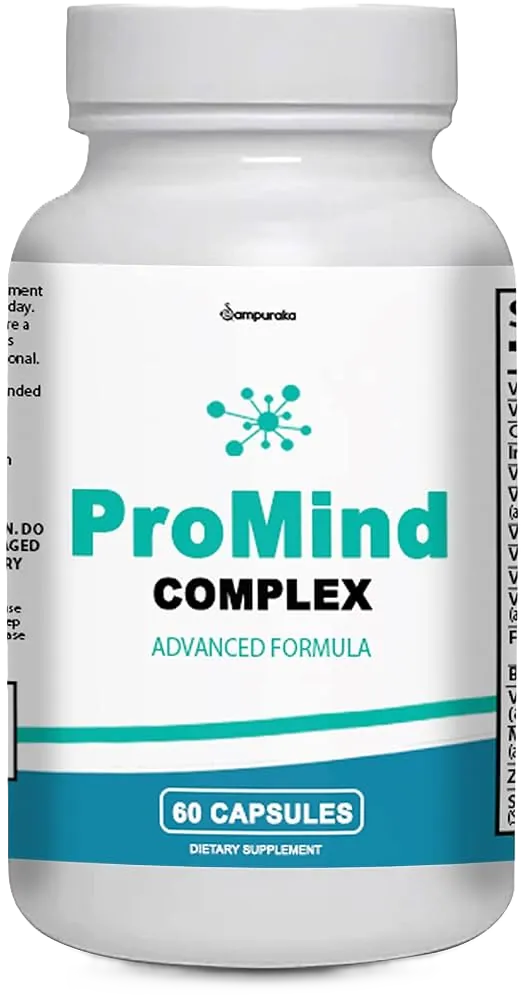
What does ProMind Complex actually do for memory and focus? It works circulation and signalling at the same time. Ginkgo and Vinpocetine move blood to the brain, Huperzine-A keeps acetylcholine in play longer, and Bacopa does the slow work on recall. Every dose is printed on the label. One or two capsules a day, and the first shift usually lands around week 2.
In This Review:
- 1. Product at a Glance
- 2. Brain Fog, Memory & the Nootropic Market: Evidence, Concerns & Trends
- 3. What ProMind Complex Does and Benefits
- 4. Why We Rate It 4.6 / 5
- 5. Who It's Best For
- 6. How It Compares
- 7. Pricing Options
- 8. The Mechanism + Full Ingredient List
- 9. Side Effects & Safety
- 10. Final Verdict
- 11. FAQs
Reviewed by The Supplement Post Editorial Team, Editorial Review
Updated
1. Product at a Glance
| Primary Mechanism | Cerebral circulation + acetylcholine support + memory consolidation |
| Key Ingredients | Bacopa monnieri (120 mg), Phosphatidylserine (125 mg), Ginkgo biloba (50 mg), Vinpocetine (2 mg), Huperzine-A (10 mcg) |
| Manufacturing | USA, GMP-certified facility |
| Guarantee | 60-day money-back |
Quick Verdict
Does ProMind Complex actually work for brain fog and memory lapses? Yes, on the supply side of memory, and covering three routes at once is the whole case for it. Ginkgo and Vinpocetine open the circulation, Huperzine-A keeps acetylcholine available for longer, and Bacopa with phosphatidylserine does the slower structural work on recall. A supplement like this is a potentiator, not a switch: it adds to sleep, food and the shape of your week, which is also why one person notices it in a fortnight and another takes two months. There is nothing to feel on day one. The circulation layer usually shows around week 2 and the memory layer between weeks 8 and 12, which is longer than the 60-day guarantee runs, so the 3- or 6-bottle order is the one that matches the timeline.
2. Why Do the Words Start Going Missing After 50?
Why do the words start going missing after 50? Because the brain gets less blood than it used to, and the chemical that files a memory runs shorter. Neither of those is damage. Both of them are supply.
You know the shape of it before you can name it. You walk into the kitchen and stand there, waiting for the reason to come back. A name you have used for twenty years arrives ten minutes late, in the car. You lose the thread of a sentence halfway through saying it. And the afternoon arrives with a kind of grey over everything.
Three things slip together, and each one makes the next worse. Blood flow to the brain drops, so healthy cells get less oxygen. Acetylcholine, the messenger that writes a memory down, gets broken up faster than it is made. And the membranes that carry the signal get stiffer with the years. All three are still reachable.
That is why one herb rarely moves anything on its own. A circulation botanical works the first, a cholinergic works the second, and the third sits there untouched. ProMind Complex is built to cover all three in one capsule, with the milligram of each one printed on the label. How the eight ingredients divide the work →
3. What ProMind Complex Does and Benefits
ProMind Complex solves a single problem with whole-body consequences: the brain stops getting what it needs to hold a thought and write it down. It is a daily capsule aimed at the supply side of memory rather than at stimulation.
Most of the shelf picks one lever and leans on it. A ginkgo pill for circulation. A choline pill for the messenger. Each one does its job and the other two gaps stay open, which is why people end up with four bottles and no clear answer about which of them is working.
Here is the part nobody mentions: the label is the whole argument. ProMind prints eight ingredients and eight milligram figures, with nothing hidden inside a proprietary blend. You can take that label to your doctor, or compare it against a study, and the numbers will still be there. Most of this category cannot be read that way.
The work divides cleanly. Ginkgo and Vinpocetine open circulation, Huperzine-A keeps acetylcholine available for longer, Bacopa and phosphatidylserine do the slower structural work on recall, and Rhodiola-free dosing means there is nothing to crash from. Circulation moves first, around week 2; the memory layer needs the full twelve weeks, which is also longer than the refund window allows.
4. Why We Rate It 4.6 / 5
Five things carry the score here, and the short refund window is what keeps it from going higher.
- Every dose printed — all eight ingredients with exact milligrams, no proprietary blend. Rare in this category.
- Bacopa at 120 mg — the nootropic with meta-analysed randomised trial data behind it.
- Phosphatidylserine at 125 mg — one of the few ingredients with an FDA qualified health claim for cognitive decline in the elderly.
- Four-layer design — acetylcholine, cerebral blood flow, membrane integrity and mood, each with a dedicated ingredient.
- Huperzine-A dosed correctly in micrograms, which is the right unit for a compound this potent.
- Free US shipping on every package, including a single bottle.
- One capsule a day — a one-capsule routine is the kind people actually sustain for three months.
- St. John’s Wort is interaction-heavy — genuinely well-evidenced, but it engages with many medications. Clear it with your doctor if you take any prescription.
- 60-day guarantee is industry-standard but shorter than the 12-week Bacopa window, so start assessing early.
- Contains soy (from lecithin) — a straightforward exclusion if you’re allergic.
5. Who Is ProMind Complex Best For?
Best match if you:
- Want to see exactly what you’re taking, in milligrams, and check it against the research yourself
- Are dealing with fog that spans memory, focus and flat mood rather than just one of the three
- Want acetylcholine, circulation and membrane support covered in one capsule instead of four bottles
- Take no prescription medication, or are willing to clear St. John’s Wort with your doctor first
- Can give it the full twelve weeks the Bacopa layer honestly needs
6. How It Compares
Three sound approaches to the same problem, built on different theories of what's failing. Here's how they line up:
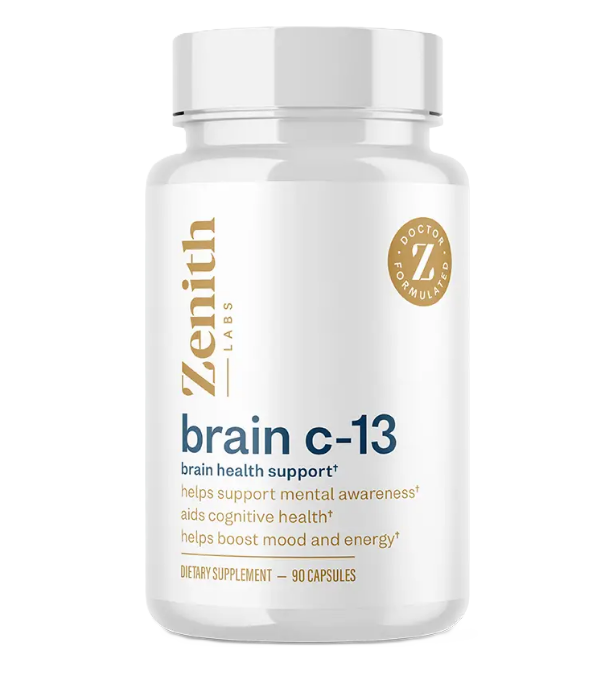
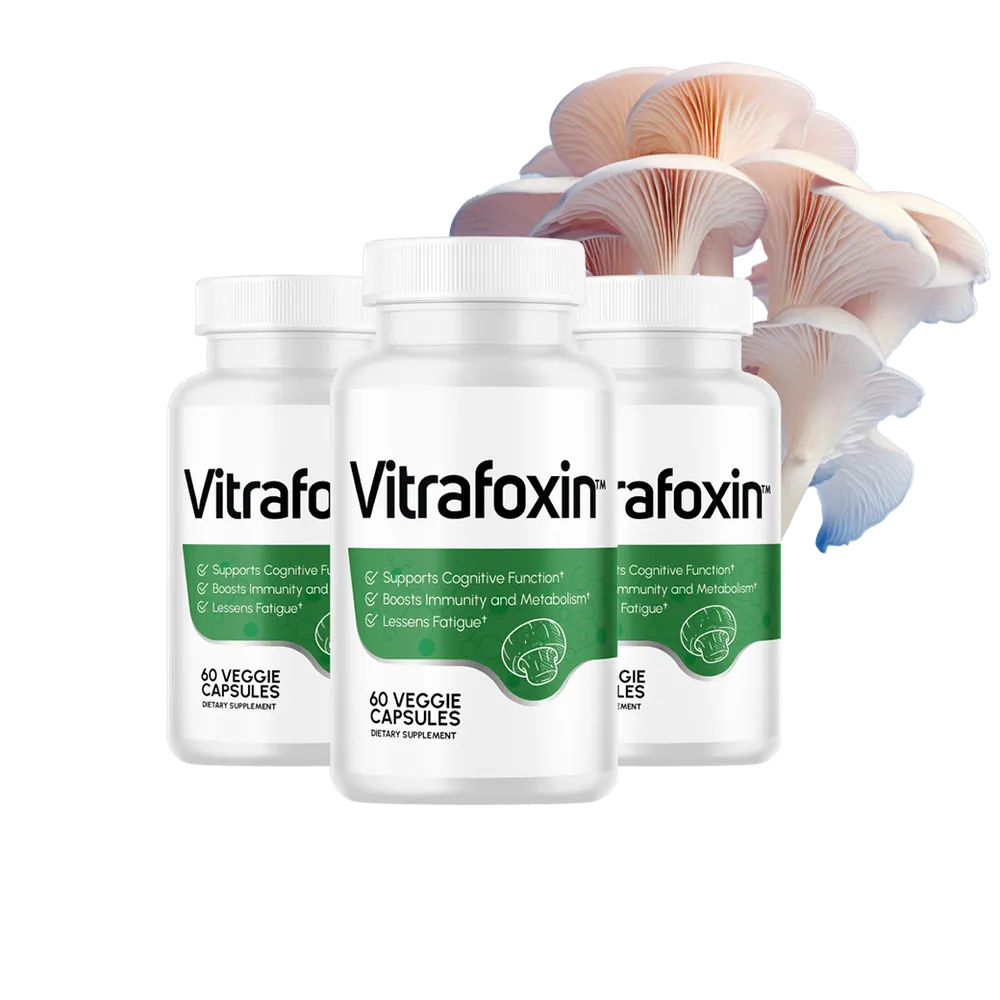
| Criteria | ProMind Complex (this review) | Brain C-13 | Vitrafoxin |
|---|---|---|---|
 |
 |
 |
|
| Primary Focus | Acetylcholine + blood flow + membranes | Citicoline (single premium) | Ten-mushroom NGF support |
| Format | Capsule | Capsule | Capsule |
| Best Price | $49/bottle | $33/bottle | $49/bottle |
| Best For | Multi-layer, fully disclosed | Direct focus & recall | Neuron maintenance |
| Where to buy | Official Site → | Official Site → | Official Site → |
Eight ingredients, eight numbers. Every milligram is printed on the label, so nothing in this formula has to be taken on trust.
7. Pricing Options for ProMind Complex
The window that matters is weeks 8 to 12 — Bacopa's trials run twelve weeks, and the membrane work takes that long. Mood and mental stamina shift earlier, around weeks 3 to 4. One bottle covers only that earlier stretch. Three bottles reaches the twelve-week mark exactly. Given all of that, six bottles at $49 each is the one we would take: it holds the memory layer through the maintenance phase, where the effects are cumulative.
1 Bottle
30-Day Supply
- Secure Checkout
6 Bottles
180-Day Supply
- Secure Checkout
3 Bottles
90-Day Supply
- Secure Checkout
Every order is backed by a 60-day money-back guarantee. The official site is the only channel that guarantees an authentic bottle and honors that refund.
8. The Mechanism: Why Eight Named Doses Instead of a Proprietary Blend
Most nootropics pick one lever and call it a brain formula. This one pulls four, and names the dose on each — which is what makes it possible to actually evaluate.
The acetylcholine layer. Acetylcholine is the neurotransmitter most tied to memory and learning, and an enzyme continuously breaks it down. Huperzine-A inhibits that enzyme, so more of what your brain already produces stays available. It's dosed at 10 mcg — small-looking, but the correct unit for a compound this potent.
The delivery layer. Your brain runs on roughly a fifth of the oxygen you breathe, so everything else depends on blood arriving. Ginkgo biloba, the most widely used cognitive botanical in the world, and Vinpocetine work that problem from two different angles — circulation and oxygen utilisation.
The structural layer. Phosphatidylserine is a phospholipid that forms part of every neuronal membrane, and holds an FDA qualified health claim relating to cognitive decline in the elderly. At 125 mg it's addressing the physical integrity of the cells doing the thinking — a layer most formulas ignore because it's slow and unglamorous.
The consolidation and mood layer. Bacopa monnieri, with meta-analysed trial data, works on memory consolidation over roughly twelve weeks. St. John's Wort covers mood, which matters because flat mood and mental fog travel together far more often than people expect. N-Acetyl L-Carnitine supports mitochondrial energy, and L-Glutamine supplies the raw material for the brain's primary neurotransmitters.
Run together: preserve the signal, deliver the oxygen, maintain the hardware, and consolidate what you learn. One capsule, once or twice a day.
Full Ingredient List
Eight ingredients, eight printed milligram doses — no proprietary blend anywhere on the panel. That's what lets you compare each line against the published research yourself.
| Ingredient | Pathway | Role in the Formula |
|---|---|---|
| St. John's Wort — 250 mg | Mood / serotonin | The largest dose in the formula and one of the most-studied botanicals in existence, with extensive human research in low mood — a meta-analysis of 35 studies found it comparable to standard antidepressants in mild-to-moderate depression (a 2023 systematic review in Advances in Clinical and Experimental Medicine). Mood and cognition are tightly linked; fog often lifts when mood does. It's also the ingredient that demands the most care — see the safety section. |
| L-Glutamine — 150 mg | Neurotransmitter precursor | The most abundant amino acid in the body and the direct precursor to glutamate and GABA — the brain's primary excitatory and inhibitory signals. It's the raw-material layer: the substrate the rest of the formula works with. |
| Phosphatidylserine 4% Complex — 125 mg | Cell membrane integrity | A phospholipid that makes up part of every neuronal membrane, and one of the few nootropic ingredients with a favourable FDA qualified health claim for cognitive decline in the elderly. Studies have examined it for memory in age-associated memory impairment (a 2026 randomized trial in Human Psychopharmacology). It's the structural layer — the physical integrity of the cells doing the thinking. |
| Bacopa monnieri — 120 mg | Memory consolidation | An Ayurvedic nootropic with genuine modern evidence: a meta-analysis of randomised controlled trials found improved cognition, particularly speed of attention (a 2026 systematic review in Phytomedicine), and a double-blind trial reported improved memory acquisition and retention (a 2026 systematic review in Phytomedicine). Notably, Bacopa is the classic slow burner — its trials run 12 weeks, which sets the honest timeline for this whole formula. |
| Ginkgo biloba — 50 mg | Cerebral blood flow | The most widely used botanical in cognitive health worldwide, studied for cerebral circulation and memory. It's the delivery layer — the brain burns roughly 20% of your oxygen, and everything else in the bottle depends on blood actually arriving. |
| N-Acetyl L-Carnitine — 50 mg | Mitochondrial energy | The brain-permeable form of carnitine, studied for mitochondrial energy production and mental fatigue in older adults. This is the layer most associated with the day-to-day feeling of mental stamina rather than sharpness. |
| Vinpocetine — 2 mg | Cerebral blood flow | A compound derived from periwinkle, studied for cerebral blood flow and oxygen utilisation. It works alongside Ginkgo on the same delivery problem via a different route — a small dose doing a specific job. |
| Huperzine-A — 10 mcg | Acetylcholine preservation | One of the most potent nootropic compounds by weight — which is why 10 micrograms is the right amount, not a small one. It inhibits the enzyme that breaks down acetylcholine, the neurotransmitter most tied to memory and learning, so more of what your brain makes stays available. |
Realistic Week-by-Week Timeline
One capsule once or twice daily. Circulation and focus effects can appear early; the memory layer runs on Bacopa's twelve-week timescale. The 60-day guarantee means it pays to start assessing deliberately rather than waiting for the last bottle.
| Timeframe | What to Expect | Driven By |
|---|---|---|
| Week 1-2 | One capsule, once or twice daily with water. Ginkgo, Vinpocetine and Huperzine-A act on circulation and acetylcholine relatively quickly — some people notice cleaner focus first. | Ginkgo + Huperzine-A |
| Week 3-4 | Mood and mental stamina typically shift next — fewer flat afternoons, more capacity to stay with a task. | St. John's Wort + NALC |
| Week 8-12 | The window that matters. Bacopa's trials run 12 weeks, and phosphatidylserine works on membrane integrity over months — this is where memory and recall are meant to be judged. | Bacopa + Phosphatidylserine |
| Month 3+ | Maintenance. The structural and memory layers are cumulative; the earlier circulation effects continue underneath them. | Full eight-ingredient panel |
9. Side Effects & Safety
For most people ProMind Complex is well tolerated, and the common reports are mild: some digestive adjustment in the first days, which usually settles when the capsule is taken with food, and occasional mild headache early on as circulation-active ingredients take effect.
St. John's Wort deserves a direct answer rather than small print. It's one of the most-studied botanicals there is, with real evidence in low mood — and it's also one of the most interaction-prone ingredients in the supplement world. It can increase sensitivity to sunlight, so take more care with sun exposure. It may affect bleeding time, which matters if you take blood thinners. It interacts with a wide range of medications, including antidepressants, MAO inhibitors, birth control and several others. And the label advises discontinuing use two to three weeks before any scheduled surgery.
None of that makes the ingredient a problem in itself — it makes it an ingredient that requires a conversation. If you take any prescription medication, run this formula past your doctor or pharmacist before starting. That's a five-minute conversation, and it's the sensible default here rather than an abundance of caution.
One more practical note: the capsule contains soy, from lecithin. Straightforward, but worth knowing if you have a soy allergy.
Worth a word with your doctor if you:
- You take any prescription medication — St. John’s Wort’s interaction profile makes this the default, not an edge case
- You take antidepressants, MAO inhibitors, or birth control (direct, documented interactions)
- You take blood thinners or anti-platelet medication (St. John’s Wort and Ginkgo may both affect bleeding time)
- You have surgery scheduled within the next few weeks — the label advises stopping 2-3 weeks beforehand
- You have a soy allergy, or you’re pregnant or nursing
- Your memory change came on suddenly or is worsening quickly — that needs a medical evaluation, not a supplement
If none of that applies to you, there is no medical reason to hesitate — for most healthy adults this is well tolerated at the labeled dose.
10. Final Verdict
You meet someone at the supermarket, greet them warmly, and get through the entire conversation without once using their name. ProMind Complex does the single most useful thing a nootropic can do: it shows you everything. Eight ingredients, eight printed milligram doses, no proprietary blend to hide behind — which means you can take Bacopa at 120 mg, phosphatidylserine at 125 mg and Huperzine-A at 10 mcg and check each one against the published literature yourself. Very few products in this category let you do that, and it's a meaningful signal about how the formula was built.
The selection is evidence-led rather than decorative. Bacopa carries meta-analysed randomised trial data. Phosphatidylserine holds an FDA qualified health claim relating to cognitive decline in the elderly. Huperzine-A has its own meta-analysis. And the four layers — acetylcholine preservation, cerebral blood flow, membrane integrity and mood — map onto the three systems that actually decline with age. We'll flag the one thing you should know going in rather than bury it: St. John's Wort interacts with a wide range of medications, so if you take any prescription, make it a quick conversation with your doctor first.
A word on which package to pick, because the difference isn't only price. The 1-bottle package at $69 per bottle buys 30 days — useful for checking how it sits with you, short of the window that decides anything. The 3-bottle package at $59 per bottle is where a fair trial actually begins: 90 days, enough to cover the 2 to 8 weeks this formula works over. The 6-bottle package at $49 per bottle is the one that makes sense once you know you want to see it through — lowest cost per bottle, with a reserve so consistency never waits on a reorder. The 60-day guarantee means the cost of finding out sits with the manufacturer, not with you. Take one capsule daily with water, and because the guarantee runs 60 days rather than a year, start paying attention from week one and make your call deliberately inside that window.
11. Frequently Asked Questions
What is ProMind Complex used for?
It's a nootropic aimed at memory, focus and brain fog. The panel covers four distinct routes: memory consolidation (Bacopa monnieri 120 mg, Huperzine-A 10 mcg), cerebral blood flow (Ginkgo biloba 50 mg, Vinpocetine 2 mg), cell-membrane integrity (Phosphatidylserine 125 mg) and mood plus mental energy (St. John's Wort 250 mg, N-Acetyl L-Carnitine 50 mg).
What are the ingredients in ProMind Complex?
Eight, all with printed milligrams — no proprietary blend. St. John's Wort 250 mg, L-Glutamine 150 mg, Phosphatidylserine 4% Complex 125 mg, Bacopa monnieri 120 mg, Ginkgo biloba 50 mg, N-Acetyl L-Carnitine 50 mg, Vinpocetine 2 mg and Huperzine-A 10 mcg. The capsule contains soy from lecithin, which matters if you have a soy allergy.
Do brain booster supplements really work?
It depends entirely on which ingredients and at what dose — which is why full disclosure matters. Several here have genuine human evidence: a meta-analysis of randomised trials found Bacopa improved cognition and speed of attention (a 2026 systematic review in Phytomedicine), phosphatidylserine has been studied in age-associated memory impairment (a 2026 randomized trial in Human Psychopharmacology), and Huperzine-A has meta-analysed cognitive data. What they don't do is work overnight; Bacopa's trials run 12 weeks, and that's the honest timeline.
How long before I notice anything?
Focus and circulation effects from Ginkgo, Vinpocetine and Huperzine-A can show in the first couple of weeks. Mood and mental stamina usually follow. The memory layer — Bacopa and phosphatidylserine — needs 8 to 12 weeks, which is why the 3- or 6-bottle bundle matches the biology better than a single bottle does.
Are there side effects or interactions to know about?
The formula is generally well tolerated, but St. John's Wort is genuinely interaction-heavy and deserves a straight answer rather than a footnote. It can increase sun sensitivity, may affect bleeding time, and interacts with a wide range of medications — including antidepressants, birth control, blood thinners and MAO inhibitors. The label also advises discontinuing two to three weeks before surgery. If you take any prescription medication, clear this one with your doctor or pharmacist first. It contains soy.
When should I talk to a doctor first?
Before starting, if you take any prescription medication at all — St. John's Wort's interaction profile makes that the sensible default rather than an abundance of caution. Also if you're pregnant or nursing, have surgery scheduled, or have a soy allergy. And any memory change that came on suddenly or is worsening quickly needs a medical evaluation, not a supplement.
INGREDIENT TAGS
FORMAT
Research & Transparency
This content is based on publicly available ingredient research, the product’s supplement facts label, and manufacturer disclosures. We are not affiliated with the manufacturer. Marketing claims not supported by the product’s own label are not repeated here.
(a) Comparative effects of Bacopa monnieri and Ginkgo biloba on cognitive function — systematic review. Phytomedicine 2026
(b) Impact of citicoline and phosphatidylserine supplementation on cognitive performance — randomized trial. Human Psychopharmacology 2026
(c) Memory — the reference we use for what normal age-related change looks like and when it warrants a doctor. MedlinePlus / NIH
(d) What we know about healthy aging — the agency read on what actually holds up cognition over time. NIH / NIA
(e) Efficacy and safety of St. John’s wort extract in depression therapy compared with SSRIs — systematic review. Advances in Clinical and Experimental Medicine 2023
About the Author
Luciano Cesar is a contributor at The Supplement Post, supporting the production of evidence-aware supplement reviews and buyer's guides across multiple health categories. His work spans ingredient analysis, formulation assessment and consumer-oriented summaries — what a label discloses, how the stated doses compare with the amounts used in published human research, and whether a formula's design matches what it claims to do. Every review is checked by The Supplement Post editorial team against the standards published in our editorial policy before it goes live.
Disclosure
All content is for informational purposes only and is not a substitute for professional medical advice. Each product reviewed is a dietary supplement, not a prescription drug. Results may vary. This page may contain affiliate links — if you purchase through them, we may earn a small commission at no additional cost to you. Read our Editorial Policy.