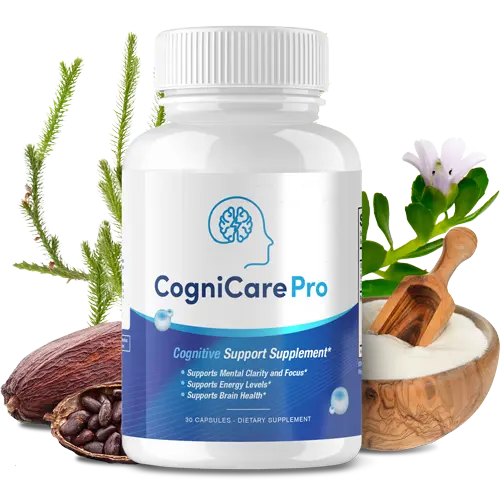
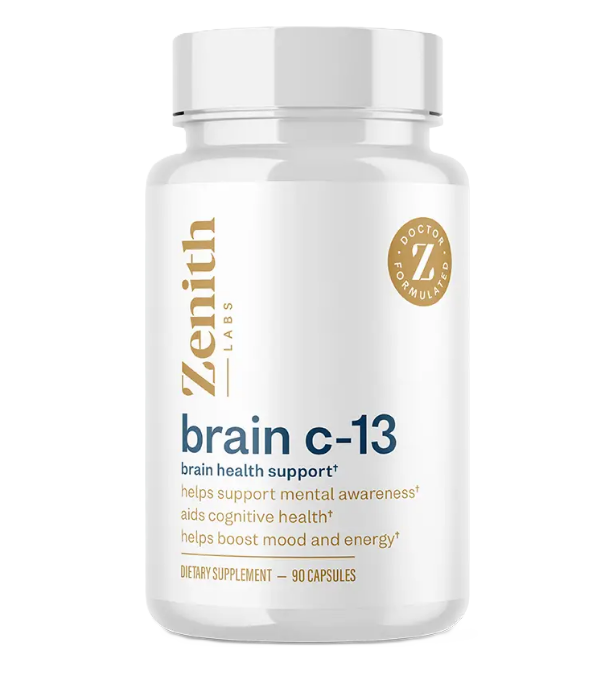
What does Brain C-13 actually do for memory and focus? It rebuilds the membrane and the messenger together. Cognizin Citicoline supplies what neurons use to repair their own membranes and to make acetylcholine, Huperzine A keeps that messenger around longer, and Bacopa does the slow work on recall. Three capsules a day. The first change usually lands around week 2.
In This Review:
- 1. Product at a Glance
- 2. Memory & Focus After 40: Evidence, Concerns & Trends
- 3. What Brain C-13 Does and Benefits
- 4. Why We Rate It 4.6 / 5
- 5. Who It's Best For
- 6. How It Compares
- 7. Pricing Options for Brain C-13
- 8. The Mechanism + Full Ingredient List
- 9. Side Effects & Safety
- 10. Final Verdict
- 11. FAQs
Reviewed by The Supplement Post Editorial Team, Editorial Review
Updated
1. Product at a Glance
| Primary Mechanism | Membrane repair + acetylcholine support + cerebral circulation |
| Key Ingredients | Cognizin Citicoline (150 mg), Bacopa Monnieri (150 mg), Huperzine A (300 mcg), Ginkgo Biloba, Phosphatidylserine |
| Manufacturing | USA, GMP-certified facility |
| Guarantee | 180-day money-back |
Quick Verdict
Does Brain C-13 actually work for memory loss and slow recall? Yes, and the form of the choline is the reason. Cognizin Citicoline is the version tested in people, and it does two jobs at once: it supplies what neurons use to rebuild their own membranes, and the raw material for acetylcholine. Huperzine A keeps that messenger around longer, Bacopa does the slow consolidation work, and Ginkgo opens the blood supply the other two depend on. A supplement like this is a potentiator, not a switch, so sleep, food and plain consistency all move the result. Attention tends to shift around week 2 and recall between weeks 6 and 8, with a 180-day guarantee wrapped around the whole trial.
2. Why Does Focus Fade Faster Than It Used To?
Why does focus fade faster than it used to? Because neurons repair their own membranes every day, and the raw material for that repair gets scarcer with age while the demand stays the same.
The signs are ordinary enough to ignore. You lose the thread of your own sentence and have to ask where you were. The morning takes an hour to properly start. You reread the same email because the first pass did not stick. By mid-afternoon the effort of concentrating is something you can feel.
Underneath that are three things giving way at once. Cell membranes get harder to maintain, so signals travel less cleanly. Acetylcholine, the messenger behind attention and recall, is broken up faster than it is replaced. And circulation drops, so even healthy cells run short of oxygen. All three respond to supply.
Brain C-13 is built around that first one, with Cognizin Citicoline, and then covers the other two in the same capsule. How the four layers divide the work →
3. What Brain C-13 Does and Benefits
Brain C-13 solves a single problem with whole-body consequences: neurons lose the raw material they need to repair themselves and to keep talking to each other. It is a daily capsule built on a branded form of citicoline.
Most of this category buys the cheap version of this idea. Choline bitartrate costs little and most of it never reaches the brain, so the label reads right and the biology never sees the dose. The result is a bottle that looks like the studies and does not behave like them.
Here is the part nobody mentions: Cognizin is the form that was actually tested in people, and it does two jobs from one molecule. It supplies the phosphatidylcholine neurons use to rebuild their own membranes, and it supplies the choline they use to make acetylcholine. Repair and signalling, from the same ingredient.
Around it, Huperzine A keeps the messenger in circulation longer, Bacopa does the slow consolidation work, and Ginkgo opens the blood supply the other two depend on. Three capsules a day, taken with food, which is the real commitment here. Attention tends to move around week 2 and the memory layer between weeks 6 and 8, with 180 days of refund window around the whole trial.
4. Why We Rate It 4.6 / 5
Four things carry the score here, and the three-capsule routine is what keeps it from going higher.
What stands out:
- Multi-pathway formula — covers neurotransmitters, circulation, neuroprotection, and energy in one serving
- Doctor-formulated — developed by Zenith Labs with physician oversight
- Cognizin Citicoline — patented form with clinical evidence for memory and focus
- Stimulant-free — no caffeine, no jitters, no crash, no dependency cycle
- 180-day guarantee — six full months to test, one of the longest in the category
- Full label transparency — no proprietary blends, every dose disclosed
Where it falls short:
- Built on the citicoline route — if you want a Bacopa-led memory formula, one built around it fits you better
- Capsule routine — taken daily, not something you reach for before a meeting
- Sold direct only — not on Amazon or retail shelves, so you order online
Full scorecard across all 6 criteria: Brain C-13 Scorecard →
5. Who Is Brain C-13 Best For?
Best match if you:
- Aging professional (45–65): Noticing slower recall, reduced focus at work, or difficulty holding complex thoughts — and want a non-prescription daily option
- Brain fog sufferer (30–50): Experiencing persistent mental cloudiness, caffeine dependency, or cognitive fatigue without a clear medical cause
- Concerned family member: No symptoms yet, but a parent or grandparent diagnosed with cognitive decline — looking for evidence-based preventive support
- Prefer a stimulant-free approach that doesn't create dependency or crash cycles
- Are committed to daily consistency for 3+ months (this is not a quick fix)
6. How It Compares
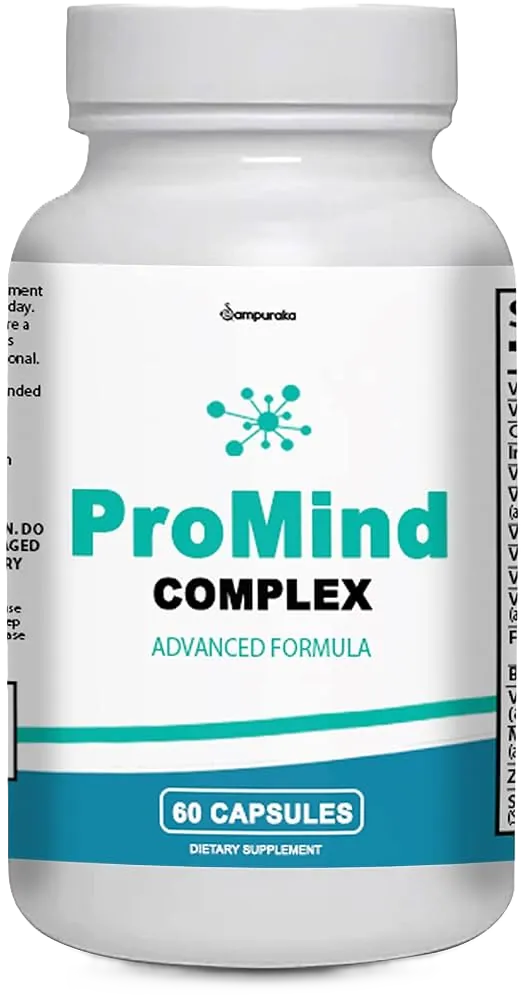
| Criteria | Brain C-13 (this review) | Alpha Brain | ProMind Complex |
|---|---|---|---|
 |
— |  |
|
| Primary Focus | Multi-pathway cognitive support | Focus + flow state | Acetylcholine + blood flow |
| Format | Capsule (3/day) | Capsule (2/day) | Capsule (1/day) |
| Label Transparency | Full disclosure | Proprietary blends | Full disclosure |
| Best Price | $33/bottle | $55/bottle | $49/bottle |
| Guarantee | 180 days | 90 days | 60 days |
| Best For | Age-related decline + brain fog | Young professionals + athletes | Verifiable doses, 4 mechanisms |
| Where to buy | Official Site → | — | Official Site → |
A 180-day window is a vote of confidence. A manufacturer only stands behind a bottle for six months when it expects you to still be taking it.
7. Pricing Options for Brain C-13
The layers arrive at different speeds: Rhodiola's stress resilience within days, citicoline-driven focus around weeks 2 to 4, and Bacopa's memory consolidation across weeks 8 to 12. That last one sets the order. One bottle covers the first layer only. Three bottles reaches the twelve-week mark. Given all of that, six bottles at $33 each is the one we would take — the lowest rate on the page and the supply the memory layer actually needs.
1 Bottle
30-Day Supply
- Secure Checkout
6 Bottles
180-Day Supply
- Secure Checkout
3 Bottles
90-Day Supply
- Secure Checkout
Every order is backed by a 180-day money-back guarantee. The official site is the only channel that guarantees an authentic bottle and honors that refund.
8. The Mechanism + Full Ingredient List
Most cognitive supplements pick one mechanism — a single nootropic compound — and bet everything on it. That produces short-term sharpness that fades back into baseline because the other three drivers of cognitive aging keep running unchecked. Brain C-13 runs four pathways in parallel, with 13 ingredients designed to work together rather than compete for absorption.
Acetylcholine Pathway. Citicoline (Cognizin), DMAE, and Huperzine A work through three complementary mechanisms on the same neurotransmitter: Citicoline supports neuronal membrane synthesis and choline availability, DMAE provides acetylcholine precursor support, and Huperzine A inhibits the enzyme that breaks acetylcholine down. Three angles keep acetylcholine levels more stable than any single compound alone — and acetylcholine is the primary neurotransmitter behind focus, attention, and memory recall.
Cerebral Circulation Pathway. Ginkgo Biloba and Gotu Kola support healthy blood flow to the brain, improving oxygen and nutrient delivery to neurons. Reduced cerebral blood flow is one of the earliest measurable changes in age-related cognitive decline — neurons starved of oxygen lose function before they show structural damage. Restoring circulation often produces faster perceived sharpness than any neurotransmitter intervention.
Neuroprotection Pathway. Bacopa Monnieri, Turmeric (curcuminoids), and Phosphatidylserine protect neurons from oxidative stress and support structural integrity of brain cell membranes. Phosphatidylserine is one of the few compounds with an FDA-qualified health claim for cognitive function. This layer slows the ongoing damage that the other three pathways are trying to compensate for.
Energy and Adaptation Pathway. Rhodiola Rosea reduces mental fatigue under stress (effects noticeable in days to weeks). Acetyl-L-Carnitine supports mitochondrial energy production in brain cells. Mucuna Pruriens provides L-DOPA for dopamine synthesis — supporting motivation and cognitive drive. This layer addresses the energy + drive side that pure memory/focus formulas often ignore.
How it runs together: the acetylcholine pathway provides the signaling. The circulation pathway delivers the oxygen and nutrients those signals depend on. The neuroprotection pathway slows the ongoing damage. The energy pathway provides the cellular fuel. Four pathways means cognitive aging gets addressed at the source — not just masked with a single nootropic that fades.
Full Ingredient List
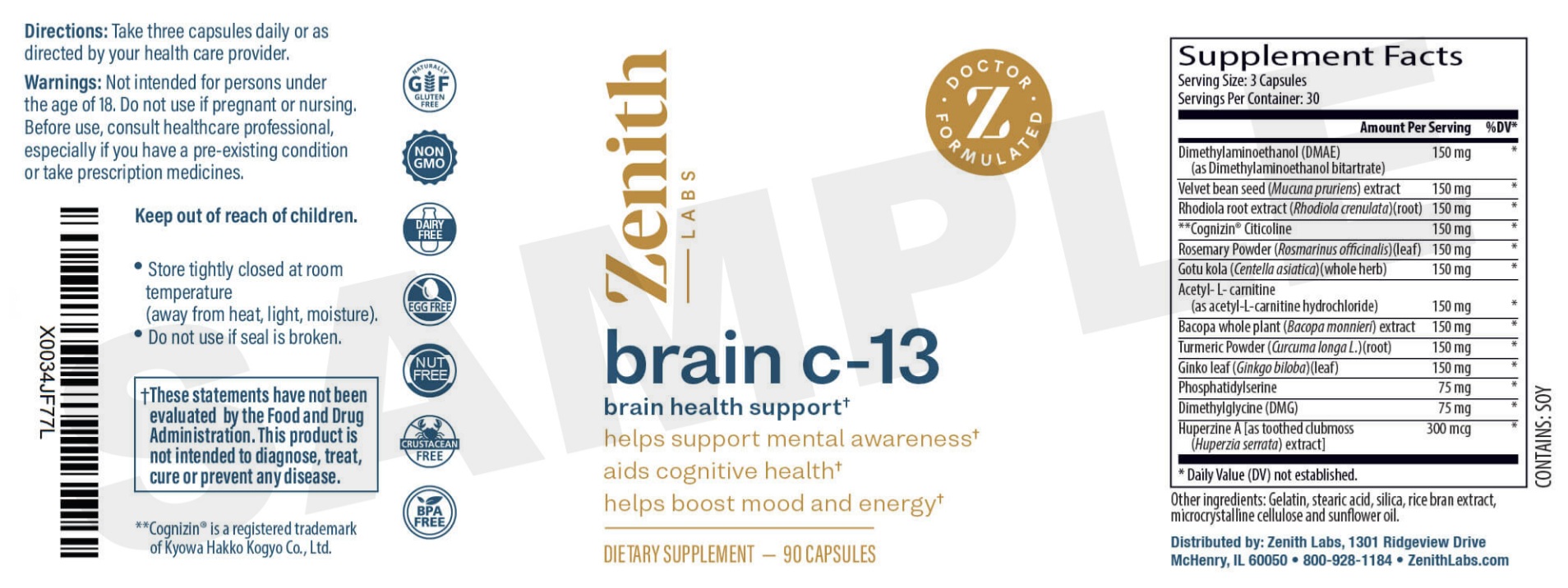
Brain C-13 discloses every dose on the label — no proprietary blend. Here's the full formula (three-per-day serving), organized by the pathway each compound serves:
| Ingredient | Per Serving | Role in the brain |
|---|---|---|
| Cognizin Citicoline | 150 mg | Supplies choline for acetylcholine and cytidine for neuronal-membrane synthesis. A dual-benefit form shown to raise brain ATP (cellular energy) — more complete than generic choline bitartrate, which only donates choline. |
| Huperzine A | 300 mcg | Acetylcholinesterase inhibitor — blocks the enzyme that breaks acetylcholine down, keeping more of it available at the synapse. The same general mechanism as prescription drugs like donepezil, at a much milder supplemental level. |
| Bacopa Monnieri Extract | 150 mg | Bacosides support synaptic communication and memory consolidation. Effects are cumulative — research shows 8–12 weeks of daily use before measurable memory gains. Fat-soluble, so best taken with food. |
| Ginkgo Biloba (Leaf) | 150 mg | Increases cerebral microcirculation via vasodilation and reduced blood viscosity, improving oxygen and glucose delivery to brain tissue — directly relevant to age-related brain fog and processing speed. |
| Rhodiola Rosea Extract | 150 mg | Adaptogen that modulates cortisol and eases mental fatigue under stress. Faster onset than most nootropic herbs (days to weeks). Best in the morning — can interfere with sleep taken late. |
| DMAE | 150 mg | Precursor that supports acetylcholine synthesis and membrane fluidity in cholinergic neurons — the neurotransmitter tied to memory encoding, learning, and sustained attention. |
| Acetyl-L-Carnitine | 150 mg | Crosses the blood-brain barrier readily; supports mitochondrial energy (ATP) production in neurons — cells that burn roughly 20% of the body's energy — and donates acetyl groups for acetylcholine. |
| Phosphatidylserine | 75 mg | A key membrane phospholipid supporting signal transduction and neurotransmitter release. One of the few compounds with an FDA-qualified health claim for cognitive function in the elderly. |
| Turmeric (Root) | 150 mg | Curcuminoids cross the blood-brain barrier and help modulate the chronic low-grade neuroinflammation that contributes to age-related cognitive decline. |
| Gotu Kola (Centella asiatica) | 150 mg | Triterpenoids (asiaticoside, madecassoside) support microvascular blood flow and the structural integrity of the small vessels feeding brain tissue. |
| Mucuna Pruriens Extract | 150 mg | Natural source of L-DOPA, the direct precursor to dopamine — supporting motivation and cognitive drive, useful for feeling mentally "flat" rather than simply forgetful. |
| Rosemary Powder | 150 mg | Antioxidant support that complements the neuroprotection layer. |
| DMG (Dimethylglycine) | 75 mg | Supports cellular energy metabolism and oxygen utilization. |
Inactive ingredients: gelatin capsule, stearic acid, silica, rice bran extract, microcrystalline cellulose, sunflower oil. The gelatin capsule means it isn't suitable for strict vegetarians or vegans.
What these terms actually mean:
- Acetylcholine
- The brain's primary "memory and focus" messenger. It carries the signals behind learning, attention, and recall. Production falls with age while the enzyme that clears it stays busy — which is exactly the forgetful, can't-focus feeling most people notice first.
- Citicoline
- A raw material your brain uses for two jobs at once: making acetylcholine and building the membranes brain cells are made of. Think of it as delivering both the fuel and the building blocks — which is why it does more than a plain choline supplement.
- Brain energy (ATP)
- ATP is the cellular battery your neurons run on. The brain is only about 2% of your body weight but burns roughly 20% of your energy — so when ATP output dips, mental stamina is the first thing to fade. Citicoline and Acetyl-L-Carnitine both support this supply.
- Neuroprotection
- Defending brain cells from the slow wear of oxidative stress and inflammation. It's the "maintenance" side of the formula — it doesn't create a next-day buzz, it protects the gains the other pathways make so they last.
What Makes This Formula Different
The nootropic aisle tends toward two traps: caffeine-driven "boosts" that spike and crash, or long ingredient lists dosed too low to matter ("pixie dusting"). Brain C-13 sidesteps both — it's entirely stimulant-free, so there's no dependency or afternoon crash, and it discloses every dose rather than hiding amounts behind a proprietary blend.
Two formulation choices stand out. First, it uses Cognizin-branded citicoline rather than cheap choline bitartrate — a patented, clinically studied form that delivers both the neurotransmitter precursor and membrane support, with human-trial evidence for attention and brain ATP. Second, it addresses both sides of the acetylcholine equation: most formulas only try to build more (precursors like DMAE and citicoline), but Brain C-13 pairs those with Huperzine A to slow the breakdown — which becomes more relevant as the clearing enzyme grows more active with age. The honest trade-off, as noted in §4, is that a few doses (citicoline at 150 mg, Bacopa at 150 mg) sit below the standalone clinical ranges — the bet here is multi-pathway breadth over single-ingredient depth.
Results Timeline — What to Expect and When
The compounds compound rather than fire at once, so the experience unfolds in stages. This timeline reflects the general pharmacology of the ingredients plus common user-reporting patterns; individual results depend on baseline cognitive health, age, sleep, diet, and — most of all — consistency.
| Timeline | What to expect |
|---|---|
| Week 1–2 | Rhodiola's adaptogenic effects activate first — subtle gains in mental energy, stress tolerance, and morning clarity, while DMAE begins influencing membrane fluidity. Most people won't see dramatic cognitive change yet, and that's normal. The foundation is being laid. |
| Week 3–4 | Citicoline reaches meaningful brain levels and Huperzine A's acetylcholinesterase inhibition compounds with it. Focus, attention span, and verbal recall improve noticeably. This is where most users form their first real opinion of the formula. |
| Week 6–8 | Bacopa's memory-consolidation effects reach their clinical window and recall improves measurably. Ginkgo and Gotu Kola's circulation benefits establish; Phosphatidylserine's membrane support accumulates. If the formula fits your biology, all four pathways should show by now. |
| Month 3+ | Neuroprotective compounds (Turmeric, Bacopa's antioxidant effect) accumulate and long-term resilience compounds. Results plateau; the goal shifts from building to maintaining. Stopping abruptly tends to drift back toward baseline over 2–3 weeks. |
The takeaway: weeks 6–8 are where you judge this product — anything earlier is too soon, especially given Bacopa's 8–12 week evidence window. Results also aren't built in a vacuum. Quality sleep (7–8 hours — when memory consolidation and glymphatic clearance happen), moderate exercise (it raises BDNF), hydration (cerebral blood flow is water-dependent), daily consistency, and managing chronic stress all directly amplify what the formula can do. If you're seeing nothing by week 8 of consistent daily use, address those factors before concluding it isn't the right fit.
9. Side Effects & Safety
Brain C-13 has one of the cleaner safety profiles in the nootropic category: stimulant-free, non-GMO, made in a GMP-certified US facility, and built on well-studied compounds — Cognizin Citicoline, Bacopa Monnieri, Phosphatidylserine, Rhodiola Rosea — with long safety track records. The honest answer for most healthy adults: nothing negative at all. Because there's no caffeine or synthetic stimulant, there's no jitter-crash cycle, no dependency, and no sleep disruption when taken in the morning.
The most commonly reported adjustment in the first week is mild digestive sensitivity, usually from Bacopa Monnieri — it's fat-soluble and can irritate an empty stomach. Taking the capsules with a meal that contains some fat typically resolves it within a few days.
Possible Side Effects
| Side effect | Likely cause | What to do |
|---|---|---|
| Mild GI discomfort | Bacopa (fat-soluble) | Take with a meal containing some fat. Usually resolves within 3–5 days. |
| Headache | Cholinergic compounds (Huperzine A, Citicoline, DMAE) | Reduce to 2 capsules the first week, then build to full dose. Stay well hydrated. |
| Vivid dreams | Higher acetylcholine activity during REM | Take the dose in the morning. Often fades within 1–2 weeks. |
| Mild nausea | Sensitivity to herbal extracts (Mucuna, Bacopa) | Take with food. If it persists past 5 days, reduce dose or discontinue. |
| Restlessness / trouble sleeping | Rhodiola (mildly stimulating adaptogen) | Take in the morning only — Rhodiola can disrupt sleep taken later in the day. |
None of these are serious or lasting — the first two are the most common and resolve with the simple adjustments above. They stem from bioactive compounds shifting neurotransmitter activity, not from a stimulant overstressing your nervous system.
Drug Interactions — Check With Your Doctor First
This matters more than usual here, because the audience for a cognitive-support formula often takes other medications. Three ingredients are genuinely bioactive and have documented interactions:
- Huperzine A + cholinesterase inhibitors (donepezil/Aricept, rivastigmine/Exelon, galantamine) — both slow acetylcholine breakdown, so combining them can overshoot. Do not combine without your doctor's approval.
- Ginkgo Biloba + blood thinners (warfarin, heparin, clopidogrel, daily aspirin) — Ginkgo's mild antiplatelet effect may add to bleeding risk.
- Mucuna Pruriens + Parkinson's medications (levodopa/carbidopa) — Mucuna supplies L-DOPA, so a supplemental source can alter dopamine levels unpredictably; medical supervision required.
- Psychiatric / mood medications (SSRIs, SNRIs, MAOIs, antipsychotics) — because the formula touches acetylcholine, dopamine, and serotonin pathways, clear it with your prescriber first.
If none of those apply, there's no medical reason to hesitate — for healthy adults not on those medication categories, this is a low-risk daily supplement. One YMYL caveat that outranks any product decision: Brain C-13 supports focus, recall, and clarity in healthy adults, but it is not a treatment for Alzheimer's, dementia, or any diagnosed cognitive disease — no supplement is. Sudden or significant memory loss is a doctor's conversation, not a supplement one. Full strengths-and-weaknesses breakdown: Brain C-13 Pros & Cons →
10. Final Verdict
The book you started twice because the first fifty pages didn’t stay. Brain C-13 addresses cognitive decline the way it actually develops — across multiple pathways simultaneously. The combination of Cognizin Citicoline, Huperzine A, and Bacopa Monnieri covers the acetylcholine system that drives memory, while Ginkgo, Rhodiola, and Phosphatidylserine add circulation, stress resilience, and neuroprotection layers that most competitors lack.
It is not a stimulant and it will not sharpen your mind overnight. Some individual doses sit below standalone clinical ranges — a common trade-off in multi-compound formulas. But for adults experiencing age-related memory decline, persistent brain fog, or cognitive fatigue — and who commit to 8–12 weeks of daily use — this is one of the more complete and honestly priced formulas in the nootropic category.
Our recommendation: Here's the honest package math. One bottle is 30 days — not enough to judge a formula that works over months. The 3-bottle bundle is the minimum for a fair trial; the 6-bottle bundle ($33/bottle) is the best value and leaves you a reserve to keep going for fuller results. The 180-day guarantee has you covered even if the bottles are empty.
11. Frequently Asked Questions
Does Brain C-13 actually support memory and cognitive function?
Brain C-13 supports cognitive function through four biological pathways — acetylcholine optimization, cerebral circulation, neuroprotection, and mitochondrial energy. Key ingredients like Citicoline, Huperzine A, and Bacopa Monnieri are well-documented in cognitive research. It is a supportive supplement, not a medication — results depend on consistency and individual baseline health.
How long until I notice improvements?
Rhodiola's stress-resilience effects may appear within 1–2 weeks. Clearer thinking and reduced brain fog typically emerge at weeks 2–4. Memory recall and sustained focus improvements develop over 8–12 weeks, particularly from Bacopa Monnieri and Citicoline. The manufacturer recommends 3–6 months for optimal results. Full timeline: Results Timeline →
Is Brain C-13 safe? Are there drug interactions?
Stimulant-free, non-GMO, and GMP-certified. Generally well tolerated. However, Huperzine A may interact with acetylcholinesterase inhibitor medications (donepezil, rivastigmine). Ginkgo Biloba may interact with blood thinners. If you take any prescription medications, consult your doctor before starting. Details: Safety & Side Effects →
Where should I buy Brain C-13?
Only through the official Zenith Labs website. Third-party sellers are not authorized and purchases through them do not qualify for the 180-day money-back guarantee.
Should I consult a doctor before taking Brain C-13?
Yes — especially if you take prescription medications, have a diagnosed neurological condition, are pregnant or nursing, or are under 18. Brain C-13 is a dietary supplement and is not intended to diagnose, treat, or cure any disease. Adults with a family history of cognitive decline should discuss any supplementation plan with their healthcare provider before starting.
INGREDIENT TAGS
FORMAT
Research & Transparency
This content is based on publicly available ingredient research, manufacturer disclosures, and product labeling. We are not affiliated with the manufacturer.
(a) Impact of citicoline and phosphatidylserine supplementation on cognitive performance — randomized trial. Human Psychopharmacology 2026
(b) The effect of plant active substances on cognitive function in healthy older adults — systematic review. Frontiers in Pharmacology 2025
(c) Memory — the reference we use for what normal age-related change looks like and when it warrants a doctor. MedlinePlus / NIH
(d) What we know about healthy aging — the agency read on what actually holds up cognition over time. NIH / NIA
About the Author
Luciano Cesar is a contributor at The Supplement Post, supporting the production of evidence-aware supplement reviews and buyer's guides across multiple health categories. His work spans ingredient analysis, formulation assessment and consumer-oriented summaries — what a label discloses, how the stated doses compare with the amounts used in published human research, and whether a formula's design matches what it claims to do. Every review is checked by The Supplement Post editorial team against the standards published in our editorial policy before it goes live.
Disclosure
All content is for informational purposes only and is not a substitute for professional medical advice. Each product reviewed is a dietary supplement, not a prescription drug. Results may vary based on individual health status, consistency of use, and lifestyle. This page may contain affiliate links — if you purchase through them, we may earn a small commission at no additional cost to you. Read our Editorial Policy.