Mind Vault Reviews and Complaints: Scam or Legit? What Buyers Report After a Few Weeks
The undisclosed-blend objection, what buyers actually report, the six-criteria scorecard, and who should look elsewhere.
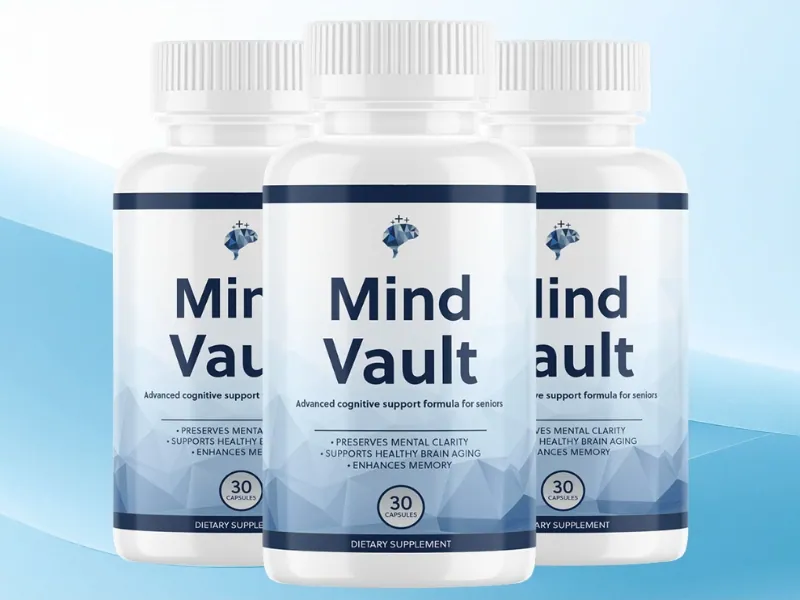
In This Article
Buyer Verdict
The honest read on Mind Vault comes down to matching expectations to what's actually disclosed. Buyers who understood it as a broad circulation-and-dopamine formula — not a targeted recall pill — tend to describe it in line with the manufacturer's own published testimonials: steadier recall of names and appointments, quicker word-finding during things like crossword puzzles, and more confidence in day-to-day conversation. The recurring objection is the same one we raise above: the blend's individual amounts aren't on the label.
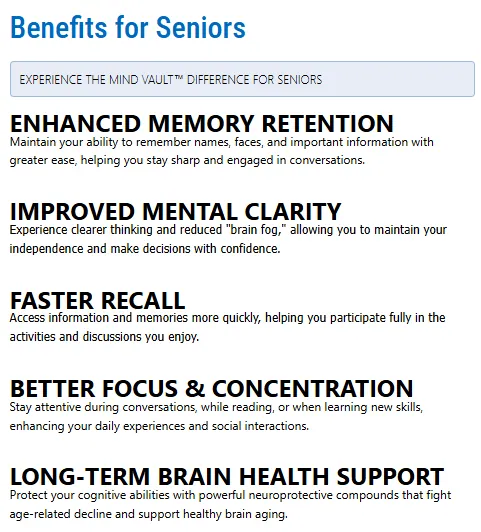
1. The Pattern Across Verified Buyers
Distilled from the manufacturer's own published buyer testimonials and the broader brain-and-focus category around it — the praise, the caveat and the objection that keep recurring.
| What buyers focus on | Recurring pattern | What it tells you |
|---|---|---|
| The praise that repeats | In testimonials published by the manufacturer, buyers describe recalling names and appointments more easily and finding words more quickly in conversation and word games after several weeks of use. (Individual results — not typical.) | That maps to the circulation and dopamine-pathway layers doing their job for processing speed and recall, consistent with how the ingredients are meant to work. |
| The caveat that repeats | "I wish I knew the exact amount of each ingredient." The 700 mg blend total is disclosed; the per-ingredient split isn't. | Fair, and it's the same limitation we flag in our own rating — a fully-dosed alternative exists if that matters more to you than the broader formula design. |
| The reassurance that repeats | "No jitters, no crash." Consistent with a formula that has zero stimulant content. | It should — nothing in the blend works on adrenaline or caffeine pathways, so there's no stimulant comedown to react to. |
| The price reaction | $1.27–$2.27 a day depending on package. Buyers note it's on the lower end for the category. | It is — at $38 a bottle on the largest package, Mind Vault runs cheaper at full price than most of the brain-and-neuro formulas we've reviewed. |
Skip Mind Vault if…
…what you want is a single-mechanism recall pill at a clinical dose. This one spreads its work across circulation, drive and nerve energy — a broader bet, and a different one. If you already take Parkinson's medication or a blood thinner, it is worth running past your doctor first, the same as with any daily supplement.
2. Scorecard Across 6 Criteria
| Criterion | Score | Why |
|---|---|---|
| Formula quality | 4.5 / 5 | Ginkgo Biloba and Mucuna Pruriens anchor the formula with real, complementary mechanisms — circulation and dopamine-pathway support — plus a disclosed B12/Niacin layer for nerve energy. |
| Evidence | 4.3 / 5 | Ginkgo has Cochrane-level review behind it; Mucuna's clinical evidence is real but sits mostly in Parkinson's disease research, not general aging adults. |
| Manufacturing | 4.6 / 5 | Made in the USA in an FDA-registered facility, GMP Certified — both confirmed on the label. |
| Price & value | 4.6 / 5 | $38 a bottle on the largest package is one of the lowest full prices across our brain-and-neuro portfolio, and it's a one-time purchase with no subscription. |
| Guarantee | 4.5 / 5 | A standard 60-day money-back guarantee on every package — solid, though shorter than the 90- and 180-day supply on the larger bundles. |
| Format compliance | 4.5 / 5 | Two capsules daily is simple to follow, and the servings per container (30) are clearly printed on the label. |
| Overall | 4.5 / 5 | A broader-than-usual formula built on two genuinely evidence-anchored actives, held back only by the undisclosed blend amount — not by the quality of what's inside. |
3. Real Buyer Feedback Themes
Four themes come up again and again around this formula and the broader brain-and-focus category it sits in.
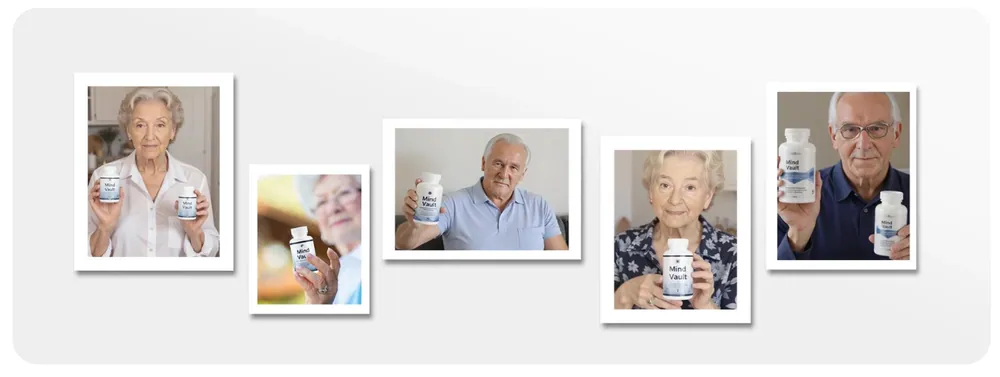
4. Mind Vault Pros
- Two evidence-anchored actives. Ginkgo Biloba (Cochrane-reviewed) and Mucuna Pruriens (an established dopamine-precursor botanical, rare in this category).
- Works circulation and drive, not just recall. Ginkgo’s blood-flow role plus Mucuna’s dopamine-pathway support cover more ground than a single-mechanism formula.
- B12 and Niacin are disclosed — both listed individually at 100% Daily Value.
- No stimulants — nothing here works on adrenaline or caffeine pathways.
- Clean manufacturing — GMP Certified, FDA-registered US facility.
- One of the lower full prices in the category — $38 a bottle on the 6-bottle package, with a 60-day guarantee and no subscription.
5. Mind Vault Cons
- Worth a word with your doctor if you already take Parkinson’s medication or a blood thinner.
- Ginkgo Biloba’s antiplatelet effect means caution on blood thinners or before surgery.
- This is a broad circulation-and-dopamine formula, not a single-symptom pill — if you specifically want a targeted word-recall product built around cholinergic ingredients, this isn’t built for that use case alone.
6. Worth It For Whom?
Worth it if you want circulation, dopamine-pathway and nerve-nutrition support in one stimulant-free capsule, aimed at the general "slower to load, not sharper to lose" feeling rather than one specific symptom — and you're comfortable trusting the label on blend amounts. The full review breaks down all three layers, and the pricing page shows why the 6-bottle package lands near $1.27 a day.
Not worth it if you need a published milligram dose for every ingredient (see Advanced Memory Formula instead), you're specifically chasing a cholinergic word-recall stack built around ingredients like Huperzine A and Bacopa, or you take Parkinson's medication, an MAOI or a blood thinner and won't check with your physician first.
Pricing Options for Mind Vault
What separates the good reviews from the flat ones is how far past week six each buyer went — that is where clarity and processing speed can be judged at all. Two bottles ends right at that line. Three bottles crosses it with free shipping. Six bottles at $38 each is what the reviewers describing steadier days were actually taking, at half the entry rate per bottle.
2 Bottles
60-Day Supply
- Secure Checkout
Full price — no discount applied*
See Today’s Discount →6 Bottles
180-Day Supply
- 3 Free Bonuses
- Secure Checkout
Full price — no discount applied*
See Today’s Discount →3 Bottles
90-Day Supply
- 3 Free Bonuses
- Secure Checkout
Full price — no discount applied*
See Today’s Discount →Every order is backed by a 60-day money-back guarantee. The official site is the only channel that guarantees an authentic bottle and honors that refund.
* The prices above are the full prices, before any discount. The official page runs its own offers on top of them, each tied to a limited number of units — and it is the only place the discount running today can be confirmed.
Frequently Asked Questions
What's the most common complaint about Mind Vault?
The undisclosed blend amount. Buyers who want to verify the exact Ginkgo or Mucuna dose against a published trial can't do that from this label — the 700 mg total is disclosed, the per-ingredient split isn't. It's a fair objection, and one that a fully-dosed alternative like Advanced Memory Formula answers directly.
Is the undisclosed blend a dealbreaker?
Not for the ingredients Mind Vault chose to headline. Both Ginkgo Biloba and Mucuna Pruriens are named individually, so you know exactly what's inside — you just can't check the milligrams against the research. For most buyers looking at overall memory and clarity support, that's a reasonable trade-off; for anyone trying to match a specific clinical dose, it isn't.
Who should skip Mind Vault?
Anyone on Parkinson's medication or an MAOI who won't clear the Mucuna Pruriens content with a doctor, anyone on a blood thinner who won't clear the Ginkgo content, and anyone whose memory lapses came on suddenly or with other neurological symptoms — that needs a medical visit, not a supplement.
← Back to Mind Vault Full Review
Research & Transparency
This content is based on publicly available ingredient research, the product’s supplement facts label, and manufacturer disclosures. We are not affiliated with the manufacturer. Marketing claims not supported by the product’s own label are not repeated here.
(a) Wieland et al. (2026) — Cochrane systematic review of Ginkgo biloba for cognitive impairment and dementia. Cochrane Database of Systematic Reviews (2026)
(b) Hammoud et al. (2025) — systematic review of Mucuna pruriens clinical trials in Parkinson disease. Parkinson's Disease (2025)
(c) Shabbir et al. (2026) — B vitamins, immune function and the ageing brain: a critical review. Proceedings of the Nutrition Society (2026)
(d) Moore et al. (2026) — systematic review of human trials on the cognitive effects of taurine. Foods (2026)
About the Author
Luciano Andreoti is a contributor at The Supplement Post, supporting the production of evidence-aware supplement reviews and buyer's guides across multiple health categories. His work spans ingredient analysis, formulation assessment and consumer-oriented summaries — what a label discloses, how the stated doses compare with the amounts used in published human research, and whether a formula's design matches what it claims to do. Every review is checked by The Supplement Post editorial team against the standards published in our editorial policy before it goes live.
Disclosure
All content is for informational purposes only and is not a substitute for professional medical advice. Each product reviewed is a dietary supplement, not a prescription drug. Results may vary. This page may contain affiliate links — if you purchase through them, we may earn a small commission at no additional cost to you. Read our Editorial Policy.