
Brain C-13 Ingredients — Full Formula Breakdown
What is actually inside Brain C-13, how each nootropic compound works in the brain, and why the formula targets multiple cognitive pathways instead of relying on a single mechanism.
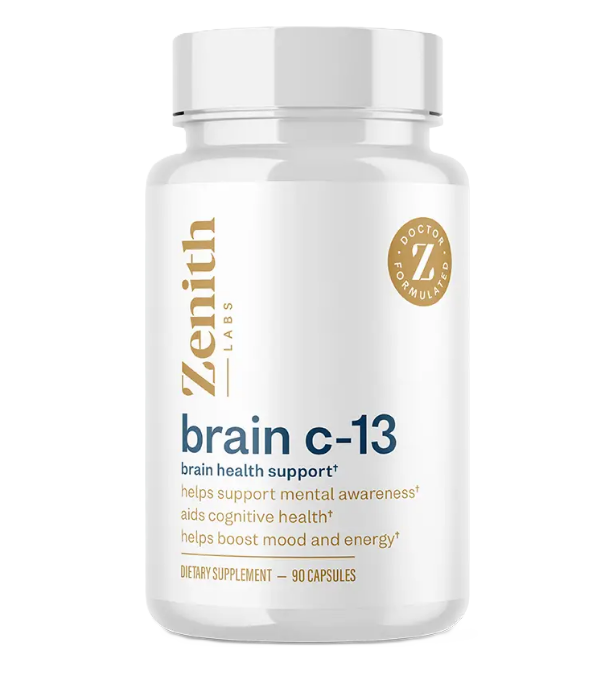
Full ingredient breakdown — what's inside and how each compound works in the brain.
In This Article
Edited by Michael Anderson, Editor-in-Chief
Updated
Quick Answer
Brain C-13 contains 13 active ingredients organized into four functional layers: acetylcholine support (Cognizin Citicoline, Huperzine A, DMAE), cerebral circulation enhancers (Ginkgo Biloba, Gotu Kola), neuroprotective antioxidants (Turmeric, Bacopa Monnieri), and stress-adaptation compounds (Rhodiola Rosea, Mucuna Pruriens). The formula is non-stimulant and targets multiple cognitive pathways simultaneously — neurotransmitter balance, blood flow, neuroprotection, and mitochondrial energy — rather than relying on caffeine or a single mechanism.
1. Formula Overview
Brain C-13 is built around a specific physiological target: multi-pathway cognitive support. The formula uses 13 active ingredients organized into four functional layers. The first layer supports acetylcholine — the neurotransmitter most directly tied to memory, learning, and recall — through three complementary compounds that increase production, support membrane integrity, and reduce breakdown. The second layer enhances cerebral blood flow, delivering more oxygen and glucose to brain tissue. The third layer provides neuroprotective antioxidants that help shield neurons from oxidative damage. The fourth layer supports stress resilience and dopamine-driven motivation.
This multi-pathway architecture matters because cognitive decline is rarely caused by a single factor. Neurotransmitter depletion, reduced cerebral circulation, chronic neuroinflammation, and mitochondrial dysfunction all contribute — and they compound each other over time. A formula that targets only one pathway leaves the others unaddressed. For a broader look at what this product is and who it targets, see the full Brain C-13 review.
2. Full Ingredient Table
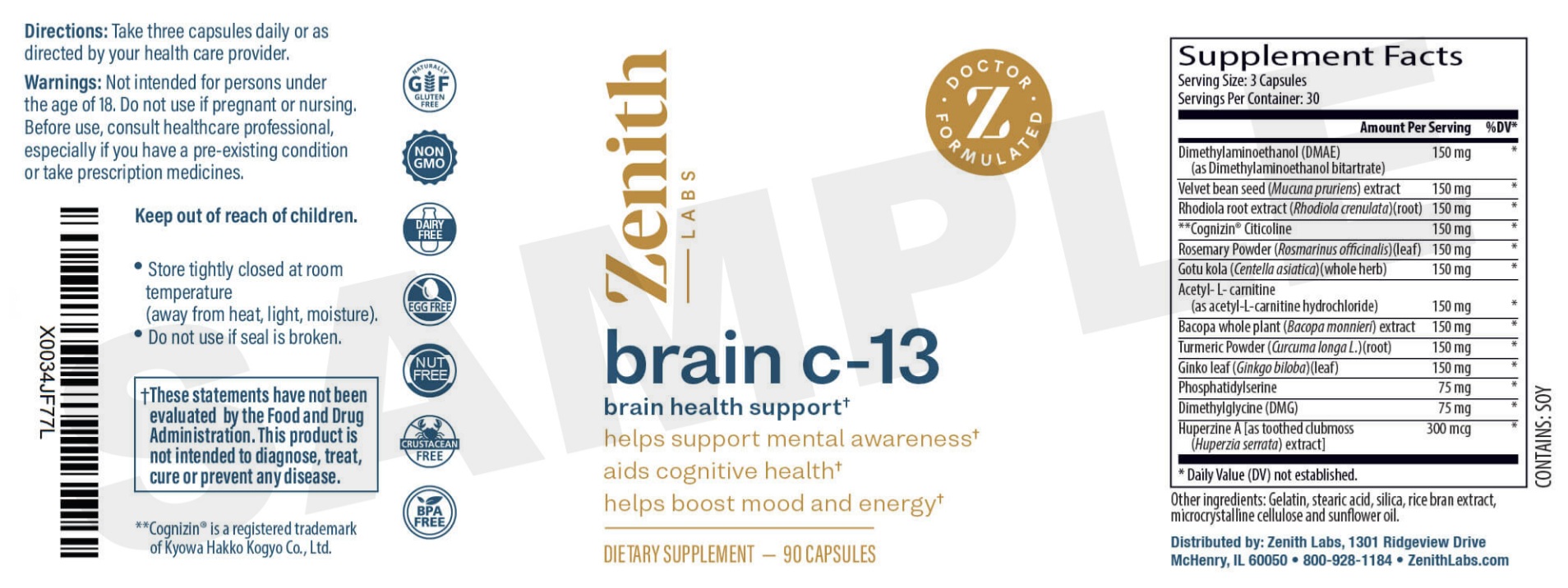
| Ingredient | Amount per Serving | Brain Mechanism |
|---|---|---|
| Cognizin Citicoline | 150 mg | Supplies both choline and cytidine (converts to uridine). Supports phospholipid synthesis in neuronal membranes and increases brain ATP production by up to 14%. Superior to choline bitartrate — provides dual benefit of neurotransmitter precursor + structural membrane support. |
| Huperzine A | 300 mcg | Acetylcholinesterase inhibitor — blocks the enzyme that breaks down acetylcholine, keeping more of it available at the synapse. This is the same general mechanism used by prescription cholinesterase inhibitors like donepezil (Aricept), though at a much milder, supplemental level. |
| Bacopa Monnieri Extract | 150 mg | Bacosides support synaptic communication and memory consolidation. Crosses the blood-brain barrier and modulates serotonin, dopamine, and acetylcholine activity. Effects are cumulative — research shows 8 to 12 weeks of consistent use before measurable memory improvements. Best absorbed with food (fat-soluble). |
| Ginkgo Biloba (Leaf) | 150 mg | Increases cerebral microcirculation by promoting vasodilation and reducing blood viscosity. Enhances oxygen and glucose delivery to brain tissue — particularly relevant for age-related declines in cerebral blood flow that contribute to brain fog and processing speed issues. |
| Rhodiola Rosea Extract | 150 mg | Adaptogen that modulates cortisol and supports mental performance under stress. Faster onset than most nootropic herbs — effects on mental fatigue can appear within days to weeks. Standardized for rosavins (3%) and salidrosides (1%). Best taken in the morning — may interfere with sleep if taken late. |
| DMAE (Dimethylaminoethanol) | 150 mg | Precursor to acetylcholine synthesis. Crosses the blood-brain barrier and supports the production of the neurotransmitter most directly tied to memory encoding, learning, and sustained attention. |
| Acetyl-L-Carnitine | 150 mg | The acetylated form crosses the blood-brain barrier more readily than standard L-Carnitine. Supports mitochondrial energy production in neurons — brain cells consume roughly 20% of the body's energy despite being 2% of body weight. Also donates acetyl groups for acetylcholine synthesis. |
| Phosphatidylserine | 75 mg | A key phospholipid in neuronal cell membranes that supports signal transduction and neurotransmitter release. One of the few compounds with an FDA-qualified health claim for cognitive function — "consumption of phosphatidylserine may reduce the risk of cognitive dysfunction in the elderly." |
| Turmeric Powder (Root) | 150 mg | Curcuminoids cross the blood-brain barrier and support neuroinflammation control. Chronic low-grade neuroinflammation is a well-documented contributor to age-related cognitive decline — curcumin helps modulate the inflammatory cascade at the cellular level. |
| Gotu Kola (Centella asiatica) | 150 mg | Supports cerebral circulation and connective tissue integrity within brain vasculature. Triterpenoid compounds (asiaticoside, madecassoside) enhance microvascular blood flow and support the structural integrity of blood vessels feeding brain tissue. |
| Mucuna Pruriens Extract | 150 mg | Natural source of L-DOPA, the direct precursor to dopamine. Supports motivation, reward signaling, and cognitive drive — particularly relevant for people who feel mentally "flat" or unmotivated rather than simply forgetful. L-DOPA crosses the blood-brain barrier and converts to dopamine in the substantia nigra. |
Additional supporting ingredients: Rosemary Powder (150 mg — antioxidant support), Dimethylglycine/DMG (75 mg — cellular energy metabolism and oxygen utilization).
Inactive ingredients: Gelatin capsule, stearic acid, silica, rice bran extract, microcrystalline cellulose, sunflower oil.
3. How They Work Together
The formula is designed around a concept called multi-pathway cognitive support, and understanding that concept is key to understanding why these specific ingredients were chosen.
Pathway 1 — Acetylcholine Optimization. Three ingredients work together to support the neurotransmitter most critical for memory and learning. DMAE provides raw material for acetylcholine synthesis. Cognizin Citicoline delivers choline while simultaneously supporting the neuronal membranes where acetylcholine receptors sit — a dual mechanism that choline bitartrate cannot match. Then Huperzine A acts as a gatekeeper: by inhibiting the enzyme that breaks acetylcholine down, it extends the working life of every molecule your brain produces. This three-angle approach — build more, support the infrastructure, break down less — is significantly more effective than any single cholinergic ingredient alone.
Pathway 2 — Cerebral Blood Flow. Ginkgo Biloba and Gotu Kola work at different levels of the brain's vascular system. Ginkgo promotes vasodilation in larger cerebral arteries and reduces blood viscosity, improving the overall volume of blood reaching the brain. Gotu Kola supports microvascular integrity — the capillary-level blood delivery that determines how much oxygen and glucose actually reaches individual neurons. Together, they address a fundamental bottleneck: as cerebral blood flow naturally declines with age, even well-functioning neurotransmitter systems cannot perform optimally without adequate fuel delivery.
Pathway 3 — Neuroprotection. Turmeric and Bacopa Monnieri provide antioxidant and anti-inflammatory support at the neuronal level. Chronic oxidative stress damages neuronal membranes and disrupts synaptic signaling over time — a process that accelerates after age 40. Phosphatidylserine reinforces this layer by directly supporting membrane structure, keeping the physical infrastructure of neurons intact. This is the "defense" layer of the formula — it helps protect the gains made by the other pathways.
Pathway 4 — Energy and Stress Resilience. Acetyl-L-Carnitine supports mitochondrial energy production in brain cells, while Rhodiola Rosea modulates the cortisol response that impairs cognition under chronic stress. Mucuna Pruriens supports dopamine — the neurotransmitter behind motivation and cognitive drive. This layer addresses the "why do I feel mentally exhausted" problem that often accompanies age-related cognitive changes.
The result is a layered approach: acetylcholine compounds drive memory and recall, circulation enhancers ensure the brain has fuel, neuroprotective antioxidants defend against long-term damage, and adaptogens support the energy and resilience to use it all. For a detailed look at what users can realistically expect from this combination, see our Does Brain C-13 Really Work? breakdown.
4. What Makes This Formula Different
The nootropic supplement market is crowded, and most products fall into one of two traps: they either rely on caffeine and stimulants for a temporary "boost" that wears off (and often crashes), or they pack a long ingredient list at doses too low to do anything meaningful — a practice known as "pixie dusting."
Brain C-13 avoids both traps. The formula is entirely stimulant-free — no caffeine, no synthetic stimulants, no energy crash cycle. This matters for two reasons: first, stimulant-based nootropics do not actually improve cognition; they temporarily mask fatigue. Second, many adults exploring cognitive support are specifically trying to reduce caffeine dependency, not add another source. Brain C-13 is designed for the person who wants sustained, building improvement — not a jolt followed by a crash.
The other differentiator is the use of Cognizin-branded citicoline rather than generic choline sources. Cognizin is a patented, clinically studied form of citicoline that has demonstrated increases in brain ATP (cellular energy) and improvements in attention and memory in human trials. Generic choline bitartrate does not provide the same dual benefit of neurotransmitter precursor plus membrane support. This is a meaningful formulation choice that separates Brain C-13 from competitors using cheaper choline sources.
The inclusion of Huperzine A as an acetylcholinesterase inhibitor also deserves attention. Most nootropic supplements focus on building acetylcholine — but few address the fact that the enzyme breaking it down becomes more active with age. By including Huperzine A alongside the precursors (DMAE, Citicoline), Brain C-13 addresses both sides of the acetylcholine equation. For a deeper look at how these ingredients translate into practical cognitive benefits, see our Brain C-13 Benefits page.
Pricing Options for Brain C-13
Brain C-13 is available in multiple package options designed to support different usage timelines. Many users choose multi-bottle packages because consistent daily use typically delivers the best results. Longer supply options also reduce the cost per unit.
1 Bottle
30-Day Supply
- 180-day Money-Back Guarantee
- Secure Checkout
6 Bottles
180-Day Supply
- 180-day Money-Back Guarantee
- Free USA Shipping
- Secure Checkout
Save $156
Shop Now3 Bottles
90-Day Supply
- 180-day Money-Back Guarantee
- Secure Checkout
Save $30
Shop NowEvery order is backed by a 180-day money-back guarantee. Only available through the official website.
Frequently Asked Questions
Are the ingredients in Brain C-13 backed by research?
Yes. The core ingredients — Cognizin Citicoline, Huperzine A, Bacopa Monnieri, Phosphatidylserine, and Rhodiola Rosea — are among the most studied compounds in cognitive and nootropic research. Human trials have examined their effects on memory, attention, processing speed, and neuroprotection. Phosphatidylserine is one of the few supplements with an FDA-qualified health claim for cognitive function. The botanical ingredients (Ginkgo, Turmeric, Gotu Kola) have both traditional use histories and growing modern research supporting their roles in cerebral circulation and neuroprotection.
Does Brain C-13 contain any stimulants or allergens?
The formula contains no caffeine, no synthetic stimulants, and no common allergens like gluten, dairy, or soy based on the published label. The capsules are gelatin-based, so they are not suitable for strict vegetarians or vegans. If you have specific sensitivities, check the most current label on the official website, as formulations can be updated over time.
How long does it take for Brain C-13 ingredients to work?
Different ingredients in the formula work on different timelines. Rhodiola Rosea can produce noticeable effects on mental fatigue within days to weeks. Citicoline and Huperzine A typically show effects on focus and attention within 2 to 4 weeks. Bacopa Monnieri requires 8 to 12 weeks of consistent use for measurable memory improvements — this is well-documented in research. The formula is designed for daily, long-term use rather than immediate effects.
Should I consult a doctor before taking Brain C-13?
If you are generally healthy and not on medication, most adults can start without issue. However, Huperzine A acts as a mild acetylcholinesterase inhibitor and may interact with prescription cholinesterase inhibitors (donepezil, rivastigmine). Ginkgo Biloba may interact with blood thinners. Mucuna Pruriens contains L-DOPA and may interact with Parkinson's medications. If you take any of these medication categories, consult your physician before starting Brain C-13.
Research & Transparency
This content is based on publicly available ingredient research, manufacturer disclosures, and product labeling. We are not affiliated with the manufacturer.
(a) Citicoline: pharmacological and clinical review, 2023 update. PMC3933742
(b) Meta-analysis of randomized controlled trials on cognitive effects of Bacopa monnieri extract. PMC5075615
(c) Huperzine A for Alzheimer's disease: a systematic review and meta-analysis. PMC4137276
(d) Phosphatidylserine and the human brain. PubMed 25933483
About the Author
Emily Carter is a contributor at The Supplement Post covering brain and neuro health, blood sugar control, weight loss, and gut-focused formulas. She specializes in evidence-aware summaries of nootropic ingredients, metabolic supplements, and consumer-friendly explanations of how supplementation fits into broader cognitive and metabolic health strategies. Emily Carter is not a medical doctor — she analyzes publicly available research to provide evidence-aware summaries for adults exploring cognitive support, metabolic balance, and gut wellness options.
Disclosure
All content is for informational purposes only and is not a substitute for professional medical advice. Each product reviewed is a dietary supplement, not a prescription drug. Results may vary based on individual health status, consistency of use, and lifestyle. This page may contain affiliate links — if you purchase through them, we may earn a small commission at no additional cost to you. Read our Editorial Policy.