
Brain C-13 Benefits — What This Nootropic Delivers
The key benefits this formula is designed to deliver — with realistic timelines and an honest look at limits.
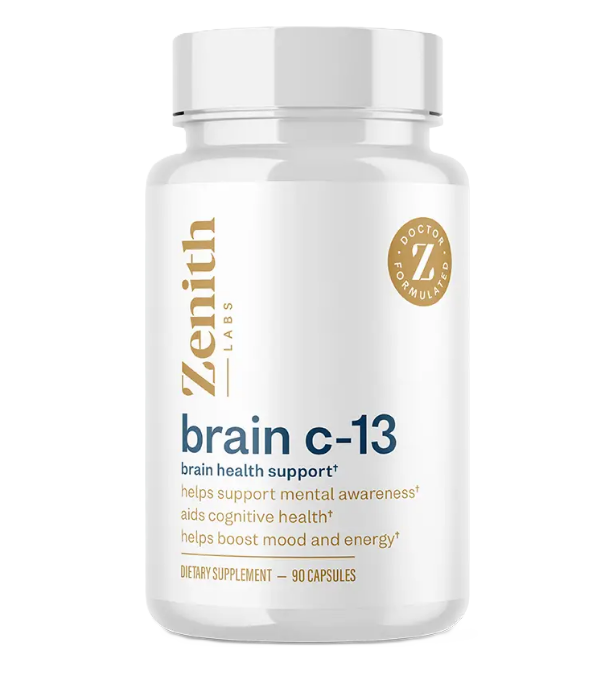
How the formula's multi-pathway design translates into real cognitive benefits.
In This Article
Edited by Michael Anderson, Editor-in-Chief
Updated
Quick Answer
Brain C-13 delivers five core cognitive benefits — all rooted in how the formula's multi-pathway design supports neurotransmitter production, cerebral blood flow, and neuroprotection simultaneously. The benefits are cumulative, not instant. Expect the first noticeable changes around weeks 2-4, with the full benefit window at weeks 6-8 of consistent daily use.
1. The 5 Key Benefits of Brain C-13
Benefit 1 — Improved Memory and Recall
This is the benefit most buyers are looking for — and it has the strongest ingredient backing in the formula. Cognizin (citicoline) supplies the raw material for acetylcholine, the neurotransmitter that drives memory encoding and retrieval. Phosphatidylserine supports the structural integrity of neuronal membranes, which directly affects how efficiently brain cells communicate during recall. Huperzine A adds a third layer by inhibiting acetylcholinesterase — the enzyme that breaks down acetylcholine after use — so each molecule stays active longer. Three compounds targeting the same neurotransmitter system from different angles is a deliberate design choice. For a full dose-by-dose breakdown, see our Brain C-13 ingredient scorecard.
Benefit 2 — Sharper Focus Without Stimulants
If you rely on caffeine to concentrate and then crash by 2 PM, this benefit matters. Rhodiola rosea modulates cortisol — the stress hormone that fragments attention when it stays elevated — producing a calmer, more sustained alertness within days. DMAE supports membrane fluidity in cholinergic neurons, which influences how quickly signals transmit across networks involved in attention and processing speed. Neither ingredient is a stimulant. There is no spike, no jitter, no crash. The focus benefit builds gradually as these compounds reach steady-state levels, typically around weeks 3-4.
Benefit 3 — Reduced Mental Fatigue
Brain fog is real. It is not laziness or “just stress” — it is what happens when your brain’s energy supply cannot keep up with demand. Bacopa monnieri has the most consistent clinical evidence in the formula for cognitive endurance, though it requires 8-12 weeks of daily intake before measurable memory effects appear. Acetyl-L-Carnitine shuttles fatty acids into mitochondria for ATP production — the cellular energy currency your neurons burn through faster than any other cell type in your body. Together, these two compounds address mental fatigue from both the metabolic side (more energy production) and the neuroprotective side (less oxidative damage to energy-producing machinery).
Benefit 4 — Neuroprotective Support
This is the benefit most buyers overlook — and arguably the most important one long-term. Turmeric (curcumin) crosses the blood-brain barrier and provides anti-inflammatory protection to neural tissue. Ginkgo biloba improves microcirculation to the brain, ensuring neurons receive adequate oxygen and nutrients. Bacopa contributes additional antioxidant defense, scavenging free radicals that damage neuronal membranes over time. These are not dramatic, feel-it-tomorrow compounds. Neuroprotection is an investment — the kind that pays off over months and years of consistent use, not days.
Benefit 5 — Long-Term Cognitive Resilience
Cognitive resilience is the brain’s ability to maintain performance under stress, fatigue, and aging. Brain C-13 approaches this through dopamine support (Mucuna Pruriens provides L-DOPA, the direct precursor to dopamine) and stress adaptation (Rhodiola modulates the HPA axis). When cortisol stays chronically elevated, it literally shrinks the hippocampus — the brain region responsible for memory consolidation. By supporting healthy stress response alongside neurotransmitter balance, the formula targets the conditions that erode cognitive function over time, not just the symptoms. For the science behind each pathway, see our Brain C-13 mechanism and results timeline.
2. How Benefits Build Over Time
These five benefits do not arrive all at once. Each compound in the formula operates on its own pharmacological timeline:
| Timeline | What to Expect | Key Compounds Active |
|---|---|---|
| Week 1-2 | Rhodiola's adaptogenic effects begin first — subtle improvements in mental energy and stress tolerance. Some users notice slightly clearer mornings. These are early signs, not the full picture. | Rhodiola Rosea, DMAE |
| Week 3-4 | Citicoline reaches meaningful brain levels. Focus and attention span improve noticeably. Acetylcholine-driven benefits (clarity, verbal recall) start becoming apparent. This is where most users form their first real opinion of the formula. | Cognizin (Citicoline), Huperzine A, Phosphatidylserine |
| Week 6-8 | Bacopa's memory consolidation effects reach their window. Recall improves measurably. Mental fatigue decreases. All five benefit areas should be noticeable if the formula works for your biology. | Bacopa Monnieri, Acetyl-L-Carnitine, Ginkgo Biloba |
| Month 3+ | Neuroprotective compounds accumulate. Turmeric's anti-inflammatory effects compound with sustained use. Results plateau at their peak — the goal shifts from building to maintaining cognitive function. | Turmeric, Bacopa (antioxidant), Ginkgo (circulation) |
Important context: Bacopa monnieri specifically requires 8-12 weeks before memory effects become measurable in clinical research. If you quit at week 4, you are stopping before the most evidence-backed ingredient has had time to work. This is the most common mistake with nootropic supplements.
3. Who Benefits Most
Brain C-13’s multi-pathway design means different users notice different benefits first, depending on their baseline:
- Adults 45+ experiencing age-related memory lapses — the acetylcholine support (Cognizin + Huperzine A + Phosphatidylserine) addresses the neurotransmitter decline that drives most age-related recall issues.
- Professionals dealing with brain fog and mental fatigue — the non-stimulant energy compounds (Rhodiola + Acetyl-L-Carnitine) provide sustained cognitive endurance without caffeine dependency or afternoon crashes.
- Anyone with a family history of cognitive decline — the neuroprotective combination (Turmeric + Bacopa + Ginkgo) supports long-term brain cell health. This is not prevention — no supplement prevents neurodegenerative disease — but it supports the conditions under which your brain ages more gracefully.
On pricing, the multi-bottle packages bring the per-day cost into a competitive range. The 6-bottle deal at $33/bottle works out to roughly $1.10/day — below what most comparable multi-ingredient nootropic formulas charge. For full pricing details, see our Brain C-13 pricing breakdown.
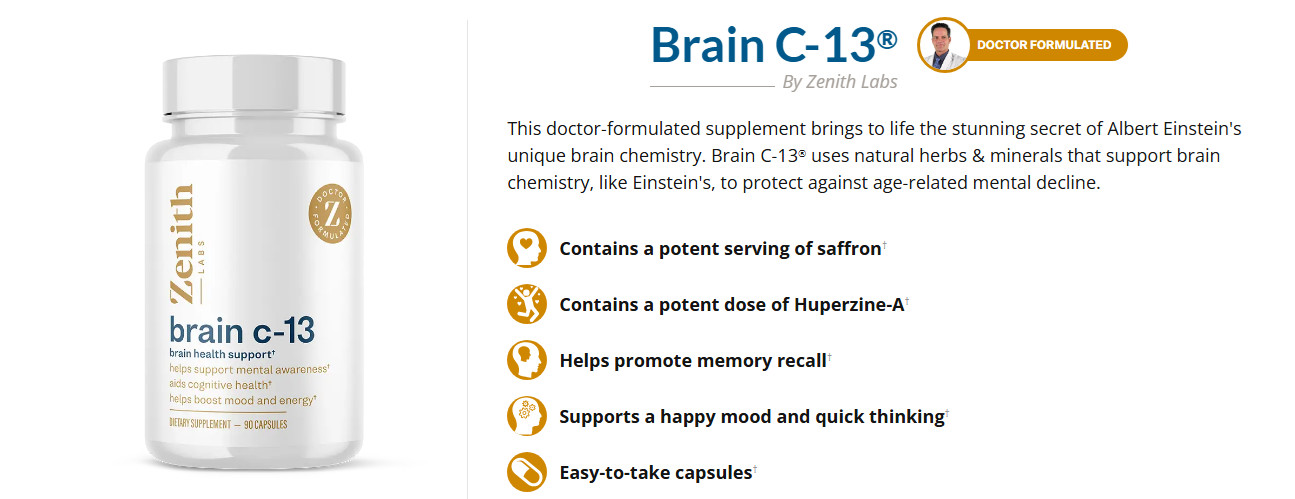
Pricing Options for Brain C-13
Brain C-13 is available in multiple package options designed to support different usage timelines. Many users choose multi-bottle packages because consistent daily use typically delivers the best results. Longer supply options also reduce the cost per unit.
1 Bottle
30-Day Supply
- 180-day Money-Back Guarantee
- Secure Checkout
6 Bottles
180-Day Supply
- 180-day Money-Back Guarantee
- Free USA Shipping
- Secure Checkout
Save $156
Shop Now3 Bottles
90-Day Supply
- 180-day Money-Back Guarantee
- Secure Checkout
Save $30
Shop NowEvery order is backed by a 180-day money-back guarantee. Only available through the official website.
Frequently Asked Questions
Which Brain C-13 benefit do most users notice first?
Improved mental energy and reduced brain fog are typically the first benefits users notice, usually within the first 2-3 weeks — driven primarily by Rhodiola's fast-acting adaptogenic effects. Focus and memory improvements tend to follow around weeks 3-4 as citicoline reaches effective brain levels, with full memory consolidation benefits building over the 6-8 week window as Bacopa accumulates.
Does Brain C-13 help with brain fog specifically?
Yes — brain fog is one of the primary symptoms the formula targets. The combination of Rhodiola (cortisol modulation), Acetyl-L-Carnitine (mitochondrial energy), and Ginkgo biloba (cerebral blood flow) addresses three of the most common biological drivers of brain fog. Most users report noticeable improvement in mental clarity within the first 3-4 weeks of consistent daily use.
How long should I take Brain C-13 before judging results?
Give the formula a minimum of 8 weeks of consistent daily use before forming a final opinion. Bacopa monnieri — one of the most evidence-backed ingredients — requires 8-12 weeks to produce measurable memory effects in clinical studies. Judging the formula at week 2 or 3 means you are evaluating before the strongest ingredients have had time to work.
Should I consult a doctor before taking Brain C-13?
If you take prescription medications — particularly blood thinners, antidepressants, or cholinesterase inhibitors (medications for Alzheimer's or dementia) — speak with your doctor before starting Brain C-13. Huperzine A and Ginkgo biloba can interact with these medication classes. This is especially important for adults over 65 who may be on multiple medications.
Research & Transparency
This content is based on publicly available ingredient research, manufacturer disclosures, and product labeling. We are not affiliated with the manufacturer.
(a) Citicoline improves memory performance in elderly subjects. PubMed 8709678
(b) Meta-analysis of randomized controlled trials on cognitive effects of Bacopa monnieri extract. PMC5075615
(c) Rhodiola rosea in stress induced fatigue — a double blind cross-over study. PubMed 22228617
(d) Phosphatidylserine and the human brain — systematic review. PubMed 25933483
About the Author
Emily Carter is a contributor at The Supplement Post covering brain and neuro health, blood sugar control, weight loss, and gut-focused formulas. She specializes in evidence-aware summaries of nootropic ingredients, metabolic supplements, and consumer-friendly explanations of how supplementation fits into broader cognitive and metabolic health strategies. Emily Carter is not a medical doctor — she analyzes publicly available research to provide evidence-aware summaries for adults exploring cognitive support, metabolic balance, and gut wellness options.
Disclosure
All content is for informational purposes only and is not a substitute for professional medical advice. Each product reviewed is a dietary supplement, not a prescription drug. Results may vary based on individual health status, consistency of use, and lifestyle. This page may contain affiliate links — if you purchase through them, we may earn a small commission at no additional cost to you. Read our Editorial Policy.