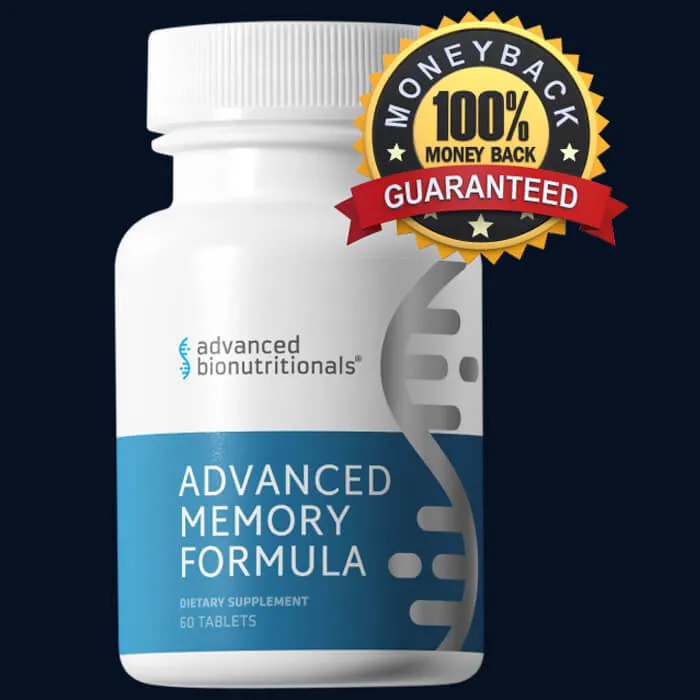
Does Advanced Memory Formula work for real buyers? For the ones who give it the full three months, yes. What they describe is friction disappearing: words arriving on time, conversations easier to follow. Alpha-GPC and Ginkgo move first, around week 2, and the consolidation layer lands between weeks 6 and 12. The disappointed reviews almost all stop before that.
Advanced Memory Formula: What Buyers Say After 3 Months, Soy Note Included
Real buyer patterns, the recurring complaints, and the honest scorecard — before you spend $249.
In This Article
Buyer Verdict
The pattern across Advanced Memory Formula buyers is unusually consistent: the people who are happy gave it months, and the people who aren't gave it weeks. The praise is never dramatic — it's "the words come back faster," "I stopped losing the thread," "I don't write everything down anymore." The complaints cluster around price and patience. And the objection that comes up most, from the more careful shoppers, is the one worth respecting: are the herbal doses big enough? Here's the honest read on all three.

1. The Pattern Across Verified Buyers
Distilled from what buyers of this formula and its category consistently focus on — the praise, the complaint and the objection that keep recurring.
| What buyers focus on | Recurring pattern | What it tells you |
|---|---|---|
| The praise that repeats | Not "photographic memory" — retrieval speed. Names arriving on time, less mid-sentence blanking, holding the thread of a conversation, needing the notepad less. | That is precisely what the acetylcholine and blood-flow layers are supposed to do, and it lands early. It's a good sign the formula is doing what it says rather than what a sales page wishes it did. |
| The complaint that repeats | "I didn't feel anything." Almost always from a one-bottle test. The formula's own timeline puts the memory ingredients at weeks 8-12. | One bottle is 30 days — it tests the fast layer only. If you're going to try it, try it for the window it was built for; the 90-day guarantee exists for exactly that reason. |
| The objection that repeats | "Ginkgo at 80 mg and bacopa at 120 mg are below the trial doses." True — the single-ingredient studies used more. | It's the trade every broad formula makes. What matters is which ingredients got the full dose: NeuroFactor (100 mg) and phosphatidylserine (150 mg) — the two the formula actually leans on — are at their studied amounts. |
| The price reaction | $1.38-1.66 a day. Nobody calls it cheap. | It isn't. It's priced like a physician-formulated, fully-disclosed formula with a patented hero ingredient — which is what it is. If price is the deciding factor, this isn't your product. |
Skip Advanced Memory Formula if…
…you have a soy allergy. Three of the eleven ingredients are soy-derived and there is no version of this formula without them. And if you're on a blood thinner and unwilling to run the ginkgo past your doctor, buy something without ginkgo instead — that's not a formality, it's a real interaction.
2. Scorecard Across 6 Criteria
| Criterion | Score | Why |
|---|---|---|
| Formula quality | 4.8 / 5 | Eleven studied nutrients across five distinct pathways, every dose printed. The transparency alone puts it ahead of most of the category. |
| Evidence | 4.6 / 5 | NeuroFactor at its human-trial dose; phosphatidylserine, alpha-GPC, bacopa and ALC all carry real human data in cognitive aging. Ginkgo and bacopa sit below the single-ingredient trial doses. |
| Manufacturing | 4.8 / 5 | Made in the USA by Formulation Technology, Inc.; formulated by a named, board-certified physician; label indexed in the NIH database. |
| Price & value | 4.3 / 5 | $1.38-1.66 a day. Fair for what it is, but genuinely a premium price — the 6-bottle bundle is where it starts to make sense. |
| Guarantee | 4.8 / 5 | 90 days, empty bottles accepted, shipping and handling refunded. It covers the formula's full timeline. |
| Format compliance | 4.6 / 5 | Two tablets a day with food. No stimulants, no taste, no ritual — easy to keep up for three months, which is what it asks of you. |
| Overall | 4.6 / 5 | A transparent, physician-formulated, multi-pathway memory formula built around the one ingredient shown to raise BDNF in humans — priced like the premium product it is. |
3. Real Buyer Feedback Themes
Four themes come up again and again in feedback on this formula and the ones like it.
- "The words come back." The most repeated observation, and the earliest. Retrieval speed, not storage — which fits the acetylcholine layer arriving first.
- "Month three was different." The buyers who report a genuine shift in memory (rather than clarity) are almost uniformly the ones who got past week eight.
- "I like that I can read the label." Transparency comes up spontaneously in this category far more than you'd expect — because so few competitors offer it.
- "It's expensive." Consistent, and fair. It is a premium formula at a premium price; the 6-bottle bundle is the only version of it that gets close to reasonable.
4. Advanced Memory Formula Pros
- A fully open label. Eleven ingredients, eleven doses, no blend to hide behind — you can verify the whole formula against the research yourself.
- The hero ingredient is at its trial dose. NeuroFactor 100 mg is exactly what the human BDNF study used, not a token sprinkle.
- Phosphatidylserine at 150 mg. Within the studied range, and the strongest single ingredient for age-related memory complaints.
- Multi-pathway by design. Signal (alpha-GPC), cell (PS, ALC), blood flow (ginkgo), wiring (NeuroFactor, bacopa), protection (luteolin, blueberry).
- A named physician behind it. Dr. Frank Shallenberger, MD — board certified, 44 years in practice.
- 90 days, empty bottles accepted, shipping refunded. One of the more generous guarantees in the category, and it covers the formula’s full timeline.
- Stimulant-free. The coffee fruit extract is decaffeinated — no jitters, no sleep disruption.
5. Advanced Memory Formula Cons
- Contains soy. The phosphatidylserine, the GPC and the lecithin are all soy-derived — a hard stop if you react to it.
- Ginkgo needs your doctor’s nod if you take blood thinners. It can add to the effect of anticoagulants.
- Built for consolidation, not a same-day lift. If you want an immediate focus hit, a stimulant-based nootropic is the closer match.
6. Worth It For Whom?
Worth it if you want the studied compounds of cognitive aging in one tablet, at doses you can actually see, and you're prepared to give it the three months its own timeline calls for. The full review walks through every dose, and the pricing page shows why the 6-bottle bundle is the only one that lands under $1.40 a day.
Not worth it if you're allergic to soy, you want a maximal single-ingredient dose, or you're going to judge it in week two. None of those are failures of the formula — they're mismatches with it.
Pricing Options for Advanced Memory Formula
What buyers notice first is not memory but clarity — words arriving faster — and that is a first-fortnight effect. The recall accounts come later, from weeks 6 to 12, which is where the consolidation ingredients work. One bottle covers none of that. Three bottles reaches it. Six bottles at $41 each is what the manufacturer's own three-month guidance actually implies.
1 Bottle
30-Day Supply
- Secure Checkout
6 Bottles
180-Day Supply
- Secure Checkout
3 Bottles
90-Day Supply
- Secure Checkout
Every order is backed by a 90-day money-back guarantee. The official site is the only channel that guarantees an authentic bottle and honors that refund.
Frequently Asked Questions
What's the most common complaint about Advanced Memory Formula?
Price and patience. At roughly $1.40-1.66 a day it is not a budget nootropic, and the people who report nothing are usually the ones who judged it in week two. The formula's own timeline says the memory ingredients land around weeks 8-12.
What do satisfied buyers actually notice?
The recurring theme is not 'photographic memory' — it's friction disappearing. Words arriving on time, walking into a room and remembering why, following a conversation without losing the thread. That maps to what the acetylcholine and blood-flow ingredients are supposed to do.
Who should skip it?
Anyone with a soy allergy (the phosphatidylserine, GPC and lecithin are all soy-derived), anyone on blood thinners who hasn't cleared ginkgo with their doctor, and anyone hoping a supplement will reverse a diagnosed condition. This is wellness support, not treatment.
Research & Transparency
This content is based on publicly available ingredient research, the product’s supplement facts label, and manufacturer disclosures. We are not affiliated with the manufacturer. Marketing claims not supported by the product’s own label are not repeated here.
(a) The effect of plant active substances on cognitive function in healthy older adults — systematic review. Frontiers in Pharmacology 2025
(b) Impact of citicoline and phosphatidylserine supplementation on cognitive performance — randomized trial. Human Psychopharmacology 2026
(c) Memory — the reference we use for what normal age-related change looks like and when it warrants a doctor. MedlinePlus / NIH
(d) What we know about healthy aging — the agency read on what actually holds up cognition over time. NIH / NIA
About the Author
Luciano Cesar is a contributor at The Supplement Post, supporting the production of evidence-aware supplement reviews and buyer's guides across multiple health categories. His work spans ingredient analysis, formulation assessment and consumer-oriented summaries — what a label discloses, how the stated doses compare with the amounts used in published human research, and whether a formula's design matches what it claims to do. Every review is checked by The Supplement Post editorial team against the standards published in our editorial policy before it goes live.
Disclosure
All content is for informational purposes only and is not a substitute for professional medical advice. Each product reviewed is a dietary supplement, not a prescription drug. Results may vary. This page may contain affiliate links — if you purchase through them, we may earn a small commission at no additional cost to you. Read our Editorial Policy.