
Ingredient Check
Magnesium Citrate vs Glycinate for Sleep: One of Them Wakes You Up at 3 a.m.
They are the same mineral wearing two different carriers, and the carrier decides everything. One of them was designed to move your bowels, which is a strange thing to swallow an hour before bed.

Same mineral, two very different jobs
Magnesium does not travel alone. It is a mineral, so it has to be bound to something to be swallowed, and that partner molecule is the entire difference between the two bottles on the shelf. The label says magnesium on both. What it does at midnight is decided by the other half of the name.
Citrate is magnesium held by citric acid. That pairing is genuinely well absorbed, and it also pulls water into the intestine. This is not a defect. It is the reason citrate is on the shelf at all, and the reason it works so reliably for people who need things to move.
Glycinate — you will also see it written bisglycinate, which means two glycine molecules rather than one — is magnesium held by an amino acid. Glycine has no laxative pull. It also happens to be involved in the body's own quieting signals, which is why this form gets recommended for the evening while the other gets recommended for the morning.
The key point Nobody is choosing between a good magnesium and a bad one. They are choosing between a magnesium built to move the bowel and a magnesium built to be quiet — and then swallowing it at bedtime. Luciano Cesar, Content Contributor
The two forms side by side
| What people wonder | Magnesium citrate | Magnesium glycinate |
|---|---|---|
| What is it attached to? | Citric acid | Glycine, an amino acid |
| Does it get absorbed? | Yes, well | Yes, well |
| What does it do to the gut? | Draws water in — loosens things | Passes through quietly |
| Will it wake me at 3 a.m.? | It can, and the more you take the likelier that gets | Not for this reason |
| What is it really for? | Daytime regularity; topping up a low intake | Evenings, and anyone with a touchy stomach |
| Any sleep trial on this exact form? | Not one of its own | Yes — a 2025 placebo-controlled trial |
That last row is the one worth pausing on, and it is narrower than it looks. It does not mean citrate has been tested and failed. It means the form that got its own placebo-controlled sleep trial happens to be the other one.
The bathroom problem, plainly
Here is the part that decides it for most people. Citric acid holds water in the gut. Water in the gut means the bowel fills and eventually asks to be emptied. Take enough of it before bed and the request arrives in the small hours.
This is dose-dependent, which is the awkward bit. A small amount may do nothing you notice. A larger one — the sort you would take to actually reach a sleep-relevant dose — is closer to the amount that gets things moving. There is a real chance of landing on the wrong side of that line while you are asleep.
How well established is this? Well enough that it shapes official guidance. In a 2023 perspective in Advances in Nutrition, Costello, Rosanoff and colleagues argued that the tolerable upper limit for supplemental magnesium was set primarily around this loosening effect rather than around any serious harm. The ceiling on supplemental magnesium exists, in large part, because of exactly what citrate is good at.
Which reframes the choice usefully. If you are already regular and you are buying magnesium for your sleep, citrate spends your dose on an effect you were not shopping for.
This is also the reason a lot of people end up looking at topical sprays, hoping to skip the gut entirely. That detour has a problem of its own, which we measured in does magnesium spray for sleep get in at all. The shorter answer is that switching form beats switching route.
What the sleep evidence supports, honestly
Two things are true at once here, and skipping either one gives a false picture.
The first is that magnesium as a category has real but measured support. Mah and Pitre pooled the randomised trials in older adults with insomnia in BMC Complementary Medicine and Therapies in 2021 and found the evidence suggestive but low in certainty — a signal, from small studies. Chan and Lo, reviewing supplements for sleep quality more broadly in the Postgraduate Medical Journal the following year, landed in a similar place. Nobody serious is claiming magnesium is a sedative.
The second is that the best single piece of evidence points at one specific form. Schuster and colleagues, in Nature and Science of Sleep in 2025, ran a double-blind placebo-controlled trial in 155 adults reporting poor sleep, using 250 mg of elemental magnesium a day as bisglycinate. Over four weeks the supplement group improved more than placebo on the Insomnia Severity Index, the standard questionnaire for scoring how bad someone's sleep is. The improvement was modest, and it was largest in people whose diets were low in magnesium to begin with.
So the honest summary is small and specific. The effect is real, it is measured rather than dramatic, it takes about four weeks, and the form it was demonstrated in is the glycinate one. The mechanism review by Kumar and colleagues in 2024 fills in why the mineral belongs to the nervous system's braking machinery rather than to sedation, which is also why it fits the staying-asleep half of the problem rather than the falling-asleep half.
If that split is new to you, it is the thing that makes the rest of the aisle make sense — we unpacked it in our guide to the supplements that help you stay asleep all night.
Where citrate still earns its place
None of this makes citrate a bad buy. It makes it a daytime buy.
If your reason for taking magnesium is that your diet is short on it, citrate is an inexpensive and well-absorbed way to fix that, and the bowel effect is either neutral or welcome. If you deal with occasional constipation, it is doing two jobs at once. Plenty of people keep citrate in the cupboard for the morning and something gentler for the evening, and that is a sensible arrangement rather than a compromise.
The mistake is not buying citrate. The mistake is buying citrate for sleep, then concluding that magnesium does not work for you when what actually happened was a trip to the bathroom at 3 a.m.
And if what you are really buying for is the anxious end of the night rather than the bowel-friendly end, the form is only half the decision — we looked at how far the glycinate form gets you in magnesium glycinate for sleep and anxiety.
How to read this on a label
- Find the form, not just the mineral. "Magnesium" on the front means nothing. The ingredient panel will say citrate, glycinate, bisglycinate or oxide, and that word is the decision.
- Read the elemental figure. 500 mg of magnesium bisglycinate is not 500 mg of magnesium. If a label will not tell you the elemental amount, you cannot compare it with the 250 mg used in the trial.
- Watch for oxide hiding in a blend. It is the cheapest form, poorly absorbed, and rough on the stomach. It is common precisely because it is cheap.
- Check what else is in there. In an evening formula, magnesium should be doing the work and anything else should be supporting it. A product led by melatonin is built for a different problem, which we set out in magnesium vs melatonin for sleep.
- Give it four weeks. That is what the trial ran. A refund window shorter than the effect takes is not much of a guarantee.

A formula on the glycinate side of the split
If the checklist above is the filter, most of the aisle drops out at the first line. Plenty of well-reviewed sleep products are built on oxide, or on citrate, or on melatonin with a token amount of magnesium behind it. Here is one that reads the way this article argues.
Sonnus Sleep Gummies
Bisglycinate rather than citrate — an evening formula that will not send you to the bathroom
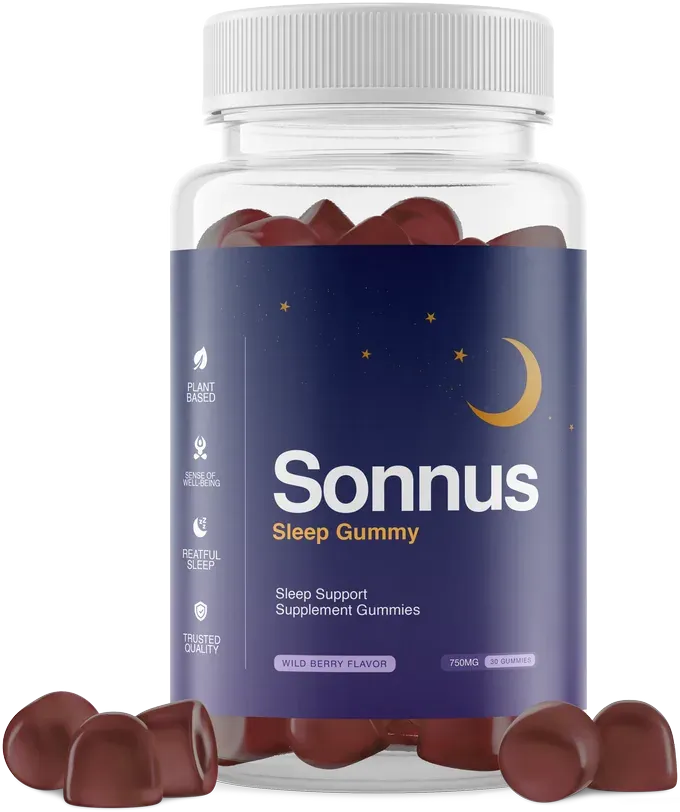
The magnesium here is bisglycinate, which is the form with the placebo-controlled sleep trial behind it and the one that stays quiet in the gut. L-theanine, apigenin and GABA sit behind it as the settling layer, and lemon balm handles the physical side of winding down. Melatonin is present at a low 0.9 mg and comes last on the list, which is the right order for a formula aimed at the second half of the night rather than the start of it. Full ingredient detail and pricing in our Sonnus review.
Look elsewhere if: what you actually want is the citrate effect, because constipation is the problem you are solving — a plain citrate powder is cheaper and better aimed. Also if your trouble is falling asleep rather than staying asleep, in which case a melatonin-led product taken earlier in the evening fits better. Speak with your doctor first if you have reduced kidney function or take prescription medication, since magnesium interacts with several common drugs. And gummies carry a little sugar; if that rules them out, look for a bisglycinate capsule instead.
Magnesium citrate or glycinate: which should you take for sleep?
The comparison sounds technical and it resolves simply. Both forms are real magnesium and both get absorbed. The question is only what the mineral is riding on, and citric acid brings a bowel effect that glycine does not.
So take citrate in the daytime if you want it, and take glycinate at night. If you have been taking citrate before bed and blaming magnesium for the 3 a.m. waking, it is worth switching the form before you write off the mineral.
Set the expectation where the research sets it, either way. Four weeks, a modest improvement, biggest if your diet was short on magnesium to begin with. That is a smaller promise than this category usually makes, and it is the one that holds up.
Frequently asked questions
Which form of magnesium is best for sleeping, citrate or glycinate?
Glycinate, and the reason is the carrier rather than the magnesium. Glycinate is bound to glycine, an amino acid that is itself calming. Citrate is bound to citric acid, which pulls water into the bowel — useful during the day, awkward at bedtime. The one placebo-controlled sleep trial on a specific form used bisglycinate, not citrate.
Is it okay to take magnesium citrate every night?
Many people do it without trouble, especially at smaller amounts. The catch is that citrate's laxative effect is dose-dependent, so the amount that helps you sleep and the amount that wakes you at 3 a.m. can be uncomfortably close. If you are already regular, you are spending your magnesium budget on a side effect you did not want.
What is the actual difference between magnesium citrate and glycinate?
Only what the magnesium is attached to. Both are well absorbed, and both deliver the same mineral. Citrate is paired with citric acid and draws water into the gut. Glycinate is paired with glycine and passes through more quietly, which is why it is the form usually recommended for people with a sensitive stomach.
Can I take magnesium citrate and glycinate together?
You can, but the amounts add up and so does the bowel effect, because both count toward the same daily total. A 2023 review in Advances in Nutrition argued that the upper limit for supplemental magnesium exists mainly because of that loosening effect. If you want both jobs done, most people separate them: citrate in the daytime, glycinate at night.
How much magnesium should I take for sleep?
The 2025 bisglycinate trial used 250 mg of elemental magnesium a day. Read the elemental figure on the label rather than the compound weight — 500 mg of magnesium bisglycinate is not 500 mg of magnesium, and the gap between those two numbers is where a lot of underdosed products hide.
When should I talk to a doctor instead?
If the night waking is nightly and has lasted more than a few weeks, if you snore heavily or wake gasping, or if low mood or anxiety arrived with it. Also check first if you have kidney disease or take prescription medication, since magnesium interacts with several common drugs. Chronic insomnia and sleep apnoea are diagnoses, and no supplement is the right tool for either.