
Ingredient Check
Magnesium Glycinate for Sleep and Anxiety: Is It Enough on Its Own, and Who It Helps Most
Sleep and anxiety usually arrive as one complaint, and magnesium glycinate is the form the internet has settled on for both. The evidence is more specific than the enthusiasm — it says who this works for, and where it stops.
Two complaints that arrive as one purchase
Almost nobody shops for these separately. The night goes badly because the mind is loud, and the day goes badly because the night did — so people look for one thing that handles both ends of it.
Magnesium glycinate is what that search keeps landing on, and the reason is sound rather than fashionable. Magnesium is involved in the machinery the nervous system uses to quiet itself, and the glycinate form is the one that is gentle enough to take every night without a stomach complaint.
The useful question is not whether it does anything. It is how much, for whom, and which half of the problem — and there is a recent review that answers all three more precisely than the marketing does.
What the review actually found
In 2024, Rawji and colleagues — a group from the psychiatry departments at Hackensack Meridian — published a systematic review in Cureus asking exactly this question. They screened 860 papers and kept the 15 that were interventional trials with a real magnesium dose behind them.
The results, in plain numbers. Of the eight trials measuring sleep, five reported improvement, two reported none, and one was mixed. Of the seven measuring anxiety, five reported improvement in self-reported symptoms.
Their conclusion is the sentence worth carrying into a purchase: magnesium is likely useful for mild anxiety and insomnia, particularly in people whose magnesium was low to begin with. They were also candid about the limits — the trials were small, the doses and formulations varied, and larger studies are still needed to settle which form and how much.
There is one more detail in that review that rarely gets repeated. Both of the anxiety trials that came back negative studied populations where hormones were driving the symptoms — premenstrual and post-partum. That is a useful thing to know about yourself before buying: if something endocrine is behind the anxiety, a mineral is not aimed at it.
The key point The review's finding is not "magnesium works". It is that magnesium works best in people who were short of it — which makes this less a question of whether the supplement is good and more a question of whether you are the person it fits. Luciano Cesar, Content Contributor
Why the glycinate form specifically
Magnesium has to be attached to something to be swallowed, and that partner decides how the night goes. Glycinate pairs it with glycine, an amino acid with no laxative pull of its own. Citrate pairs it with citric acid, which draws water into the bowel — fine in the morning, awkward at 10 p.m.
That is the whole reason this form dominates the evening shelf, and it is also why the 2025 placebo-controlled trial that tested magnesium for poor sleep used bisglycinate rather than anything cheaper. Schuster and colleagues gave 155 adults 250 mg of elemental magnesium a day and measured with the Insomnia Severity Index; over four weeks the supplement group improved more than placebo, modestly, and most in those with low dietary magnesium.
If you want that comparison in full — including why oxide is the one to avoid outright — it is the subject of magnesium citrate vs glycinate for sleep.
Which half it handles better
The two complaints came as one purchase, but magnesium does not treat them equally. Being honest about that is what lets you buy the right thing.
| What you are hoping for | How magnesium does on it | What the evidence rests on |
|---|---|---|
| Staying asleep through the night | Best case for it | A 2025 placebo-controlled trial on the bisglycinate form |
| Body settling — tense shoulders, restless legs | Good | The mineral's role in muscle and nerve relaxation |
| General day-to-day anxiousness | Modest, and clearest if you were low | 5 of 7 trials in the 2024 review reported improvement |
| A racing mind at lights-out | Weakest on its own | Usually studied in combination, not as magnesium alone |
| Falling asleep faster | Not what it is for | That is a timing problem — melatonin's territory |
Those bottom two rows are the ones that send people away disappointed. If your problem is the hour you fall asleep rather than the quality of the night, the fit is different — we set that out in magnesium vs melatonin for sleep.
Where magnesium alone runs out
This is the part most pages skip, and it is the practical one.
Look at how the anxious half actually gets studied and a pattern shows up: magnesium rarely appears by itself. In a 2022 randomized placebo-controlled study in Nutrients, Noah and colleagues tested magnesium in chronically stressed adults as part of a combination — B vitamins, rhodiola and the green tea amino acid L-theanine alongside it — rather than as a single mineral. The same pattern runs through the 2024 review, which had to exclude trials carrying more than three other active compounds to get a clean magnesium signal at all.
That is not a knock on magnesium. It is a description of what the anxious half of the problem responds to. The mineral does the foundational, physical part; the compounds that address a mind that will not switch off tend to sit alongside it.
Which is why, when you are buying for both complaints rather than one, the sensible read of a label is not "how much magnesium" alone. It is: magnesium doing the base work, in the right form, with something credible next to it for the thoughts.
How to read a label for this
- Elemental magnesium, stated on the panel. 500 mg of magnesium bisglycinate is not 500 mg of magnesium. The trial figure to compare against is 250 mg.
- Bisglycinate, not oxide. Oxide is cheap because it is poorly absorbed and rough on the stomach, and it turns up inside blends where nobody reads.
- Something for the anxious half. L-theanine is the one with the most human work behind it; apigenin and lemon balm are gentler, older and thinner on evidence. That is worth knowing rather than hiding.
- Melatonin small, or absent. A formula led by melatonin is built for falling asleep, which is a different complaint from either of the two on this page.
- Four weeks of supply, minimum. That is what the trial ran. A guarantee that closes before the effect lands is not much of a guarantee.
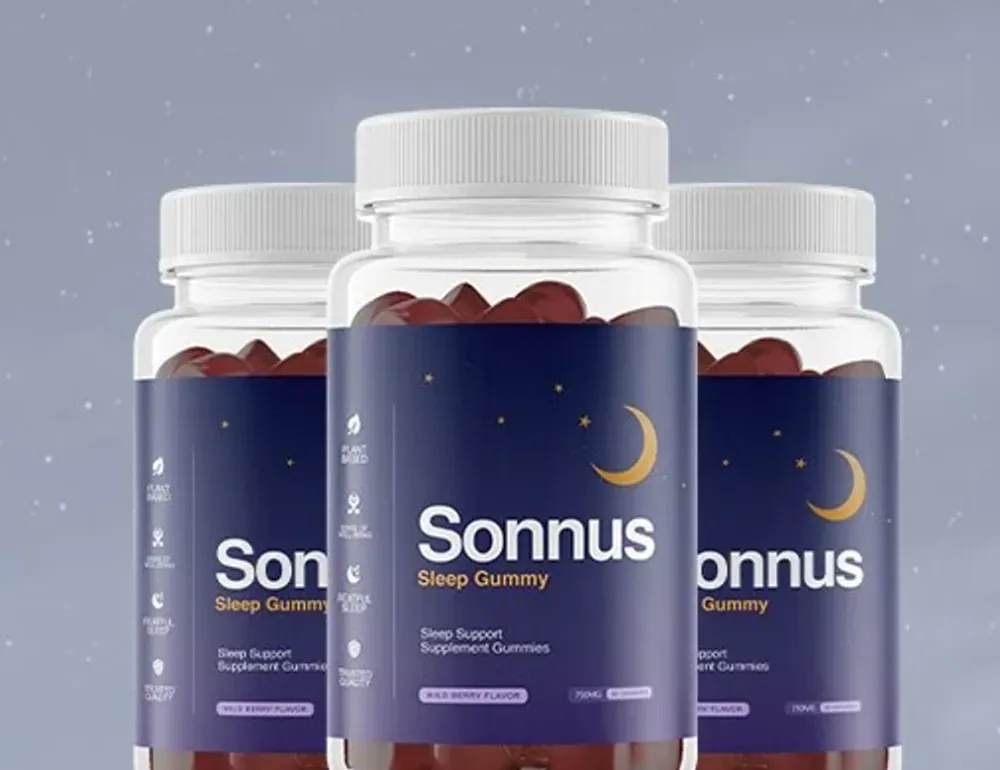
A formula built the way this reads
Plenty of magnesium products are perfectly good magnesium products — if you only want the mineral, a plain bisglycinate capsule does the job and costs little. What is harder to find is the arrangement this article argues for: the right form doing the base work, with a credible layer next to it for the half magnesium is weakest on.
Sonnus Sleep Gummies
Bisglycinate as the base, with L-theanine and apigenin for the part that keeps thinking
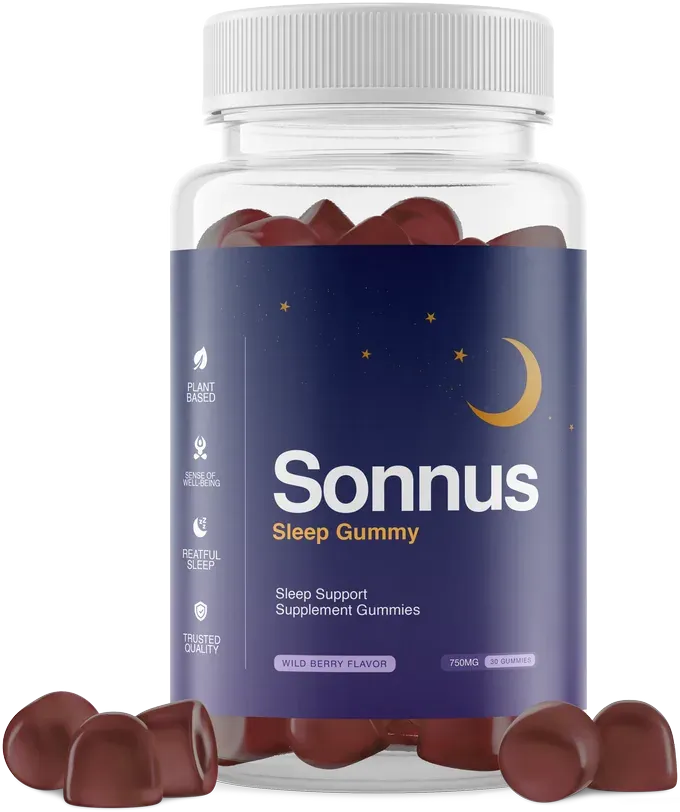
The magnesium is bisglycinate — the form with the placebo-controlled sleep trial behind it and the one that stays quiet in the gut. Behind it sit L-theanine, apigenin and GABA as the settling layer, with lemon balm for the physical side of winding down, which is the arrangement the research on the anxious half keeps pointing at. Melatonin is present at a low 0.9 mg and comes last, so this stays a formula for the night rather than for the hour you fall asleep. Full label and pricing in our Sonnus review.
Look elsewhere if: you only want the mineral and nothing else — a plain bisglycinate capsule is cheaper and does that one job. Also if your anxiety is affecting daily life, or if hormonal factors are driving it, in which case this is a medical conversation rather than a shelf decision. Speak with your doctor first if you have reduced kidney function or take prescription medication. And gummies carry a little sugar; if that rules them out, look for a bisglycinate capsule with L-theanine alongside.
Is magnesium glycinate enough for sleep and anxiety on its own?
Magnesium glycinate earns its reputation here, and it earns a specific version of it. Five of seven anxiety trials and five of eight sleep trials came back positive in the 2024 review, the effects were modest, and the people who gained most were the ones who were short of magnesium in the first place.
So the question to ask yourself is not whether it works. It is whether you are that person — and whether the half of the problem you most want fixed is the body settling or the mind quieting. Magnesium is stronger on the first. For the second it is a foundation with something else on top.
Set the timeline where the trial set it: four weeks, a measured improvement, read off the elemental figure rather than the front of the box. And if the anxiety is affecting your days rather than just your nights, that is a conversation with a doctor, not a purchase.
Frequently asked questions
Is magnesium glycinate good for sleep and anxiety?
For both, modestly, and best if you were running low. A 2024 systematic review in Cureus screened 860 papers, kept 15 interventional trials, and found improvement in 5 of the 7 that measured anxiety and 5 of the 8 that measured sleep. The authors called magnesium likely useful for mild anxiety and insomnia, with the clearest benefit in people whose magnesium status was low at baseline.
Which magnesium glycinate is best for sleep and anxiety?
Judge it on three lines of the panel rather than the brand. The elemental magnesium figure should be stated, not just the compound weight. The form should be bisglycinate rather than oxide or citrate. And for the anxious half, look at what sits alongside it — magnesium on its own handles the physical settling better than it handles a mind that will not stop.
What is the downside of taking magnesium glycinate?
It is one of the better-tolerated forms, which is the point of it, but no supplement is free. It interacts with several common medications, it is not appropriate for anyone with reduced kidney function, and the effect on sleep is cumulative rather than immediate. The honest downside is expectation: this is a four-week proposition with a modest result, not a sedative.
How much magnesium glycinate should a sleep formula contain?
The 2025 placebo-controlled trial on bisglycinate used 250 mg of elemental magnesium a day. The 2024 review noted that the trials using higher doses tended to show more, though it stopped short of naming a threshold because the studies varied too much. Read the elemental figure and compare it against 250 mg rather than against the compound weight on the front.
Does magnesium glycinate help with a racing mind at bedtime?
Less directly than people expect. Magnesium works on the body's own quieting machinery, which shows up more as physical settling than as quieter thoughts. A 2022 randomized placebo-controlled trial in chronically stressed adults tested magnesium combined with L-theanine and other actives rather than magnesium alone — which is a fair reflection of how the anxious half is usually approached.
When should I speak to a doctor instead?
If anxiety is affecting your daily life, if the sleep loss has run for more than a few weeks, or if low mood came with it. Also before starting, if you have reduced kidney function or take prescription medication, since magnesium interacts with several common drugs. Anxiety disorders and chronic insomnia are diagnoses with real treatments, and a supplement is not a substitute for either.