
Myth Check
Magnesium Spray for Sleep: Does Any of It Get In? What the Skin Research Actually Found
Spraying magnesium on your calves before bed is pleasant, and the tingling feels like proof that something is happening. The measurement of how much actually crosses the skin tells a different story — and points at an easier fix.

The claim, and why it sounds so reasonable
The pitch writes itself. Magnesium helps you sleep, oral magnesium upsets some people's stomachs, so put it on your skin instead and skip the gut entirely. Spray it on your calves twenty minutes before bed, rub it in, done.
It sounds reasonable because part of it is true. Magnesium does have a role in sleep, and some oral forms genuinely do loosen the bowels. The step that never got established is the one in the middle: whether skin lets the mineral through in any amount worth having.
That step has now been measured directly, and the result is the whole article.
What the skin research actually found
In 2026, Camili, Stürup and Heinz at the University of Copenhagen's centre for cutaneous drug delivery published exactly the experiment this question needs, in the European Journal of Pharmaceutics and Biopharmaceutics. They put a saturated magnesium solution on skin, left it 24 hours, and measured with mass spectrometry how much came through the other side.
Through intact skin, the answer was 8.3 micrograms per square centimetre. The untreated control samples read 3.9. The difference was not statistically significant — which is the technical way of saying that after a full day of contact they could not distinguish treated skin from untreated skin.
Then they repeated it on skin whose surface barrier had been stripped away. Permeation jumped to around 13 milligrams per square centimetre — several orders of magnitude more. The barrier, not the magnesium, was doing all the deciding.
Their conclusion is worth quoting in plain terms: magnesium delivery through the skin from a simple water-based solution is unlikely to happen under normal conditions.
One honest caveat about this study, because it matters. It was done on pig skin in a laboratory diffusion cell, not on sleeping humans. Pig skin is the standard stand-in for human skin in permeation work and this is the right kind of experiment for the question. But it is a measurement of a barrier, not a trial of a night's sleep, and it deserves to be described as what it is.
The key point The outer layer of skin exists to keep things out, and it is very good at its job. That is not a flaw in the spray. It is the entire purpose of the surface you are spraying. Luciano Cesar, Content Contributor
So what is the tingling?
This is the part that convinces people, so it deserves a straight answer.
The tingle is a skin response to a concentrated salt solution sitting on it. It shows up more on dry skin, on freshly shaved legs, and on the first few applications. Some sellers explain it as a sign that your magnesium is low, and that explanation has nothing behind it.
Read it against the study and there is a small irony. The condition that actually increased permeation was a compromised barrier — and a compromised barrier is also what makes the stinging worse. The sensation is closer to a sign that your skin is irritated than a sign that the mineral is arriving.
Skin or swallow, side by side
| What people wonder | Magnesium spray | Oral magnesium |
|---|---|---|
| Does the mineral reach me? | Not measurably through intact skin | Yes, and how much depends on the form |
| Is there a sleep trial on it? | None for the spray route | Yes — a 2025 placebo-controlled trial on bisglycinate |
| Will it upset my stomach? | No, it never gets there | Depends entirely on the form you pick |
| Can I tell how much I am getting? | No, and no label can tell you | Yes, if the panel states elemental magnesium |
| Is it worth anything at all? | As a wind-down ritual and a leg massage, genuinely yes | As a way of raising your magnesium, yes |
That bottom-left cell is not a consolation prize. A calming twenty-minute routine before bed has real value, and if the spray is what gets you doing one, it is earning its place. Just do not expect it to be the mineral doing the work.
The problem the spray was solving has a simpler answer
Most people who reach for a spray are running from the same thing: they tried oral magnesium, it loosened their bowels, and topical looked like the way around it.
That side effect is real and well documented. In a 2023 perspective in Advances in Nutrition, Costello, Rosanoff and colleagues noted that the upper limit for supplemental magnesium was set largely around this loosening effect rather than around any serious harm.
But the culprit is the form, not the mineral. Oxide and citrate are the two that cause most of the trouble — citrate because it draws water into the bowel by design. Bisglycinate is magnesium bound to two glycine molecules, and it is the form that exists precisely because it passes through quietly. We took that comparison apart in magnesium citrate vs glycinate for sleep.
So the fix for a stomach problem is a gentler form, not a route that does not deliver.
What the oral route actually buys you
Worth being just as measured here as with the spray, because the honest number is not a dramatic one.
Schuster and colleagues, in Nature and Science of Sleep in 2025, ran a double-blind placebo-controlled trial in 155 adults reporting poor sleep, using 250 mg of elemental magnesium a day as bisglycinate. Over four weeks the supplement group improved more than placebo on the Insomnia Severity Index. The improvement was modest, and it was biggest in people whose diets were low in magnesium to start with.
The wider picture matches. Mah and Pitre pooled the randomised trials in older adults with insomnia in BMC Complementary Medicine and Therapies in 2021 and described the evidence as suggestive with low certainty. Kumar and colleagues, reviewing the mineral's role in the nervous system in 2024, explain why magnesium belongs to the body's quieting machinery rather than acting as a sedative.
Small, real, cumulative and oral. That is the honest shape of it, and it is more than the spray can claim.
What else belongs alongside it, and what the rest of the panel should look like, is the subject of our guide to staying asleep all night.
What to use instead
If you liked the spray for the ritual, keep the ritual — the massage and the twenty quiet minutes are doing something real. For the magnesium itself, this is the route and the form the research points at.
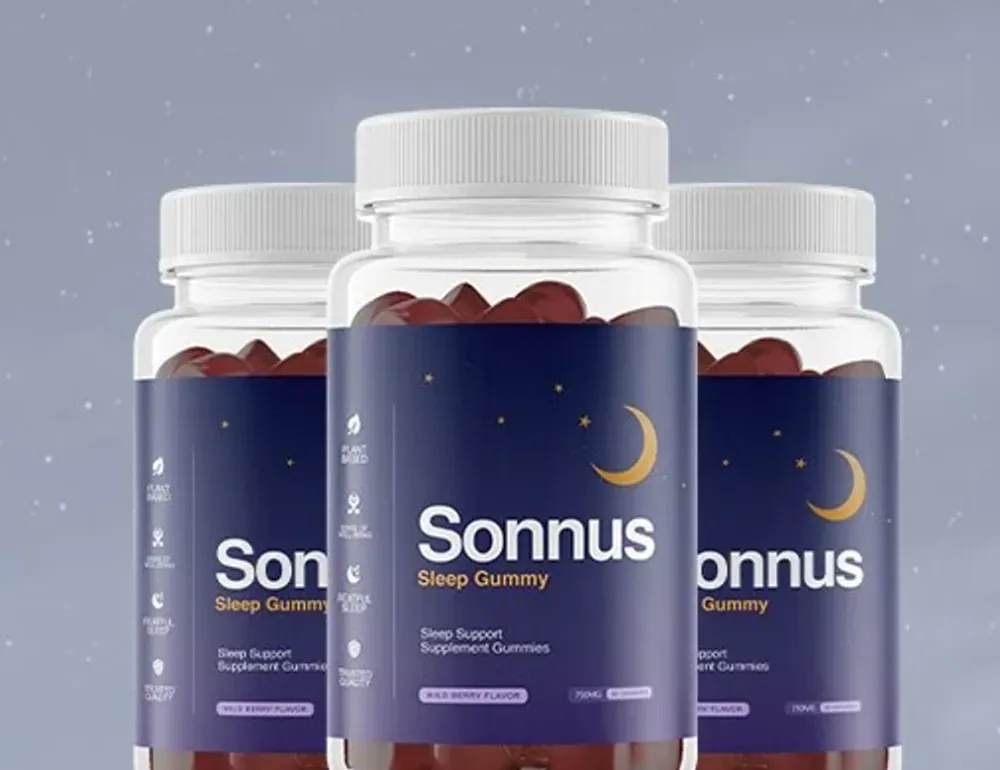
Sonnus Sleep Gummies
Oral bisglycinate — gentle on the stomach, which is the reason people went topical in the first place
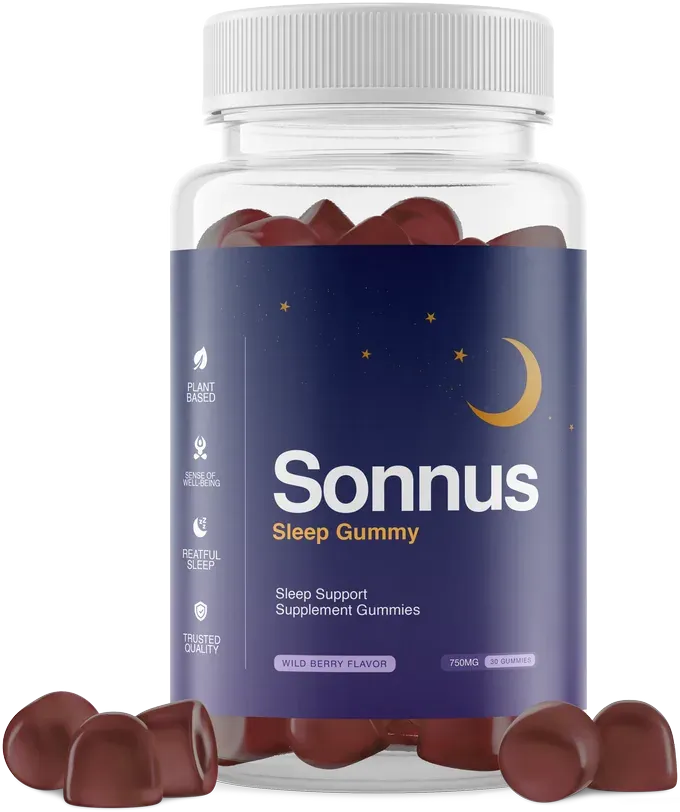
The magnesium is bisglycinate, the form with the placebo-controlled sleep trial behind it and the one that does not bring the bowel effect people were trying to escape. L-theanine, apigenin and GABA sit behind it as the settling layer, with lemon balm for the physical side of winding down, and melatonin appears last at a low 0.9 mg as an evening cue rather than the engine. The gummy format helps with the part that decides everything for a four-week ingredient: still taking it in week four. Full label and pricing in our Sonnus review.
Look elsewhere if: your trouble is falling asleep rather than staying asleep, in which case a melatonin-led product taken earlier in the evening is better aimed. Speak with your doctor first if you have reduced kidney function or take prescription medication, since magnesium interacts with several common drugs. And gummies carry a little sugar; if that rules them out, a plain bisglycinate capsule delivers the same ingredient.
Does magnesium spray work for sleep?
Magnesium spray is not a scam and it is not dangerous. It is a nice thing to rub into tired legs, and the routine around it may genuinely help you settle. But the mineral is not getting past your skin in any amount that matters, and the 2026 measurement is about as direct a test of that as you can run.
If you bought it to raise your magnesium, swap the route rather than the brand. Oral bisglycinate is gentle, measurable on the label, and the version with a human trial behind it. Read the elemental figure, give it four weeks, and expect a modest improvement rather than a transformation.
And if the waking is nightly, if you snore heavily or wake gasping, or if low mood arrived with it, that is a conversation with a doctor rather than a purchase of any kind.
Frequently asked questions
Does magnesium spray for sleep actually work?
Not through absorption, on the evidence available. A 2026 permeation study measured magnesium crossing intact skin and found the amount statistically indistinguishable from an untreated control. Any benefit people report is more plausibly the routine, the massage and the winding-down ritual than the mineral reaching the bloodstream.
Why does magnesium spray tingle if it is not absorbing?
The tingle is a skin reaction to a concentrated salt solution, not a signal that the mineral is getting through. It is often stronger on freshly shaved or dry skin, which is a clue about what it really is. Sellers sometimes describe it as a sign of deficiency, but there is no evidence connecting the sensation to your magnesium status.
Where should I put magnesium spray for sleep?
Placement is the wrong lever, because the barrier is the same skin everywhere. The one condition that changed permeation in the 2026 study was a damaged skin barrier, and deliberately applying it to broken or freshly exfoliated skin is not a good idea. If you want magnesium to reach your system, the oral route is the one with the evidence.
Is magnesium spray safer than taking magnesium orally?
It is generally well tolerated on the skin, and people usually choose it to dodge the loose stools that some oral forms cause. That is a real problem with a simpler answer: the bisglycinate form is gentle on the stomach, which is the reason it exists. Swapping to a gentler form beats swapping to a route that does not deliver.
What should I use instead for waking up at night?
Oral magnesium in the bisglycinate form is the option with a human trial behind it — a 2025 placebo-controlled study used 250 mg of elemental magnesium a day and saw a modest improvement over four weeks. Read the elemental figure on the label, not the compound weight, and give it the full four weeks.
When should I speak to a doctor instead?
If the night waking is nightly and has lasted more than a few weeks, if you snore heavily or wake gasping, or if low mood or anxiety came with it. Also check first if you have reduced kidney function or take prescription medication, since magnesium interacts with several common drugs. Chronic insomnia and sleep apnoea are diagnoses, and no supplement is the right tool for either.