
What Works Tonight
How to Get Rid of Water Retention Overnight: 6 Fast Fixes, and What Changes by Week Two
You can move real fluid in one night. What you cannot do in one night is change why it keeps arriving — which is why the same face is back on Thursday, and why your bloodwork came back normal anyway.
The Verdict
Yes, you can move real fluid in one night. Legs above the chest, the sodium in tonight's dinner, potassium, normal water, ten minutes of walking, compression on early tomorrow. The six are below, in the order that actually matters.
What none of it does is change why the fluid keeps arriving. Every measure on that list moves fluid that is already there. That is why the same face is back on Thursday, and why your bloodwork came back normal anyway.
One line stays above all of it. One leg only, sudden onset, or painful is a same-day appointment — not a list of tips.
First, where it shows in the morning
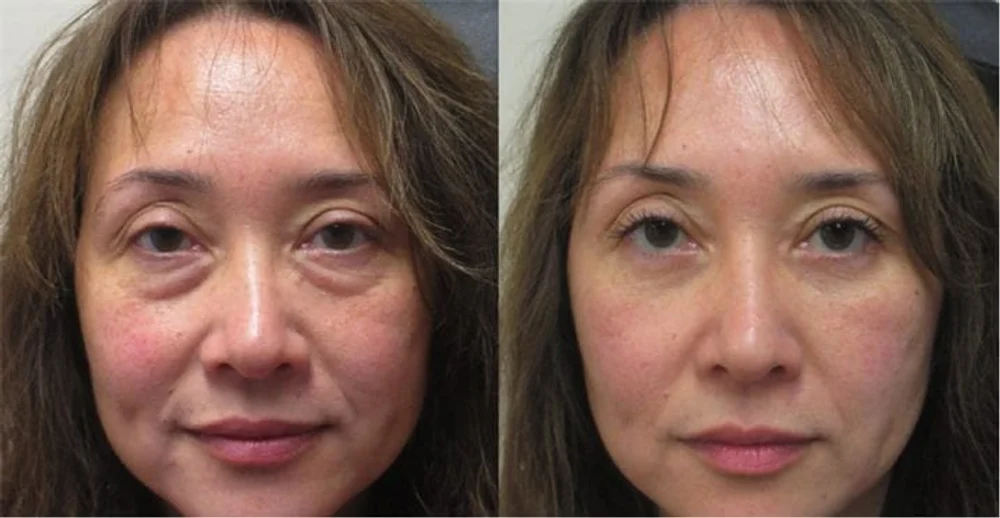
Morning swelling is not only the face. The usual set is face, eyelids, hands and fingers — the ring that is tight at 7am and loose by lunch, the fist that will not quite close.
It is also the same fluid you had in your legs last night. Lying flat takes gravity out of the equation, so what pooled downward all day redistributes upward while you sleep. The face shows it first because the tissue around the eyes is thin and loosely attached, with almost nothing holding it in place. A small amount of fluid goes a long way there.
Which produces the pattern that organises this whole subject:
| On waking | By evening | |
|---|---|---|
| Face, eyelids, hands | Worst | Settled |
| Legs and ankles | Smallest | Worst |
That inversion is worth more than it looks. Legs that are back to normal in the morning is the reassuring sign — it means position is driving it, which is the everyday kind. When the cause is the heart or the kidneys, the swelling does not resolve overnight. It is still there when you wake up.
The six that work tonight
These are ordered by how much difference they make, not by how often they get repeated. We have no compression sock and no herbal tea to sell you, which is why this list ends where the evidence ends.
| What to do | Why it works | By morning |
|---|---|---|
| 1. Legs above your chest, 20–30 min | Gravity has pushed fluid down all day. Remove the pressure and it moves back into circulation, where your kidneys can deal with it. | The biggest single change, and it is free |
| 2. Cut the sodium in tonight's dinner | Not the shaker — the bread, the deli meat, the sauces, the restaurant meal. That is where the sodium actually is. | Visible, especially in the face |
| 3. Keep drinking normally | Under-hydration raises blood sodium concentration, and your body holds fluid to compensate. | Cutting water backfires within a day |
| 4. Potassium at the evening meal | Potassium balances sodium. Avocado, spinach, sweet potato, beans. | Modest, and it compounds night to night |
| 5. Ten minutes of walking before bed | The calf is the pump. Every step squeezes the deep veins and pushes fluid upward. | Noticeable in ankles |
| 6. Compression on early tomorrow | Put it on before the leg refills, not after. It keeps the overnight gain instead of chasing it back. | Protects what tonight earned |
Realistic expectation: overnight fluid swings of one to two kilos are ordinary. That is fluid moving between tissue and circulation, not fat, which is why the scale reads so differently from one morning to the next.
The four that do nothing
Each of these gets recommended constantly, and each fails for a reason worth knowing.
- Drinking less water. The single most common mistake. It raises blood sodium concentration and your body holds more fluid, not less.
- Sweating it out in a sauna. You lose water weight and drink it straight back. Nothing about the underlying balance changed, and dehydrating on purpose triggers the retention response above.
- Over-the-counter water pills. They push your kidneys to pass more fluid. That is a different mechanism from clearing fluid out of tissue, and the rebound is real — we went through it properly in water pills versus drainage drops.
- Chasing the "strongest" diuretic tea. Dandelion, parsley, hibiscus and green tea all have mild diuretic activity, and the strongest of them is far weaker than a prescription. The NCCIH is blunt about the wider category: "detox" and "cleanse" claims are not supported by evidence.
Why it is back by Thursday
Look again at what the six have in common. Every one of them moves fluid that has already collected in tissue. Not one changes how well your body collects it and carries it away.
Overnight measures move today's fluid. They do not change tomorrow's. That is not a failure of the tips — it is what they are.
The carrying-away job belongs to your lymphatic system, and unlike your blood it has no pump of its own. It moves when your muscles contract and when you breathe deeply. Nine hours in a chair is nine hours with that pump switched off, and no amount of leg elevation at 11pm undoes the day.
This is also why the bloodwork came back normal. Standard panels look at kidney, liver, thyroid and heart markers — and they should, because those causes matter and need ruling out. What no routine panel measures is how efficiently fluid is being cleared from your tissue. Normal results mean the dangerous causes were not found. They do not mean nothing is happening.
What changes it by week two
This is where a daily formula has a job the overnight list cannot do: it keeps working through the hours you are not managing anything.
And the timeline is faster than most people expect, because of where fluid shows first. The morning set — face, eyelids, hands — is the earliest reported change, around week one to two. Legs and ankles take longer, typically week three to six, because gravity works against you there all day. Anyone promising the reverse order has it backwards. If the face is the part you notice most, we cover it on its own in how to get rid of a puffy face in the morning.
The evidence for the plant family is better than the category's reputation suggests. A 2025 review in the Journal of Vascular Surgery: Venous and Lymphatic Disorders examined plant-derived venoactive compounds, and a second team re-examined the same evidence in Vascular Pharmacology in 2026. Both found real effects. Both placed these plants alongside compression and movement rather than instead of them, which is exactly how we would put it.
If you want to stop managing the same fluid
One pick, because this article is about the morning and there is one formula whose first reported change is the morning. If your problem is squarely legs and ankles by evening instead, that is a different shortlist — it is in our guide to the best supplements for swollen legs and ankles.
Linfaflow
Aimed at drainage — and the morning is where it reports first
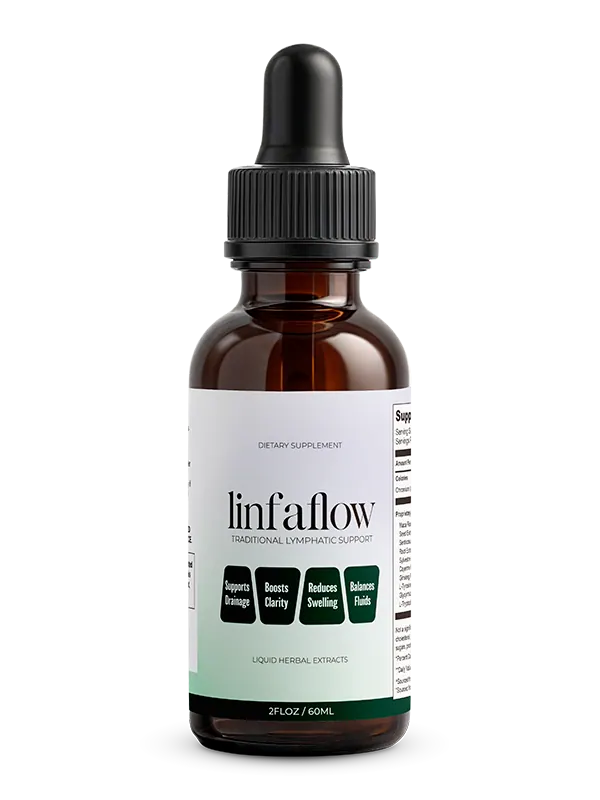
Four plant extracts in a 300 mg blend, one dropper under the tongue: Cleavers to move parked fluid, Stillingia root to open the deeper routes, Red Clover blossom for the surface layer that shows on your face, and Prickly Ash bark for the days you barely stand up. It works the drainage side — the half that keeps running through the hours you are not elevating anything. No diuretic and no stimulant, so there is no bathroom day and nothing to rebound from. Made in the USA, tested by an outside lab batch by batch. Full breakdown in our Linfaflow review.
Know before you buy: it is a traditional botanical formula and says so on its label. Red clover is the extract with modern human research; the other three carry herbal records rather than trials. And legs are the slower half — week three to six, not week two. Anyone promising the reverse order has it backwards.
When it is a doctor's question
Nothing above replaces an exam, and one pattern outranks everything on this page: one leg only, sudden onset, or painful, red and warm. That is a same-day appointment.
The American Family Physician clinical review of peripheral edema lists causes running from veins to heart, kidneys, liver and thyroid, plus medication you may already be taking. Several are far easier to sort out early, and no article can tell them apart from the everyday kind. If your swelling is new, not settling overnight at all, or came with breathlessness, stop reading and call.
How do you get rid of water retention overnight?
Do the six tonight. They work, they cost nothing, and elevation alone will change what you see in the mirror tomorrow. If you are also dealing with legs and ankles specifically, the fit and pressure checklist in our piece on why compression socks stop helping is worth ten minutes, and the wider field is in our guide to the best supplements for swollen legs and ankles.
Then decide whether you want to keep doing this every night. Because that is the real choice here — not whether the overnight list works, but whether managing the same fluid over and over is the plan. If the morning is what you keep noticing, Linfaflow is where we would start: that is its first and fastest reported change, and 90 days with empty bottles accepted means you find out on your own face rather than on our word.
Frequently asked questions
Is morning swelling only in the face?
No. The usual set is face, eyelids, hands and fingers — the ring that is tight at 7am and loose by lunch. It is also the same fluid that was in your legs the night before: lying flat removes gravity, so what pooled downward all day redistributes upward while you sleep. The face shows it first because the tissue around the eyes is thin and loosely attached. That is also why your legs look their best in the morning, which is the reassuring sign — when the cause is the heart or kidneys, the swelling does not resolve overnight.
What is the fastest way to flush water retention?
Lying flat with your legs propped above your chest is the fastest single thing you can do, and it costs nothing. Gravity has been pushing fluid downward all day; removing that pressure lets it move back into circulation, and your kidneys handle the rest. Twenty to thirty minutes makes a visible difference to ankles. Doing it before bed rather than after you are already lying down gives it a head start.
How much water retention can you actually lose overnight?
Enough to see and feel, but not enough to call it weight loss. Overnight fluid shifts of one to two kilos are common and completely normal, which is why the scale swings so much from day to day. What you are seeing is fluid moving between tissue and circulation, not fat. That is also why it comes straight back if the reason it accumulated is still there.
What is the strongest natural diuretic?
The honest answer is that the question points in the wrong direction. Dandelion, parsley, hibiscus and green tea all have mild diuretic activity, and the strongest of them is still far weaker than a prescription diuretic. More importantly, a diuretic makes your kidneys pass more fluid — it does not improve how well your body clears fluid from tissue. That is why people cycle through them and end up puffy again.
Does drinking more water help with water retention?
Yes, counterintuitive as it sounds, and it is one of the few overnight measures with a clean mechanism. Under-hydration raises the concentration of sodium in your blood, and your body holds fluid to compensate. Drinking normally lets that correction relax. Cutting water to reduce puffiness reliably makes it worse.
Why does the puffiness come back the next day?
Because everything on the overnight list moves fluid that is already there. None of it changes how well your body collects fluid out of tissue and returns it, which is the lymphatic side, and that system has no pump of its own. If your legs and face refill each day, you are managing the same fluid over and over rather than changing the process behind it.
When should swollen legs or a puffy face be seen by a doctor?
Get seen now if the swelling is in one leg only, if it arrived suddenly, or if it comes with pain, redness, warmth, breathlessness or chest discomfort. Also worth an appointment if it is new for you, if it does not settle overnight at all, or if you take medication that can cause it. As the American Family Physician clinical review of peripheral edema sets out, fluid retention can come from your veins, heart, kidneys, liver or thyroid, and several of those are far easier to sort out early.