
Morning Report
How to Get Rid of Puffy Face in the Morning
A puffy morning face is usually fluid that spent the night in the wrong place. Most of it clears in about fifteen minutes once you know what actually moves it. The part worth reading is why it keeps coming back.
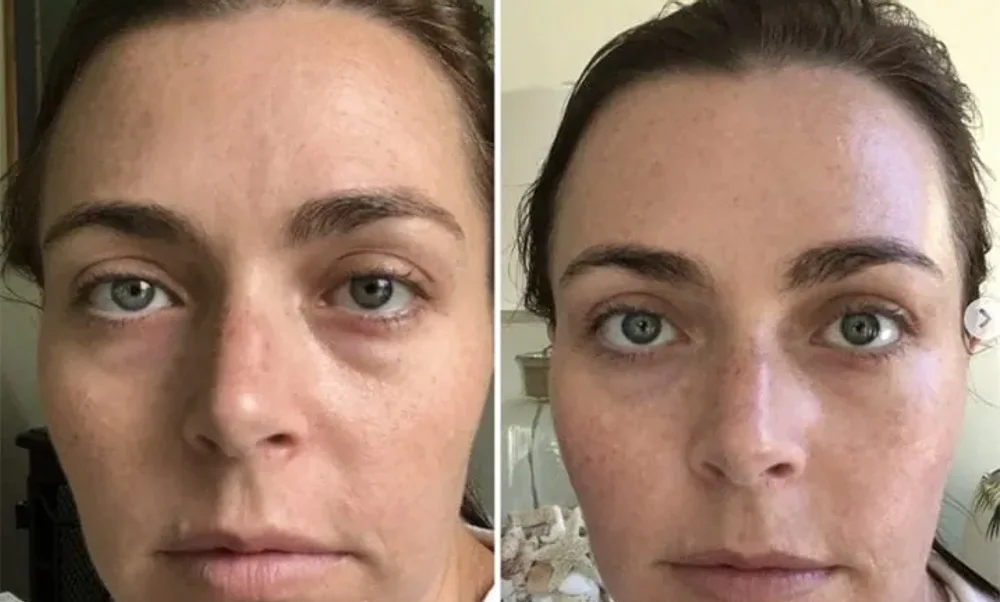
The Verdict
Fifteen minutes fixes most of what you are looking at. Get upright, put something cold on the eye area, drink a normal glass of water, and move for ten minutes. The full sequence is below, in the order that makes the most difference.
The reason it is your face and not your legs is simple. Lying flat switches gravity off for seven hours. Fluid that pooled downward all day drifts back up, and the loosest tissue you own is the skin around your eyes.
One pattern separates the ordinary kind from the kind worth a test. If it has settled by lunchtime, it is the everyday sort this page is about. If it stays all day, sits on one side, or arrived suddenly, that is a different conversation and it is further down.
Why your face and not your legs
All day, gravity pulls fluid down. That is why your ankles are at their worst by evening and your rings feel tight after a long afternoon. Your face, meanwhile, looks fine.
Then you lie down. Gravity stops working in one direction, and the fluid that spent the day in your lower half redistributes. Some of it goes back into circulation. Some of it settles in tissue that offers the least resistance.
The skin of your eyelid is the thinnest on your body, roughly half a millimetre, and it is only loosely attached to what sits underneath. A small amount of fluid there is instantly visible. The same volume in your thigh would be invisible.
So the morning face and the evening ankle are not two problems. They are the same fluid at two different hours. Your legs look their best at 7am for exactly the reason your face looks its worst.
The morning face and the evening ankle are the same fluid, twelve hours apart. Stand up and it reverses. That daily flip is the reassuring part.
By the numbers
~7 h
flat every night, with gravity effectively switched off
0.5 mm
the eyelid — the thinnest skin you have, which is why it shows there first
By noon
when the everyday kind has usually settled on its own
Zero
pumps the drainage side of your circulation has of its own
The fifteen minutes that actually change what you see
In order of how much difference each one makes. The first two are free and beat anything sold in a jar.
| Do this | Why it works | How long |
|---|---|---|
| Get upright | Gravity is back on your side the moment you are vertical. Staying propped against the headboard scrolling your phone does almost nothing. | Immediately |
| Cold on the eye area | Cold briefly narrows the small vessels, so less fluid leaks into tissue. A chilled spoon, a cool cloth or cold water all work equally well. | 2–3 min |
| Move | Walking runs the muscle pump that pushes fluid back toward your chest. Ten minutes does more for your face than any cream applied to it. | 10 min |
| Drink water | Being slightly under-hydrated makes your body hold fluid. Skipping water to look less puffy reliably makes it worse. | One glass |
| Stroke downward | If you massage, go light, from the centre of the face outward and down toward the neck and collarbone. That is the direction the drainage runs. | 2 min |
| Keep breakfast low in salt | Bacon, cheese, bread and sauces reload the sodium that built the puffiness overnight. This is the one that decides how tomorrow looks. | One meal |
What does not earn its place: caffeine creams, jade rollers used upward, and anything sold as a detox. Rolling upward pushes fluid back toward the eye rather than away from it. As NCCIH puts it plainly, detox and cleanse products do not have evidence behind the claims they make.
What last night did to it
Same face, different mornings. Usually one of these decided which morning you got.
| What happened | Why the face reacts | What to change |
|---|---|---|
| A salty dinner | Sodium holds water with it. The salt that matters is in bread, sauces, deli meat and restaurant food, not the shaker. | Move the saltiest meal to lunch rather than dinner. |
| Alcohol | You lose fluid first, so you go to bed slightly dry and your body holds on. It also widens small vessels, which adds the flushed look. | A glass of water before bed, and expect two mornings, not one. |
| Crying | Tears are salty, and the tissue around the eye takes on fluid quickly. It is the fastest puffiness there is and the fastest to clear. | Cold, upright, and give it the morning. |
| The week before your period | Hormonal shifts change how much sodium and water your body holds. Face, fingers and ankles all move together. | Track it. Knowing it is cyclical stops it feeling random. |
| Sleeping flat or face-down | Flat maximises the upward drift. Face-down adds direct pressure on the tissue that shows it most. | One extra pillow. Small change, visible difference. |
| A long day sitting | Nine hours in a chair is nine hours with the calf pump switched off. All that fluid is still there when you lie down. | Walk in the evening, or put your legs up for twenty minutes before bed. |
Is the evening half of that list your bigger problem? Six measures move real fluid before morning. They are in our companion piece on what actually works overnight.
When it is a test rather than a routine
Most morning puffiness is the ordinary kind, and the giveaway is that it settles. Three patterns are different, and each has a simple answer.
| The pattern | What it can point to | What to do |
|---|---|---|
| Still puffy at 3pm, every day | An underactive thyroid. NIDDK lists a puffy face among the signs, usually alongside tiredness, feeling cold and dry skin. | Ask for a thyroid blood test. It is one draw and it answers the question. |
| Puffy eyes plus foamy urine or swollen ankles that never settle | The kidneys. NIDDK describes puffiness around the eyes in the morning as an early sign of nephrotic syndrome. | A urine test. Quick, cheap, and worth doing rather than wondering. |
| Sudden, one-sided, or involving lips, tongue or breathing | An allergic reaction rather than fluid balance. | Urgent care now. This is the one line on the page that is not a routine appointment. |
That list reads heavier than reality, so let us be clear. A face that is puffy at 7am and normal by lunch, with nothing else going on, is the common version by a wide margin. For sorting the rest, clinicians use the American Family Physician review of peripheral edema. It also flags the thing people forget: several everyday medications cause fluid retention on their own.
Why it is back tomorrow
Here is the part the fifteen-minute routine cannot reach.
Everything on that list moves fluid that is already sitting in your face. Cold narrows vessels for a while. Standing up lets gravity do its work. Walking runs the pump. All of it is real, and all of it is temporary by design.
None of it changes how well your body collects fluid out of tissue and carries it back. That job belongs to the drainage side of your circulation, and unlike your blood, it has no pump of its own. It moves when your muscles contract and when you breathe deeply. A desk day is a day with that pump idling.
So if you have already cut the salt, fixed the pillow, stopped drinking on weeknights and still wake up to the same face, you are not doing it wrong. You are managing the same fluid every morning instead of changing what happens between mornings.
If the morning face is the thing you keep noticing
One pick, because this article is about the face and there is one formula whose first reported change is the morning. If your bigger complaint is legs and ankles by evening, that is a different shortlist — it is in our guide to the best supplements for swollen legs and ankles.
Linfaflow
Works the drainage side — and the face is where it reports first
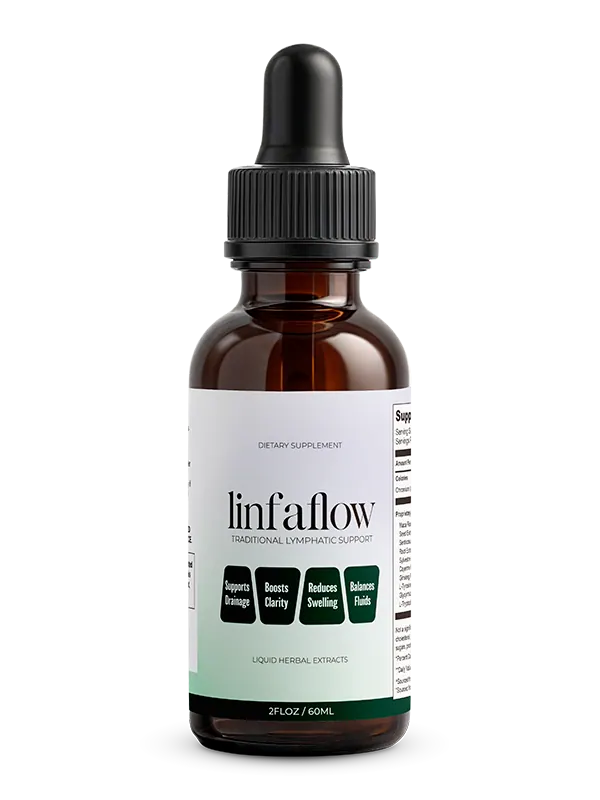
Four plant extracts in a 300 mg blend, one dropper under the tongue: Cleavers to move parked fluid, Stillingia root to open the deeper routes, Red Clover blossom for the surface layer that shows on your face, and Prickly Ash bark for the days you barely stand up. No diuretic and no stimulant, so there is no bathroom day and nothing to rebound from. Made in the USA, tested by an outside lab batch by batch. Full breakdown in our Linfaflow review.
Know before you buy: it is a traditional botanical formula and says so on its label. Red clover is the extract with modern human research behind it; the other three carry herbal records rather than trials. And it is a daily routine measured in weeks, not a morning fix — the fifteen minutes above is still what changes today.
How do you get rid of a puffy face in the morning?
Do the fifteen minutes tomorrow. Upright, cold, water, ten minutes of walking, low-salt breakfast. It works, it costs nothing, and you will see the difference in the mirror before you leave the house.
Then look at the six things from last night and change one of them. The pillow and the dinner salt are the two that pay back fastest.
And if none of that is new to you, the question is no longer what to do at 7am. You have been doing all of it for months and the face still arrives. That is a different problem. Linfaflow is where we would start, because the morning set is its first and fastest reported change. Ninety days with empty bottles accepted means you find out on your own face rather than on our word. If you wake up with heavy legs too, our piece on why compression socks stop helping covers the other half.
Frequently asked questions
Why is my face puffy in the morning?
Because you spent the night lying flat. Gravity pulls fluid downward all day, which is why your ankles are worst by evening. Lie down and that pressure disappears, so fluid redistributes upward and settles in the loosest tissue you have. That is the skin around your eyes. Stand up and the process reverses, which is why the everyday kind is mostly gone by mid-morning.
How do I get rid of a puffy face fast?
Get upright, get cold on it, and get moving. Standing restores gravity, cold briefly narrows the small vessels so less fluid leaks out, and walking works the muscles that push fluid back toward your chest. Fifteen minutes of the three together does more than any single product. If you use a gentle facial massage, stroke downward toward your neck and collarbone rather than upward.
Can a puffy face in the morning mean thyroid problems?
It can, and the pattern is what tells you apart from the everyday kind. Puffiness from an underactive thyroid does not clear by lunchtime, and it usually arrives with other things: fatigue that sleep does not fix, feeling cold, dry skin, weight that creeps up. NIDDK lists a puffy face among the signs. It is a simple blood test, so if that description fits, ask for one rather than guessing.
Can puffy eyes in the morning be a kidney problem?
It is uncommon, but it is the one pattern worth taking seriously. Puffiness around the eyes in the morning is a classic early sign of nephrotic syndrome, according to NIDDK, and it usually comes with foamy urine or swelling in the feet and ankles that does not settle. If any of that is true for you, a urine test answers the question quickly. Puffiness alone, gone by noon, with normal urine, is not that.
Why is my face puffy after drinking alcohol?
Two things happen at once. Alcohol makes you pass more fluid at first, so you go to bed slightly under-hydrated, and your body responds by holding on to what is left. It also widens small blood vessels and irritates tissue, which adds a flushed, swollen look on top. That is why the morning after looks worse than the amount you drank would suggest. Water before bed and the fifteen-minute routine both help.
Can you get rid of a puffy face permanently?
You can change how often it happens, which matters more than the word permanently. Sodium, alcohol, sleep position and how much you move all shift the daily total. What none of them change is how well your body clears fluid out of tissue between mornings, and that is the part people never address. If you have already fixed the obvious inputs and still wake up the same, that gap is usually where the answer sits.
When should a puffy face be seen by a doctor?
Straight away if it came on suddenly, if it involves your lips, tongue or throat, or if breathing feels tight. That is an emergency, not a routine appointment. Book an ordinary one if the puffiness stays all day rather than settling, if it is on one side only, or if it arrived with foamy urine, breathlessness or swollen ankles that do not go down overnight. As the American Family Physician review of peripheral edema sets out, fluid retention can come from the thyroid, kidneys, heart, liver or medication you already take.