
Buyer's Guide
The Best Supplements for Swollen Legs and Ankles (2026): What Actually Reaches the Fluid
Most advice for swollen legs is something you wear, something you pay for by the hour, or something that sends you to the bathroom all day. Here is what a daily formula can actually do — and the one we would take.

The Verdict
Our pick is Linfaflow, because of where it aims. Most of this aisle is diuretic herbs that make you urinate more — which empties fluid from your blood, not from the tissue your swelling actually sits in. Linfaflow is four plant extracts built around drainage instead, taken as a dropper under the tongue in about thirty seconds, with no diuretic and no stimulant anywhere in it. It also carries the longest money-back window we have seen in this category: 90 days, empty bottles accepted, which matters more than it sounds when the leg changes do not arrive until week three. Lymph Tonic is the wider alternative if a longer ingredient list is what reassures you.
One thing before you read further, because it outranks every product on this page: swelling in one leg only, swelling that arrived suddenly, or swelling with pain, redness, warmth or breathlessness is an appointment, not a supplement.
First — why most of this aisle aims at the wrong place
Walk the swelling aisle and you will find the same four or five plants over and over: dandelion, parsley, horsetail, juniper. They are all diuretics. They work by telling your kidneys to send more water to your bladder.
That is a real effect. It is just aimed at the wrong compartment. The puffiness you can press with a thumb is fluid that has settled into tissue, and the system responsible for collecting it and carrying it back is not your kidneys. It is a second circulation that most people never hear about until they go looking for an answer.
Here is the part that makes the rest make sense. You have two circulatory systems. The first has a pump — your heart moves blood through it every second whether you think about it or not. The second carries roughly twice the fluid your blood does, clears out what your tissue cannot use, and has no pump at all. It moves when your muscles contract, when you take a deep breath, when you walk. It is a drain, and a drain has no motor.
So think about what nine hours in a chair does to it. Your calf is one of the two biggest pumps you own, and it only pumps when it contracts. Add the hormonal shift of the forties and fifties, which changes how much fluid tissue holds onto, and the drain does not fail. It just runs slow. You feel that at 5 p.m., in the sock mark that is still visible at bedtime, and in shoes that fit at eight in the morning and not at six in the evening.
A diuretic empties your blood. The swelling you can see is in your tissue. That gap is the whole reason people take a water pill, spend the day in the bathroom, and wake up puffier than they started.
By the numbers
$80–150
one drainage massage — effect measured in days
$30–150
a pair of compression stockings
$2,000+
where pneumatic compression pumps start
~$1.33
a day for the daily formula we picked
How we ranked them
Five criteria, in the order they actually change the outcome. Note what is not on the list: star ratings, and how fast a brand claims results arrive.
| What we weighed | Why it decides the ranking |
|---|---|
| Does it aim at drainage or at your kidneys? | The single biggest split in this category. A diuretic-led formula moves water out of your blood. A drainage-led formula works on the system that collects fluid from tissue. Only one of those matches where the swelling is. |
| Is the plant list coherent, or just long? | Twenty ingredients is easy to print and hard to justify. We favour formulas where each plant has a distinct job and the jobs fit together in a sequence. |
| Can you actually keep taking it? | Everything here works by repetition over weeks. A thirty-second routine survives a bad week; a regimen you have to remember with food does not. Format is not a detail in this category, it is the mechanism. |
| Is the guarantee longer than the timeline? | The leg and ankle change does not arrive until around week three. A 30-day window closes before you can judge the thing you bought it for. This is where most of the category quietly fails. |
| What is on the label besides the plants? | Stimulants and hidden caffeine are common in this aisle and have nothing to do with drainage. We favour clean, short panels and third-party batch testing. |
One thing worth saying plainly, because the rest of this page depends on it. Plant compounds for leg heaviness are not a fringe idea. A 2025 review in the Journal of Vascular Surgery: Venous and Lymphatic Disorders went through the research on plant-derived venoactive compounds in venous disease, and a second team re-examined the same evidence in Vascular Pharmacology in 2026 to check it held up. Both landed in the same place: these plants do something real, and they work best as support alongside the rest of your care. That is the honest frame for everything below.
The picks
Two formulas clear the bar. They are not rivals so much as two routes to the same feeling — one built around four plants in a defined sequence, one around a much wider herb list. Each names the person it fits and the one it does not.
Linfaflow
Best overall — aimed at drainage, not at your kidneys
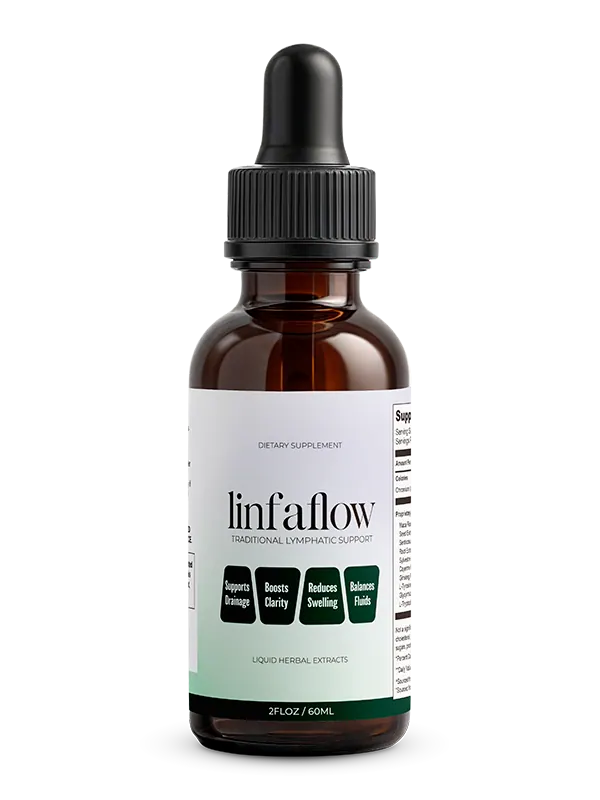
Four plant extracts in one 300 mg blend, taken as a dropper under the tongue: Cleavers to get parked fluid moving, Stillingia root to open the deeper routes so it has somewhere to go, Red Clover blossom for the surface layer that shows on your face, and Prickly Ash bark for the days you barely leave your chair. It contains no diuretic and no stimulant, so there is no bathroom day and nothing to rebound from. Made in the USA and tested by an outside lab batch by batch. Its honest limit: this is a traditional botanical formula and says so on its label — red clover is the one extract with modern human research behind it. Full breakdown in our Linfaflow review.
Look elsewhere if: you want a printed milligram behind every plant — that is a question of fit rather than a flaw, and open-label formulas exist for exactly that buyer.
Lymph Tonic
The wide-spectrum route — thirteen herbs, horse-chestnut anchored
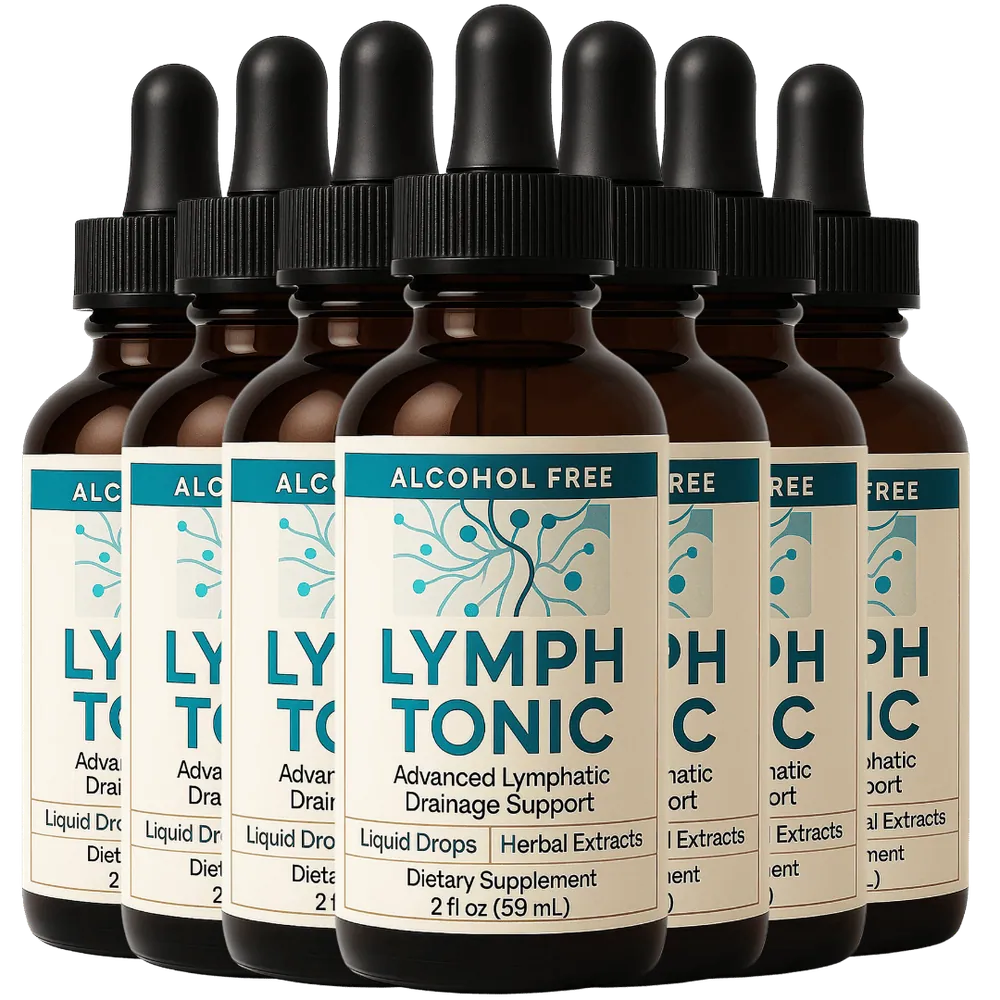
Thirteen herbs in a 600 mg alcohol-free blend, two droppers a day in water. It is anchored by horse chestnut, which is the most-studied plant extract there is for chronic venous insufficiency and leg swelling — a genuinely sound thing to build a formula around. Choose it if your complaint is squarely legs and ankles rather than mornings and face, or if a longer ingredient list is what makes you comfortable. Full breakdown in our Lymph Tonic review.
Look elsewhere if: your mornings are the problem rather than your evenings — the face-first sequence is where our top pick is aimed.
Frequently asked questions
What is the best supplement for swollen legs and ankles?
Our pick is Linfaflow, and the reason is what it works on. Most of the category is built on diuretic herbs that make you urinate more — dandelion, parsley, horsetail. That empties fluid from your blood, not from the tissue where the swelling actually sits. Linfaflow is a four-plant liquid built around drainage instead, taken as a dropper under the tongue, with no diuretic and no stimulant in it. Lymph Tonic is the wider alternative at thirteen herbs. Neither is a cure, and swelling in one leg only is a doctor's question first.
Do supplements for swollen legs actually work?
Some of the category has real backing and some of it does not, and the difference matters. Plant compounds studied for leg heaviness and swelling — the group vascular medicine calls venoactive compounds — were reviewed in 2025 in the Journal of Vascular Surgery: Venous and Lymphatic Disorders, and a second team re-examined the same evidence in Vascular Pharmacology in 2026. Both concluded these plants do something real, and both placed them as support alongside the rest of your care rather than as a replacement for it. What does not hold up is the promise of eliminating swelling in days.
Are supplements better than compression socks?
They are not competing, and the honest answer is that they do different jobs. Compression works, and a 2025 review in Lymphology confirmed that pumps genuinely reduce limb volume. But it squeezes from the outside and it stops the moment you take it off. A daily formula works on the inside, on the ordinary Tuesday when you are not wearing anything. Plenty of people use both, and that is a reasonable choice rather than a contradiction.
Is it better to take a water pill for swollen ankles?
A water pill tells your kidneys to pull water out of your blood and send it to your bladder. That is why it means a day of bathroom trips, and why many people wake up puffier the next morning. The swelling you see in your ankle is fluid sitting in tissue, which is a different compartment. If a doctor prescribed a diuretic for a diagnosed condition, keep taking it and talk to them before adding anything. If you bought one over the counter for puffiness, a drainage-focused formula is aimed at the right place.
How long do these supplements take to work?
Plan on weeks, not days, and expect the changes in a specific order. The face and the morning puffiness tend to ease first, usually inside the first fortnight. Legs, ankles and the sock mark follow from around week three. Skin tone and steadier afternoon energy come later. That sequence is why we weight the money-back window so heavily in the ranking — a 30-day guarantee ends before the part most people bought it for has arrived.
When should swollen legs be seen by a doctor?
Get seen now, before buying anything, if the swelling is in one leg only, if it arrived suddenly, or if it comes with pain, redness, warmth, breathlessness or chest discomfort. As the American Family Physician clinical review of peripheral edema sets out, swollen legs and feet can come from your veins, heart, kidneys, liver or thyroid, or from medication you already take — and several of those are far easier to sort out early. Supplements are for the everyday kind: both legs, gradual, worse by evening.