
Compared
Water Pills vs Drainage Drops: Which One Moves the Fluid You Can Actually See?
Both promise less swelling. They act on two different compartments of your body, and only one of them is where the puffiness you can see actually sits. That is the whole comparison.

The Verdict
A water pill empties your blood. The puffiness you can press with a thumb is in your tissue. That single distinction explains almost everything people find frustrating about over-the-counter diuretics — the day in the bathroom, the number on the scale that moves and then comes back, the morning after when your face is puffier than before you started.
If your problem is everyday swelling — both ankles, worse by evening, better after a night's sleep — a daily formula aimed at drainage is pointed at the right compartment. Our pick there is Linfaflow, with Lymph Tonic as the wider-spectrum alternative.
One line that outranks all of the above: if a doctor prescribed you a diuretic, keep taking it. It was written for a diagnosed reason. Nothing here replaces it.
The part nobody explains: two compartments, not one
Picture the fluid in your body as sitting in two places. Some of it is inside your blood vessels, moving around. The rest has left the vessels and settled into the tissue between your cells — and that is the part you can see. When you press your thumb into a swollen ankle and the dent stays for a second, that is tissue fluid.
A diuretic works on the first compartment. It tells your kidneys to filter more water out of your blood and send it to your bladder. It is very good at that. It is not designed to reach into tissue and collect what is sitting there.
The job of collecting tissue fluid belongs to a second circulation — the lymphatic system. It carries roughly twice the fluid your blood does, and unlike your blood it has no pump. It moves when your muscles contract, when you breathe deeply, when you walk. A day spent sitting is a day that system barely runs.
Losing water from your blood and clearing fluid out of your tissue are two different events. A scale can only see the first one. Your mirror is reporting on the second.
Why the water pill often makes the morning worse
This is the complaint that sends most people looking for something else, and it has a mechanism behind it rather than being bad luck.
When a diuretic lowers your blood volume, your body notices. The hormonal systems that manage fluid respond by holding onto sodium and water more tightly afterwards. People experience that as rebound: a good day, then a puffier morning. Meanwhile the tissue fluid you were actually trying to reach has not been addressed, so the ankle looks much the same while the rest of you is drier than it was.
There is a second problem with the over-the-counter versions. Diuretic herbs and OTC water pills are not gentle by definition — they can affect electrolyte balance, and the FDA does not guarantee that every herbal water pill on a shelf is what its label says. That is not a reason for alarm, but it is a reason to stop assuming "natural diuretic" means "no consequences".
By the numbers
Hours
how fast a diuretic shows on the scale
~2×
the fluid your lymphatic system carries versus your blood
Zero
pumps that system has of its own
Week 3
when leg and ankle changes typically show on a daily formula
Side by side
| Over-the-counter water pills | Daily drainage formulas | |
|---|---|---|
| What it acts on | Your kidneys — fluid inside the bloodstream | The lymphatic side — fluid sitting in tissue |
| How it feels day one | Frequent bathroom trips; a quick drop on the scale | Nothing you can feel — there is no flush to notice |
| Typical timeline | Hours, then it fades | Face first in the opening fortnight; legs from week three |
| The morning after | Rebound puffiness is a common complaint | No forced flush, so nothing to rebound from |
| Main cautions | Dehydration, electrolyte swings, variable OTC quality | Botanical interactions — check against your prescriptions |
| Best suited to | A prescribed, monitored purpose decided by your doctor | Everyday puffiness in an otherwise healthy adult |
Worth stating plainly, because it is the honest frame for the whole comparison: plant compounds for leg heaviness are not fringe. A 2025 review in the Journal of Vascular Surgery: Venous and Lymphatic Disorders examined the research on plant-derived venoactive compounds in venous disease, and a second team re-examined the same evidence in Vascular Pharmacology in 2026. Both concluded these plants do something real, and both placed them as support alongside the rest of your care rather than as a replacement for it.
The line we will not blur
Everything above is about over-the-counter water pills — the ones you can pick off a shelf for puffiness.
A prescribed diuretic is a different object entirely. Furosemide, hydrochlorothiazide and the rest are written for diagnosed reasons: blood pressure, heart failure, kidney or liver conditions. They are doing a job that matters, and stopping one on your own can be genuinely dangerous. No supplement on this site is a substitute for it, and we would rather lose the sale than imply otherwise.
If you take one and want to add a daily botanical alongside, the move is to bring the label to your prescriber or pharmacist and let them look at the whole list. That is not a formality — combining two products that both act on fluid is exactly the situation where a professional should be involved.
If you are choosing a daily formula
Two options aimed at the tissue side rather than at your kidneys. Neither is a replacement for a prescribed diuretic.
Linfaflow
The closest thing here to the opposite of a water pill
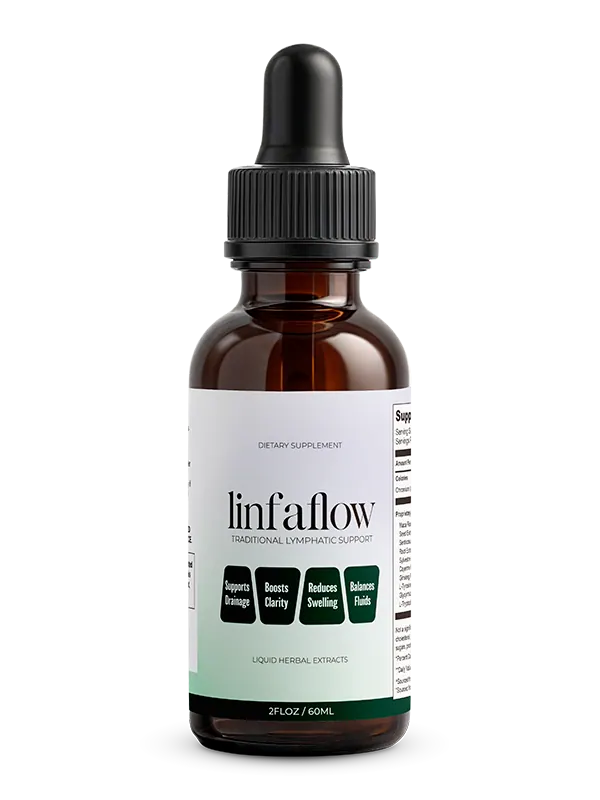
Four plant extracts in a 300 mg blend, taken as a dropper under the tongue: Cleavers to move parked fluid, Stillingia root to open the deeper routes, Red Clover blossom for the surface layer that shows on your face, and Prickly Ash bark for the days you barely stand up. There is no diuretic and no stimulant in it, and nothing in the bottle but the plants, vegetable glycerin and water. Made in the USA, tested by an outside lab batch by batch. Full breakdown in our Linfaflow review.
Know before you buy: it is a traditional botanical formula and says so on its label. Red clover is the extract with modern human research; the other three carry herbal records rather than trials.
Lymph Tonic
Wider spectrum, if a longer ingredient list reassures you
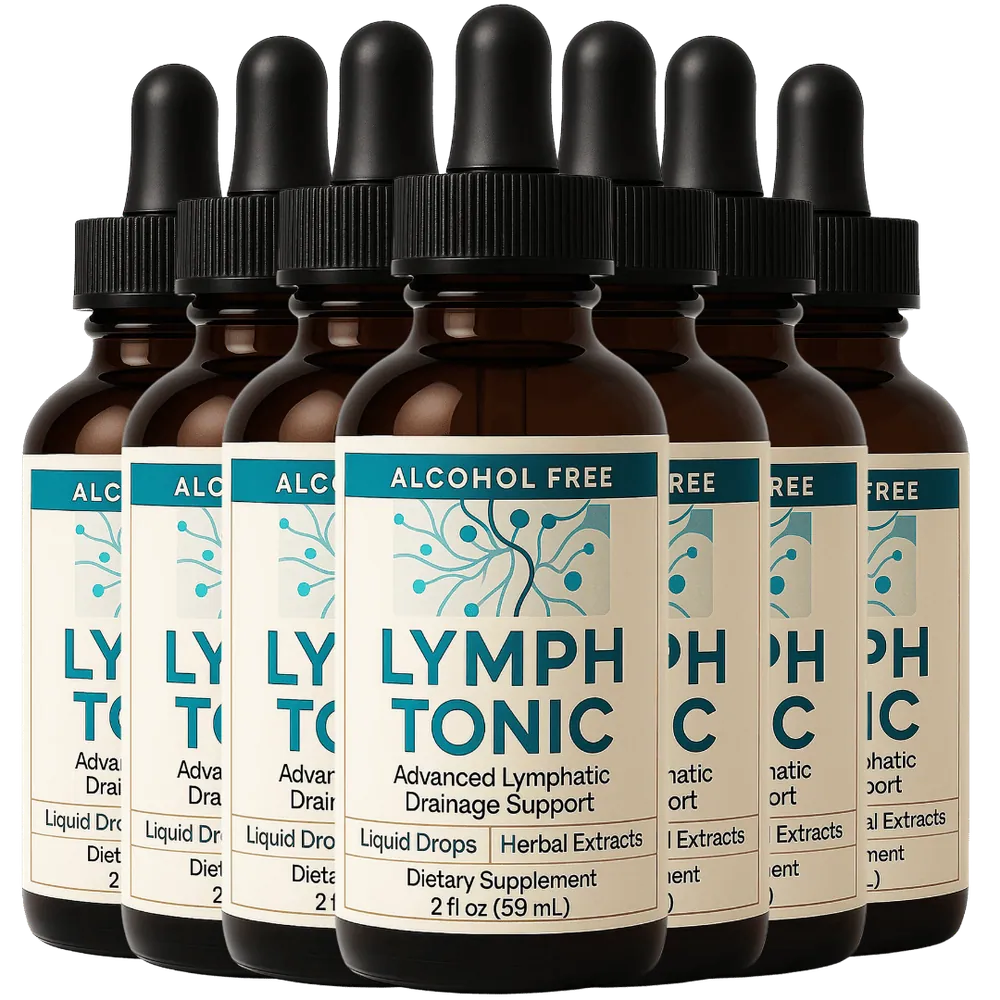
Thirteen herbs in a 600 mg alcohol-free blend, two droppers a day in water, anchored by horse chestnut — the most-studied plant extract for chronic venous insufficiency and leg swelling. A sound choice if your complaint is squarely legs and ankles. The guarantee is 60 days rather than 90. Full breakdown in our Lymph Tonic review.
When neither is the answer
Some swelling is a signal rather than a nuisance, and it deserves checking before you spend anything. The American Family Physician clinical review of peripheral edema lists causes running from veins to heart, kidneys, liver and thyroid, plus medications you may already take — and several of those are far easier to sort out early.
The rule most people can use: one leg only, sudden onset, or painful — book the appointment. Both legs, gradual, worse by evening and better by morning — that is the everyday kind this article is about.
Water pills or drainage drops: which should you take?
If you have been buying water pills for puffiness and wondering why the swelling keeps coming back, the answer is probably not that you need a stronger one. It is that the fluid you are trying to move is not in the compartment the pill is working on.
A daily drainage formula is aimed at the right place, and it asks something different of you: weeks instead of hours, and a habit instead of a dose you take when you feel puffy. Face first, legs from around week three. Linfaflow is where we would start, largely because a 90-day empty-bottle window lets you find out on your own ankles without carrying the risk.
And if your diuretic came from a doctor, it stays. That one is not up for comparison.
Frequently asked questions
What is the difference between a water pill and a drainage supplement?
They act on two different compartments. A water pill is a diuretic: it tells your kidneys to pull water out of your bloodstream and send it to your bladder. A drainage formula is aimed at the lymphatic side — the system that collects fluid out of tissue and carries it back. The puffiness you can press with a thumb is in tissue, not in blood, which is why the two feel so different to take.
Why do I wake up puffier after taking a water pill?
Because your body reads the fluid loss as something to correct. Diuretics lower blood volume, and hormonal systems respond by holding onto sodium and water afterwards — the effect people describe as rebound. Over-the-counter water pills also do nothing for the fluid already sitting in tissue, so the swelling you were trying to reach is often still there while your blood is drier than before.
Should I stop my prescribed diuretic and take drops instead?
No. If a doctor prescribed furosemide, hydrochlorothiazide or any other diuretic, it was prescribed for a diagnosed reason — often blood pressure, heart or kidney related — and stopping it on your own can be dangerous. Nothing on this page is a replacement for it. If you want to add a drainage formula alongside, bring the label to the doctor or pharmacist who prescribed your medication first.
Are drainage drops safer than water pills?
They work differently rather than being simply safer, and both deserve care. Drainage formulas are plant blends without a forced kidney flush, so they avoid the dehydration and electrolyte swings that over-the-counter diuretics can cause. But plants interact too: red clover contains isoflavones, which matters if you take a blood thinner or have a hormone-sensitive condition. Check any new product against your prescription list.
Which one works faster?
The water pill, and that is exactly what misleads people. A diuretic shows a number on the scale within hours because you have urinated out blood volume. A drainage formula works over weeks — the face tends to ease first, legs and the sock mark from around week three. Fast is not the same as reaching the right place, and the speed is the reason so many people cycle through water pills without the swelling ever really going.
Can I use both?
Only with medical guidance, and never by adding an over-the-counter diuretic on top of a prescribed one. If you are already on a prescription diuretic and want to add a daily botanical, that is a conversation with your prescriber — combining products that both act on fluid is precisely the situation where a professional should be looking at the whole list.