
Troubleshooting
Compression Socks Not Helping Swelling? Here's Why, and What to Check Next
Almost everyone answering this question sells compression socks, so the answer is almost always 'buy a better sock'. Sometimes that is right. Here is how to tell — and what it means when it is not.
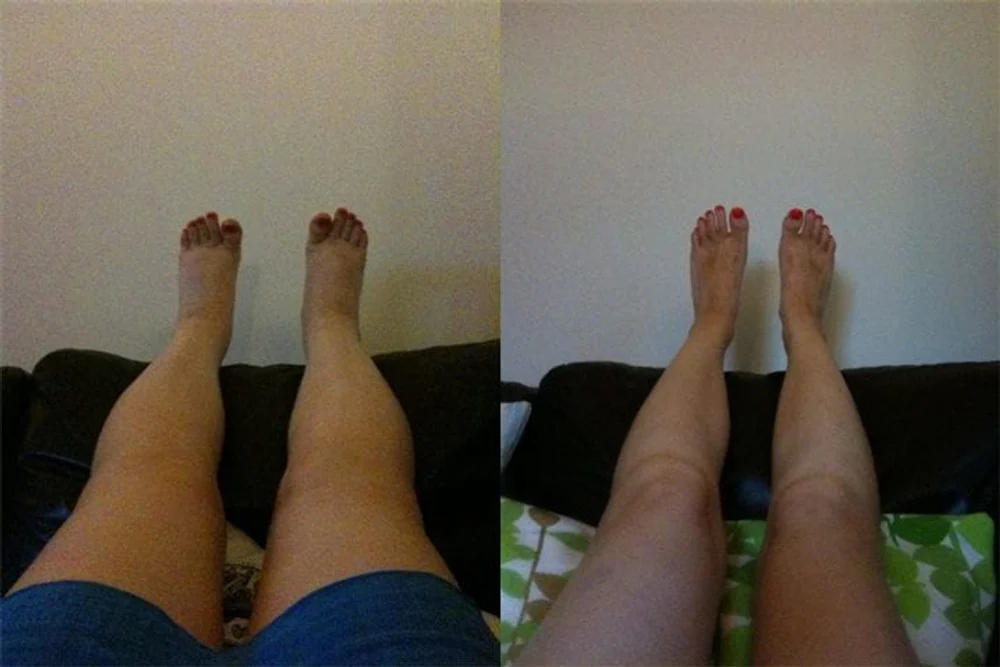
The Verdict
Check the boring things first, because most failures are there. Wrong size, pressure too low for your situation, socks older than about six months, or socks that bunch and roll instead of lying flat. That checklist is below and it costs nothing to run.
If you have fixed all of it and your legs still swell, the socks are not broken — they are doing exactly what compression does. They hold fluid out of the way while they are on. They do not change how well your body collects fluid out of tissue and carries it away. That second job belongs to a system with no pump of its own, and it is the part nobody selling you a sock has any reason to mention.
One line that outranks everything else here: swelling in one leg only, swelling that arrived suddenly, or swelling with pain, redness, warmth or breathlessness is an appointment, not a purchase.
First, the checklist nobody with socks to sell will finish
We do not sell compression socks. That is worth saying at the top, because it is why this list ends where it does rather than at "so buy our better pair".
Run these five in order. If one of them is your answer, you have saved yourself a purchase.
| Check | How to tell | The fix |
|---|---|---|
| Are they actually your size? | If you can pinch a fold of fabric away from your calf, they are too loose. If they leave deep indentations or pinch behind the knee, too tight. | Measure your ankle and calf in the morning, before the leg fills, and buy to the measurement rather than to your shoe size. |
| Is the pressure right for the job? | Most off-the-shelf pairs are 15–20 mmHg, which is a comfort-and-travel level. | Persistent swelling often needs a higher graduated level, and that is a decision to make with a clinician rather than by guessing upward. |
| How old are they? | They feel easy to put on and comfortable all day. That is the symptom, not the reassurance. | Assume the graduated pressure has faded after about six months of regular wear and washing. Worn socks look fine and do nothing. |
| Do they lie flat? | Bunching, rolling at the top, or a fold behind the knee. | A rolled band becomes a tourniquet and can make swelling worse below it. Smooth them fully or size differently. |
| When do you put them on? | You pull them on at lunchtime, or after a day on your feet. | Put them on in the morning before the leg has filled. Compression is far better at keeping fluid out than at pushing fluid that is already there. |
Then the part the checklist cannot fix
Say the fit is right, the pressure is right, the pair is new and you put them on before breakfast. The leg still refills within an hour of taking them off in the evening.
That is not a defective sock. That is compression doing precisely what compression does.
It works from the outside. It narrows the space fluid can pool in and it supports the veins carrying blood back up your leg. The evidence for that is real — a 2025 systematic review and meta-analysis in Lymphology found that advanced pneumatic compression devices genuinely reduce limb volume. But the benefit belongs to the hours the pressure is applied. Remove it and the leg returns to whatever your circulation is managing on its own.
Compression keeps fluid out of the way. Something else has to carry it away. If only the first job is being done, every evening starts from zero.
The carrying-away job belongs to a second circulation most people never hear about until they go looking. Your lymphatic system moves roughly twice the fluid your blood does, collecting what has leaked into tissue and returning it — and unlike your blood, it has no pump. It moves when your muscles contract, when you breathe deeply, when you walk. Nine hours in a chair is nine hours with that pump switched off, and no stocking changes that.
By the numbers
15–20
mmHg in most off-the-shelf pairs — a comfort level, not a swelling level
~6 months
before regular wear and washing quietly fades the graduated pressure
~2×
the fluid your lymphatic system carries versus your blood
Zero
pumps that system has of its own
What each approach actually reaches
| Compression | Daily drainage formula | |
|---|---|---|
| Where it works | From outside the leg, mechanically | From inside, on the system that collects tissue fluid |
| When it works | While it is on | Continuously, including the hours you are asleep |
| What it asks of you | Putting it on early, correct size, replacing it twice a year | Thirty seconds a day, repeated for weeks |
| Reaches the face? | No | Yes — and that is usually where the first change shows |
| Rough cost | $30–150 a pair, replaced twice a year | About $1.33 a day at full price on the three-bottle package |
They are not competitors. Compression is the better tool for holding a leg through a long day on your feet; a daily formula is aimed at what happens the rest of the time. Plenty of people do both, and that is a sensible answer rather than a contradiction.
Worth saying plainly, because it is the honest frame: plant compounds for leg heaviness are not a fringe idea. A 2025 review in the Journal of Vascular Surgery: Venous and Lymphatic Disorders examined plant-derived venoactive compounds in venous disease, and a second team re-examined the same evidence in Vascular Pharmacology in 2026. Both concluded these plants do something real, and both placed them as support alongside the rest of your care rather than instead of it.
If you want to try the inside route
Two formulas aimed at the tissue side rather than at the outside of your leg. Neither replaces compression, and neither replaces a doctor.
Linfaflow
Best for the swelling that comes back the moment the stocking comes off
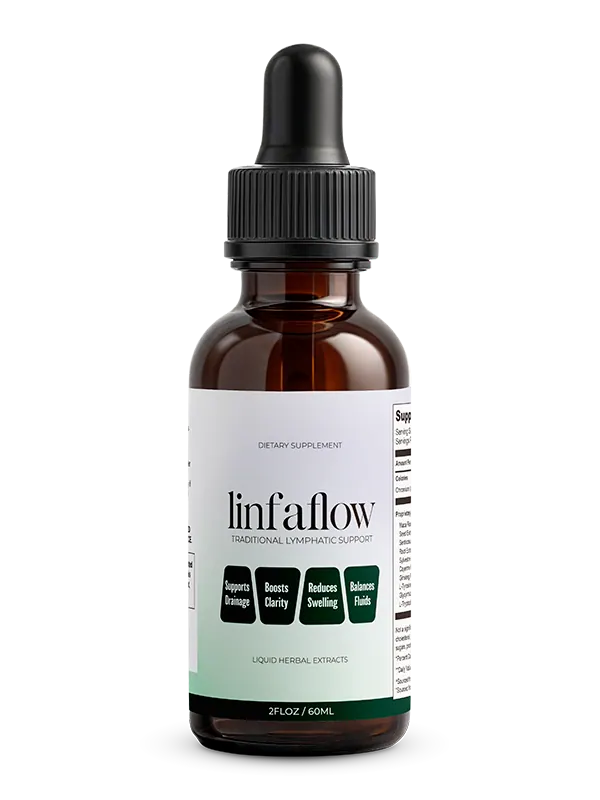
Four plant extracts in a 300 mg blend, taken as a dropper under the tongue: Cleavers to move parked fluid, Stillingia root to open the deeper routes, Red Clover blossom for the surface layer that shows on your face, and Prickly Ash bark for the days you barely stand up. No diuretic and no stimulant, so there is no bathroom day and nothing to rebound from. Made in the USA, tested by an outside lab batch by batch. Full breakdown in our Linfaflow review.
Know before you buy: it is a traditional botanical formula and says so on its label. Red clover is the extract with modern human research; the other three carry herbal records rather than trials. And it is a weeks-long routine — the legs tend to follow the face, from around week three.
Lymph Tonic
Wider spectrum, anchored by the most-studied botanical for leg swelling
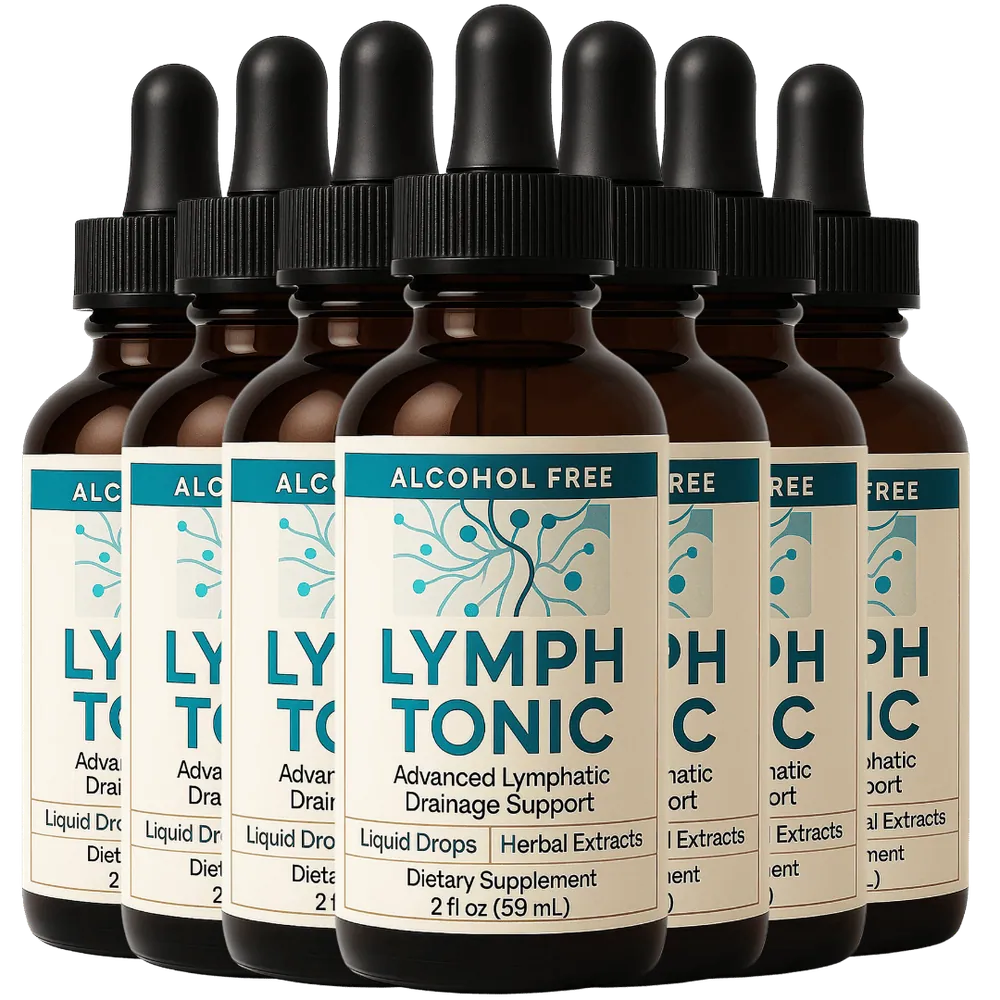
Thirteen herbs in a 600 mg alcohol-free blend, two droppers a day in water, anchored by horse chestnut — the most-studied plant extract there is for chronic venous insufficiency and leg swelling. A sound choice if your complaint is squarely legs and ankles, or if a longer ingredient list is what reassures you. The guarantee is 60 days rather than 90. Full breakdown in our Lymph Tonic review.
When it is a doctor's question, not a product's
Compression that stops working can also be a signal that something changed rather than that the sock aged. The American Family Physician clinical review of peripheral edema lists causes running from veins to heart, kidneys, liver and thyroid, plus medications you may already be taking — and several of those are far easier to sort out early.
The rule worth keeping: one leg only, sudden onset, or painful — book the appointment. Both legs, gradual, worse by evening and better after a night's sleep — that is the everyday kind this page is about.
And if a clinician fitted your stockings for a diagnosed condition, keep wearing them. Nothing here is a reason to stop.
What to do when compression socks aren't helping swelling
If you have not run the checklist, run it. Wrong size, faded elastic and a lunchtime application are genuinely the most common reasons compression underdelivers, and fixing them costs you nothing but a tape measure.
If you have run it and the answer is still the same leg every evening, stop looking for a better sock. You are asking one tool to do two jobs. Compression will hold the fluid out of the way; what it cannot do is improve how your body carries that fluid away, and that is where a daily routine belongs. Linfaflow is where we would start — mostly because 90 days with empty bottles accepted lets you find out on your own legs without carrying the risk.
Frequently asked questions
What does it mean if compression socks don't work?
Usually one of two things, and they need different fixes. The common one is mechanical: the wrong size, a pressure level too low for your situation, socks that have lost their elasticity, or socks that bunch and roll instead of lying flat. Run that checklist first, because it is cheap and it is often the whole answer. The second is that compression is doing its job while it is on and your swelling is being driven by something it cannot reach — which is why the legs refill within an hour or two of taking them off.
Why are compression socks not helping with my swelling?
Compression works from the outside. It squeezes tissue so fluid has less room to pool, and it supports the veins carrying blood back up. What it does not do is change how well your body collects fluid out of tissue and carries it away — that is the lymphatic side, and it has no pump of its own. If the fit and pressure are right and the swelling still returns as soon as the stocking comes off, that gap is the likeliest explanation.
How many hours a day should one wear compression stockings?
The usual guidance is to put them on in the morning before your legs have filled and take them off at night, so roughly your waking hours. Two practical points people miss: putting them on after your legs are already swollen makes them much harder to get on and less effective, and wearing them overnight is not standard advice unless a clinician told you to. If you are unsure what applies to you, that is a question for whoever fitted them.
Why are my legs still swollen after wearing compression socks?
Because compression manages swelling rather than resolving what causes it. It is genuinely effective — a 2025 systematic review in Lymphology found that advanced pneumatic compression devices reduce limb volume — but the effect belongs to the time the pressure is applied. Take the stocking off and the leg goes back to whatever your circulation and drainage are doing on their own. That is not a failure of the product; it is what compression is.
How do I know if my compression socks are too loose or worn out?
Three quick tests. If you can pinch a fold of fabric away from your calf, they are too loose. If they slide down during the day or you can pull them on easily with no effort, the elastic has gone. And if it has been more than about six months of regular wear and washing, assume the graduated pressure has faded even if they still look fine. Worn socks feel comfortable precisely because they have stopped working.
When should swollen legs be seen by a doctor?
Before you buy anything else. Get seen now if the swelling is in one leg only, if it came on suddenly, or if it comes with pain, redness, warmth, breathlessness or chest discomfort. As the American Family Physician clinical review of peripheral edema sets out, swollen legs can come from your veins, heart, kidneys, liver or thyroid, or from medication you already take — and several of those are far easier to sort out early.