
Evidence Check
Do Lymphatic Drainage Supplements Work? What Holds Up and What Doesn't
The honest answer sits between the two you keep finding. One half of the internet says there is no evidence at all. The other half promises your legs back in two weeks. Neither is right.

The Verdict
Nothing you swallow pumps lymph. That system moves when your muscles contract and your ribcage expands. Any page telling you a capsule drives it is selling, and you can stop reading that page.
But the blanket dismissal is wrong too, and it is the more common mistake. One family of plant compounds acts on the vessel wall and on how easily fluid leaks into tissue. These are called venoactive compounds, they appear in vascular guidelines, and two separate research teams reviewed them in 2025 and 2026.
So the question worth asking is not "do they work" but "is this one built on that". Most of the aisle is diuretic-led, which aims somewhere else entirely. The five checks that separate them are below.
The two wrong answers you keep finding
Search this question and you get two kinds of page. Both are confident and both are incomplete.
The first says there is no clinical evidence for lymphatic supplements, full stop. That is true about the specific claim of driving lymph flow. It quietly skips the plant compounds that do have trials, which is a large omission.
The second promises drainage, detox and legs transformed in a fortnight. On detox specifically, NCCIH is unambiguous: those products do not have evidence behind the claims they make. Your body has organs for that job already.
The accurate answer is narrower than either, and more useful. Some of these formulas contain compounds with real research. Many do not. The label tells you which, once you know what to look at.
Stop asking whether drainage supplements work. Ask whether the one in your hand is built on the compounds that have evidence, or on the ones that just sound herbal.
What no supplement can do
Clearing this first makes the rest of the page easier to judge. These four claims are common and none of them hold.
| The claim | Why it does not hold |
|---|---|
| "It pumps your lymphatic system" | That system has no pump of its own. It moves with muscle contraction and deep breathing. A 2025 systematic review in Lymphology found that mechanical pneumatic devices do reduce limb volume, which tells you the lever is physical, not chemical. |
| "It detoxes you" | Your liver and kidneys already do this continuously. NCCIH states plainly that detox and cleanse products lack evidence for the claims they make. |
| "It clears cellulite" | Cellulite is structural, not a pocket of fluid. General puffiness settling can change how skin looks, which is a different statement from treating cellulite. |
| "It cleanses your kidneys" | Different system, different job. Kidneys filter blood; the lymphatic side collects fluid from tissue. Formulas marketed for both are usually marketed for neither well. |
What actually holds up
Here is the part the dismissive articles leave out.
A group of plant compounds has been studied for decades in people with heavy, swollen legs. They act on the vessel wall and on how readily fluid leaks out of small vessels into tissue. In vascular medicine they are called venoactive compounds.
A 2025 review in the Journal of Vascular Surgery: Venous and Lymphatic Disorders went through that evidence. A second team re-examined the same body of work in Vascular Pharmacology in 2026 to check it held up against international guidelines. Both concluded these compounds do something real, and both placed them as support alongside the rest of your care rather than as a replacement for it.
Individual plants have their own human data too. A 2026 GRADE-assessed meta-analysis in the European Journal of Obstetrics and Gynecology pooled nine randomized trials of red clover and found a modest but statistically significant effect on menopausal hot flushes. That is a different outcome from swelling, and it is quoted here for one reason: it shows the plant has been put through proper trials rather than only tradition.
Where "vitamin P" comes from
You may run into flavonoids described as vitamin P. That is a real name from 1930s research, dropped afterwards because flavonoids are not vitamins — your body does not require them the way it requires vitamin C. The compounds themselves stayed in the research, and today they sit inside the venoactive category above. Old name, current science.
By the numbers
2
independent research teams reviewing venoactive compounds, in 2025 and 2026
9
randomized trials pooled in the 2026 red clover meta-analysis
Zero
pumps the lymphatic system has of its own, which is why the mechanical lever is real
1–2 wks
where the first reported change usually shows: the face, not the legs
Five checks that separate a real formula from a label
You can run all five in the time it takes to read a supplement panel.
| Check | What you are looking for |
|---|---|
| Drainage or diuretic? | Dandelion, parsley, horsetail and juniper are diuretics. They tell your kidneys to pass more water, which comes out of your blood rather than out of the tissue you can see. This is the single biggest split in the aisle. |
| Coherent list, or just long? | Twenty ingredients are easy to print and hard to justify. Favour formulas where each plant has a distinct job and the jobs fit together. |
| Could you keep taking it? | Everything here works by repetition over weeks. A thirty-second routine survives a bad week; a regimen with food timing does not. Format is part of the mechanism, not a detail. |
| Guarantee longer than the timeline? | Legs do not report until around week three. A 30-day window closes before you can judge what you bought. This is where much of the category quietly fails. |
| What else is on the panel? | Hidden caffeine and stimulants show up here and have nothing to do with drainage. Short, clean panels with third-party batch testing win. |
Two that pass the checks
Both are built on plants rather than diuretics, and both name their own limits. They are two routes to the same feeling, not rivals.
Linfaflow
Short, coherent list and a guarantee longer than the timeline
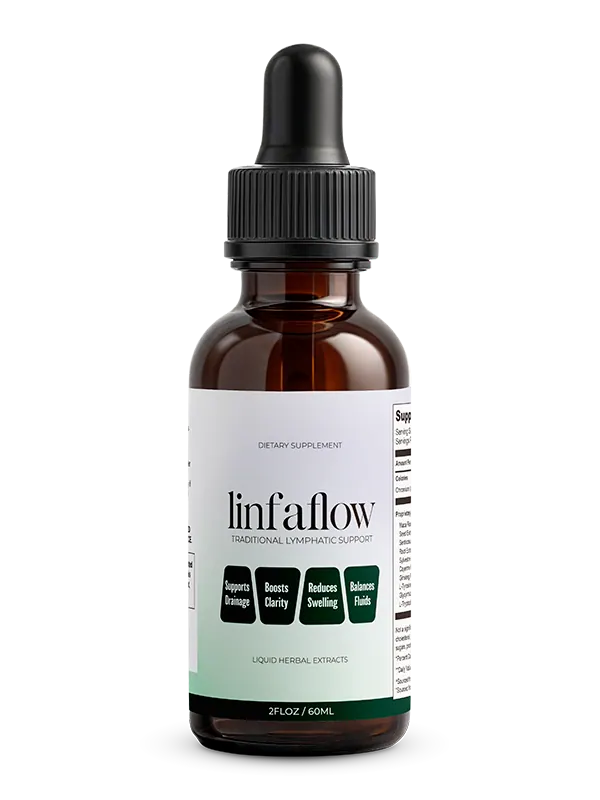
Four plant extracts in one 300 mg blend, taken as a dropper under the tongue: Cleavers to get parked fluid moving, Stillingia root to open the deeper routes, Red Clover blossom for the surface layer that shows on your face, and Prickly Ash bark for the days you barely leave your chair. No diuretic and no stimulant, which is the first check passed. Made in the USA and tested by an outside lab batch by batch. Full breakdown in our Linfaflow review.
Know before you buy: it is a traditional botanical formula and says so on its label. Red clover is the one extract with modern human research behind it; the other three carry herbal records rather than trials. If you have a hormone-sensitive history or take hormone therapy, ask your doctor about the red clover first.
Lymph Tonic
The wider list, anchored by the most-studied plant in the category
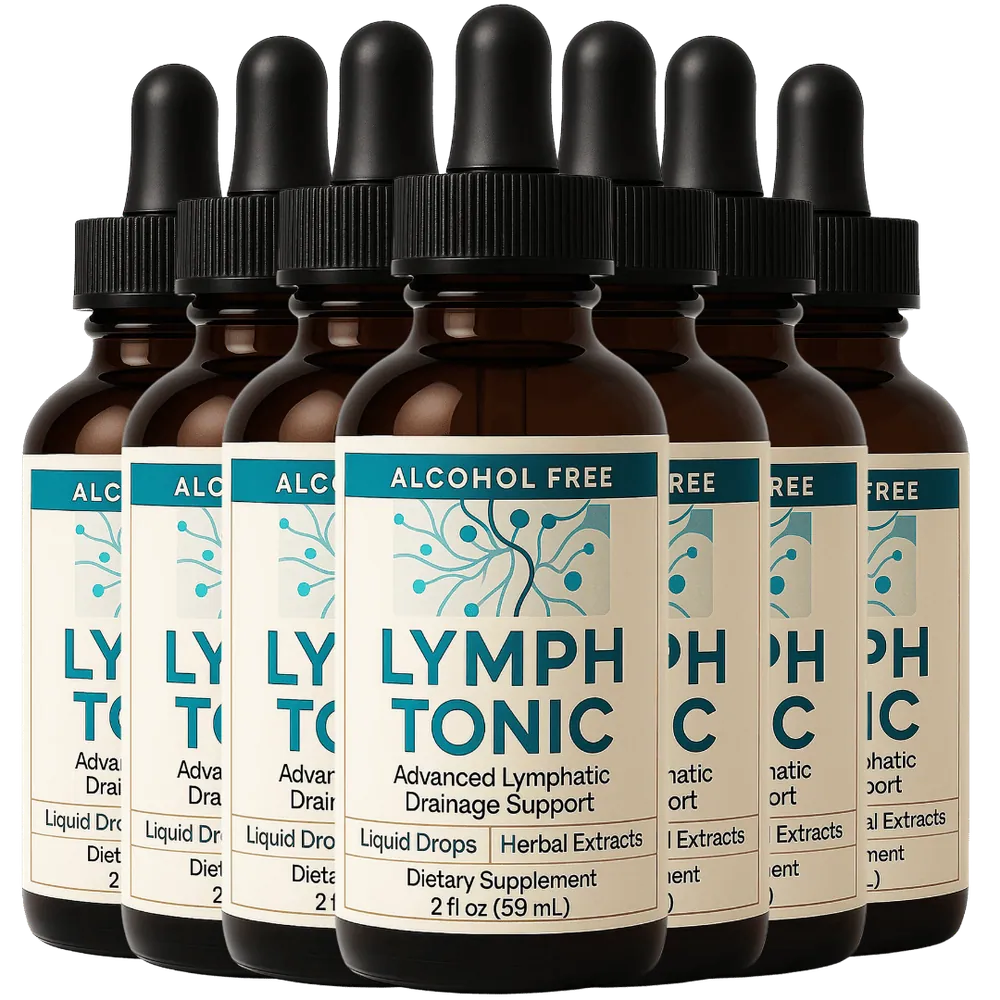
Thirteen herbs in a 600 mg alcohol-free blend, two droppers a day in water, anchored by horse chestnut — the plant extract with the most human evidence for leg swelling and chronic venous insufficiency. If your complaint is squarely legs and ankles, that anchor is exactly on target, and a longer ingredient list is what reassures some buyers. Full breakdown in our Lymph Tonic review.
Know before you buy: the guarantee is 60 days rather than 90, which is tight for a change that builds over weeks. And thirteen herbs means individual amounts are spread thinner than in a four-plant formula.
What to expect, and in what order
The sequence is predictable enough to use as a test of whether a page is being straight with you.
The face, eyelids and fingers report first, usually around week one to two. Fluid shows fastest in thin, loosely attached tissue, and that is where it lands overnight while you are lying flat.
Legs and ankles take longer, commonly three to six weeks, because gravity works against you there every waking hour. Any page promising the reverse order has the physiology backwards, and that is a useful thing to notice.
None of this replaces the free levers. Elevation, movement and fitted compression all work, and our companion pieces cover what actually moves fluid overnight and why compression socks sometimes stop helping.
Do lymphatic drainage supplements work?
No capsule drives your lymphatic system, and a page that says otherwise has told you something about itself. That is the part the sceptics get right.
What they miss is that venoactive plant compounds are a real research category, reviewed twice in the last two years, and that some formulas are genuinely built on plants rather than on diuretics. Run the five checks and the aisle sorts itself quickly.
Linfaflow is where we would start, mostly because 90 days with empty bottles accepted is longer than the timeline you are testing. If the legs are the whole complaint, Lymph Tonic and its horse chestnut anchor is the more targeted choice. And if you want the product shortlist by symptom instead, that is our guide to the best supplements for swollen legs and ankles.
Frequently asked questions
Do lymphatic drainage supplements actually work?
Not in the way the marketing implies, and better than the sceptics allow. Nothing you swallow pumps lymph, because that system moves when your muscles contract and your ribcage expands, not on chemical command. What some of these formulas do contain are plant compounds that act on the vessel wall and on how easily fluid leaks into tissue. That category has real research behind it, and it is the part worth paying for.
Do lymphatic drainage pills work for cellulite?
There is no good evidence that they do, and it is worth being blunt about it. Cellulite is a structural feature of how fat, connective tissue and skin are arranged, not a fluid problem waiting to be drained. Some women report smoother-looking skin when general puffiness settles, which is a real observation about swelling rather than about cellulite itself. If a smoother thigh is the whole reason you are buying, this is the wrong aisle.
Do lymphatic drainage supplements help the kidneys?
No, and the two get mixed up constantly. Your kidneys filter blood and send waste to your bladder. The lymphatic side collects fluid that has leaked into tissue and returns it to circulation. They are different systems doing different jobs. A supplement aimed at drainage is not a kidney product, and a product claiming to cleanse your kidneys is making a claim NCCIH specifically warns about.
Do these supplements work on the face?
The face is usually where people notice a change first, and there is a plain reason for it. The skin around your eyes is the thinnest on your body and only loosely attached, so small volumes of fluid show there immediately. It is also the area that fills overnight while you are lying flat. Nothing about the face is special chemically, it is simply the most visible gauge you own.
Are there side effects to lymphatic drainage supplements?
For most healthy adults these are mild botanical formulas, and the more useful question is what is on the label. Anything with a diuretic can leave you dehydrated or affect potassium if you take it regularly. Red clover is a phytoestrogen, so it needs a conversation with your doctor if you have a hormone-sensitive history or take hormone therapy. And any herbal product deserves a check against prescription medication you already take.
How long before a drainage supplement shows anything?
Weeks, not days, and the order is predictable enough to use as a test. The face, eyelids and fingers tend to report first, around week one to two, because fluid shows fastest in thin tissue. Legs and ankles take longer, commonly three to six weeks, since gravity works against you there all day. Any page promising the reverse order has it backwards.
When should swelling be checked by a doctor instead?
Before you buy anything. Swelling in one leg only, swelling that arrived suddenly, or swelling with pain, redness, warmth or breathlessness needs an appointment now. As the American Family Physician review of peripheral edema sets out, fluid retention can come from your veins, heart, kidneys, liver or thyroid, or from medication you already take. Several of those are far easier to sort out early.