In This Review:
- 1. Product at a Glance
- 2. Lymphatic Health & Circulation After 40: Evidence, Concerns & Trends
- 3. What Lymph Tonic Does and Benefits
- 4. Why We Rate It 4.5 / 5
- 5. Who It's Best For
- 6. How It Compares
- 7. Pricing & How to Order
- 8. The Mechanism + Full Ingredient List
- 9. Side Effects & Safety
- 10. Final Verdict
- 11. FAQs
Reviewed by The Supplement Post Editorial Team, Editorial Review
Updated
1. Product at a Glance
| Product | Lymph Tonic |
| Category | Heart Health / Circulation / Lymphatic Drainage Drops |
| Format | Alcohol-free liquid drops — 2 droppers daily, mixed in water (2 fl oz / 59 mL bottle, 30 servings) |
| How it works | Supports your body's natural drainage system — the network that moves trapped fluid out of swollen tissue and back into circulation. 13 herbal extracts work together to calm vascular inflammation, support vein wall integrity, and help the fluid clearance that compression stockings try to do mechanically. |
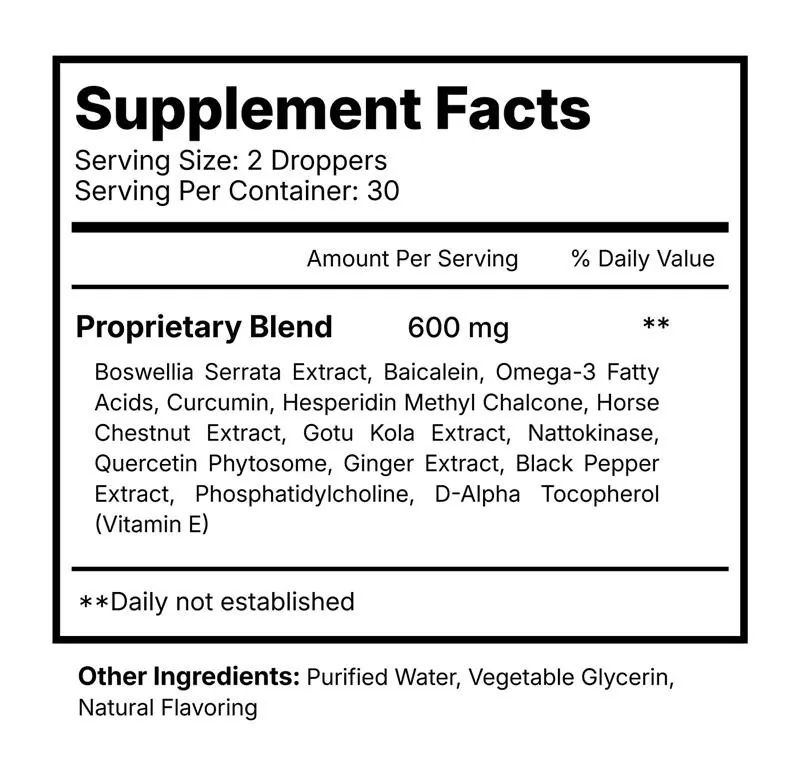
| Key Ingredients | Proprietary 600 mg herbal blend: Boswellia Serrata Extract, Baicalein, Omega-3 Fatty Acids, Curcumin, Hesperidin Methyl Chalcone, Horse Chestnut Extract, Gotu Kola Extract, Nattokinase, Quercetin Phytosome, Ginger Extract, Black Pepper Extract, Phosphatidylcholine, D-Alpha Tocopherol (Vitamin E) |
| Manufacturing | USA manufactured, third-party tested for purity, alcohol-free, natural herbal extracts with no artificial preservatives |
| Guarantee | 60-day Money-Back Guarantee |
| Our Rating | 4.5 / 5 |
Quick Verdict
If your ankles are fine in the morning but puffy by 4 pm — and compression stockings help a little but never really fix it — the problem isn't water you're drinking. It's sluggish drainage: the venous and lymphatic flow that clears fluid out of swollen tissue, slowing down with age, sitting, and hormonal shifts after 40. Lymph Tonic works on this from the inside out — where stockings can't reach. Two droppers a day deliver 13 herbal extracts that calm the inflammation behind leaky capillaries, support vein wall integrity (Horse Chestnut is the most European-prescribed botanical for chronic leg swelling), and help blood and lymph move more freely so fluid stops pooling by evening. Real users describe shoes that fit at the end of the day by week 3, lighter legs by 6 pm by weeks 4-6, less puffiness in the mirror by weeks 8-12. Alcohol-free, plant-based, USA-manufactured, third-party tested, with a 60-day money-back guarantee long enough to fairly test the result.
2. Lymphatic Health & Circulation After 40: Evidence, Concerns & Trends
Before the formula itself, here's what the current outcome and clinical evidence, the common concerns, and where a drainage tincture like Lymph Tonic honestly fits actually show about swelling, venous flow, and lymphatic support.
| The concern / trend | What the evidence shows | What it means for you |
|---|---|---|
| Horse Chestnut has real outcome evidence for leg swelling | The strongest botanical evidence for end-of-day leg swelling isn't marketing — it's a Cochrane systematic review of horse chestnut seed extract (escin) documenting measurable reductions in leg volume, pain, and edema across multiple randomized trials in chronic venous insufficiency patients. Gotu Kola (Centella asiatica) adds Belcaro-documented improvements in leg heaviness and microcirculation. | There is a real, outcome-level evidence base here for the swelling and heaviness you feel — but it lives at the level of a few specific ingredients (Horse Chestnut, Gotu Kola), not the word "drainage" on a front label. |
| Concern — "detox / drainage" marketing outruns the science | The wellness framing of "flushing toxins" through lymphatic drainage runs well ahead of what the evidence supports. The lymphatic system moves fluid and immune cells — it isn't a toxin-purge switch. The honest, evidence-backed benefit is fluid balance and reduced swelling, not cleansing or disease reversal. | Treat any "detox," "flush," or cure-type claim as a red flag. The realistic, wellness-lane outcome is less end-of-day puffiness and lighter legs — not curing a condition. |
| Trend — lymphatic-health & circulation research is going mainstream (2025+) | Lymphatic drainage has moved from a niche European spa treatment to one of the most-searched circulation and wellness topics in the U.S. through 2025, driven by social-media rediscovery of "lymphatic massage" and modern research catching up with decades of European phytotherapy on venous support. | More attention means more (and better) formulas — but also more bandwagon "drainage" products. Evidence-matched ingredients and honest, wellness-lane claims are how you separate the two. |
Where Lymph Tonic fits: on the evidence-matched, honest side of the trend. Its anchor ingredients (Horse Chestnut, Nattokinase, Gotu Kola, Quercetin Phytosome) match the strongest published support for venous and lymphatic health, and it stays in the wellness lane — fluid balance and lighter legs, not detox or disease claims. The 13 herbs are formulated as one 600 mg system rather than itemized dose-by-dose — a formulation choice built for combined effect, not a single mega-dose of one herb. Here's what the formula actually does day to day.
3. What Lymph Tonic Does and Benefits
Lymph Tonic goes after a problem most diuretics and most diet changes can't touch — sluggish drainage. Your body has two systems that move fluid out of swollen tissue: the venous system (veins carrying blood back to the heart) and the lymphatic system (a parallel network that picks up the leftover fluid your veins miss). When either of those systems slows down — and they both do with age, with sitting for long stretches, with hormonal shifts after 40 — fluid stops moving. It pools. It sits in your ankles by 4 pm. And no amount of water-drinking actually fixes it, because the problem isn't water intake. It's drainage.
You feel it in concrete ways. Rings that fit fine in the morning but cut into your finger by evening. Pants that leave deep marks around your waistband. Shoes you put on at 8 am that feel two sizes too small by dinner. Calves that feel "heavy" walking up stairs. A general puffiness in your face the morning after a salty meal that takes the whole day to go away. None of these are a "diet" problem — they're a flow problem.
What changes when the drainage starts working again is usually subtle at first, and it arrives as a cluster of small daily wins rather than one dramatic moment. By weeks 2-3, your shoes feel like they fit at the end of the day and sock lines stop biting. By weeks 4-6, the heavy-legs sensation walking up stairs softens. Between weeks 6-9, the facial puffiness after a salty meal or a restless night clears faster in the morning, and — a benefit most users don't expect — bowel regularity smooths out as the Boswellia and Curcumin calm low-grade gut inflammation. By weeks 8-12, you stop reaching for the compression stockings unprompted, the 3-4 pm "puffy crash" eases, and the ankles that used to be tight by lunchtime stay closer to their morning shape through the afternoon. The scale doesn't move dramatically (because this isn't fat — it's trapped fluid), but you look less puffy in the mirror.
And here's what compression stockings can't do. Stockings work mechanically — they squeeze fluid back up your legs while you wear them. The moment they come off, the leaky capillaries, the inflammation, and the slow blood flow that caused the swelling in the first place are still there. Lymph Tonic works on those root causes from the inside: tighter vein walls so less fluid leaks out, calmer inflammation so capillaries stop being so permeable, and freer blood and lymph flow so trapped fluid actually drains. Stockings treat the symptom; the herbal blend addresses the reason the symptom keeps coming back.
Manufactured in a USA facility, third-party tested for purity, alcohol-free (rare for tinctures), no artificial preservatives — a plant-based daily routine that most users tolerate without issue. The one safety conversation worth having before you start: if you're on prescription blood thinners (warfarin, aspirin, apixaban), the Nattokinase in this formula has documented interactions worth running past your doctor first. Everyone else, the formula is gentle by design. Full safety profile → · How the 13-herb blend actually works on drainage →
4. Why We Rate It 4.5 / 5
Lymph Tonic earns 4.5/5 because it tackles a real, under-served problem — chronic end-of-day swelling that compression stockings only partially solve — with a comprehensive 13-herb blend anchored by the ingredients with the strongest published evidence for vascular and lymphatic support: Horse Chestnut (the Cochrane-reviewed venous insufficiency botanical), Nattokinase for fibrinolytic flow, Gotu Kola for connective tissue tone, and Quercetin Phytosome for bioavailability-enhanced inflammation control. The alcohol-free liquid format is genuinely uncommon. Here's what stands out and where it falls short.
What stands out:
- Horse Chestnut extract is the most-evidence-backed botanical for chronic leg swelling — a Cochrane systematic review documents measurable reductions in leg volume in venous insufficiency patients.
- Comprehensive 13-herb formula covering four overlapping pathways: vein wall integrity (Horse Chestnut), fibrinolytic flow (Nattokinase), connective tissue tone (Gotu Kola), and inflammation control (Boswellia + Curcumin).
- Alcohol-free liquid format — rare for herbal tinctures, important for users who can't tolerate alcohol-based tinctures (most are 20-40% alcohol).
- Quercetin Phytosome (phospholipid-bound delivery) — vastly improves Quercetin absorption over generic powder. The phytosome distinction is a real formulator decision, not a marketing label.
- USA manufactured, third-party tested for purity, with no artificial preservatives or fillers.
Where it falls short:
- Nattokinase and blood thinners do not mix casually — if you take warfarin, aspirin or apixaban, clear it with your doctor before starting.
- Best fit is everyday heaviness and swelling — sudden one-sided leg swelling needs a doctor first, because that presentation can be a clot.
Full scorecard across all 6 criteria: Lymph Tonic Scorecard →
5. Who Is Lymph Tonic Best For?
Best match if you:
- Have swollen ankles or heavy legs that show up by the end of the day — especially if compression stockings help but never fully solve it
- Notice rings, waistbands, or shoes feeling tighter by 4 pm — fluid retention that follows a daily pattern, not just after salty meals
- Sit for long stretches (office work, long flights) or are over 40 and noticing circulation changes that didn't exist in your 30s
- Want an alcohol-free herbal format — most tinctures are 20-40% alcohol; Lymph Tonic is one of the few drops that isn't
- Are willing to give the formula 60-90 days of consistent daily use — vascular changes don't show up overnight
- Are NOT on blood-thinner medication (the Nattokinase in this formula requires doctor coordination for warfarin, aspirin, or apixaban users)
6. How It Compares
| Criteria | Lymph Tonic (this) | Linfaflow | CircO2 |
|---|---|---|---|
 |
 |
 |
|
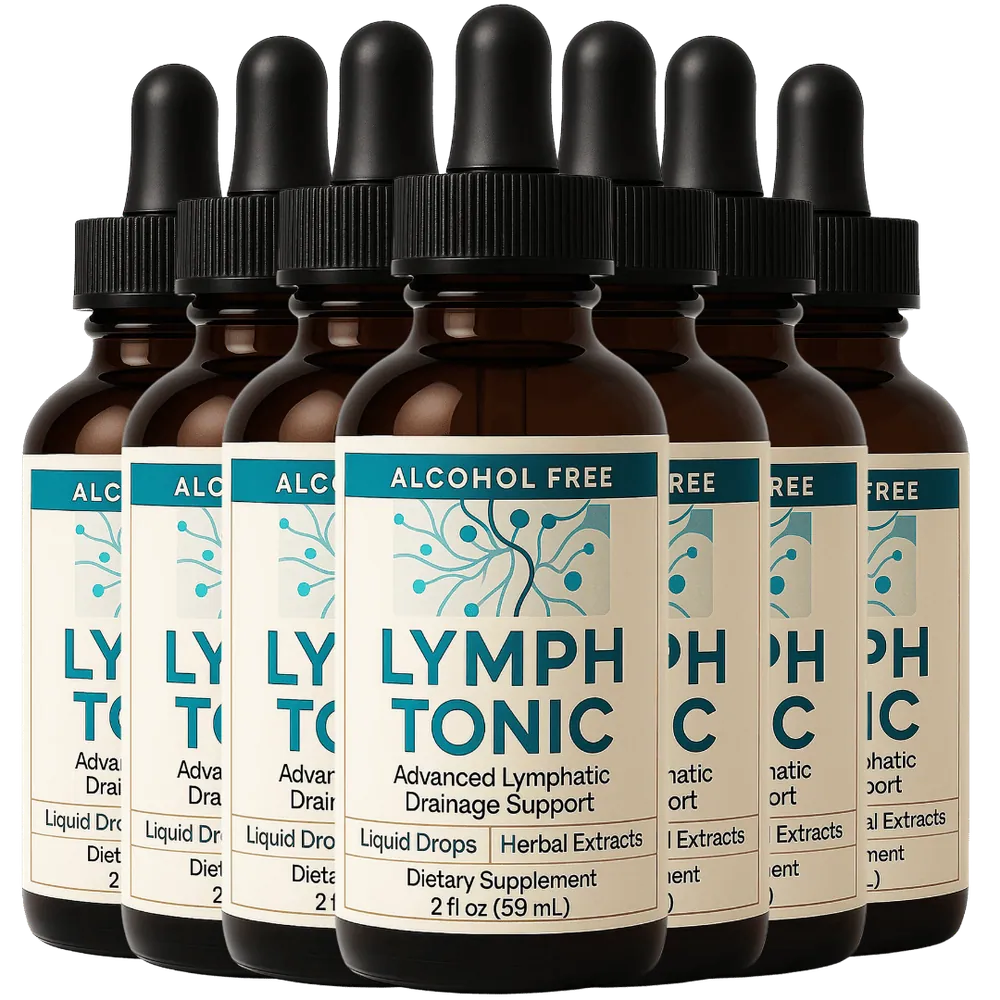
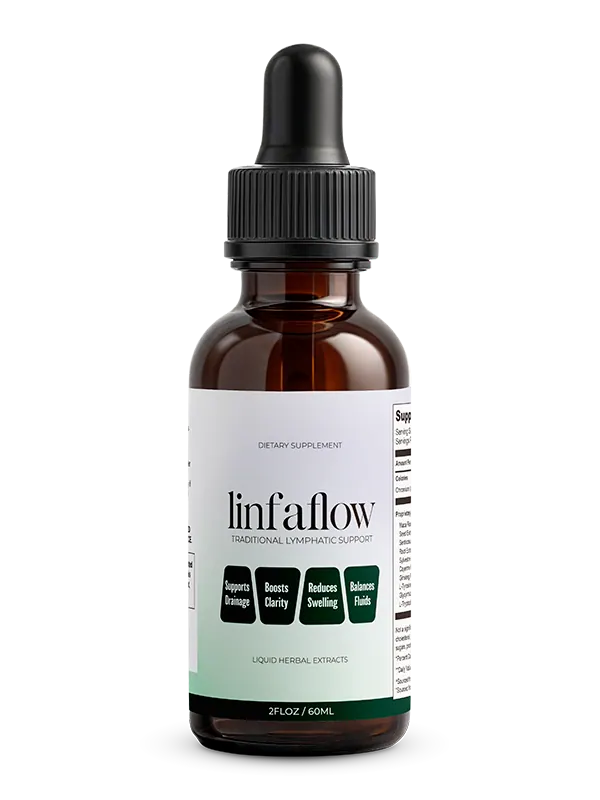
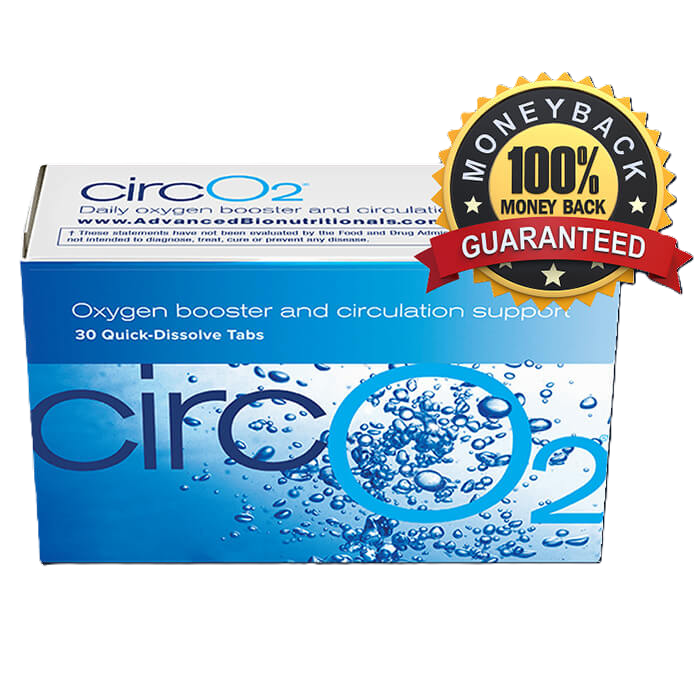
| Approach | 13-herb blend supporting drainage at 4 layers | 4 plants in one 300 mg blend, in a defined sequence | Nitric-oxide lozenge — widens vessels via the nitrate pathway |
| Format | 2 droppers daily in water | 1 dropper daily under the tongue | Lozenge dissolved on the tongue, once daily |
| Anchor ingredient | Horse chestnut — the most-studied plant extract for leg swelling | Cleavers, with red clover for the surface layer that shows on the face | Nitrate and nitrite, on the nitric-oxide pathway |
| What it does well | Calms inflammation + supports drainage from inside out | Shortest routine of the three, and the face and fingers are where buyers report change first | Raises nitric oxide fast; strong for blood flow and stamina |
| Where it aims less | Won't provide immediate physical compression | No horse-chestnut anchor, so the vein side is addressed less directly | Works on blood flow, not on lymphatic drainage |
| Guarantee | 60 days | 90 days, empty bottles accepted | Per the manufacturer's current terms |
| Best fit if you… | Want the widest herb list, and the complaint is squarely legs and ankles | Want the simplest daily routine, or the puffiness shows in your face and hands too | Want circulation and energy rather than fluid drainage |
| Where to buy | Official Site → | Official Site → | Official Site → |
None of these three is a runner-up — they are three solid tools aimed at different parts of the same feeling. Lymph Tonic carries the widest herb list and the horse-chestnut anchor, which is the extract with the most human research behind it for heavy, swollen legs. Linfaflow takes the opposite design decision and does it well: four plants in a defined sequence and a thirty-second routine, with the face and fingers reporting first and a 90-day window to judge it in. CircO2 is the nitric-oxide route — it widens vessels and moves blood, which is a real and well-studied job, just a different one from lymphatic drainage. Pick by which system is actually bothering you.
Compression is worth a line of its own, because it belongs alongside any of them rather than against them. It works mechanically and immediately, and it stops when you take it off — our piece on why compression socks sometimes stop helping runs the fit and pressure checklist before drawing that conclusion. For blood pressure specifically, the Cardio Slim Tea review covers a beetroot and hibiscus approach that overlaps in audience.
7. Pricing Options for Lymph Tonic
The first drainage signal comes at weeks 2 to 3 — shoes fitting better by evening, lighter sock lines — with leg heaviness lifting across weeks 4 to 6 and facial puffiness clearing from weeks 6 to 9. The entry, two bottles, covers the first two of those. Three bottles at $69 reaches the third. Given all of that, six bottles at $49 each is the one we would take, thirty dollars a bottle below the entry.
2 Bottles
60-Day Supply
- Secure Checkout
6 Bottles
180-Day Supply
- Free Bonus Guides ($178 Value)
- VIP Customer Status
- Secure Checkout
3 Bottles
90-Day Supply
- Free Bonus Guides ($178 Value)
- Secure Checkout
Every order is backed by a 60-day Money-Back Guarantee. The official site is the only channel that guarantees an authentic bottle and honors that refund.
8. The Mechanism: Why 4 Layers, Not One
Most drainage supplements pick one ingredient — usually Horse Chestnut alone, or a generic "diuretic blend" — and hope it does the whole job. SlimLeaf's argument is different: drainage is a system that needs support at four points at once, because trapped fluid has multiple upstream causes. Three of them are vascular (vein wall integrity, blood flow, inflammation in vessel walls); one is connective (the loose tissue around your vessels that lymph moves through).
Layer 1 — Vein wall integrity (Horse Chestnut + Hesperidin). Horse Chestnut Extract contains escin, the active compound shown in Cochrane systematic reviews to reduce leg volume and edema in chronic venous insufficiency. It works by tightening capillary walls — the tiny vessels where fluid leaks out into surrounding tissue when vein pressure rises. Hesperidin Methyl Chalcone is the citrus flavonoid used in European prescription venotonic medications (Daflon) for the same purpose: better vein wall integrity, less leaky capillaries.
Layer 2 — Blood flow + fibrinolytic support (Nattokinase + Ginger). Nattokinase is an enzyme from fermented soybeans that helps break down fibrin — the protein that thickens blood and slows circulation. When blood moves more freely, fluid clears tissue more efficiently. Ginger adds mild thermogenic support that supports general circulation.
Layer 3 — Inflammation control (Boswellia + Curcumin + Quercetin Phytosome). Chronic low-grade inflammation makes capillaries leakier and slows lymphatic drainage. Boswellic acids (from Boswellia) modulate the 5-LOX inflammatory pathway. Curcumin (paired with Black Pepper for piperine-enhanced absorption) targets NF-kB. Quercetin Phytosome — the phospholipid-bound form — supports capillary integrity and modulates histamine response, which is part of how swelling actually forms.
Layer 4 — Connective tissue tone (Gotu Kola). The fluid that pools in your ankles isn't just inside the veins — it's also in the loose connective tissue around them. Gotu Kola (Centella asiatica) has centuries of Ayurvedic use and modern clinical research (the 2026 critical appraisal in Vascular Pharmacology) documenting improvements in connective tissue tone and microcirculation in venous insufficiency patients. It's what holds the system together at the tissue level.
How it runs together: capillaries get tighter (less fluid leaks out), blood moves more freely (less pooling), inflammation cools (less leakiness from inflammatory cytokines), and the connective tissue around your vessels stays more elastic. Over 60-90 days, the daily effect is a body that holds less trapped fluid by 4 pm — without compression stockings, without aggressive diuretics, without dramatic swings on the scale.
Full Ingredient List
Lymph Tonic uses a single 600 mg proprietary blend, so exact per-herb milligrams aren't printed on the label. Here's every one of the 13 actives and the job it does — the four anchors above carry the evidence load; the supporting cast rounds out absorption and vascular protection.
| Ingredient | Role in the formula |
|---|---|
| Horse Chestnut Extract | Active escin — tightens vein walls and reduces capillary permeability; the most-evidence-backed botanical for chronic venous insufficiency (Cochrane review). |
| Nattokinase | Fibrinolytic enzyme from fermented soybeans — helps break down fibrin for freer blood flow. The one ingredient that needs doctor coordination with blood thinners. |
| Gotu Kola (Centella asiatica) | Connective-tissue tone and microcirculation; Belcaro-documented improvements in leg heaviness. Works on a different axis than Horse Chestnut. |
| Boswellia Serrata Extract | Boswellic acids modulate the 5-LOX inflammatory pathway behind chronic low-grade fluid retention — a different route than NSAIDs (which target COX). |
| Curcumin (from turmeric) | Most-researched anti-inflammatory polyphenol; targets NF-kB. Paired with Black Pepper for the standard piperine bioavailability boost. |
| Quercetin Phytosome | Phospholipid-bound form that absorbs far better than generic quercetin powder; supports capillary integrity and modulates histamine-driven leakiness. |
| Hesperidin Methyl Chalcone | Citrus flavonoid used in European venotonic prescriptions (Daflon) for vein wall integrity — the methyl chalcone form improves bioavailability. |
| Baicalein | Flavonoid antioxidant (from Scutellaria baicalensis) with vascular-protective and anti-inflammatory action. |
| Omega-3 Fatty Acids | Cardiovascular and cellular-membrane support. |
| Ginger Extract | Mild thermogenic support that aids general circulation. |
| Black Pepper Extract (Bioperine) | Piperine — enhances absorption of Curcumin and other fat-soluble actives (~2,000% boost for curcumin). |
| Phosphatidylcholine | Cell-membrane support; also serves as a delivery vehicle for the fat-soluble actives in the blend. |
| D-Alpha Tocopherol (Vitamin E) | Lipid-soluble antioxidant protecting cellular and vascular membranes. |
The blend format — 13 herbs named, 600 mg total disclosed — is a formulation choice, not an omission: the actives work as one system, and the ratio between them is the formulator's design. What matters for the result is that every one of the 13 is present and the total dose is meaningful, which the label states. With multi-herb tinctures you're buying the combined synergistic effect rather than one documented clinical dose; if you need a verified single-herb amount, a standalone product fits better.
What these terms actually mean:
- Lymphatic system
- A network of vessels running parallel to your blood vessels that picks up leftover fluid (and waste) your veins don't catch. Unlike your heart pumping blood, the lymphatic system has no pump — it moves fluid through muscle contractions, breathing, and tissue tone. When it slows down, fluid pools where gravity takes it (usually ankles and feet).
- Chronic venous insufficiency (CVI)
- The medical term for when the valves in your leg veins stop closing properly, letting blood (and fluid) pool downward. Affects 20-40% of adults, more common after 50 and in women. Symptoms: heavy legs, ankle swelling, visible spider veins, achiness at end of day. Compression stockings are the standard treatment.
- Escin (from Horse Chestnut)
- The active compound in Horse Chestnut seed extract. Works by tightening capillary walls — the tiny vessels where fluid leaks into surrounding tissue when vein pressure rises. The Cochrane review-backed ingredient for measurable leg-volume reduction in CVI.
- Fibrinolytic
- The body's process of breaking down fibrin — the protein that thickens blood and forms clots. Nattokinase supports natural fibrinolytic activity, which means smoother blood flow and less risk of small-vessel pooling. Also why nattokinase needs doctor coordination with prescription blood thinners.
Results Timeline — What to Expect and When
Drainage support builds in stages rather than overnight — the escin, flavonoids, and connective-tissue compounds all need daily delivery to reach a steady state. This timeline reflects the pharmacology of the anchor botanicals plus the arc real buyers consistently describe; individual results depend on age, how many hours you sit each day, hydration, and consistency.
| Window | What to expect |
|---|---|
| Days 1–14 | Adaptation phase. Two droppers daily becomes routine. A mild "warming" sensation is possible as ginger + curcumin adjust. No visible swelling change yet — too early. |
| Weeks 2–3 | First drainage signal. Shoes fit better at the end of the day, sock-line indentations fade, rings rotate freely on fingers by evening. The most-reported "I noticed something" milestone. |
| Weeks 4–6 | Leg heaviness lifts. Stairs feel lighter, calves feel less "full," and the pull toward compression stockings softens. |
| Weeks 6–9 | Facial puffiness clears faster in the morning, abdominal distention after meals eases, and bowel regularity smooths as low-grade inflammation calms. |
| Weeks 9–12 | Full evaluation window. The first complete drainage cycle finishes: shoes fit all day, lighter legs, clearer face, steady afternoon comfort. |
| Months 4–6 | Lock-in phase. The cumulative effect stabilizes; many users move to a 1-dropper maintenance dose. |
The takeaway: weeks 9–12 are where you fairly judge this product — anything earlier is too soon, which is exactly why the published Horse Chestnut and Gotu Kola trials ran 8–16 weeks. Two conditions decide whether it works for you: consistency (skipping 2–3 days a week resets the gentle steady-state effect) and time (the escin and flavonoids need weeks of daily exposure to tone vein walls and cut capillary leakage). Pairing the drops with walking, leg elevation, and steady hydration amplifies what the formula can do. If you see no drainage shift by week 3 of consistent use, the 60-day guarantee covers a clean read on whether it fits your body.
9. Side Effects & Safety
Lymph Tonic has a generally clean safety profile for healthy adults: alcohol-free (unusual for a tincture), no synthetic stimulants, no high-dose caffeine, USA-manufactured in a facility that third-party tests for purity. For most users the mild-effect profile is limited to a short adjustment period. There is, however, one interaction that genuinely matters — and it's the reason the safety conversation here isn't a throwaway disclaimer.
Mild Side Effects Most Users Experience
| Side effect | Likelihood | What to do |
|---|---|---|
| Mild "warming" sensation | Common (first 1–2 weeks) | Ginger + Curcumin can feel mildly thermogenic at first. Usually resolves within 7–10 days — no action needed. |
| Occasional looser stool | Occasional (week 1) | Transient as the herbal extracts settle in. Take with a little food if it's bothersome. |
| Mild garlic / fermented taste | Common | Nattokinase comes from fermented soybeans. Mix the drops in water rather than taking sublingually to mask it. |
| Brief shift in bowel regularity | Occasional (first 1–2 weeks) | Boswellia + Curcumin calm gut inflammation; regularity can shift briefly either way, then stabilizes by week 3. |
None of these are severe or lasting. If any persists past two weeks or causes real discomfort, pause and check with your doctor.
The Nattokinase Drug-Interaction Caveat
This is the single most important safety fact about Lymph Tonic. Nattokinase is fibrinolytic — it helps break down fibrin, the protein that thickens blood. That mechanism is exactly why it's in the formula, and exactly why it adds to the effect of prescription blood thinners and antiplatelets.
| Drug class | Interaction with Nattokinase | Severity |
|---|---|---|
| Warfarin (Coumadin) | Additive anticoagulant effect — increased bleeding risk | High — doctor required |
| Aspirin (daily low-dose) | Additive antiplatelet effect — increased bleeding risk | High — doctor required |
| Apixaban / Rivaroxaban (DOACs) | Additive anticoagulant effect — increased bleeding risk | High — doctor required |
| Clopidogrel (Plavix) | Additive antiplatelet effect — increased bleeding risk | High — doctor required |
| Pre-surgery | Stop Nattokinase two weeks before any planned procedure | High — doctor required |
If you take any prescription anticoagulant or antiplatelet, talk to your doctor before starting. They may approve it with monitoring, adjust your dose, or advise skipping it — but that's a medical decision, not a DIY one.
Beyond the blood-thinner interaction, a few groups should avoid the formula or clear it with a doctor first:
- Pregnant or breastfeeding women — Curcumin (high doses), Horse Chestnut, Boswellia, and Gotu Kola are all traditionally avoided during pregnancy and lactation.
- Anyone with a soy allergy — Nattokinase is derived from fermented soybeans.
- Severe liver or kidney disease — several ingredients are metabolized through those pathways and warrant physician guidance.
- Children under 18 — the formula hasn't been evaluated in pediatric use.
And one caution that outranks any supplement: if swelling is sudden, one-sided, painful, or warm to the touch — or comes with chest pain or shortness of breath — that's a medical emergency (possible deep vein thrombosis), not a supplement situation.
For everyone outside those groups, the profile is genuinely gentle by design — no stimulants, no caffeine, alcohol-free, USA-manufactured and third-party tested for purity. The 60-day money-back guarantee gives you room to test how your own body responds.
10. Final Verdict
The ring that goes on in the morning and won’t come off at night. Lymph Tonic tackles a real, under-served problem — the chronic end-of-day swelling that compression stockings only partially solve — with a comprehensive 13-herb blend anchored by the ingredients with the strongest published evidence for vascular and lymphatic support. Horse Chestnut brings the Cochrane-reviewed venous insufficiency evidence; Nattokinase brings the fibrinolytic flow support; Gotu Kola brings the connective-tissue tone; Boswellia + Curcumin + Quercetin Phytosome bring the inflammation control that compounds chronic fluid retention. The alcohol-free liquid format is genuinely uncommon and matters for sensitive users.
Real buyers consistently describe the same arc: by weeks 2-3, shoes fit at the end of the day. By weeks 4-6, the heavy-legs sensation at 6 pm softens. By weeks 8-12, the compression stockings start collecting dust because the ankles stay closer to their morning shape through the afternoon. The formula is USA-manufactured, third-party tested for purity, with no artificial preservatives — a clean-credentials stack rare in herbal tincture products.
The package decision comes down to a single question: how long does Lymph Tonic need before you can judge it? The answer is 8 to 12 weeks. That's what puts the 2-bottle package at $79 per bottle in perspective — 60 days is a tolerance check, not an answer. The 3-bottle package at $69 per bottle is the honest minimum, and the 6-bottle package at $49 per bottle is the best value, with the lowest price per bottle and the supply to carry a result forward instead of restarting. The 60-day guarantee means the cost of finding out sits with the manufacturer, not with you.
11. Frequently Asked Questions
How long until my ankles actually stop swelling?
Most users report shoes feeling like they fit at the end of the day by weeks 2-3. The "heavy legs" sensation by 6 pm typically softens by weeks 4-6. The visible reduction in ankle puffiness — the kind your partner notices — usually lands in the 8-12 week window. The clinical research on Horse Chestnut and Gotu Kola for venous insufficiency runs 8-12 weeks for measurable changes; this formula is built around the same timeline.
Can I take Lymph Tonic if I'm on blood thinners?
Not without talking to your doctor first. The Nattokinase in this formula is fibrinolytic — it helps break down fibrin, which means it can amplify the effect of warfarin, apixaban, rivaroxaban, aspirin, and other blood thinners. The combination isn't automatically dangerous, but it requires coordination with your prescriber. If you're on any blood thinner medication, do not start Lymph Tonic without first running it past the doctor who prescribed it.
How is this different from just taking Horse Chestnut alone?
Horse Chestnut alone (typically dosed at 300-500 mg in standalone products) addresses one layer of the problem — vein wall integrity. Lymph Tonic adds three more layers in the same daily dose: fibrinolytic flow support (Nattokinase), connective tissue tone (Gotu Kola), and inflammation control (Boswellia + Curcumin + Quercetin Phytosome). The trade-off is that Horse Chestnut in Lymph Tonic is at a lower individual dose because it shares the 600 mg total blend with 12 other ingredients. If you want a single-mechanism higher-dose approach, standalone Horse Chestnut might fit better. If you want multi-pathway support in one bottle, this is built for that.
Why alcohol-free? Does that matter?
Most herbal tinctures are 20-40% alcohol — it's the traditional solvent for extracting plant compounds. That's fine for many people but a real problem for users in recovery, users with alcohol sensitivities, pregnant or nursing women, or anyone who simply doesn't want a daily dose of alcohol with their morning routine. Lymph Tonic uses vegetable glycerin as the alcohol-free carrier, which makes it accessible to a much broader audience without compromising the herbal extract delivery.
Will Lymph Tonic make me lose weight?
Honestly, not in any meaningful way through fat loss — this isn't a metabolism or fat-burning formula. Where you might see scale movement: water weight. If you're carrying 2-5 lbs of trapped fluid (common in chronic fluid retention), reducing that fluid retention will show up on the scale. But that's not fat loss; that's drainage. If your primary goal is fat loss, look at the weight-loss category instead. If your primary frustration is "my body holds onto fluid no matter what I do," that's where Lymph Tonic fits.
What's the cost per day and which bundle makes sense?
The 6-bottle bundle at $49/bottle works out to roughly $1.63 per day — the lowest per-day cost, includes free priority shipping plus the bonus guides ($178 value) plus VIP customer status, and covers the full 6-month window the herbal blend was built around. The 3-bottle bundle at $69/bottle ($2.30/day) is the middle option with free shipping. The 2-bottle starter at $79/bottle ($2.63/day) + small shipping fee is the minimum entry — useful as a test bundle aligned with the 60-day refund window, but per-bottle the most expensive. The 73%-choose-this-bundle social proof on the manufacturer site lines up with the math: most buyers go 6-bottle.
INGREDIENT TAGS
FORMAT
Research & Transparency
This content is based on publicly available ingredient research, manufacturer disclosures, and product labeling. We are not affiliated with the manufacturer.
(a) Effects of monoglucosyl hesperidin on human lymphatic circulatory function — randomized controlled trial. Scientific Reports 2026
(b) Venoactive compounds in the management of chronic venous disease — critical appraisal of the evidence. Vascular Pharmacology 2026
(c) Lymphatic diseases — the reference we use for what lymphatic congestion is and when it needs a doctor. MedlinePlus / NIH
(d) Health products compliance guidance — the standard the agency applies to circulation and lymphatic claims. FTC
About the Author
Luciano Cesar is a contributor at The Supplement Post, supporting the production of evidence-aware supplement reviews and buyer's guides across multiple health categories. His work spans ingredient analysis, formulation assessment and consumer-oriented summaries — what a label discloses, how the stated doses compare with the amounts used in published human research, and whether a formula's design matches what it claims to do. Every review is checked by The Supplement Post editorial team against the standards published in our editorial policy before it goes live.
Disclosure
All content is for informational purposes only and is not a substitute for professional medical advice. Each product reviewed is a dietary supplement, not a prescription drug. Results may vary based on individual health status, consistency of use, and lifestyle. This page may contain affiliate links — if you purchase through them, we may earn a small commission at no additional cost to you. Read our Editorial Policy.