
Edited by Michael Anderson, Editor-in-Chief
Updated
Nagano Tonic Results: Worth the Hype or Not?
Does the Japanese adaptogen powder actually work — and how long until the mirror agrees? Honest test of the cortisol + thermogenic mechanism, week-by-week timeline, what to expect over 60–90 days of daily use.
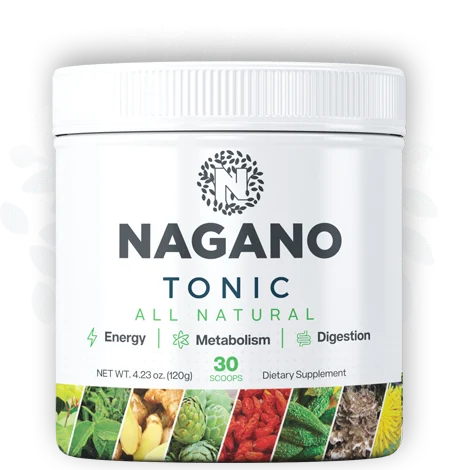
The honest week-by-week. Not marketing.
In This Article
Does It Work?
For most buyers — yes, but slowly. The adaptogen + thermogenic + greens mechanism works in stages: energy steadies in weeks 1–3, cravings ease around weeks 2–4, stress response calms by weeks 4–8, and the waistline change lands between weeks 8 and 12. Realistic 12-week result: visible body composition shift plus measurable scale movement, depending on starting point and consistency. The product doesn’t override a calorie surplus — it addresses the cortisol-driven storage signal that diet alone often can’t budge. If you want a 2-week thermogenic stimulant burner, this isn’t that.
THE CORE PROMISE
Most weight-loss formulas pick one mechanism and bet everything on it — and most fail because slow, stress-driven metabolism has multiple drivers running together. Nagano Tonic loads three blends working in parallel: Eastern adaptogens for the cortisol-belly-fat loop, thermogenic catechins for fat oxidation, super food greens for antioxidant defense, plus a 5-strain probiotic for gut function and 1042% DV B12. Result: a slow, steady shift over 8–12 weeks — one scoop in water every morning. That’s the whole promise.
1. The Honest Week-by-Week Timeline
| Window | What shifts | What you feel |
|---|---|---|
| Week 1–2 (Foundation) | B12 saturates cellular energy production; adaptogens begin modulating cortisol; 5 probiotic strains colonize | 3 p.m. crash softens. Slightly cleaner digestion. Subtle steadier energy without caffeine spike. |
| Week 3–4 (Early Signals) | Cortisol pattern shifts; insulin sensitivity improves; EGCG-driven fat oxidation begins compounding | Cravings ease — the 3 p.m. cookie reflex and after-dinner snack pull get quieter. Bloating settled. |
| Week 5–8 (Stress Pivot) | Ashwagandha + Eleuthero + Panax Ginseng adaptogen effects accumulate; sleep deeper | Calmer reaction to stressful moments. First scale signal in some users. Belt notch holds steady. |
| Week 9–12 (Mirror Catches Up) | Cumulative cortisol modulation + fat oxidation translates to visible body composition change | Waistline change visible in your own clothes. Scale follows about a week behind the mirror. The shift your spouse notices first. |
| Month 4–6 (Compounding) | Full system maintenance — adaptogen baseline established, metabolism + gut + stress all calibrated | Continued waistline + scale improvement. Steady energy. The full result the 180-day guarantee was designed around. |
2. How the Adaptogen + Thermogenic Mechanism Works
Three pathways run simultaneously. Cortisol modulation: the adaptogen trio (Ashwagandha, Panax Ginseng, Eleuthero) helps the body process chronic stress more efficiently, which directly reduces the “store fat around the midsection” signal that drives stress-related weight gain after 40. Fat oxidation: the 98% polyphenol Green Tea Extract delivers EGCG at clinical-trial concentration, binding receptors that nudge fat cells toward burning stored energy instead of storing more of it. Ginger and Cinnamon Cassia add thermogenesis. Insulin sensitivity: Mangosteen + Bitter Melon flatten the blood sugar curves that drive between-meal cravings.
Why this matters: weight gain after 40 isn’t purely a calorie-math problem. It’s the consequence of chronic cortisol elevation, insulin resistance creeping in, and metabolic flexibility declining. A stimulant burner addresses none of those — it just spikes thermogenesis short-term. The Nagano approach addresses all three drivers daily, for the timeline the system needs to actually respond.
3. Who It Tends to Work Best For
Patterns from buyer feedback: it works best for adults 35+ who recognize the stress-eating + slow-metabolism profile in themselves. People with desk-bound work, chronic low-grade stress, broken sleep, and 10–40 lbs to lose see the most visible scale movement. People who already exercise regularly but can’t shift the last 10 lbs around the waist often see cleaner body recomposition (mirror shifts before scale).
It works less dramatically for people who already have low baseline cortisol and good stress management, or for people whose weight gain traces primarily to a large calorie surplus rather than stress + slow metabolism. It also doesn’t replace fundamentals — sleep, hydration, basic movement — but it supports the metabolic + stress sides those fundamentals depend on.
4. When It Doesn’t Work
Three patterns explain almost every “it didn’t work” complaint in buyer feedback. One: inconsistency. Skipping 2–3 days per week breaks the adaptogen + thermogenic load before it can register. Two: calorie surplus. The formula supports metabolism and cortisol — it doesn’t override eating 800 calories over maintenance daily. The math still matters. Three: stopping at week 4. If the mirror hasn’t moved by 30 days, some buyers quit. The timeline was always 8–12 weeks; week 4 is just the early-signal window.
If you want a fair test: commit to daily use through week 12, pair it with reasonable eating (not perfect — just reasonable), and check progress at week 12 instead of every Monday on the scale.
5. Realistic Expectation Setting
What this product is: a slow-build adaptogen + thermogenic + greens powder that works in stages over 8–12 weeks, with full evaluation at 6 months. What it isn’t: a stimulant thermogenic, an appetite suppressant, a meal replacement, or a fast-acting fat burner. If you’ve tried stimulant burners and they didn’t stick (most don’t — they spike short-term and plateau), this is a different approach. Slower start, steadier finish, less drama in either direction — plus genuine stress-modulation effects from the adaptogen layer that stimulant formulas can’t deliver.
The 180-day money-back guarantee is the company’s signal that they expect you to need 6 months to evaluate honestly. If you stop at week 3 because nothing “happened,” you stopped before the formula had room to work. If you go through 12 weeks consistently and the scale + mirror haven’t moved, the refund window covers it. That’s the test the formula was designed for.
Pricing Options for Nagano Tonic
Nagano Tonic is available in three bundle options. Most users choose the 6-bottle bundle because the adaptogen + thermogenic system needs 60-90 days of consistent daily use to register in the mirror and the scale. The 6-bottle bundle locks in $39 per bottle, includes free shipping plus 3 bonuses, and covers the full evaluation window with margin to spare.
1 Bottle
30-Day Supply
- 180-Day Money-Back Guarantee
- Secure Checkout
3 Bottles
90-Day Supply
- 180-Day Money-Back Guarantee
- 3 FREE Bonuses
- Anti-Aging + Sleep + Smoothie Guides
Save $204
Shop Now6 Bottles
180-Day Supply
- 180-Day Money-Back Guarantee
- Free US Shipping
- 3 FREE Bonuses
Save $528
Shop NowEvery order is backed by a 180-day money-back. Only available through the official website.
Frequently Asked Questions
When should I know if Nagano Tonic is working for me?
Two checkpoints. Week 3: energy and digestion should show some shift, with cravings starting to ease — that’s the early-signal window. If neither has moved by day 21, double-check daily consistency. Week 12: the waistline should be visibly easing and the scale moving for most users. If both checkpoints pass and you’re not seeing change, the 180-day guarantee covers a full refund.
Will I gain the weight back if I stop?
Depends on what you changed during the 6 months. If you used the powder while building better habits (cleaner eating, more movement, better stress management), those habits stick after you stop. If the powder was the only intervention and you go back to where you were, weight tends to drift back over 3–6 months — though usually not all the way, because cortisol patterns and gut microbiome shifts tend to persist longer. Best protocol: use the 6-month window to build habits the powder supports, then maintain or taper.
Does it work without exercise?
Partially — buyers who don’t exercise still report digestion, energy, and cravings shifts plus modest waistline change. With even light exercise (3–4 walks per week, basic resistance), the body composition change is significantly more visible by week 12, and the adaptogen benefits (calmer stress response, deeper sleep) compound with the recovery improvements movement provides. Exercise isn’t required for the formula to function; it accelerates the result. Don’t treat the powder as a license to skip movement entirely — that’s where buyers end up disappointed at week 12.
Continue your research
- Understand: Nagano Tonic Ingredients — Formula Explained
- Then commit: Nagano Tonic Price — Cheapest Way to Buy
- Compare: Ikaria Juice — same powder format, polyphenol + 9-strain probiotic angle instead of adaptogen-driven
- Real buyer feedback: Nagano Tonic Pros and Cons
Research & Transparency
This content is based on publicly available ingredient research, manufacturer disclosures, and product labeling. We are not affiliated with the manufacturer.
(a) Ashwagandha (Withania somnifera) for stress, cortisol reduction, and body weight management in chronically stressed adults — randomized controlled trial. PMC5934947
(b) Green tea catechins (EGCG) and body composition — meta-analysis of randomized controlled trials. PMC2855614
(c) Panax ginseng influence on obesity and gut microbiota in obese middle-aged Korean women — randomized clinical trial. PMC4003844
(d) Eleuthero (Eleutherococcus senticosus) endurance capacity and metabolism in humans — clinical investigation. PubMed 20355297
(e) Mangosteen extract insulin sensitizing effect in obese female patients — prospective randomized controlled pilot study. PubMed 30144384
About the Author
Emily Carter is a contributor at The Supplement Post covering brain and neuro health, blood sugar control, weight loss, and gut-focused formulas. She specializes in evidence-aware summaries of nootropic ingredients, metabolic supplements, and consumer-friendly explanations of how supplementation fits into broader cognitive and metabolic health strategies. Emily Carter is not a medical doctor — she analyzes publicly available research to provide evidence-aware summaries for adults exploring cognitive support, metabolic balance, and gut wellness options.
Disclosure
All content is for informational purposes only and is not a substitute for professional medical advice. Each product reviewed is a dietary supplement, not a prescription drug. Results may vary based on individual health status, consistency of use, and lifestyle. This page may contain affiliate links — if you purchase through them, we may earn a small commission at no additional cost to you. Read our Editorial Policy.