
Reviewed by Emily Carter, Contributor — Weight Management & Blood Sugar
Edited by Michael Anderson, Editor-in-Chief ·
Updated
ColonBroom GLP-1 Booster Side Effects & Safety Profile
The honest safety profile — what most users experience, the possible Berberine side effects, drug interactions that really matter, and who should consult a doctor first.
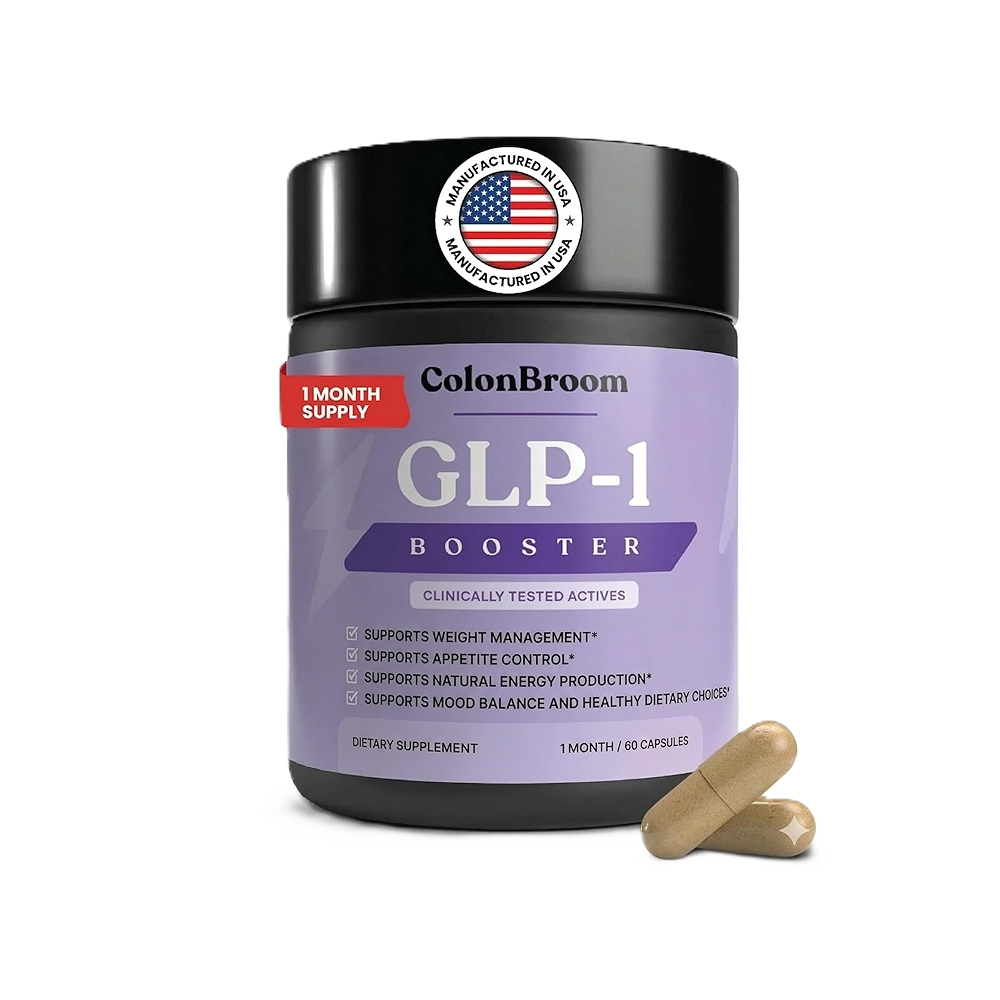
Safety profile — what to know before starting.
In This Article
Quick Answer
ColonBroom GLP-1 Booster is generally well tolerated. The most common report is mild digestive sensitivity during the first 1–2 weeks (loose stools, bloating, or stomach cramps) — normal for Berberine and usually resolves. It's vegan, gluten-free, non-GMO, and manufactured in the USA with no stimulants. The critical safety consideration is drug interactions: Berberine can meaningfully interact with metformin, insulin, blood thinners, immunosuppressants, and some antibiotics. Anyone on prescription medication should talk to a doctor before starting.
1. Manufacturing & Quality Standards
ColonBroom GLP-1 Booster is manufactured in the United States. The label advertises vegan, gluten-free, non-GMO, and "no fillers" credentials. The formula contains no stimulants, no synthetic hormones, and no pharmaceutical GLP-1 agonists. These are baseline quality signals worth verifying on any supplement you buy.
The manufacturer doesn't publish third-party lab testing on the public website, which is common in the supplement industry but an area where clearer disclosure would strengthen confidence. The label is fully transparent with individual ingredient doses disclosed — no proprietary blends — which is a real positive given how many weight-loss formulas hide behind blend labels.
2. What Most Users Experience
Most adults tolerate the formula without issue. Because there are no stimulants, there's no jitter, no heart rate bump, and no sleep disruption — distinguishing it from most thermogenic weight-loss products. The ingredients (Berberine, Resveratrol, Quercetin, Zinc) all have well-characterized safety profiles at supplement-range doses.
In the first 1–2 weeks, a notable percentage of users report mild digestive effects from Berberine. This is expected and well-documented in the research — Berberine has a known loose stool / cramping profile that usually diminishes after the first week as the body adapts. Taking with food (rather than on an empty stomach) reduces the issue for most people.
3. Possible Side Effects
Ranked from most to least common:
- Mild GI discomfort (weeks 1–2): Loose stools, bloating, cramping, or mild diarrhea. Usually Berberine-related and resolves on its own. Taking with food helps.
- Constipation (rare): Some users report the opposite effect — Berberine's effects on gut motility vary by individual.
- Mild nausea (uncommon): Usually resolves within the first week. Taking before meals rather than on an empty stomach reduces frequency.
- Headache (rare): Reported by a small minority during the first few days as the body adapts.
- Hypoglycemia risk (when combined with diabetes medication): This is a real concern — Berberine lowers blood sugar, and combined with metformin, insulin, or sulfonylureas it can push blood sugar dangerously low. Always consult a doctor if you're on glucose-lowering drugs.
None of these are common at the 200 mg Berberine dose in ColonBroom. Most users experience mild or no side effects. Any severe or persistent reaction should trigger discontinuation and a doctor visit.
4. Check With Your Doctor If…
This is the most important section for Berberine-containing products. Berberine has real and significant drug interactions. You should consult a physician before starting if any of the following apply:
- You take diabetes medication. Metformin, insulin, sulfonylureas, SGLT2 inhibitors, and GLP-1 agonists (Ozempic, Wegovy, Mounjaro) all lower blood sugar. Berberine compounds these effects and can cause hypoglycemia.
- You take blood thinners. Berberine may affect platelet function and interact with warfarin, apixaban, and similar anticoagulants.
- You take immunosuppressants. Berberine inhibits CYP3A4, a liver enzyme that metabolizes cyclosporine, tacrolimus, and several other immunosuppressants.
- You take certain antibiotics or antifungals. Berberine's CYP3A4 inhibition can affect how the liver processes some drugs.
- You have liver or kidney disease. Berberine is metabolized through the liver — impaired liver function changes how it's processed.
- You have heart rhythm problems. High-dose Berberine has been associated with QT prolongation in rare cases.
- You're pregnant or breastfeeding. Berberine is contraindicated — it can cross the placenta and affect the developing fetus, and should not be used during breastfeeding.
- You're under 18. Not studied or formulated for children.
- You have a history of low blood sugar episodes. Even without medication, Berberine's glucose-lowering effect can push sensitive individuals too low.
5. The Bottom Line on Safety
For healthy adults not on medication, ColonBroom GLP-1 Booster has a clean safety profile at the 200 mg Berberine dose. The most likely side effect is mild GI discomfort during the first 1–2 weeks, which typically resolves on its own. The formula is stimulant-free, transparent, and well-labeled.
The bigger safety story is drug interactions. Berberine is potent enough to matter — if you're on any prescription medication (especially diabetes drugs or blood thinners), talk to your doctor first. Supplements are not the place to skip that conversation. For the full ingredient details, see Ingredients →. For the honest scorecard, see Pros & Cons →.
Pricing Options for ColonBroom GLP-1 Booster
ColonBroom GLP-1 Booster is available in multiple package options designed to support different usage timelines. Many users choose multi-bottle packages because consistent daily use typically delivers the best results. Longer supply options also reduce the cost per unit.
1 Bottle
30-Day Supply
- 30-day Money-Back Guarantee
- Free USA Shipping
- Secure Checkout
6 Bottles
180-Day Supply
- 30-day Money-Back Guarantee
- Secret Gift
- Free USA Shipping
- Secure Checkout
Save 53%
Shop Now3 Bottles
90-Day Supply
- 30-day Money-Back Guarantee
- Secret Gift
- Free USA Shipping
- Secure Checkout
Save 36%
Shop NowEvery order is backed by a 30-day money-back guarantee. Only available through the official website.
Frequently Asked Questions
Is ColonBroom GLP-1 Booster safe to take long-term?
For healthy adults without medication conflicts, Berberine has been used safely in research for up to a year. Long-term safety data beyond 12 months is limited, so some users prefer to cycle (3 months on, 1 month off) as a precaution.
Can I take this with metformin or Ozempic?
Not without talking to your doctor first. Berberine works through mechanisms similar to metformin and can compound the glucose-lowering effects of both drugs — potentially causing dangerously low blood sugar. Same caution applies to insulin and GLP-1 agonists like Ozempic.
Will it affect my sleep?
No — the formula is stimulant-free. Berberine has no effect on sleep quality or heart rate.
What should I do if I get side effects?
For mild GI discomfort in the first week, take the capsules with food. If symptoms persist beyond 2 weeks or are severe, discontinue and use the 30-day money-back guarantee. For any allergic reaction or severe symptoms, stop immediately and consult a doctor.
Research & Transparency
This review is based on publicly available ingredient research, manufacturer disclosures, and product labeling. We are not affiliated with the ColonBroom brand. Below is a summary of the scientific evidence behind the four active ingredients in the GLP-1 Booster formula, organized by benefit area.
Blood sugar & insulin sensitivity (Berberine)
Berberine has one of the strongest individual evidence bases in the natural metabolic category. A 2008 randomized trial (Yin et al.) showed Berberine at 500 mg three times daily produced glucose-lowering effects comparable to metformin in adults with type 2 diabetes. A 2015 systematic review (Lan et al.) confirmed Berberine's effects on fasting glucose, HbA1c, and insulin resistance across 27 trials.
Weight management & appetite regulation (Berberine, Resveratrol)
Berberine's AMPK activation mechanism (the same pathway targeted by metformin) has been linked to modest weight loss in overweight adults over 12 weeks. Resveratrol from Polygonum Cuspidatum activates SIRT1 — a complementary metabolic regulator — and a 2020 meta-analysis (Ramírez-Garza et al.) showed improvements in insulin sensitivity and visceral fat reduction.
Antioxidant & anti-inflammatory support (Quercetin, Zinc)
Quercetin is one of the most studied flavonoids for metabolic syndrome markers. Zinc is a cofactor for insulin signaling enzymes; inadequate zinc status independently impairs glucose handling in research populations. Together they address the chronic low-grade inflammation that drives insulin resistance.
Honest note on the Berberine dose
The clinical research on Berberine typically uses 500–1500 mg per day. ColonBroom GLP-1 Booster provides 200 mg per serving. Effects are likely present but proportionally smaller than what the research shows. No supplement in this category replicates prescription GLP-1 agonists (semaglutide, liraglutide, tirzepatide). The "natural Ozempic" framing is marketing language, not a clinical claim.
(a) Yin J, et al. Efficacy of Berberine in Patients with Type 2 Diabetes. PMC2410097
(b) Lan J, et al. Meta-analysis of the effect and safety of Berberine in glucose and lipid metabolism. PMC4500981
(c) Ramírez-Garza SL, et al. Health Effects of Resveratrol: Results from Human Intervention Trials. PMC7084498
(d) Shabbir U, et al. Quercetin and its role in chronic diseases. PMC7146259
(e) Fernández-Cao JC, et al. Zinc intake and status in insulin resistance. PMC6470772
About the Author
Emily Carter is a contributor at The Supplement Post and a research collaborator with the Smart Guide editorial group. Her work covers weight management, blood sugar control, brain health, and evidence-aware supplement analysis. She is not a medical doctor — she analyzes publicly available research to provide consumer-friendly summaries for adults exploring metabolic and appetite support options.
Disclosure
All content is for informational purposes only and is not a substitute for professional medical advice. This page may contain affiliate links — if you purchase through them, we may earn a small commission at no additional cost to you. Read our Editorial Policy.