
Reviewed by Emily Carter, Contributor — Weight Management & Blood Sugar
Edited by Michael Anderson, Editor-in-Chief ·
Updated
ColonBroom GLP-1 Booster Ingredients — Formula Breakdown
What's actually inside ColonBroom GLP-1 Booster, what each ingredient does in the body, and how the doses compare to the research on Berberine and its cofactors.
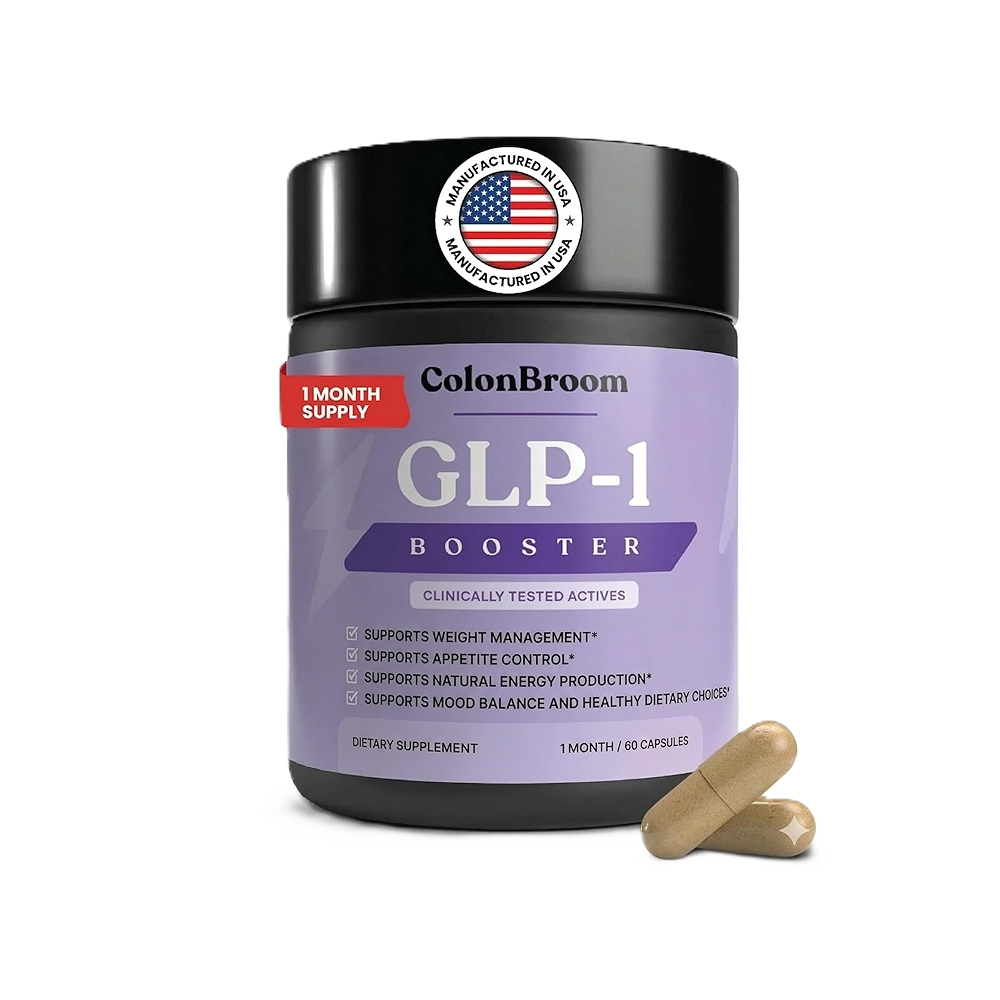
Full ingredient breakdown — Berberine-led formula.
In This Article
Quick Answer
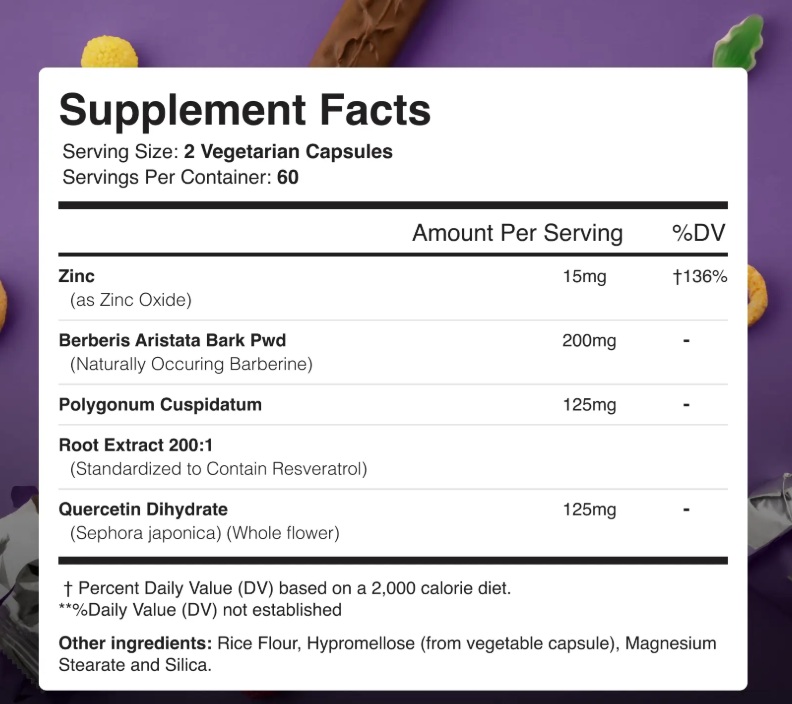
ColonBroom GLP-1 Booster contains four active ingredients: Berberine (Berberis aristata) 200mg, Polygonum Cuspidatum 125mg (resveratrol source), Quercetin Dihydrate 125mg, and Zinc 15mg. The formula is fully transparent with no proprietary blend. Berberine is the star — one of the most researched plant compounds for blood sugar and metabolic support — but the 200mg dose is below the 500–1500mg range used in most clinical trials. The supporting compounds add antioxidant and insulin-sensitivity layers that complement the Berberine core.
1. Formula Overview
ColonBroom GLP-1 Booster is built around a specific metabolic premise: the fastest way to support weight management isn't suppressing appetite with stimulants — it's fixing the upstream factors that drive cravings and fat storage. The four active ingredients target blood sugar balance, insulin sensitivity, antioxidant protection, and metabolic enzyme support. The formula is stimulant-free, vegan, and made in the USA with a fully disclosed label — no proprietary blend hiding individual doses.
The star is Berberine, a plant alkaloid with one of the strongest individual evidence bases in the natural weight-management category. Research links it to improved glucose metabolism, enhanced insulin sensitivity, AMPK activation (the cellular energy sensor), and modest weight loss over 8–12 weeks of consistent use. For broader context on what this product is and who it targets, see What Is ColonBroom GLP-1 Booster?
2. Full Ingredient Table
| Ingredient | Amount | Role in the Formula |
|---|---|---|
| Berberine (Berberis aristata bark powder) | 200 mg | Plant alkaloid that activates AMPK, improves insulin sensitivity, and has indirect research-supported effects on appetite regulation. The cornerstone of the formula's metabolic mechanism. |
| Polygonum Cuspidatum Extract (200:1) | 125 mg | Standardized to contain resveratrol — the antioxidant polyphenol studied for its role in insulin signaling, metabolic inflammation, and cardiovascular support. |
| Quercetin Dihydrate | 125 mg | Flavonoid antioxidant with research showing modest effects on inflammation, blood pressure, and metabolic syndrome markers. Supports cellular recovery and immune balance. |
| Zinc (as Zinc Oxide) | 15 mg (136% DV) | Essential mineral cofactor for hundreds of enzymes, including those involved in insulin signaling, immune function, and cellular metabolism. |
3. Dose Reality Check
Being honest about doses matters more in weight management than in most categories because Berberine specifically has been studied at much higher doses than ColonBroom provides. Most clinical trials on Berberine use 500–1500 mg per day, typically split across 2–3 doses before meals. The 200 mg per serving in ColonBroom GLP-1 Booster is below that range.
That doesn't mean the formula is ineffective — Berberine is a potent compound and some effect is likely at 200 mg, especially when combined with the other cofactors. But you're getting roughly a quarter to a third of the dose used in most clinical research. If you want the full clinical-range Berberine experience, you'd need to either stack a dedicated Berberine supplement alongside ColonBroom GLP-1 Booster, or take higher-dose Berberine directly.
The Polygonum Cuspidatum (resveratrol source) and Quercetin doses are both at the lower end of what research uses (studies typically range from 100–500 mg). Zinc at 15 mg is well-calibrated — higher wouldn't add meaningful benefit and may interfere with copper absorption over time.
4. How They Work Together
The four ingredients aren't just a bag of random antioxidants — they're designed to hit several points of the metabolic pathway simultaneously.
Berberine does the heavy lifting. It activates AMPK, the cellular "fuel gauge" that regulates how your body balances glucose uptake, fat oxidation, and energy storage. When AMPK activity is low (common in insulin resistance), the body stores calories as fat rather than burning them. Berberine pushes that gauge back toward burning. Research also links Berberine to indirect effects on GLP-1 signaling — the pathway that prescription Ozempic-style drugs target directly.
Resveratrol (from Polygonum Cuspidatum) reinforces the Berberine effect. Resveratrol activates SIRT1, another metabolic regulator, and independently improves insulin sensitivity. Together, Berberine + resveratrol hit two separate metabolic pathways that both push toward better glucose handling.
Quercetin handles the inflammation layer. Chronic low-grade inflammation is one of the biggest hidden drivers of insulin resistance and weight gain. Quercetin has documented anti-inflammatory and antioxidant effects, particularly on the pathways most relevant to metabolic syndrome.
Zinc covers the enzymatic foundation. Insulin signaling depends on zinc-containing enzymes. Inadequate zinc status impairs insulin response — a common overlooked issue in adults eating modern processed diets.
For a detailed look at what users can realistically expect from this combination, see our Does It Really Work? breakdown. For the practical benefits, see Benefits →.
Pricing Options for ColonBroom GLP-1 Booster
ColonBroom GLP-1 Booster is available in multiple package options designed to support different usage timelines. Many users choose multi-bottle packages because consistent daily use typically delivers the best results. Longer supply options also reduce the cost per unit.
1 Bottle
30-Day Supply
- 30-day Money-Back Guarantee
- Free USA Shipping
- Secure Checkout
6 Bottles
180-Day Supply
- 30-day Money-Back Guarantee
- Secret Gift
- Free USA Shipping
- Secure Checkout
Save 53%
Shop Now3 Bottles
90-Day Supply
- 30-day Money-Back Guarantee
- Secret Gift
- Free USA Shipping
- Secure Checkout
Save 36%
Shop NowEvery order is backed by a 30-day money-back guarantee. Only available through the official website.
Frequently Asked Questions
Are the ingredients in ColonBroom GLP-1 Booster backed by research?
Yes — Berberine especially has a substantial evidence base for blood sugar, insulin sensitivity, and metabolic health. Resveratrol, Quercetin, and Zinc each have their own research bases. The combined formula has not been independently tested as a single product, which is normal for the supplement industry, but the individual components are well-studied.
Is 200 mg of Berberine really enough?
The 200 mg dose is chosen to work in combination with the formula's other three ingredients (Resveratrol, Quercetin, Zinc), not as a standalone mega-dose. The whole design rationale is multi-pathway support — Berberine activating AMPK while Resveratrol activates SIRT1 and the antioxidants reduce metabolic inflammation. Research on higher Berberine doses (500–1500 mg) exists but is still being studied for long-term safety and real-world benefit. Anyone weighing whether they need a stronger single-ingredient concentration — rather than trusting the combination approach — should have that conversation with their doctor.
Why use Zinc Oxide instead of a more bioavailable form?
Zinc Oxide is one of the cheaper, less bioavailable zinc forms compared to zinc picolinate or zinc bisglycinate. It still works — your body absorbs it — but the rate is slower. This is a minor optimization point, not a dealbreaker.
Research & Transparency
This review is based on publicly available ingredient research, manufacturer disclosures, and product labeling. We are not affiliated with the ColonBroom brand. Below is a summary of the scientific evidence behind the four active ingredients in the GLP-1 Booster formula, organized by benefit area.
Blood sugar & insulin sensitivity (Berberine)
Berberine has one of the strongest individual evidence bases in the natural metabolic category. A 2008 randomized trial (Yin et al.) showed Berberine at 500 mg three times daily produced glucose-lowering effects comparable to metformin in adults with type 2 diabetes. A 2015 systematic review (Lan et al.) confirmed Berberine's effects on fasting glucose, HbA1c, and insulin resistance across 27 trials.
Weight management & appetite regulation (Berberine, Resveratrol)
Berberine's AMPK activation mechanism (the same pathway targeted by metformin) has been linked to modest weight loss in overweight adults over 12 weeks. Resveratrol from Polygonum Cuspidatum activates SIRT1 — a complementary metabolic regulator — and a 2020 meta-analysis (Ramírez-Garza et al.) showed improvements in insulin sensitivity and visceral fat reduction.
Antioxidant & anti-inflammatory support (Quercetin, Zinc)
Quercetin is one of the most studied flavonoids for metabolic syndrome markers. Zinc is a cofactor for insulin signaling enzymes; inadequate zinc status independently impairs glucose handling in research populations. Together they address the chronic low-grade inflammation that drives insulin resistance.
Honest note on the Berberine dose
The clinical research on Berberine typically uses 500–1500 mg per day. ColonBroom GLP-1 Booster provides 200 mg per serving. Effects are likely present but proportionally smaller than what the research shows. No supplement in this category replicates prescription GLP-1 agonists (semaglutide, liraglutide, tirzepatide). The "natural Ozempic" framing is marketing language, not a clinical claim.
(a) Yin J, et al. Efficacy of Berberine in Patients with Type 2 Diabetes. PMC2410097
(b) Lan J, et al. Meta-analysis of the effect and safety of Berberine in glucose and lipid metabolism. PMC4500981
(c) Ramírez-Garza SL, et al. Health Effects of Resveratrol: Results from Human Intervention Trials. PMC7084498
(d) Shabbir U, et al. Quercetin and its role in chronic diseases. PMC7146259
(e) Fernández-Cao JC, et al. Zinc intake and status in insulin resistance. PMC6470772
About the Author
Emily Carter is a contributor at The Supplement Post and a research collaborator with the Smart Guide editorial group. Her work covers weight management, blood sugar control, brain health, and evidence-aware supplement analysis. She is not a medical doctor — she analyzes publicly available research to provide consumer-friendly summaries for adults exploring metabolic and appetite support options.
Disclosure
All content is for informational purposes only and is not a substitute for professional medical advice. This page may contain affiliate links — if you purchase through them, we may earn a small commission at no additional cost to you. Read our Editorial Policy.