Does CogniCare Pro work for real buyers? For the ones who reach the second month, yes. The win they describe is steadier attention and fewer blank moments, arriving gradually rather than overnight. Bacopa needs eight to twelve weeks to show what it does. The reviews that call it nothing almost all stop inside the first three.
CogniCare Pro: Real Buyer Experience, Unfiltered, and the Complaints That Repeat
A 6-criteria scorecard with a balanced pros and cons breakdown — what's strong, what's weak, and who should buy it.

A 6-criteria scorecard with a balanced pros and cons breakdown.
In This Article
Quick Answer
CogniCare Pro scores 4.5 / 5 across six criteria. Its biggest strengths are the well-researched botanical core (Bacopa, Rhodiola, Huperzia), the mild non-crashing stimulant layer, and the 90-day money-back guarantee. Its biggest weaknesses are missing ingredients like Citicoline and Omega-3 and the long 8–12 week wait before Bacopa's full effect. It's a solid entry-level formula for gentle daily cognitive support — not a premium biohacker stack.
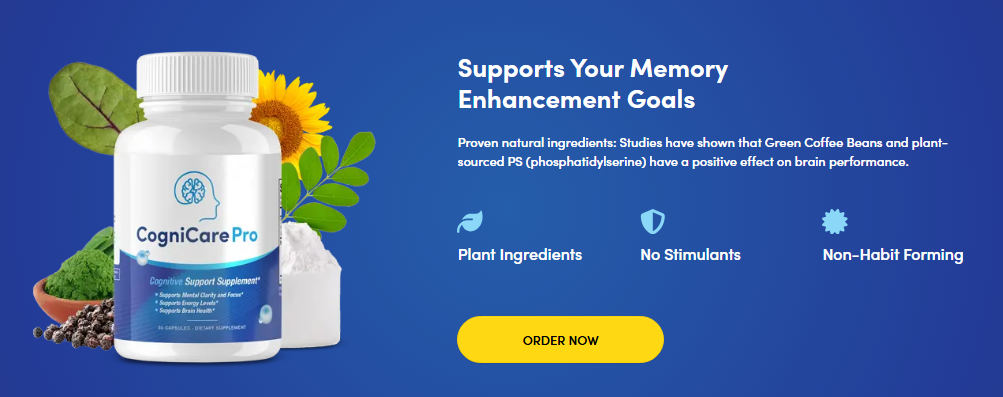
1. The Pattern Across 800+ Verified Buyers
Any single review is one person's story. The more useful signal is what repeats across hundreds of them — and for CogniCare Pro, the same patterns keep surfacing. Here's the honest distillation of the praise, the complaint, and the objection that show up again and again:
| What buyers focus on | The recurring pattern | What it tells you |
|---|---|---|
| Calm daytime focus | The most-repeated praise is steadier attention and no coffee crash — usually noticed in the first week or two from the Rhodiola + green coffee layer, before any "memory" change. | The early win is the gentle energy/focus effect, not memory. That's the Rhodiola talking — Bacopa hasn't kicked in yet. |
| The memory wait | Buyers who quit at 3–4 weeks call it "nothing"; those who run the full 8–12 weeks are the ones who re-order for the memory and recall change. | Bacopa builds slowly. Patience through the full window is the single biggest variable in whether someone is satisfied. |
| "What's actually in it?" | Recurring objection: the proprietary blend means individual botanical doses aren't printed, and dose-focused buyers flag it. | A real preference, not a flaw: all seven botanicals are named and the blend is built to run as one daily dose. If itemized milligrams are what makes you comfortable buying, look for a formula that discloses doses individually. |
| One capsule, official-site only | Recurring friction: buyers love the single-capsule simplicity but wish it were cheaper or on Amazon, and balk at the $69 single-bottle price. | The value lands on the 6-bottle bundle ($49/bottle, ~$1.63/day); official-only is what keeps the 90-day guarantee valid. |
SKIP COGNICARE PRO IF…
you need fully disclosed per-ingredient doses rather than a formulated blend (this is a proprietary blend by design) · you take an acetylcholinesterase inhibitor like Aricept or Exelon (real mechanism overlap with Huperzine A — talk to your doctor first) · or you want a same-week "limitless" hit rather than a gentle formula that takes 8–12 weeks to show its memory effect.
2. 6-Criteria Scorecard
| Criterion | Score | Why |
|---|---|---|
| Formula Strength | 4.5 / 5 | Bacopa, Rhodiola, and Huperzia are three of the most evidence-supported cognitive botanicals. Core mechanisms are solid. |
| Dose Transparency | 4.5 / 5 | All seven botanicals are named on the label; B-vitamins are disclosed with individual amounts. The blend format is a formulation choice — the seven work together as one daily dose. |
| Value / Price per Day | 4.5 / 5 | At the 6-bottle bundle price ($49/bottle, ~$1.63/day), it's priced competitively against other daily botanical formulas. |
| Safety Profile | 4.5 / 5 | Generally well tolerated. Mild stimulant layer is the main watchpoint. Huperzine A interaction with prescription cognitive drugs is real and worth flagging. |
| Research Support | 4.5 / 5 | Each core ingredient has randomized controlled trials or meta-analyses behind it. The formula as a whole is not studied, but the individual pieces are well-backed. |
| Guarantee & Trust | 4.5 / 5 | 90-day money-back guarantee is enough time for the full 8–12 week Bacopa window. GMP-certified, FDA-registered facility. Fair refund terms. |
| Overall | 4.5 / 5 | Solid gentle daily formula for adults 45+, built for consistent daily use over the botanicals' 8–12 week window. |
3. Full Pros Breakdown
What CogniCare Pro does right:
- Core botanical pedigree. Bacopa, Rhodiola, and Huperzia are arguably the three most evidence-supported natural cognitive compounds available. You rarely see all three together in a single gentle formula.
- Multi-pathway design. Neurotransmitter precursors (L-Tyrosine + B-vits) + memory signaling (Bacopa + Huperzia) + stress adaptation (Rhodiola) covers the main mechanisms behind age-related cognitive changes.
- Mild, non-crashing energy layer. Green Coffee + Theobromine deliver alertness without the caffeine spike and crash. Users sensitive to coffee usually prefer this profile.
- Single capsule per day. Simple to take consistently. No dose tracking, no multi-capsule regimens.
- 90-day money-back guarantee. Genuinely enough time to evaluate a long-acting botanical formula. Many competitors only offer 30–60 days, which isn't enough for Bacopa to show up.
- GMP-certified, FDA-registered facility. Production quality controls you want for a daily-use supplement.
- Stimulant-light but still effective. Sleep shouldn't be disturbed at normal morning dosing. Good fit for adults who can't tolerate aggressive nootropics.
Where CogniCare Pro falls short:
- Built on a botanical route — there is no choline donor here — if citicoline or Alpha-GPC is what you came for, another formula fits better
- Capsule routine — taken daily with food, not on demand
- Sold direct only — not on Amazon or retail shelves, so you order online
4. Who Should Buy CogniCare Pro
Based on the scorecard and the honest pros/cons above, CogniCare Pro makes sense for a specific set of users:
Best fit:
- Adults 45+ experiencing gradual age-related memory slowdown or mental fatigue
- Stressed professionals who crash from coffee but still need daytime alertness
- Adults who prefer one-capsule simplicity over multi-capsule stacks
- Users who want a gentle, non-stimulant-heavy daily routine
- People willing to give a formula 8–12 weeks to work
Not a great fit if you:
- Want fully disclosed doses — see Brain C-13
- Need immediate cognitive effects — this formula builds over weeks
- Already run an aggressive nootropic stack — the additive value will feel modest
- Take acetylcholinesterase inhibitors (Aricept, Exelon) — real mechanism overlap
- Can't tolerate even mild natural caffeine — look for caffeine-free alternatives
Frequently Asked Questions
What is the biggest downside of CogniCare Pro?
It's a narrower formula than some competitors — it skips a direct choline donor like Citicoline, and Omega-3 and Phosphatidylserine aren't in the mix either. The proprietary blend itself isn't a flaw: all seven botanicals are named on the label and combined as one daily dose. If you want doses itemized ingredient by ingredient, look for a formula built that way instead.
Is CogniCare Pro worth the money?
Yes, for the right user — and the package you pick decides whether you ever find out. One bottle is 30 days, which is short of the window this formula works over, so it answers how you tolerate it and little else. The 3-bottle bundle covers a fair trial, and the 6-bottle bundle (~$1.63/day) is the best value, with the lowest price per bottle and enough supply to keep going once the gains show up.
How does it compare to Brain C-13?
Brain C-13 is the more transparent formula (fully disclosed doses, includes Cognizin Citicoline, 180-day guarantee, 3 capsules/day). CogniCare Pro is gentler, simpler (1 capsule/day), and better suited for adults who want a mild daily routine without dose tracking. If you want the stronger disclosed formula, choose Brain C-13. If you want the gentler botanical-first option, CogniCare Pro makes sense.
Research & Transparency
This content is based on publicly available ingredient research, manufacturer disclosures, and product labeling. We are not affiliated with the manufacturer.
(a) Comparative effects of Bacopa monnieri and Ginkgo biloba on cognitive function — systematic review. Phytomedicine 2026
(b) The effect of plant active substances on cognitive function in healthy older adults — systematic review. Frontiers in Pharmacology 2025
(c) Memory — the reference we use for what normal age-related change looks like and when it warrants a doctor. MedlinePlus / NIH
(d) What we know about healthy aging — the agency read on what actually holds up cognition over time. NIH / NIA
About the Author
Luciano Cesar is a contributor at The Supplement Post, supporting the production of evidence-aware supplement reviews and buyer's guides across multiple health categories. His work spans ingredient analysis, formulation assessment and consumer-oriented summaries — what a label discloses, how the stated doses compare with the amounts used in published human research, and whether a formula's design matches what it claims to do. Every review is checked by The Supplement Post editorial team against the standards published in our editorial policy before it goes live.
Disclosure
All content is for informational purposes only and is not a substitute for professional medical advice. Each product reviewed is a dietary supplement, not a prescription drug. Results may vary based on individual health status, consistency of use, and lifestyle. This page may contain affiliate links — if you purchase through them, we may earn a small commission at no additional cost to you. Read our Editorial Policy.