
Timing Guide
When to Take Prostate Supplements: Best Timing, and Whether Yours Is the Right One
Morning or night, with food or without — the timing question has a short answer, and it's below. The longer answer is the one that actually decides your result: whether the formula in your cabinet was built for the symptom you have. Two formulas, two different jobs, both testable risk-free.

Should you take prostate supplements in the morning or at night?
Straight answer first, because it is what you came for.
Morning, with food. Breakfast is the anchor that survives real life — you will still be doing it in week six, which is more than can be said for a bedtime routine. Food matters because most prostate formulas carry botanicals and minerals that sit badly on an empty stomach, and nausea is the single most common reason men quietly stop taking something.
The one exception is if your main problem is the nights. Then take it earlier in the day and never at bedtime — a dose landing right as you are winding down becomes part of the bladder story instead of quieting it.
If your label calls for split dosing, breakfast plus lunch beats breakfast plus bedtime. And that is genuinely it. Timing is a small lever, and you have just pulled it.
Does the timing matter more than the formula?
Now the part that actually decides your result, and it is worth being blunt about it. You can nail the timing perfectly and still get nothing — because the hour is the smallest lever you have. The big one is what is in the capsule.
So look at what is in your cabinet right now and ask a harder question than "when should I take this". Ask when it was formulated. A lot of what sells as prostate support is a decade behind: a saw palmetto softgel and little else, a generic "prostate complex" built around whatever was cheap, or a multivitamin you are quietly hoping counts. None of that reflects where the evidence actually landed — which is that the gland, the bladder and the flow are three different problems answering to three different ingredients.
- The gland — the DHT and inflammation side, the slow structural driver underneath most of it
- The bladder — urgency and the nights, running on a completely different signal
- The flow — the stream that stalls, starts and stops, never quite finishes
Most men have one of those dominating. A formula aimed at another one will politely do nothing for it, no matter how disciplined you are with breakfast. That is the real reason behind almost every "I tried supplements and they did not work" — not the category failing, one product answering a question the man was not asking. If you genuinely cannot tell which of the three is yours, the broad-spectrum route is the safer opening — our full review of Prostavive's broad-spectrum prostate formula sets out what it covers on each of the three.
The part that matters Perfect timing on the wrong formula is four wasted weeks with a tidy routine. The hour is worth a little. What is in the capsule is worth everything else. Luciano Cesar, Content Contributor
And here is the part that should settle it: you do not have to be right about this in advance. Both formulas worth considering below are sold with a 180-day money-back window — more than four times the four weeks it takes to read a result.
Which means the decision is not really a decision. You are not committing money, you are committing a month of taking one capsule at breakfast and counting nights. If the numbers move, you found it. If they do not, you send it back and you have learned something specific about your own symptoms rather than staying stuck in the same guess. The only genuinely wrong move is the one most men make — keep taking something you already suspect is not working, because switching feels like starting over.
What the evidence actually supports
Three findings show up consistently across the research on prostate botanicals, and they are the ones worth holding any formula to:
The Evidence
- Consistency outweighs timing, by a wide margin. Taking a dose six or seven days a week beats a better-timed three-or-four-day schedule. The clearest read on this comes from prescription BPH treatment, where men who stayed on the daily dose kept the benefit and needed surgery less often (Zhang et al., 2020). Two things decide the result, and both are in your hands: the formula you pick, and whether it actually gets taken.
- Four to eight weeks is the real window. Trials of saw palmetto, beta-sitosterol and pygeum all place measurable urinary improvement between week 4 and week 12. Men who switch at two weeks are quitting before the data says anything happens.
- Ingredients divide by job, not by brand. Beta-sitosterol carries the strongest flow-rate evidence and pygeum the clearest data on storage symptoms, including night-time frequency. Saw palmetto has the largest trial base, and it performs best in enriched or combined preparations rather than as a lone capsule (Schwartzmann et al., 2026). That is exactly why a formula aimed at one complaint underdelivers on another.
Which is also why the honest recommendation is not a single winner — it is a match between your dominant symptom and the formula built around it. The ingredient side is covered in our pieces on saw palmetto and beta-sitosterol research.
The two formulas, by the symptom they fit
The table below has the full side-by-side. Here are the two formulas themselves, with the buyer who fits each one named plainly.
Prostavive
Several symptoms at once, or you can't tell which dominates
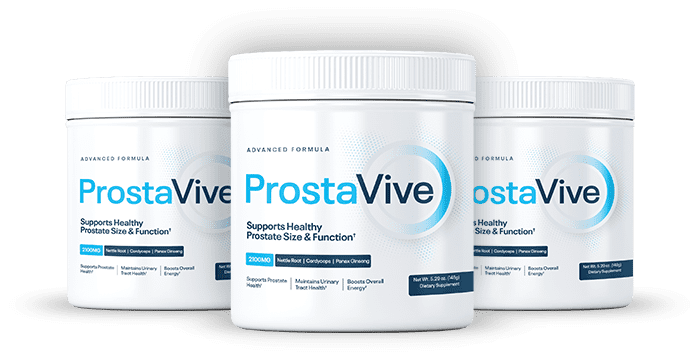
The broader of the two. It works the DHT and inflammation side, which sits underneath most prostate symptoms, in one capsule with breakfast — the schedule you'll actually keep. If you genuinely can't tell which symptom dominates, this is where to start.
Look elsewhere if: your main problem is specifically the stream — weak, stalling, slow to start. TitanFlow below targets that directly.
TitanFlow
Urinary flow — the stream that stalls, starts and stops

Aimed at flow specifically, rather than at the gland in general. It's the complaint that shows up first for a lot of men, and the easiest one to measure week to week — did the stream start faster, and finish clean.
Look elsewhere if: you have several symptoms at once. Prostavive's broader formula covers more of the gland-and-bladder picture.
Two formulas, two different jobs
One for each of the two most common patterns. Find the row that sounds like your week — that is the whole selection method, and it beats reading six labels. If nighttime urgency specifically is your complaint, a bladder-focused formula built for exactly that is worth a separate look.
| If your main problem is… | The formula for it | Why this one | Your risk |
|---|---|---|---|
| Prostate health Several symptoms at once, or you cannot tell which dominates | Prostavive ★ rated 4.8 / 5 Official site → | The broader of the two. It works the DHT and inflammation side, which is the driver sitting underneath most prostate symptoms. One capsule with breakfast — the schedule you will actually keep. | 180-day money-back, the longest in the category and more than double the evaluation window |
| Urinary flow The stream that stalls, starts and stops, never quite finishes | TitanFlow rated 4.6 / 5 Official site → | Aimed at flow specifically rather than at the gland in general — the complaint that shows up first for a lot of men, and the easiest one to measure week to week. | 180-day money-back |
★ Where we would start if both rows sound like you, or if you genuinely cannot tell which dominates — the broader formula covers more ground while you find out. Both are sold only through their official sites.
On the risk-free part, since it is the reason to simply find out: both carry a money-back window longer than the four weeks it takes to read a result. That inverts the usual problem. You do not have to decide whether a formula works by reading about it — you decide by running four honest weeks and counting. What you are actually spending is the month.
Common mistakes men make
- Taking it only "sometimes." Inconsistent use makes results almost impossible to interpret — most men who give up were taking it 3 days a week, not 6.
- Taking everything right before bed. Especially when nocturia is the main complaint. The supplement becomes part of the bedtime "bladder anxiety" instead of helping you sleep through it.
- Switching too fast. Many prostate strategies need weeks, not days. Two weeks isn't enough to judge a formula built for gradual support.
- Ignoring the basics. Late-night fluids, alcohol, and poor sleep can overwhelm small gains. The supplement is competing with the rest of your evening.
- Running a perfect routine on the wrong formula. This is the one nobody counts as a mistake, and it wastes the most time. If your problem is the nights and you're testing a broad daytime formula, four disciplined weeks will still end in a shrug — and you'll blame the category instead of the fit. Match the formula to the symptom before you start counting, not after.
When should you take prostate supplements?
The best time to take a prostate supplement is the time you can follow consistently — for most men, that's breakfast. If nocturia is what's wrecking your life, push it earlier rather than later. Pair with food if your stomach asks you to. Give any formula at least four weeks before you judge it. Track weekly, not daily.
And if what you are really deciding is which formula, it comes down to naming your dominant symptom out loud. The gland and everything at once, or you are not sure: Prostavive. The stream that stalls: TitanFlow. If the nights and the urgency are what dominate, the symptom-by-symptom comparison has the bladder-focused pick built for that. Pick the one that sounds like your week.
What to avoid is what most men do instead: buy something vaguely prostate-shaped, take it whenever, quit at week three, and conclude the category does not work. Pick the one matched to your symptom, put it next to the coffee, count for four weeks. Both formulas above carry a money-back window longer than that, so the only thing you are risking is the month.
If you experience blood in urine, fever with urinary symptoms, inability to urinate, or severe or sudden symptom changes, seek medical evaluation. Supplements support comfort; they don't replace assessment when warning signs are present.
Is it worth trying for steadier days and nights?
Most men who land on this page aren't picturing a transformation. They're picturing something plainer: sitting through a full movie without mapping the exits first, or a road trip that doesn't get planned around rest stops. Or one uninterrupted stretch of sleep instead of three trips to the bathroom. That's a reasonable thing to want, and it's a reasonable thing to work toward.
Here's the honest frame. A prostate formula is a potentiator, not a switch. It doesn't shrink the gland overnight or override the years behind it — it eases the inflammation and DHT signaling driving the symptoms, so the day-to-day gets more predictable. Taken that way, it tends to help. Expected to act like a prescription by week two, it will disappoint.
What makes it worth the attempt is that the ground isn't empty. Schwartzmann and colleagues' 2026 review found real clinical benefit from Serenoa repens across the trials. Zhang and colleagues' study of men on daily BPH treatment found consistency itself driving the outcome. None of that is a guarantee, and none of it was tested on your exact routine. It's enough to say the mechanism is real and the attempt is informed rather than hopeful.
And the response is yours, not an average. A man of fifty who takes his dose every morning without fail will read a different result than a man of seventy who takes it three days a week — same formula, same weeks. That's not a caveat to talk you out of it. It's the reason to give it the full eight weeks before deciding, and the reason the men who see the most tend to be the ones who simply kept taking it.
Frequently asked questions
Is there a best time of day to take prostate supplements?
For most men, the best time is the time you can follow consistently. Many prostate supplements are designed for steady, routine support, so adherence usually matters more than perfect timing. If nocturia is a major symptom, earlier-in-the-day dosing often feels more practical than bedtime dosing.
Should you take prostate supplements with food?
Many men tolerate prostate formulas better with food, especially when botanicals or minerals cause mild stomach upset. If you feel nausea or reflux when taking them on an empty stomach, pairing your dose with breakfast or lunch is usually the simplest fix.
How long should you try a prostate supplement before judging it?
A fair evaluation window is typically 4-8 weeks of consistent use. This is especially true for formulas positioned around inflammation balance, circulation support, or gradual urinary comfort changes, where the trend matters more than day-to-day fluctuations.
Can I take prostate supplements together with other medications?
Generally yes, but talk to your doctor first if you're on alpha-blockers (Flomax), 5-alpha reductase inhibitors (finasteride), or blood pressure medication. Saw palmetto, beta-sitosterol, and other prostate ingredients can interact mildly with these — usually safe, sometimes worth dose adjustment.
When should urinary symptoms be checked by a doctor instead of self-managing?
If you experience blood in urine, fever with urinary symptoms, inability to urinate, severe pain, or sudden worsening of symptoms, you should seek medical evaluation. Supplements should not delay proper assessment when warning signs are present.