
Buyer's Guide
Supplements to Increase Urine Flow: What Actually Works When the Stream Gets Weak
A weaker stream and an extra trip or two at night usually build slowly. Here are the ingredients with research behind them, why the best formulas combine more than one, and the two we would look at first.

What is behind a weak urine stream?
Urinary flow rarely changes overnight. It usually starts small: a weaker stream, a pause before it starts, a little dribble at the end. Some men notice one more trip to the bathroom at night than the year before. Doctors group these under lower urinary tract symptoms, or LUTS. They are commonly tied to benign prostate enlargement, or BPH, which affects roughly half of men by 60, according to the National Institutes of Health.
But size is not the whole story. Low-grade inflammation, tighter muscle around the urethra and shifting hormone signals all play a part. That is good news for you, because it means there are several points you can support, not just one.
Which ingredients help increase urine flow?
Saw palmetto is the best-known name. Schwartzmann and colleagues reviewed 16 human studies from 2020 to 2025 in a 2026 systematic review. They found symptom scores improved in several trials, and the plant was generally well tolerated, with mostly mild stomach complaints at worst.
Pumpkin seed extract has its own long look. Theil and colleagues followed 130 men with moderate symptoms for up to 24 months in 2022. Symptom scores fell and quality of life rose, with no hit to sexual function. It was an observational study, so read it as encouraging, not as proof.
Antoniou and colleagues, summarizing the plant-based research for BPH in 2023, described plant options such as saw palmetto and pumpkin seed as well tolerated, with modest effects that add up as part of a routine. Each one pulls a different lever: saw palmetto the hormone side, pumpkin seed the bladder and prostate tissue, and pygeum, covered below, the smooth muscle and inflammation side.
The key point A weak stream rarely has one cause, so the formulas that cover more than one route are the ones worth a try. Luciano Cesar, Content Contributor
Do supplements for urine flow work better combined than alone?
That is the pattern in the research. Arnold and colleagues, in a 2023 rapid evidence review in American Family Physician, found the overall evidence for herbal BPH options modest but real. Schwartzmann's review points the same way: the stronger signals came with well-made extracts and with combination approaches.
It makes sense in plain terms. One ingredient pulls one lever. A formula built on three or four pulls several, and you notice the result in the one place you care about: the stream, the night.
What about pygeum for urine flow?
Pygeum africanum comes from the bark of the African cherry tree and has long been used in European urology. Salinas-Casado and colleagues reviewed that experience in 2020 and found a real body of use behind it. It is the extract that eases the smooth muscle around the urethra, and both formulas below carry it.
Best supplement to increase urine flow: the two pygeum formulas side by side
Same goal, two ways in. Both carry pygeum. Pick the one that fits the rest of the label you want.
| What you care about | ProstaPeak | TitanFlow |
|---|---|---|
| Format | Capsules, 2 a day | Capsules, 2 a day |
| What is in it | Pygeum, saw palmetto, green tea extract, cat's claw (20+ botanicals) | Pygeum, beta-sitosterol complex, pumpkin seed oil, lycopene, broccoli sprout |
| Stimulants | Not listed | None |
| First changes | From week 3 | From weeks 3 to 4 |
| Guarantee | 180 days | 180 days |
| Best for | Weak stream and nighttime trips, broad blend with saw palmetto | Weak stream and straining to start, pumpkin seed and beta-sitosterol |
A healthy diet supports the prostate in general, so keep it. Pygeum, though, comes from the bark of an African tree, so there is no food version to lean on, and you came for a stronger stream. A formula that carries pygeum, next to partners working the same pathway, is how you put it to work. Both options below are built that way.
Supplements to increase urine flow: two with pygeum in the formula
Both carry pygeum on the label, each with different partners. Each names the man it fits.
ProstaPeak
Weak stream and nighttime trips, from pygeum and saw palmetto in a broad capsule
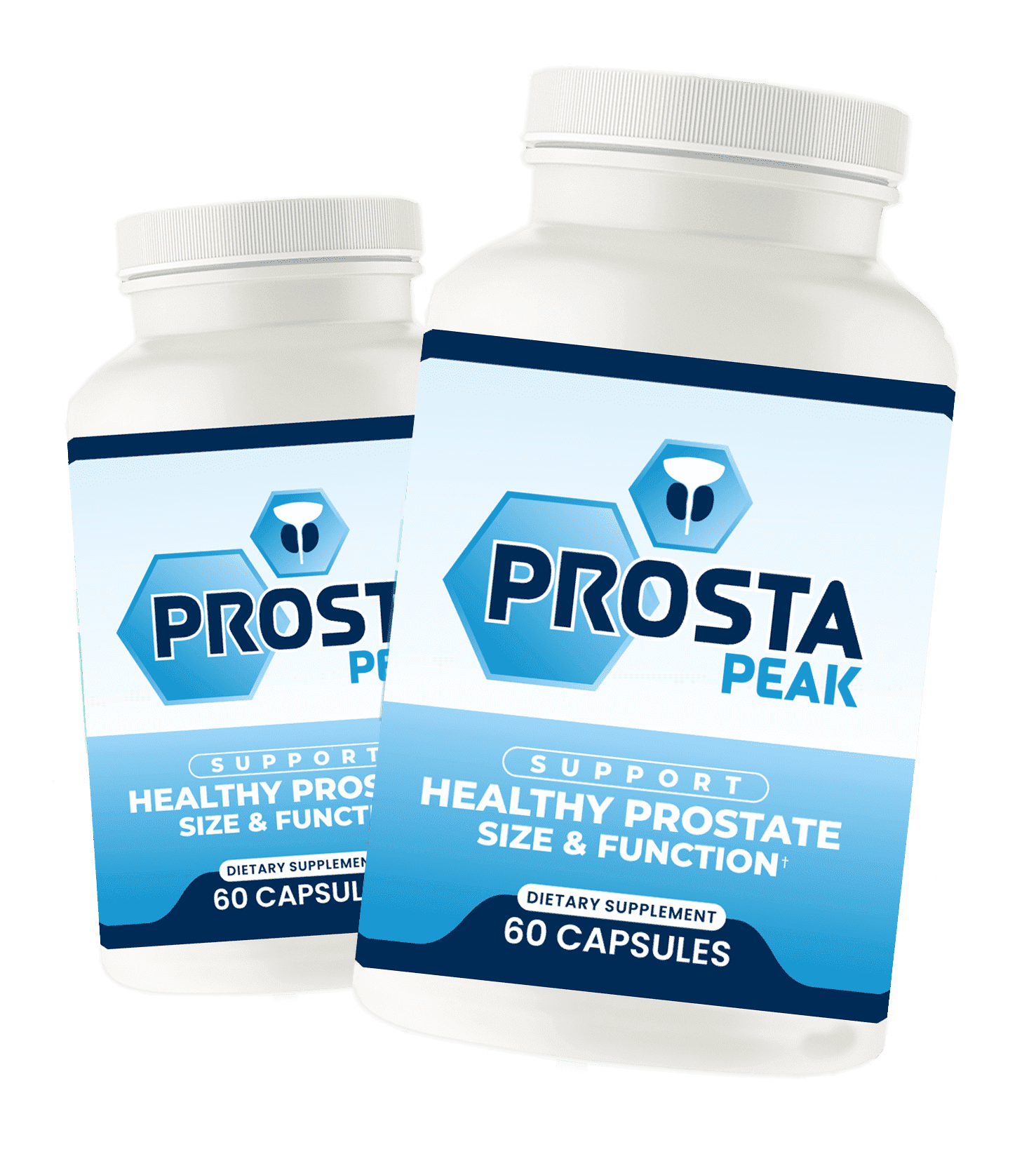
ProstaPeak carries pygeum and saw palmetto, with green tea extract and cat's claw among more than 20 botanicals. Saw palmetto works the hormone side, pygeum eases the smooth muscle around the urethra, and the antioxidants cover the rest. Two capsules a day, and the first changes tend to show from week 3.
Look elsewhere if: You want pumpkin seed oil in the mix, with a beta-sitosterol complex beside the pygeum. That is TitanFlow's lane.
TitanFlow
Weak stream and straining to start, with pygeum, beta-sitosterol and pumpkin seed oil

TitanFlow puts pygeum beside a beta-sitosterol complex and pumpkin seed oil (500 mg), with lycopene and broccoli sprout extract in support. It is built around the wall of the urethra, so the stream starts without the wait. Two capsules a day, and the first changes tend to show around weeks 3 to 4.
Look elsewhere if: You want saw palmetto on the label as well, in a wider botanical blend. ProstaPeak is built that way.
What is the best supplement to increase urine flow?
What is the best supplement to increase urine flow? For most men with a weak stream and nighttime trips, a formula that combines several plant routes, like ProstaPeak, is the direct pick. It puts pygeum and saw palmetto in two capsules a day, among more than 20 botanicals. If a stream that is slow to start is your main complaint, TitanFlow adds pumpkin seed oil and beta-sitosterol. Both carry a 180-day money-back guarantee, which covers the weeks when the first changes usually show.
Is it worth trying a supplement to increase urine flow?
Is it worth trying a supplement to increase urine flow? Yes, if what you want is a steadier stream and a quieter night. Picture a long drive where you stop thinking about the next rest stop. Or a night you sleep straight through, and a morning that starts without the walk down the hall.
Here is the honest frame. A supplement is a booster, not a switch. It adds to the routine you already have, and it supports the prostate and bladder tissue the way your body already works. Used that way, inside a formula built for the job, it can help, building over weeks.
The reason it is worth the try is that the research has a real base. Schwartzmann's 2026 review found symptom improvement in saw palmetto trials. Theil's group saw relief in men followed for up to two years on pumpkin seed. Arnold's 2023 evidence review named the herbal options among those that may help. Together they make this an informed try.
And the response is personal. A man of 45 with mild, recent symptoms will often notice change sooner than a man of 68 with years of gradual narrowing, on the same ingredients over the same weeks. Late-evening fluids, caffeine and poor sleep also shape what you feel. That is not a reason to expect nothing. It is the reason to give a formula a fair run before you decide.
Frequently asked questions
What supplements help with urine flow?
The most studied ones are saw palmetto and pumpkin seed extract, with pygeum, an African plum-bark extract long used in European urology, alongside them. They support the prostate side of a weak stream, so they work best as a daily routine rather than a one-time fix.
How can I increase my urine flow naturally?
Start with the basics: spread fluids across the day, ease off caffeine and alcohol in the evening, and stay active. Then add a prostate-support supplement that covers more than one route, such as ProstaPeak or TitanFlow, both of which carry pygeum, and give it a steady few weeks.
Which is better for a weak stream, saw palmetto or pumpkin seed?
They work differently. Saw palmetto is the most studied plant for prostate-related urinary symptoms, while pumpkin seed extract has a 24-month study in men with moderate symptoms. Many men choose a formula that carries more than one. TitanFlow pairs pumpkin seed oil with pygeum, and ProstaPeak pairs saw palmetto with pygeum.
ProstaPeak or TitanFlow: which one should I choose?
Both are two capsules a day, carry pygeum and come with a 180-day money-back guarantee. Choose ProstaPeak if you want saw palmetto beside the pygeum in a broader blend. Choose TitanFlow if you want pumpkin seed oil and beta-sitosterol beside it, aimed at a stream that is slow to start.
Where does pygeum fit in?
Pygeum africanum comes from African cherry bark and has a long place in European urology. It is one more option on the list. Both formulas above carry it, one with saw palmetto and one with pumpkin seed oil and beta-sitosterol.
When should I see a doctor about urinary symptoms?
See a healthcare professional if you cannot urinate at all, see blood in your urine, get repeated urinary infections, or notice your flow getting worse quickly. Supplements can support mild, everyday symptoms, but they should never delay a proper evaluation.