
In the News
Swollen Legs and Ankles: What Trump's Diagnosis Means for Your Own Legs
A president's swollen ankles made the news twice. The condition behind them is quietly one of the most common findings in adults over 40 — and most people who have it have never heard the name.
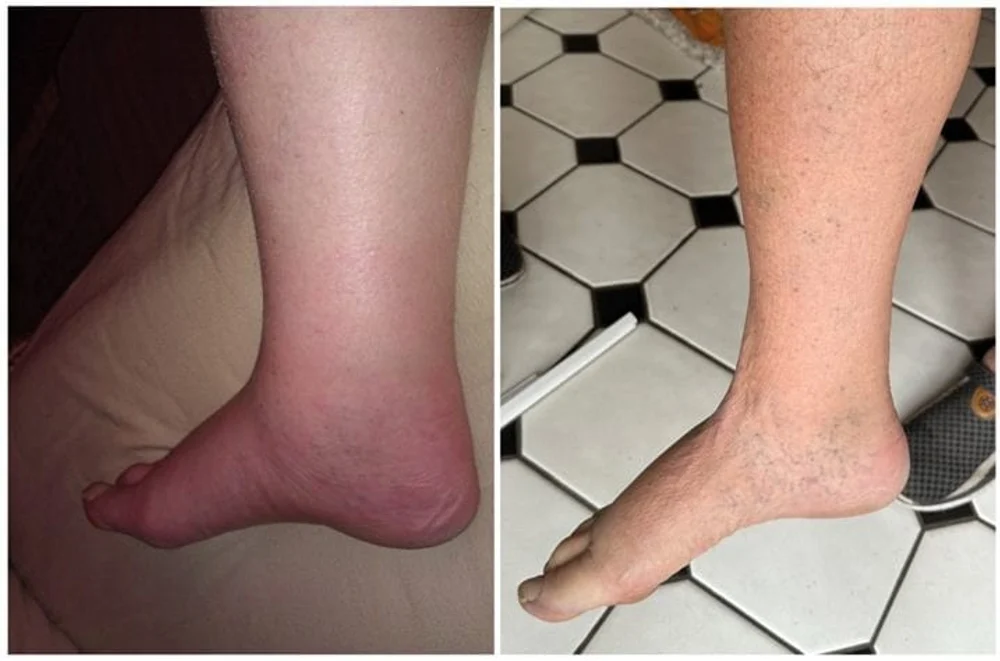
The Verdict
The condition behind the headlines is called chronic venous insufficiency, and the short version is that the small valves inside leg veins stop closing neatly. Blood pools lower down, fluid seeps into the tissue, and the ankle swells by evening.
The number that should reframe this for you is not political. When researchers ran duplex ultrasound on 2,510 adults over 40 for the Rotterdam Study, nearly one in four had the underlying backflow. Most had never been told.
Read the pattern, not the swelling. Both legs, worse by evening, better after a night flat is the everyday kind. One leg, sudden, or painful is an appointment — today, not after you finish reading.
What was actually announced
In July 2025 the White House said the president had been diagnosed with chronic venous insufficiency after reporting mild swelling in his lower legs. The workup included bilateral lower-extremity venous Doppler ultrasounds.
The statement was specific about what it ruled out. There was no evidence of deep vein thrombosis and none of arterial disease, and an echocardiogram showed normal cardiac structure and function. The condition was described as benign and common, particularly in people over 70. In May 2026 Reuters reported a physician's memo describing slight lower-leg swelling with improvement from the previous year.
That is the whole of it, and it is the whole of what anyone outside his medical team knows. What makes it worth your time is not the patient. It is that a condition almost nobody could name last year suddenly has a name, and a lot of people read the coverage and looked down at their own ankles.
Why this is far more common than the coverage suggests
Most reporting framed it as something that happens after 70. That is true of the diagnosis. It is not true of the plumbing behind it.
The best recent measurement comes from the Rotterdam Study, published in the European Journal of Vascular and Endovascular Surgery in February 2026. Researchers did not rely on questionnaires. They ran physician-performed duplex ultrasound on 2,510 people aged 40 and over.
By the numbers
23.7%
of adults over 40 had superficial venous reflux on ultrasound
3%
had already reached visible swelling or beyond
Women
carried higher odds, alongside older age and greater height
~46%
of people with leg lymphoedema also have venous insufficiency
Nearly one in four. Not one in four people in a vein clinic — one in four ordinary adults who showed up for a population study. Most of them had never been told, because nobody scans your legs unless you complain.
That last figure is worth a sentence of its own. A 2026 meta-analysis in the same journal pooled eighteen studies and found venous insufficiency in roughly 46% of people with lower-leg lymphoedema, two thirds of them women. The authors were careful about it, and so are we: the studies varied widely and the certainty grade is low. But the direction is clear. The vein side and the drainage side overlap in about half of cases, which is why treating them as separate problems tends to disappoint.
How to read your own legs
No single symptom tells you much. The pattern does. Here is what distinguishes the everyday kind from the kind that needs a phone call.
| What you notice | The everyday pattern | Get seen instead |
|---|---|---|
| Which leg | Both, roughly evenly | One leg only |
| How it started | Gradually, over months or years | Suddenly, over hours or a day |
| How it feels | Heavy, tired, aching by evening | Painful, hot, red or tender |
| Overnight | Better by morning after lying flat | No better, or worse |
| Anything else | Sock marks, tight shoes by six | Breathless, chest discomfort, fever |
One leg, sudden, or painful is not a supplement question and not a compression question. It is a same-day appointment.
The reason that line is drawn so hard is in the American Family Physician clinical review of peripheral edema. Swollen legs can come from your veins, your heart, your kidneys, your liver or your thyroid, and from medication you already take. Several of those are far easier to sort out early, and a page like this one cannot tell them apart. An exam can.
What actually helps, starting tonight
The first-line answers are unglamorous, free, and genuinely effective. They are also the ones people skip because they sound too simple. Do these before you buy anything.
- Elevate above the heart, not just up. Feet on a coffee table does little. Lying flat with the legs propped higher than the chest is what drops the pressure and lets fluid move back.
- Walk, and use the calf. The calf muscle is the pump. Every step squeezes the deep veins and pushes blood upward. Short and frequent beats long and occasional.
- Compression, fitted and worn early. Put it on in the morning before the leg fills. It works far better at keeping fluid out than at pushing out fluid already there. If yours is older than about six months, the graduated pressure has faded even though it still looks fine. The full fit and pressure checklist is in our piece on why compression socks stop helping with swelling.
- Salt, honestly assessed. Not the salt shaker — the bread, the deli meat, the sauces, the restaurant meal. That is where the sodium actually is.
- Break up the sitting. Two minutes of standing or ankle pumps every hour does more than one long walk at the end of a nine-hour day.
Compression in particular earns its place. A 2025 systematic review and meta-analysis in Lymphology found that advanced pneumatic compression devices measurably reduce limb volume. The catch is the one everybody discovers on their own, and it leads straight to the next section.
The half nobody covers
Every measure above works while you are doing it. Elevate and the leg drains. Walk and the pump runs. Wear the stocking and the ankle holds. Stop, and by the next evening you are back where you started.
That is not you doing it wrong. External and positional measures manage the swelling. They do not change how well your body carries fluid away. That second job belongs to the lymphatic system, which unlike your blood has no pump of its own — it moves when your muscles contract and when you breathe deeply. It is also why the two problems overlap in about half of cases.
So a daily formula has one defensible job here: the hours you are not managing anything. Not a replacement for compression and movement, and not a treatment for a diagnosed vein condition. The evidence for the plant family is decent and says the same thing — the 2025 review in the Journal of Vascular Surgery: Venous and Lymphatic Disorders and the 2026 re-examination in Vascular Pharmacology both found real effects, and both placed these plants alongside the rest of your care rather than instead of it.
Two routes, depending on what brought you here
These are not ranked, because they answer different questions. One carries the plant family with the venous research behind it. The other is aimed at drainage across the whole body, face included. Read the opening line of each and take the one that describes you. If you would rather see the wider field first, we compare it in our guide to the best supplements for swollen legs and ankles.
Lymph Tonic
Choose this if a vein diagnosis, or the news, is what brought you here
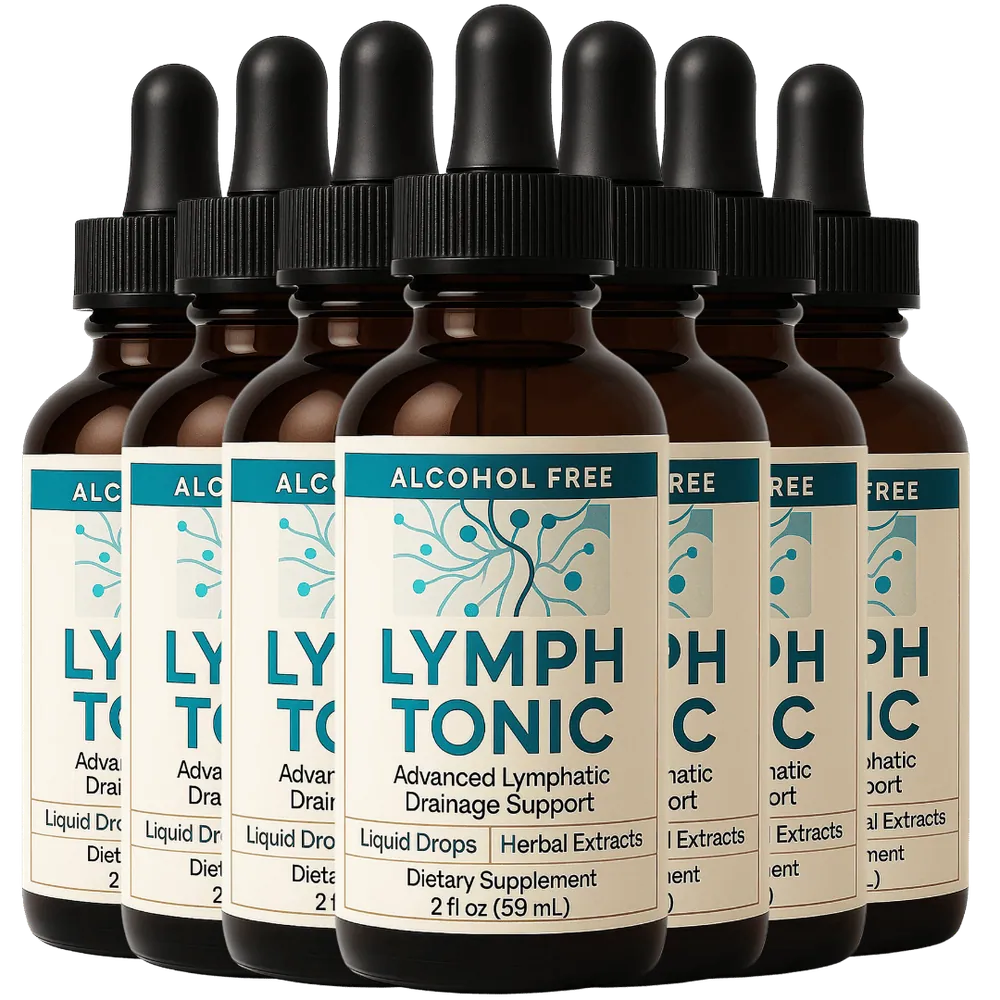
Thirteen herbs in a 600 mg alcohol-free blend, two droppers a day in water. What matters for this article is which three are in it: horse chestnut (the source of escin, and the most-studied plant extract there is for chronic venous insufficiency), hesperidin methyl chalcone (the citrus flavonoid used in European venoactive prescriptions) and gotu kola. That is the venoactive family, in one bottle, alongside nattokinase and an anti-inflammatory group. Full breakdown in our Lymph Tonic review.
Know before you buy: the 600 mg is a single blend shared by thirteen herbs, so the horse chestnut sits below the 300–500 mg used in standalone studies. You are buying the combination rather than one documented clinical dose. If a verified single-herb amount is what you want, a standalone horse chestnut product is the honest answer.
Linfaflow
Choose this if it is the everyday swelling — mornings, face and legs together
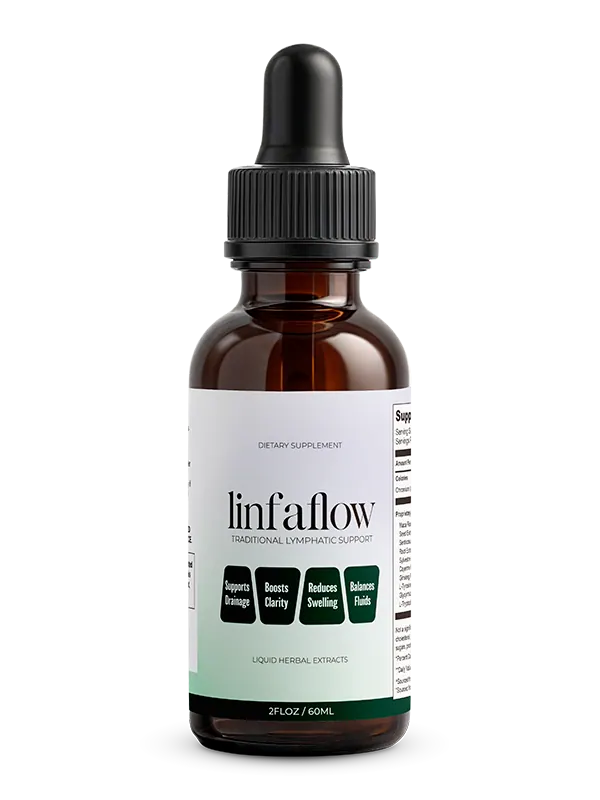
Four plant extracts in a 300 mg blend, taken as a dropper under the tongue: Cleavers to move parked fluid, Stillingia root to open the deeper routes, Red Clover blossom for the surface layer that shows on your face, and Prickly Ash bark for the days you barely stand up. It works the drainage side rather than the vein wall, which is the half that keeps running while you sleep. No diuretic and no stimulant, so there is no bathroom day and nothing to rebound from. Full breakdown in our Linfaflow review.
Know before you buy: it is a traditional botanical formula and says so on its label. Red clover is the extract with modern human research; the other three carry herbal records rather than trials. It is aimed at drainage, not at vein walls, so it is not the venoactive route.
What do your swollen legs and ankles actually mean?
A president's ankles put a name to something that turns out to be sitting in nearly a quarter of adults over 40. That is the useful part of the story, and it is the only part that has anything to do with you.
Start with the free things, because they work and because skipping them makes everything else look like it failed. Elevate properly, use the calf, wear compression that actually fits and put it on early. Then be honest about what those measures do not cover: the hours you are not doing them.
And keep the one hard line in view. Both legs, gradual, better in the morning is the everyday kind. One leg, sudden, or painful is a phone call. No amount of research online substitutes for someone looking at the leg.
Frequently asked questions
What venous condition was President Trump diagnosed with?
Chronic venous insufficiency. The White House announced it in July 2025 after he reported mild swelling in his lower legs. The workup included bilateral lower-extremity venous Doppler ultrasounds, and the statement said there was no evidence of deep vein thrombosis or arterial disease, with a normal echocardiogram. It was described as a benign and common condition, particularly in people over 70. A physician's memo reported by Reuters in May 2026 described slight lower-leg swelling with improvement from the year before.
Is chronic venous insufficiency a serious health problem?
On its own it is usually not dangerous, which is why the White House called it benign. The valves inside leg veins stop closing neatly, so blood pools lower down and fluid seeps into the tissue. Left completely unmanaged over many years it can progress to skin changes and, in a small minority, leg ulcers. The part that matters most is telling it apart from the causes that are urgent — a clot, an infection, or a heart or kidney problem — which is a job for an actual exam, not a web page.
How common is leg swelling from vein problems?
Far more common than the coverage suggests. In the Rotterdam Study, published in the European Journal of Vascular and Endovascular Surgery in February 2026, researchers ran physician-performed duplex ultrasound on 2,510 adults aged 40 and over. Nearly one in four — 23.7% — had superficial venous reflux, the backflow that underlies the condition. Three percent had reached the stage where visible swelling or worse is present. Being older, being a woman and being taller all raised the odds.
What are the early signs in your own legs?
The pattern is more telling than any single symptom. Both legs rather than one, worse by evening and better after a night flat, heaviness or aching rather than sharp pain, socks leaving a mark that lingers, and shoes that fit in the morning but not at six. If that is your day, it is the everyday pattern. One leg, sudden onset, or pain and redness is a different question entirely and belongs to a doctor.
Do supplements help with leg swelling?
For this specific area the botanical evidence is unusually good, and it is honest to say so. Reviews in the Journal of Vascular Surgery: Venous and Lymphatic Disorders in 2025 and in Vascular Pharmacology in 2026 both examined venoactive plant compounds in chronic venous disease and found real effects, while placing them as support alongside compression and movement rather than instead of them. What they do not do is replace an exam or a prescription. Compression and elevation stay first-line.
When should swollen legs be seen by a doctor?
Now, if the swelling is in one leg only, if it arrived suddenly, or if it comes with pain, redness, warmth, breathlessness or chest discomfort. Also worth an appointment if it is new for you, if it is not settling overnight, or if you take medication that can cause it. The American Family Physician clinical review of peripheral edema lists causes running from veins to heart, kidneys, liver and thyroid, and several of those are much easier to sort out early.