
Buyer's Guide
The Best Supplements for Menopause Water Retention, and Who Each One Fits (2026)
Nothing about your diet changed, but the rings stopped fitting and the ankles started showing by 4pm. Here is why this kind of swelling behaves differently, and what is worth buying for it.
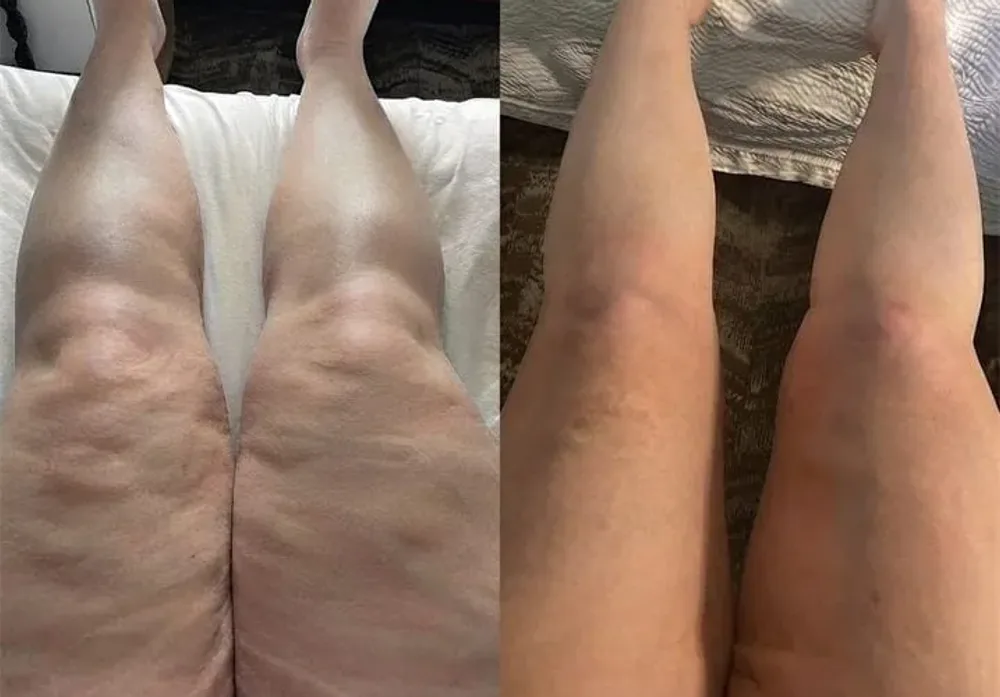
The Verdict
This kind of retention runs on a different clock, and that is the whole reason the usual advice underdelivers. Ordinary swelling builds through the day and drains overnight. Menopause swelling follows hormones, so it arrives in waves that do not match anything you ate or did.
Two formulas are worth your money here, and which one depends on a question nobody else asks you. Linfaflow is our pick for most women. Lymph Tonic is the better call if you are on hormone therapy or have a hormone-sensitive history, because it carries no phytoestrogen.
One thing outranks both. Swelling in one leg only, swelling that arrived suddenly, or swelling with pain or breathlessness is an appointment. So is puffiness that comes with fatigue, feeling cold and dry skin, because that pattern can be your thyroid rather than your ovaries.
First — why this swelling has a different clock
Most swelling is a gravity story. Fluid pools downward through the day, you lie down, and by morning it has mostly gone. Predictable, and it responds to elevation.
Perimenopause breaks that rhythm. Estrogen and progesterone both influence how much sodium your body holds on to, and sodium holds water with it. As those hormones stop running on a schedule, so does your fluid balance.
The result is retention that feels random. It shows up for four days and disappears for ten. It ignores the salad week. Your rings are tight on a Tuesday for no reason you can name, which is exactly the part women describe as maddening.
It also moves around. Ordinary end-of-day swelling stays in your legs and ankles. This kind turns up in fingers, feet, face and under the eyes, often in different combinations from month to month.
Ordinary swelling asks what you did today. This kind asks where you are in a hormonal shift that takes years. Advice built for the first one keeps missing the second.
One practical note, because it is the question underneath most searches. Fluid moves fast, and fat does not. Two to four pounds arriving over a few days and easing again is water, not weight gained. If your rings and ankles are moving with the number, you are watching fluid.
By the numbers
45–55
the usual age range for menopause, with perimenopause starting years earlier
4–8 yrs
how long the transition commonly runs, which is how long the swings last
2–4 lb
a swing over days that is fluid, not fat — fat does not move that fast
Zero
pumps the drainage side of your circulation has of its own
Where it shows up, and what each spot tells you
The location is not random, and it is the fastest way to work out what you are dealing with.
| Where | What it usually means |
|---|---|
| Fingers and rings | The classic early sign, and the one women notice first. Small volumes show quickly in the hands, which is why a ring is a better daily gauge than the scale. |
| Face and under the eyes, on waking | Fluid redistributing upward overnight, since lying flat removes gravity. It settles by mid-morning. If it never settles, see the last section. |
| Feet and ankles, by late afternoon | Gravity plus a long day on your feet or at a desk. This is the half that responds to elevation and to fitted compression. |
| Legs feeling heavy and tight | The vein side. It becomes more common with age independently of hormones, and it is the pattern with the strongest plant evidence behind it. |
| Abdominal bloating | Usually a gut question rather than a fluid one, and a drainage formula is the wrong tool for it. We would not sell you one for that. |
How we ranked them
Five criteria. The fourth is the one that decides this page, and it is the one no other list in this aisle bothers to run.
| What we weighed | Why it decides the ranking |
|---|---|
| Does it aim at drainage or at your kidneys? | A diuretic pulls water out of your blood. The swelling you see is in tissue, which is a different compartment. Most of this aisle is diuretic-led and quietly aims at the wrong place. |
| Does it suit a baseline that changed? | This is not a one-week problem. What matters is whether you can still be taking it in month three, which makes format and routine part of the mechanism rather than a detail. |
| Is the guarantee longer than the timeline? | The face and fingers report first, around week one to two. Legs take three to six. A 30-day window closes before you can judge the thing you bought it for. |
| What does the label mean if you are on HRT? | Red clover is a phytoestrogen, so it acts on the same receptors your own estrogen uses. NCCIH advises caution with hormone-sensitive conditions. For this audience specifically, that belongs on the front of the decision rather than in the small print. |
| What else is on the panel? | Hidden caffeine and stimulants are common here and have nothing to do with drainage. We favour short, clean panels with third-party batch testing. |
Worth stating plainly, because everything below rests on it. Plant compounds for heavy legs are not a fringe idea. A 2025 review in the Journal of Vascular Surgery: Venous and Lymphatic Disorders went through the evidence on plant-derived venoactive compounds and found they do something real. It also placed them as support alongside the rest of your care, not instead of it. That is the honest frame here.
The picks
Two formulas clear the bar, and they split on one question rather than on quality. Each names the woman it fits and the one it does not.
Linfaflow
Best for the pattern that moves — fingers, face, feet, not just legs
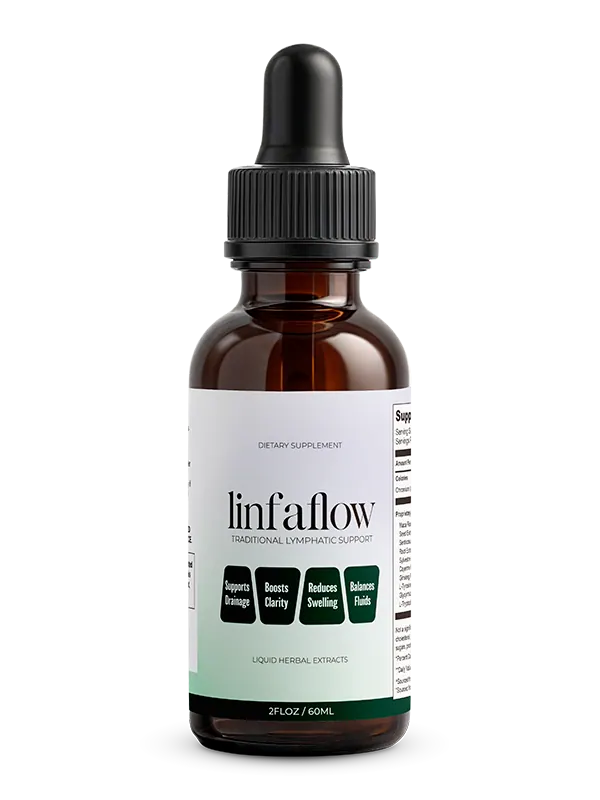
Four plant extracts in one 300 mg blend, taken as a dropper under the tongue: Cleavers to get parked fluid moving, Stillingia root to open the deeper routes, Red Clover blossom for the surface layer that shows on your face, and Prickly Ash bark for the days you barely leave your chair. It works the drainage side rather than your kidneys, so there is no bathroom day and nothing to rebound from. It fits this audience because the change is reported where menopause retention shows first: the face and the fingers, around week one to two. Made in the USA, tested by an outside lab batch by batch. Full breakdown in our Linfaflow review.
Know before you buy, and this part matters here: red clover is in this formula for drainage, not for hormones. The trials that found a benefit for hot flushes used isolated isoflavones at 37 to 160 mg a day. One plant inside a 300 mg four-plant blend is nowhere near that, so do not buy it expecting hot-flash relief. And because red clover is a phytoestrogen, talk to your doctor first if you are on hormone therapy or tamoxifen, or have a hormone-sensitive history.
Lymph Tonic
Choose this if you are on HRT, or if the legs are the whole story
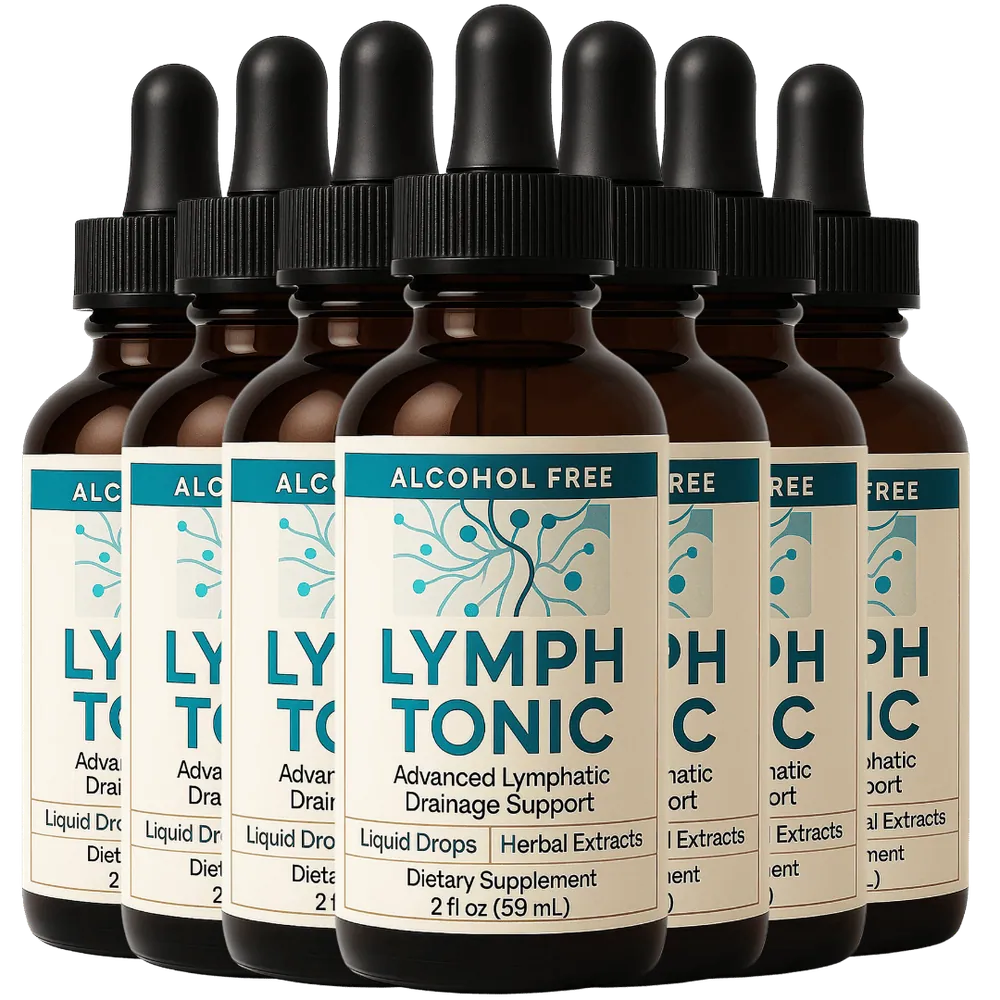
Thirteen herbs in a 600 mg alcohol-free blend, two droppers a day in water, anchored by horse chestnut — the most-studied plant extract there is for leg swelling and chronic venous insufficiency. Two things make it the right call for a specific woman here. It carries no phytoestrogen anchor, which removes the HRT question entirely. And its centre of gravity is the vein side, which is the pattern if your complaint is heavy legs by evening rather than fingers and face. Full breakdown in our Lymph Tonic review.
Know before you buy: the guarantee is 60 days rather than 90, which is a tighter window for a change that builds over weeks. And a thirteen-herb list is broad by design, so individual amounts are spread thinner than in a four-plant formula.
Does it stop after menopause?
Partly, and it is worth knowing which part. Once hormone levels stop fluctuating, the unpredictable swings usually settle. The Tuesday that made no sense stops happening.
What tends to stay is the baseline. Circulation, muscle mass, daily activity and vein function all shift across the same years, and none of them reverse when the hormonal part quiets down. Many women describe the retention as becoming steadier rather than smaller.
That is the honest case for a daily routine rather than a rescue product. You are not waiting out a phase.
When it is a test rather than a supplement
One overlap matters more than the rest for this audience. An underactive thyroid and perimenopause share a symptom list: fatigue, weight that creeps up, feeling cold, dry skin, puffiness. They get confused all the time, in both directions.
The tell is that thyroid puffiness does not clear by lunchtime the way the hormonal kind does. If that describes you, ask for a thyroid blood test. It is one draw and it settles the question.
The rest is short and firm. One leg only, sudden onset, or painful, red and warm is a same-day appointment. The American Family Physician review of peripheral edema also flags something easy to miss: several everyday medications cause fluid retention on their own, and blood pressure drugs are among them.
Which supplement should you take for menopause water retention?
If the retention moves around your body and turns up in your fingers and face as much as your ankles, that is the menopause pattern, and Linfaflow is where we would start. Ninety days with empty bottles accepted covers the window in which you can actually judge it.
If you are on hormone therapy, or the legs are the entire complaint, Lymph Tonic is the better fit and not a consolation prize. Horse chestnut is the most-researched plant in this whole category.
Either way, the free things still work. Our companion pieces cover what actually moves fluid overnight and the fifteen-minute answer for a puffy face.
Frequently asked questions
Why am I retaining water in perimenopause?
Because the hormones that help set your fluid balance stopped running on a steady schedule. Estrogen and progesterone both influence how much sodium your body holds, and sodium holds water with it. In perimenopause those levels swing rather than settle, so the retention arrives in waves that do not line up with anything you ate or did. That is also why it feels like it came out of nowhere.
Does water retention stop after menopause?
The swings usually settle once hormone levels stop fluctuating, so the unpredictable part tends to ease. What often does not go away is the baseline. Circulation, muscle mass, activity levels and vein function all change over the same years, and none of those reverse on their own when the hormonal swing ends. Plenty of women find the retention becomes steadier rather than smaller.
Is menopause water retention weight gain, or is it fluid?
Usually both, in different proportions, and the scale cannot separate them for you. Fluid moves fast: two to four pounds appearing over a few days and easing again is almost always water. Fat does not behave that way. A useful test is whether the change tracks with your rings and your ankles rather than with your clothes overall. If the whole picture shifts within a week, you are looking at fluid.
Do water pills help with menopause water retention?
They move fluid, but they aim at the wrong place for this. A diuretic tells your kidneys to send more water to your bladder, which pulls it out of your bloodstream. The swelling you can see is sitting in tissue, not in your blood, and the two are not the same compartment. That is why people report a heavy bathroom day and the same ankles by evening.
Can red clover supplements help menopause symptoms?
For hot flushes there is real evidence, and it is worth knowing the size of it. A 2026 GRADE-assessed meta-analysis in the European Journal of Obstetrics and Gynecology pooled nine randomized trials and found a modest but statistically significant reduction in hot flush frequency. Those trials used isolated isoflavones at 37 to 160 mg a day. A drainage formula with red clover as one of four plants in a 300 mg blend is not delivering that, and should not be bought expecting it.
Is red clover safe if I am on HRT?
That is a conversation with your doctor rather than a decision to make from a label. Red clover isoflavones are phytoestrogens, which means they interact with the same receptors your body's own estrogen uses. NCCIH advises caution for women with hormone-sensitive conditions, and the same caution applies alongside hormone therapy or tamoxifen. If any of that is you, ask first or choose a formula without it.
When should menopause swelling be seen by a doctor?
Book an appointment if the swelling is in one leg only, arrived suddenly, or comes with pain, redness, warmth or breathlessness. Also worth checking if it never settles overnight, or if it arrived with fatigue, feeling cold and dry skin, since an underactive thyroid can look a lot like perimenopause. As the American Family Physician review of peripheral edema sets out, fluid retention can also come from the heart, kidneys, liver or medication you already take.