
Edited by Michael Anderson, Editor-in-Chief
Updated
ProNail Complex Ingredients: The 17-Oil Blend and How They Combine
Every oil in ProNail Complex, what it does, and why the one disclosed active matters more than the marketing around it.
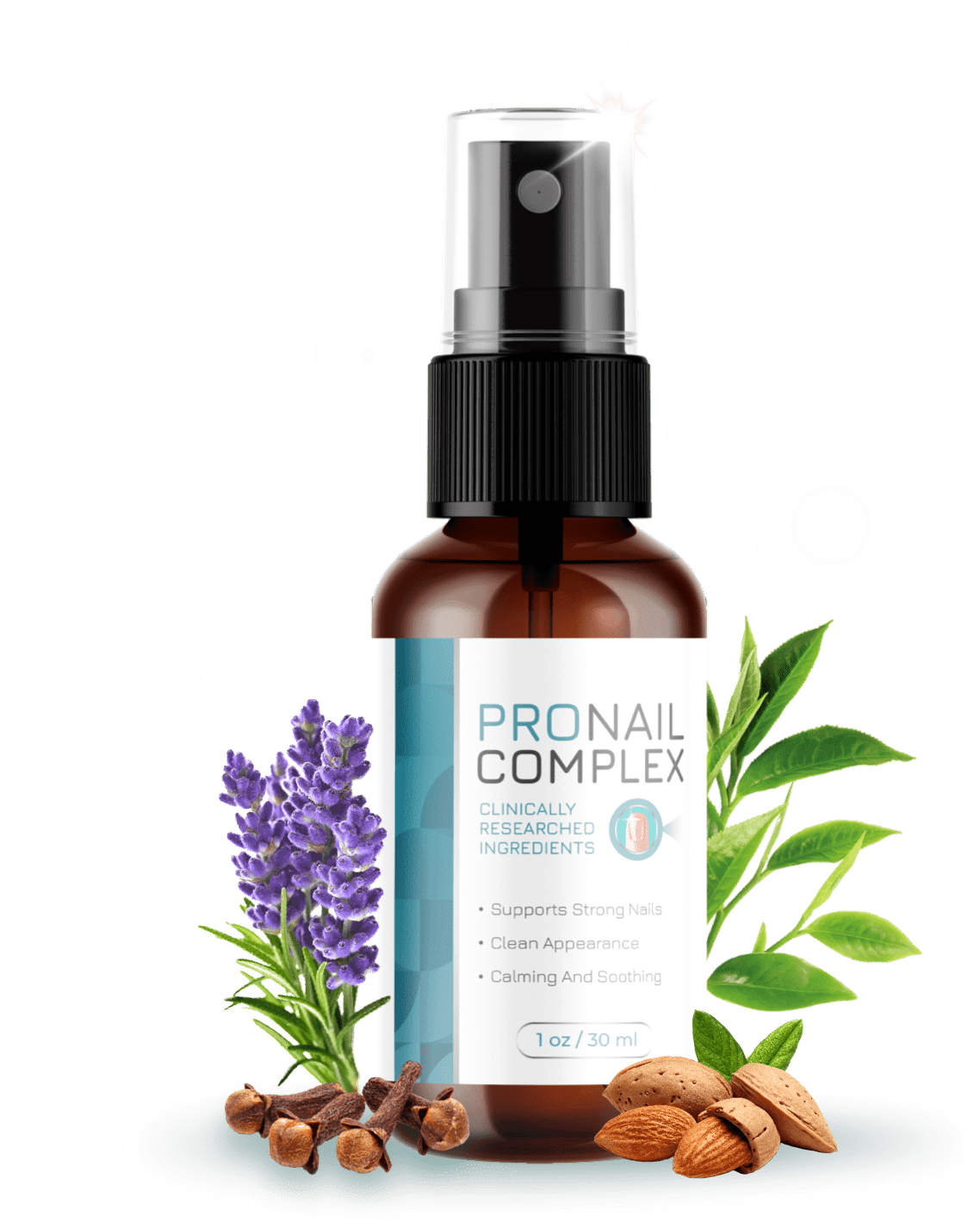
ProNail Complex — a 17-oil topical blend built around one disclosed antifungal active.
In This Article
What's Inside
ProNail Complex is a 17-oil topical blend. One ingredient is disclosed by amount — Undecylenic Acid at USP 5%, a recognized FDA OTC-monograph antifungal active. The other 16 are named but not individually quantified (standard cosmetic labeling): four antifungal essential oils (tea tree, clove, lavender, manuka), soothing agents (menthol, camphor, aloe), conditioning oils (jojoba, almond, flaxseed, chia, walnut, Vitamin E), and two carrier oils (mineral, canola) that build the spreadable mist.
THE CORE PROMISE
Every oil in this blend exists for one of two jobs — protect the nail’s environment, or strengthen the nail itself. Most topical nail products fail for one reason: raw oils dabbed on top of a nail just sit there and evaporate. ProNail Complex is built to skip that — a micro-particle mist fine enough to slip under the nail edge, carrying a 17-oil blend (with a disclosed FDA-monograph antifungal active, Undecylenic Acid USP 5%) to where the problem actually sits. Result: new growth comes in stronger and clearer over the renewal window — sprayed on in seconds, twice a day. That’s the whole promise.
1. The One Disclosed Active: Undecylenic Acid USP 5%
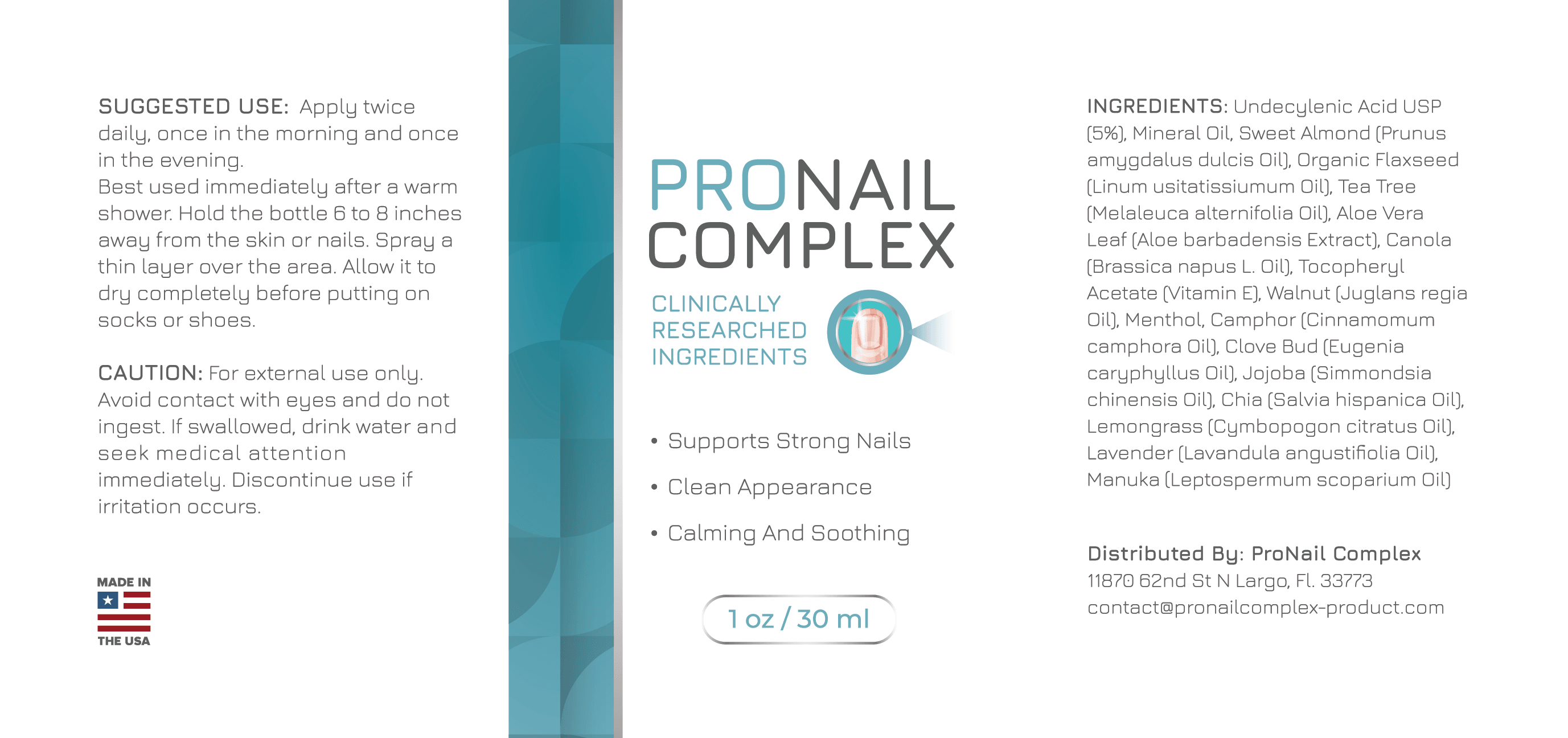
Most “natural nail oil” products have no verifiable active at all — just a list of oils. ProNail Complex is different on one specific point: Undecylenic Acid is disclosed right on the label at USP 5%. That matters because undecylenic acid is a recognized antifungal active in the FDA’s OTC drug monograph, and 5% is a real, monograph-range strength. You can verify exactly how much of the working ingredient you are getting.
This is the ingredient that separates ProNail Complex from a plain bottle of botanical oil. The rest of the formula supports it — but this is the disclosed, evidence-recognized core.
2. The Full 17-Oil Blend
Here is the complete formula. Only the active is disclosed by amount; the 16 supporting oils are listed by name without individual percentages — standard cosmetic labeling for inactive ingredients, not a red flag, but it does mean you can’t see the exact ratios.
| Ingredient | Amount | Role |
|---|---|---|
| Undecylenic Acid USP | Disclosed 5% | Antifungal active — the one verifiable working ingredient, recognized in the FDA OTC monograph |
| Tea Tree Oil | In blend | The most-researched natural antifungal essential oil; antimicrobial and antiseptic |
| Clove Bud Oil | In blend | Rich in eugenol, documented antifungal activity against skin/nail fungi |
| Lavender Oil | In blend | Antifungal essential oil; also calming for irritated skin |
| Manuka Oil | In blend | New Zealand relative of tea tree; research-noted antifungal potency |
| Lemongrass Oil | In blend | Antimicrobial; supports a clean nail environment |
| Camphor Oil | In blend | Penetrating, cooling, soothing — traditional in nail/skin topicals |
| Menthol | In blend | Cooling sensation on application; the “calming” experience |
| Aloe Vera | In blend | Soothes and hydrates skin; mild antifungal properties of its own |
| Vitamin E | In blend | Antioxidant; supports skin repair and protects the oils from oxidation |
| Jojoba Oil | In blend | Closest plant oil to skin’s sebum — carries actives deep, conditions |
| Sweet Almond Oil | In blend | Fatty-acid-rich; softens cuticles, conditions brittle nails (tree nut) |
| Organic Flaxseed Oil | In blend | Omega-rich; research-noted antifungal properties, conditions the plate |
| Chia Oil | In blend | Omega-3-rich; supports the skin barrier around the nail |
| Walnut Oil | In blend | Phenolic compounds with noted antifungal activity (tree nut) |
| Mineral Oil | In blend | Base carrier oil — creates the spreadable, penetrating mist texture |
| Canola Oil | In blend | Light base carrier oil; helps the formula spread and absorb |
3. The Four Antifungal Essential Oils
Around the disclosed active sit four essential oils chosen for documented antimicrobial research: tea tree (the most-studied natural antifungal oil), clove (eugenol, active against dermatophytic fungi), lavender (antifungal plus calming), and manuka (a tea-tree relative with research-noted potency). Together they support a cleaner environment around the nail — the appearance side of nail health.
4. The Conditioning Oils That Strengthen Nails
The strength side of the formula is six conditioning oils: jojoba, sweet almond, flaxseed, chia, walnut, and Vitamin E. These hydrate and nourish the nail plate and cuticle so the new growth comes in less brittle. Jojoba is the standout — the closest plant oil to skin’s own sebum, which helps the whole blend penetrate rather than sit on top. Note for allergy-aware readers: sweet almond and walnut are tree-nut-derived.
5. The Carrier Base
Two ingredients — mineral oil and canola oil — are the carrier base. They aren’t actives; they create the light, spreadable texture that lets the micro-particle mist travel under the nail edge and absorb without greasiness. They are functional and safe, but they are inexpensive filler oils — one of the honest reasons the product rates a strong 4.5 rather than 4.7.
Pricing Options for ProNail Complex
ProNail Complex is available in three bundle options. Most users choose the 6-bottle Best Value bundle because it carries them all the way through — from the first-week wins to a fully renewed nail. The "Best Value" 6-bottle bundle locks in $49 per bottle, includes free shipping plus 3 bonus eBooks, and covers the complete nail-renewal window.
2 Bottles
60-Day Supply
- 60-day Money-Back Guarantee
- Secure Checkout
Save $200
Shop Now6 Bottles
180-Day Supply
- 60-day Money-Back Guarantee
- Free US Shipping
- 3 FREE Bonus eBooks
- Instant Savings $780
Save $780
Shop Now3 Bottles
90-Day Supply
- 60-day Money-Back Guarantee
- Free US Shipping
- Instant Savings $330
Save $330
Shop NowEvery order is backed by a 60-day money-back. Only available through the official website.
Frequently Asked Questions
What is the active ingredient in ProNail Complex?
Undecylenic Acid, disclosed on the label at USP 5% — a recognized antifungal active in the FDA OTC drug monograph. It is the one ingredient quantified by amount; the other 16 oils are supporting ingredients.
Why are the other oils not listed with amounts?
The 16 supporting essential and carrier oils are listed by name without individual percentages, which is standard cosmetic labeling for inactive ingredients. You can verify the active and see the full ingredient list; you can’t see the exact oil ratios.
Is ProNail Complex all-natural?
The formula is described as 100% natural and non-GMO, manufactured in a GMP-certified, FDA-registered USA facility. It contains tree-nut-derived oils (sweet almond, walnut), so check the full list and patch-test if you have nut or essential-oil sensitivities.
Continue your research
- Next: ProNail Complex safety profile — the patch-test rule
- Then: Does ProNail Complex really work — how the oils perform over time
- Compare: Orivelle Fungus Pen — a brush-tip topical alternative
- Deep dive: Orivelle’s ingredient list — how another nail-oil blend compares
Research & Transparency
This content is based on publicly available ingredient research, manufacturer disclosures, and product labeling. We are not affiliated with the manufacturer.
(a) Undecylenic acid and its antifungal effect on Candida albicans biofilm formation. Shi et al. 2016
(b) Antifungal activity of clove essential oil and its volatile vapour against dermatophytic fungi. Chee & Lee 2007
(c) Antifungal activity of Lavandula angustifolia (lavender) essential oil against Candida albicans. D'Auria et al. 2005
(d) Antifungal activity of Aloe vera leaves. Rosca-Casian et al. 2007
About the Author
Sarah Thompson is a contributor at The Supplement Post covering women's health, skin and hair anti-aging, joint wellness (cartilage and peripheral nerve health), and lifestyle-focused supplementation. Her work emphasizes practical comparisons — ingredient form versus form, dose versus dose — and safety considerations, particularly around medication interactions and contraindications. Sarah Thompson is not a medical doctor. She analyzes publicly available research to provide consumer-friendly summaries for adults exploring supplementation as part of broader lifestyle and clinical care.
Disclosure
All content is for informational purposes only and is not a substitute for professional medical advice. Each product reviewed is a dietary supplement, not a prescription drug. Results may vary based on individual health status, consistency of use, and lifestyle. This page may contain affiliate links — if you purchase through them, we may earn a small commission at no additional cost to you. Read our Editorial Policy.