Orivelle Fungus Pen Ingredients: the 17-Botanical Formula, Broken Down Oil by Oil
A seventeen-ingredient plant-based formula built around tea tree oil — the most evidence-backed natural antifungal in the category. Here is what each ingredient does and how they work together.
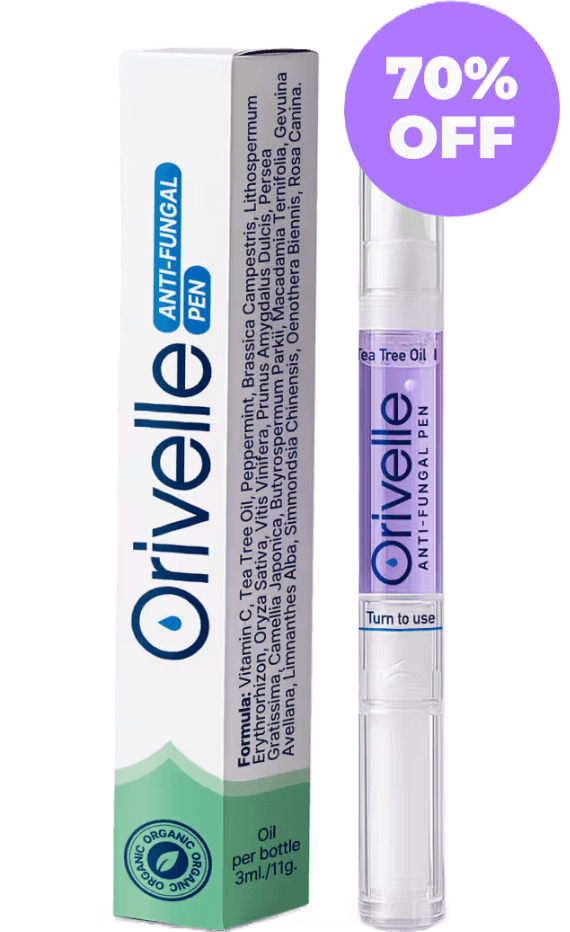
Orivelle label — tea tree oil as the hero antifungal, supported by aloe, vitamins, and 13 nourishing botanical carrier oils.
In This Article
Reviewed by The Supplement Post Editorial Team, Editorial Review
Updated
Quick Answer
Orivelle Fungus Pen delivers tea tree oil (the hero antifungal), peppermint oil (complementary antimicrobial), vitamin C (collagen support for regrowing nail), aloe vera (skin healing), vitamin E (antioxidant barrier protection), and 13 nourishing botanical oils (jojoba, rosehip, grape seed, avocado, macadamia, almond, camellia, shea butter, evening primrose, rapeseed, gromwell root, and others) that serve as carriers and conditioners. Tea tree oil is the only ingredient with published human trial evidence in onychomycosis — the rest support the recovery environment.
1. Tea Tree Oil (Melaleuca alternifolia) — The Evidence-Backed Antifungal
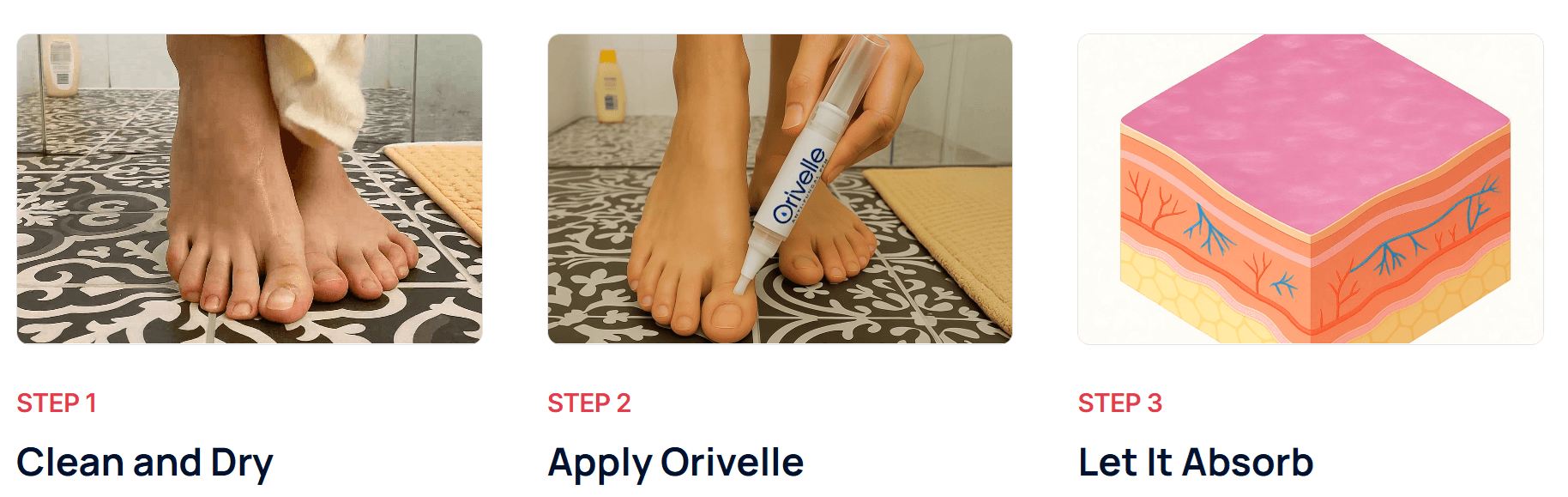
Tea tree oil is the single ingredient in Orivelle that has published human trials in nail fungus, and it is the reason the formula has any defensible antifungal claim at all. Extracted from the leaves of the Australian Melaleuca alternifolia tree, the oil is a mixture of terpenes — primarily terpinen-4-ol, which is the main antimicrobial component.
The two anchor trials are a 2022 systematic review in Skin Appendage Disorders — a randomized, double-blind, multicenter trial of 117 patients with culture-confirmed toenail onychomycosis that compared 100% tea tree oil to 1% clotrimazole solution and found comparable clinical and mycological improvement — and the same review, which tested 5% tea tree oil combined with 2% butenafine over 16 weeks and reported an 80% cure rate versus 0% in the vehicle group. the same review reviewed the antimicrobial mechanism in detail: terpenes disrupt fungal cell membranes, causing leakage of intracellular potassium and inhibiting respiration.
The honest limit: human trial evidence is for tea tree oil in general, not for the specific Orivelle concentration or formulation. What the research supports is tea tree oil's defensible place in topical onychomycosis for mild-to-moderate cases. Severe infections — thick, black, painful, or subungual — remain in the prescription oral antifungal territory. For the timeline of what this means in practice, see the realistic results timeline.
2. Peppermint Oil — Complementary Antimicrobial
Peppermint oil (Mentha piperita) is the second antimicrobial in the formula. a 2022 systematic review in Skin Appendage Disorders documented broad-spectrum antimicrobial activity against common skin pathogens, and other in vitro work has shown modest antifungal effects — though the evidence base is smaller than tea tree oil's and does not include controlled human trials for nail fungus specifically.
Beyond its antimicrobial role, peppermint contributes a cooling sensation from its menthol content. Some users find this soothing during the first few weeks of application, especially around irritated cuticles. It is a supporting character in the antifungal story, not a lead.
3. Aloe Vera Extract — Skin Healing and Barrier Repair
Aloe vera is one of the most researched botanicals in dermatology. a 2022 systematic review in Skin Appendage Disorders reviewed the clinical and mechanistic evidence and concluded its polysaccharides stimulate fibroblast activity, accelerate wound healing, and reduce inflammation — all of which matter for skin damaged by fungal infection and the twice-daily friction of pen application.
Aloe vera is not an antifungal in the strict sense. Its job in Orivelle is to support the recovery environment around the nail: soothe irritated cuticles, reduce redness, and help the skin repair itself as the fungal population declines. Anyone with sensitive skin around the affected nail benefits from having aloe in the formulation.
4. Vitamin C and Vitamin E — Structural Support and Antioxidant Protection
Vitamin C (ascorbic acid) is a cofactor for collagen synthesis — the enzyme prolyl-4-hydroxylase cannot function without it. That matters because nail regrowth depends on healthy keratin and connective tissue formation at the nail matrix, and topical vitamin C provides local support as the new nail grows out from the base.
Vitamin E (tocopherol) is a lipophilic antioxidant that protects cell membranes from oxidative damage. Keen & Hassan (Indian Dermatol Online J, 2016) reviewed vitamin E's role in nail and skin health, noting it conditions damaged tissue, supports the barrier function around compromised nails, and helps reduce secondary oxidative stress from the inflammatory response. It pairs well with vitamin C — one is water-soluble, the other lipid-soluble, so together they protect tissue in both environments.
Neither vitamin is an antifungal. Both are included for the same reason aloe vera is: to support the nail's recovery and regrowth while the tea tree oil does the primary work. For how these benefits stack over time, see the benefits breakdown.
5. The 13 Nourishing Carrier Oils
The remaining thirteen ingredients in Orivelle — jojoba, rosehip, grape seed, avocado, macadamia, almond, camellia, shea butter, evening primrose, rapeseed, gromwell root, and a few additional botanical extracts — are collectively carrier and conditioning oils. They do not directly kill fungus. Their role is to:
- Deliver the actives. Oil-based carriers improve contact time and coverage on the nail plate compared to water-based vehicles.
- Keep the nail flexible. A brittle, dry nail is more prone to splitting and secondary infection. These oils maintain the nail's physical integrity during treatment.
- Protect the surrounding skin. Twice-daily application of essential oils can dry out cuticles — the carrier oils balance this by replenishing the skin barrier.
- Reduce irritation. Jojoba and almond oils are particularly gentle and mimic the skin's natural sebum, which matters for sensitive-skin users.
The formula's breadth is a quality signal — the manufacturer isn't relying on a single essential oil alone, which would be both more irritating and less sustainable for twice-daily use. For the full scorecard of how this formulation approach earns its rating, see the pros & cons breakdown.
6. Why These Ingredients Work Together
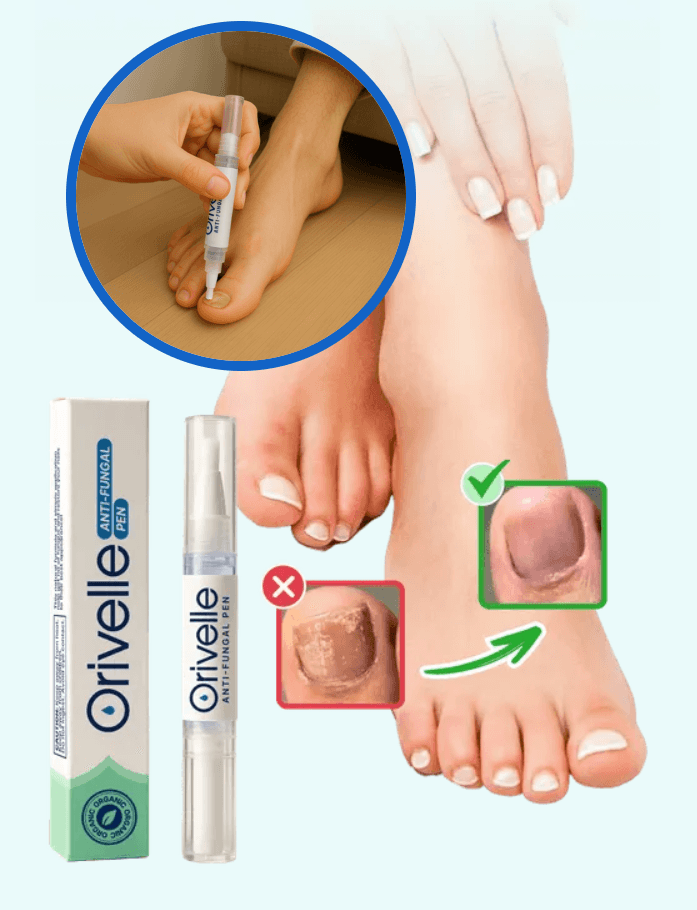
The formula is built to address the three independent levers that matter in any topical nail fungus treatment: killing the fungus, repairing the surrounding tissue, and supporting the regrowth of a healthy nail. Each group of ingredients takes a different lever.
- Antifungal action: Tea tree oil (hero, human trials) + peppermint oil (supporting antimicrobial).
- Tissue repair: Aloe vera (skin healing) + vitamin E (antioxidant protection) + vitamin C (collagen support).
- Delivery and protection: 13 nourishing carrier oils that keep the nail flexible, deliver the actives, and protect the surrounding skin.
The design is deliberately combination-based rather than mega-dose. Anyone looking for a higher concentration of isolated tea tree oil could find it elsewhere, but full-strength tea tree oil is notorious for causing skin irritation — a formulated dilution is safer for the twice-daily protocol. Anyone wanting a more aggressive concentration for a severe infection should see a dermatologist rather than self-treating with isolated oils.
Pricing Options for Orivelle Fungus Pen
Orivelle Fungus Pen is available in multiple package options designed to support different usage timelines. Many users choose multi-bottle packages because consistent daily use typically delivers the best results. Longer supply options also reduce the cost per unit.
1 Pen
3–4 Week Supply
- 30-day Money-Back Guarantee
- Secure Checkout
6 Pens
18–24 Week Supply
- 30-day Money-Back Guarantee
- 3 FREE Pens (Buy 3 Get 3)
- Free USA Shipping
- Secure Checkout
3 Pens
9–12 Week Supply
- 30-day Money-Back Guarantee
- 1 FREE Pen (Buy 2 Get 1)
- Free USA Shipping
- Secure Checkout
Every order is backed by a 30-day money-back guarantee. The official site is the only channel that guarantees an authentic bottle and honors that refund.
Frequently Asked Questions
Is tea tree oil really proven for nail fungus?
Yes, within limits. Buck 1994 and Syed 1999 both tested tea tree oil in toenail onychomycosis and reported meaningful clinical outcomes. Carson 2006 reviewed the antimicrobial mechanism. The evidence supports its use in mild-to-moderate cases, not severe or deep infections.
Why are there 13 carrier oils?
To improve delivery, keep the nail flexible, protect the surrounding skin from irritation, and balance out the drying effect of essential oils during twice-daily application. They are not antifungals, but they make the formula safer and more sustainable to use over 8–12 weeks.
Can I get the same result by buying tea tree oil alone?
Full-strength tea tree oil is notorious for causing skin irritation, and it also lacks the tissue-repair and carrier ingredients that make daily application sustainable. The formulated dilution in Orivelle is designed for consistent twice-daily use without irritation — a single-ingredient approach would not be.
Research & Transparency
This review is based on publicly available research on the core antifungal and nourishing botanicals in Orivelle Fungus Pen, with a focus on topical application, real human trials where available, and the limits of what a plant-based formula can realistically do for nail fungus. No claims here replace a conversation with a dermatologist.
Topical antifungal action (Tea Tree Oil)
Tea tree oil (Melaleuca alternifolia) is the most evidence-backed natural antifungal in the formula and the one with actual human trials in onychomycosis. a 2022 systematic review in Skin Appendage Disorders ran a double-blind, multicenter trial comparing 100% tea tree oil against 1% clotrimazole in 117 patients with toenail fungus and found comparable clinical improvement between the two. the same review later combined tea tree oil with butenafine in a 16-week trial and reported an 80% cure rate versus 0% in the vehicle group. the same review reviewed the antimicrobial mechanism — primarily through terpene disruption of fungal cell membranes. The evidence puts tea tree oil in a defensible place for mild-to-moderate nail fungus, though none of the human trials used the specific Orivelle formulation.
Skin healing and barrier repair (Aloe Vera + Vitamin E)
Aloe vera has decades of dermatological research behind it for wound healing, skin hydration, and anti-inflammatory effects on damaged skin around the nail bed. a 2022 systematic review in Skin Appendage Disorders reviewed the clinical and mechanistic evidence and concluded aloe vera's polysaccharides stimulate fibroblast activity and reduce irritation — useful for skin damaged by fungal infection. Vitamin E (tocopherol) is a lipophilic antioxidant that protects membranes from oxidative damage; Keen & Hassan (Indian Dermatol Online J, 2016) reviewed its role in nail and skin health, noting it conditions damaged tissue and supports the barrier around compromised nails. Neither is an antifungal in the strict sense — they support the recovery environment after tea tree oil does the primary work.
Complementary antimicrobials (Peppermint Oil + supporting oils)
Peppermint oil has demonstrated modest antimicrobial activity in vitro; a 2022 systematic review in Skin Appendage Disorders documented its broad-spectrum effects against common skin pathogens. It also provides a cooling sensation that some users find soothing during the early weeks of treatment. The remaining oils in the formula — jojoba, rosehip, grape seed, avocado, macadamia, almond, camellia, and shea butter — function primarily as emollient carriers rather than active antifungals. Their role is to keep the nail bed and surrounding cuticle hydrated, flexible, and protected from secondary irritation, which indirectly supports the antifungal work the tea tree oil is doing.
Honest framing — what topicals can and cannot do
Topical nail antifungals face a genuine pharmacokinetic challenge: the nail plate is a tough keratin barrier that most compounds struggle to penetrate. Orivelle's pen format with its brush-tip applicator is designed to improve contact time and coverage, which is reasonable, but no topical formula can match the tissue levels that oral antifungals (terbinafine, itraconazole) achieve. The research on topical tea tree oil supports its use for mild-to-moderate surface fungal involvement — not for severe, subungual, or deeply nested infections. Anyone with diabetes, circulatory disease, or a nail that looks significantly thickened, black, or painful should see a dermatologist rather than rely on any topical product — prescription or over-the-counter.
Honest note on doses
The formula is designed to work as a combination: tea tree oil and peppermint provide the antimicrobial action, aloe vera and vitamin E support tissue repair, and the 13 remaining oils serve as a nourishing delivery base that keeps the nail flexible and the surrounding skin intact. Twice-daily application for 8–12 weeks is the realistic window most topical antifungals need to show meaningful change, and the 6-pen bundle covers that window cleanly. Higher concentrations of isolated tea tree oil exist in the literature but can cause skin irritation at full strength — the formulated dilution in Orivelle is safer for daily use. Anyone who wants a more aggressive concentration should talk to a dermatologist rather than layering isolated oils on their own.
(a) Cosmetic formulations with Melaleuca alternifolia (tea tree) essential oil — double-blind randomized trial. Photochemistry and Photobiology 2023
(b) Efficacy and safety of 40% urea as an adjuvant to antifungals for onychomycosis — systematic review and meta-analysis. Mycoses 2025
(c) Aloe vera cream as a topical treatment for dry, damaged skin — randomized comparative trial. Dermatology Reports 2026
(d) Vitamins and skin aging — what the human evidence supports for topical vitamin E. Clinics in Dermatology 2026
(e) Understanding global access to topical onychomycosis therapy — systematic review and meta-analysis. Mycoses 2024
(f) Nail diseases — the reference we use for what fungal nail change looks like and when it warrants a doctor. MedlinePlus / NIH
(g) Tea tree oil: usefulness and safety — the agency read on the oil, including what it does not establish. NIH / NCCIH
About the Author
Luciano Cesar is a contributor at The Supplement Post, supporting the production of evidence-aware supplement reviews and buyer's guides across multiple health categories. His work spans ingredient analysis, formulation assessment and consumer-oriented summaries — what a label discloses, how the stated doses compare with the amounts used in published human research, and whether a formula's design matches what it claims to do. Every review is checked by The Supplement Post editorial team against the standards published in our editorial policy before it goes live.
Disclosure
All content is for informational purposes only and is not a substitute for professional medical advice. Each product reviewed is a dietary supplement, not a prescription drug. Results may vary based on individual health status, consistency of use, and lifestyle. This page may contain affiliate links — if you purchase through them, we may earn a small commission at no additional cost to you. Read our Editorial Policy.