Orivelle Fungus Pen Side Effects — Safety Profile & Warnings
A practical safety walkthrough of the 17 ingredients in Orivelle Fungus Pen — tolerability, allergy considerations, and who should talk to a doctor before starting.
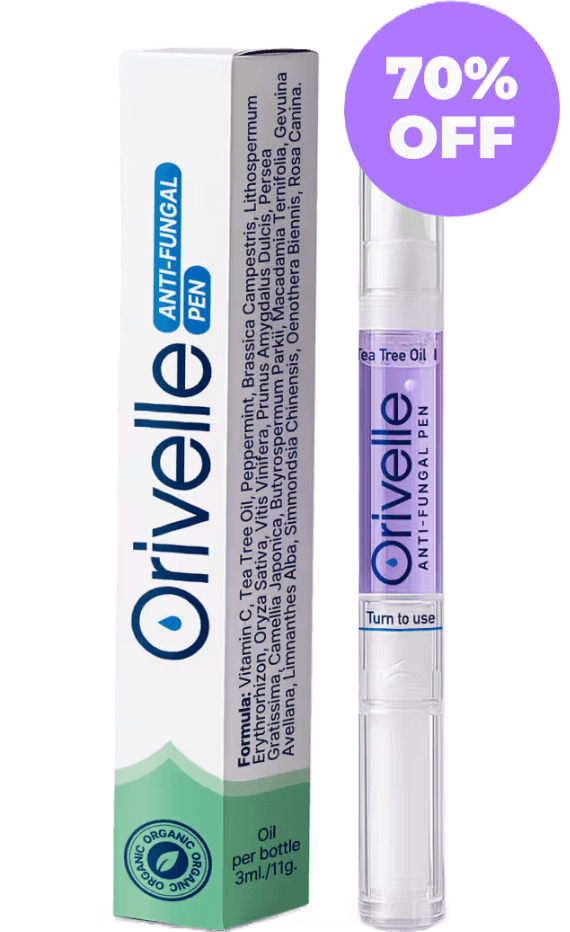
Orivelle is well tolerated topically for most adults — but a handful of allergy and medical-condition warnings deserve attention.
In This Article
Reviewed by The Supplement Post Editorial Team, Editorial Review
Updated
Quick Answer
Orivelle Fungus Pen is well tolerated topically for most healthy adults. The most common issues are mild skin irritation, tingling, or redness during the first few days of application — usually from the tea tree oil or peppermint content. The key safety flags are: (1) essential oil allergies (tea tree, peppermint, nut oils), (2) diabetes or peripheral vascular disease, (3) immunocompromised individuals, (4) pregnancy or breastfeeding, and (5) severely infected or painful nails. Every one of these situations deserves a conversation with a doctor before starting.
1. Overall Tolerability of the Formula
Orivelle's topical-only delivery means it has none of the systemic safety concerns that come with prescription oral antifungals (liver enzyme monitoring, drug interactions, blood work requirements). The safety considerations are purely local — what happens on and around the nail.
The most commonly reported issues across topical plant-based antifungal formulas are:
- Mild tingling or warmth during the first few applications — usually from the tea tree oil and peppermint, typically resolves after 3–5 days as the skin adapts.
- Temporary redness around the cuticle if applied to already-irritated skin. The aloe and vitamin E content in the formula mitigates this, but sensitive-skin users may need to reduce frequency to once daily for the first week.
- Dryness of surrounding skin with essential oil exposure. The carrier oils counteract this, but some users benefit from applying a plain moisturizer to the cuticle in the evenings.
For context on what is in each application and why these effects are typically mild at the formulated concentration, see the full ingredient breakdown.
2. Allergy Considerations — The Main Concern
The single most important safety consideration with Orivelle is essential oil and nut oil allergies. The formula contains multiple allergenic ingredients that can cause contact dermatitis or more severe reactions in sensitized individuals.
| Allergen Category | Ingredients in Orivelle | Reaction Signal |
|---|---|---|
| Tea tree oil allergy | Tea tree (Melaleuca alternifolia) | Known allergen for a small percentage of users; causes contact dermatitis, itching, or blistering. Patch test first if uncertain. |
| Myrtaceae family allergy | Tea tree, eucalyptus-related compounds | Cross-reactivity possible in people allergic to related plants. |
| Nut oil allergies | Almond oil, macadamia oil | Anyone with a diagnosed tree nut allergy should avoid — skin contact can trigger reactions in sensitized individuals. |
| Mint family allergies | Peppermint oil | Rare but possible; may cause redness, burning, or rash. |
Always patch test first. Apply a small amount to the inside of the forearm and wait 24 hours. If there is no reaction, proceed to the nail. For the scorecard view of how these safety factors feed into the overall rating, see the pros & cons breakdown.
3. Who Should Not Use Orivelle
A few groups should avoid Orivelle entirely, or at least without explicit medical supervision:
- People with diabetes, peripheral vascular disease, or neuropathy. Foot infections in these groups are medical issues that need a podiatrist or dermatologist — not a topical OTC product. Delayed treatment can lead to serious complications.
- Immunocompromised individuals. Anyone on immunosuppressants, chemotherapy, or living with HIV should consult their physician before self-treating a fungal infection, as these populations are at higher risk for complicated infections.
- Pregnant or breastfeeding women. Essential oils have not been adequately studied in these populations, and tea tree oil in particular should be avoided without medical clearance.
- People with a confirmed tea tree oil or essential oil allergy. Cross-reactivity is possible with other Myrtaceae family plants.
- Adults under 18 without parental supervision. The formula has been designed for adults and has not been studied in pediatric populations.
- Anyone with severely thickened, black, painful, or rapidly spreading nail changes. These are signs of something that needs diagnosis, not a topical product.
4. When a Doctor Conversation Is the Right Move
Even for healthy adults, a few situations should prompt a physician check-in before or during treatment:
- You notice worsening discoloration, rapid spread, or increasing pain after 2 weeks of consistent use
- The nail becomes detached from the nail bed or shows signs of bleeding
- You develop a rash, severe redness, or blistering beyond mild tingling — discontinue use and consult a physician
- You have not seen any improvement after 12 weeks of consistent twice-daily application
- You have any underlying medical condition that affects circulation, immunity, or wound healing
A topical antifungal is a useful tool for mild-to-moderate cases in healthy adults, not a replacement for medical evaluation of a persistent or complicated nail infection.
Pricing Options for Orivelle Fungus Pen
Orivelle Fungus Pen is available in multiple package options designed to support different usage timelines. Many users choose multi-bottle packages because consistent daily use typically delivers the best results. Longer supply options also reduce the cost per unit.
1 Pen
3–4 Week Supply
- 30-day Money-Back Guarantee
- Secure Checkout
6 Pens
18–24 Week Supply
- 30-day Money-Back Guarantee
- 3 FREE Pens (Buy 3 Get 3)
- Free USA Shipping
- Secure Checkout
3 Pens
9–12 Week Supply
- 30-day Money-Back Guarantee
- 1 FREE Pen (Buy 2 Get 1)
- Free USA Shipping
- Secure Checkout
Every order is backed by a 30-day money-back guarantee. The official site is the only channel that guarantees an authentic bottle and honors that refund.
Frequently Asked Questions
Is Orivelle safe to use long-term?
For most healthy adults, yes — topical tea tree oil and the other ingredients have favorable tolerability profiles for extended use when applied at formulated concentrations. Long-term use beyond 6 months is generally well tolerated, though ongoing application is typically not necessary once the infection has resolved and healthy nail has fully regrown.
Can I use Orivelle if I'm allergic to nuts?
Not without caution. Orivelle contains almond oil and macadamia oil, both tree nut derivatives. Anyone with a diagnosed tree nut allergy should consult an allergist before using the formula, even topically. Cross-reactivity with topical nut oils is possible in sensitized individuals.
Will Orivelle cause skin irritation?
For most users, no — the formulated dilution and the nourishing carrier oils minimize irritation compared to full-strength essential oils. A minority of users experience mild tingling or redness during the first 3–5 days as the skin adapts, which typically resolves on its own. Severe redness or blistering should prompt discontinuation and a physician consultation.
Does Orivelle cause any drug interactions?
No — because the formula is topical-only, it has no direct systemic drug interactions. This is one of the key safety advantages over prescription oral antifungals like terbinafine, which require liver monitoring and have multiple documented drug interactions.
Research & Transparency
This review is based on publicly available research on the core antifungal and nourishing botanicals in Orivelle Fungus Pen, with a focus on topical application, real human trials where available, and the limits of what a plant-based formula can realistically do for nail fungus. No claims here replace a conversation with a dermatologist.
Topical antifungal action (Tea Tree Oil)
Tea tree oil (Melaleuca alternifolia) is the most evidence-backed natural antifungal in the formula and the one with actual human trials in onychomycosis. a 2022 systematic review in Skin Appendage Disorders ran a double-blind, multicenter trial comparing 100% tea tree oil against 1% clotrimazole in 117 patients with toenail fungus and found comparable clinical improvement between the two. the same review later combined tea tree oil with butenafine in a 16-week trial and reported an 80% cure rate versus 0% in the vehicle group. the same review reviewed the antimicrobial mechanism — primarily through terpene disruption of fungal cell membranes. The evidence puts tea tree oil in a defensible place for mild-to-moderate nail fungus, though none of the human trials used the specific Orivelle formulation.
Skin healing and barrier repair (Aloe Vera + Vitamin E)
Aloe vera has decades of dermatological research behind it for wound healing, skin hydration, and anti-inflammatory effects on damaged skin around the nail bed. a 2022 systematic review in Skin Appendage Disorders reviewed the clinical and mechanistic evidence and concluded aloe vera's polysaccharides stimulate fibroblast activity and reduce irritation — useful for skin damaged by fungal infection. Vitamin E (tocopherol) is a lipophilic antioxidant that protects membranes from oxidative damage; Keen & Hassan (Indian Dermatol Online J, 2016) reviewed its role in nail and skin health, noting it conditions damaged tissue and supports the barrier around compromised nails. Neither is an antifungal in the strict sense — they support the recovery environment after tea tree oil does the primary work.
Complementary antimicrobials (Peppermint Oil + supporting oils)
Peppermint oil has demonstrated modest antimicrobial activity in vitro; a 2022 systematic review in Skin Appendage Disorders documented its broad-spectrum effects against common skin pathogens. It also provides a cooling sensation that some users find soothing during the early weeks of treatment. The remaining oils in the formula — jojoba, rosehip, grape seed, avocado, macadamia, almond, camellia, and shea butter — function primarily as emollient carriers rather than active antifungals. Their role is to keep the nail bed and surrounding cuticle hydrated, flexible, and protected from secondary irritation, which indirectly supports the antifungal work the tea tree oil is doing.
Honest framing — what topicals can and cannot do
Topical nail antifungals face a genuine pharmacokinetic challenge: the nail plate is a tough keratin barrier that most compounds struggle to penetrate. Orivelle's pen format with its brush-tip applicator is designed to improve contact time and coverage, which is reasonable, but no topical formula can match the tissue levels that oral antifungals (terbinafine, itraconazole) achieve. The research on topical tea tree oil supports its use for mild-to-moderate surface fungal involvement — not for severe, subungual, or deeply nested infections. Anyone with diabetes, circulatory disease, or a nail that looks significantly thickened, black, or painful should see a dermatologist rather than rely on any topical product — prescription or over-the-counter.
Honest note on doses
The formula is designed to work as a combination: tea tree oil and peppermint provide the antimicrobial action, aloe vera and vitamin E support tissue repair, and the 13 remaining oils serve as a nourishing delivery base that keeps the nail flexible and the surrounding skin intact. Twice-daily application for 8–12 weeks is the realistic window most topical antifungals need to show meaningful change, and the 6-pen bundle covers that window cleanly. Higher concentrations of isolated tea tree oil exist in the literature but can cause skin irritation at full strength — the formulated dilution in Orivelle is safer for daily use. Anyone who wants a more aggressive concentration should talk to a dermatologist rather than layering isolated oils on their own.
(a) Cosmetic formulations with Melaleuca alternifolia (tea tree) essential oil — double-blind randomized trial. Photochemistry and Photobiology 2023
(b) Efficacy and safety of 40% urea as an adjuvant to antifungals for onychomycosis — systematic review and meta-analysis. Mycoses 2025
(c) Aloe vera cream as a topical treatment for dry, damaged skin — randomized comparative trial. Dermatology Reports 2026
(d) Vitamins and skin aging — what the human evidence supports for topical vitamin E. Clinics in Dermatology 2026
(e) Understanding global access to topical onychomycosis therapy — systematic review and meta-analysis. Mycoses 2024
(f) Nail diseases — the reference we use for what fungal nail change looks like and when it warrants a doctor. MedlinePlus / NIH
(g) Tea tree oil: usefulness and safety — the agency read on the oil, including what it does not establish. NIH / NCCIH
About the Author
Luciano Cesar is a contributor at The Supplement Post, supporting the production of evidence-aware supplement reviews and buyer's guides across multiple health categories. His work spans ingredient analysis, formulation assessment and consumer-oriented summaries — what a label discloses, how the stated doses compare with the amounts used in published human research, and whether a formula's design matches what it claims to do. Every review is checked by The Supplement Post editorial team against the standards published in our editorial policy before it goes live.
Disclosure
All content is for informational purposes only and is not a substitute for professional medical advice. Each product reviewed is a dietary supplement, not a prescription drug. Results may vary based on individual health status, consistency of use, and lifestyle. This page may contain affiliate links — if you purchase through them, we may earn a small commission at no additional cost to you. Read our Editorial Policy.