What do HoneyBurn buyers actually report? The routine settling in the opening fortnight, then appetite and stress-driven eating shifting around weeks 3 to 4. Two recurring notes: it is a dropper, so the taste is part of the deal, and the guarantee here is 60 days rather than the 180 some rivals offer.
HoneyBurn Reviews: Pros, Cons & the Bee Allergy Note, and the Complaints Worth Knowing About
Why the lipase claim holds up, what the standardisations tell you, and the bee-allergy exclusion.
In This Article
Buyer Verdict
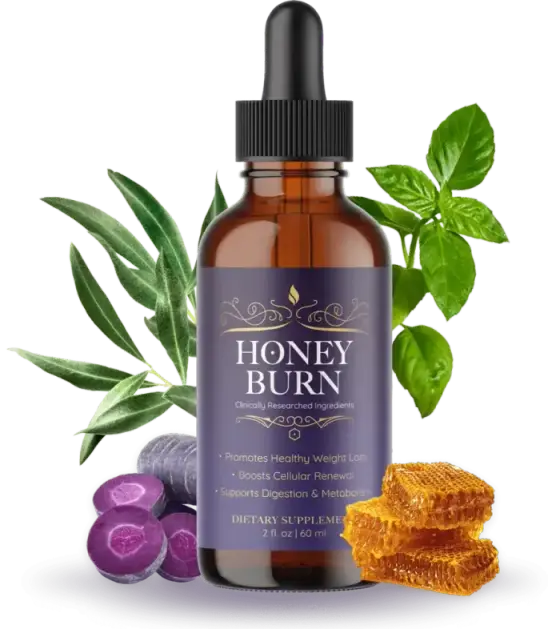
The honest read on HoneyBurn is that the packaging undersells a formula with a genuinely defensible mechanism. Buyers arrive asking whether honey burns fat — it doesn't, and we won't pretend otherwise. But the product's actual claim is about lipase, and that one holds: berberine has been shown to raise adipose triglyceride lipase, the enzyme that releases stored fat rather than storing it. Around it sit a kudzu extract with a human visceral-fat trial, olive leaf and holy basil for the storage side, and bee ingredients with real satiety research behind them. Two things gate it: a bee allergy rules it out entirely, and berberine's interactions mean a doctor's check if you take prescriptions. Here's the straight read.
1. The Pattern Across Verified Buyers
Distilled from what buyers of this formula and the honey-based weight category consistently focus on — the praise, the caveat and the objection that keep recurring.
| What buyers focus on | Recurring pattern | What it tells you |
|---|---|---|
| The question that repeats first | "Is honey actually good for burning fat?" — the dominant search around the product and its whole category. | The answer is no, and it's the wrong question. The right one is what's dissolved in the honey — where the answer is standardised berberine, kudzu, olive leaf and holy basil. |
| The praise that repeats | Steadier energy between meals arrives before anything shows on the scale. | That order is exactly what berberine's blood-sugar mechanism predicts. It's a good sign the effect is tracking the formula rather than the expectation. |
| The caveat that repeats | "It's not dramatic." Correct — there are no stimulants, so nothing announces itself. | The frame that decides your satisfaction. Judge it on the 9 p.m. negotiation you stopped having, not on how the dropper made you feel. |
| The exclusion people miss | The bee content — pollen, propolis, royal jelly — is easy to skim past on a honey-branded product. | This is the one thing in the review we'd put in bold twice. A bee or pollen allergy rules this out completely, at any price. |
Skip HoneyBurn if…
…you have a bee, pollen or honey allergy. The formula contains bee pollen, propolis, royal jelly and raw honey, and no bundle discount makes that risk worth taking. Also skip it — or at least pause — if you take diabetes medication or any regular prescription and aren't going to clear the berberine with your doctor first. Berberine's interactions are genuine, not boilerplate small print.
2. Scorecard Across 6 Criteria
| Criterion | Score | Why |
|---|---|---|
| Formula quality | 4.7 / 5 | Eleven components with five real standardisation specs, addressing both halves of fat loss: release (berberine, kudzu) and storage (olive leaf, holy basil). |
| Evidence | 4.8 / 5 | A specific published mechanism (berberine raising ATGL via AMPK), a meta-analysis of RCTs on berberine, a human visceral-fat trial on kudzu, and human satiety data on royal jelly. |
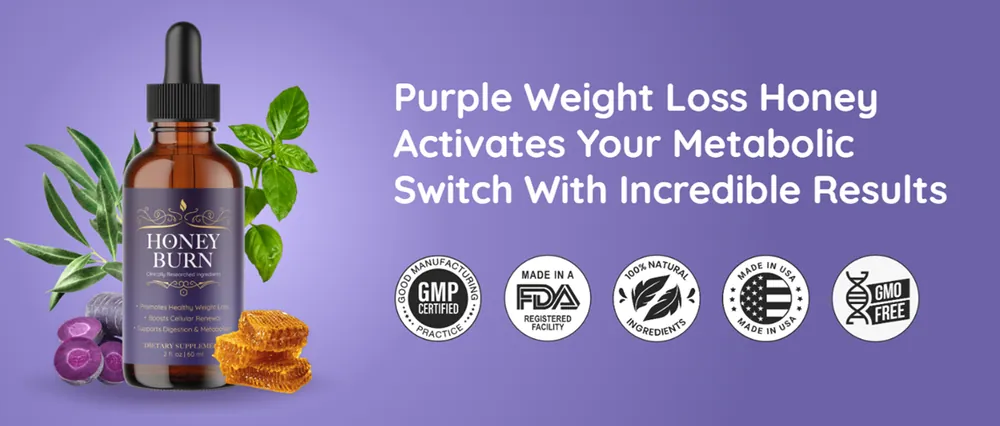
| Manufacturing | 4.6 / 5 | GMP-certified, FDA-registered US facility, non-GMO, named distributor with address, and five standardisation specs printed on the panel. |
| Price & value | 4.7 / 5 | $1.63-2.30 a day for five standardised extracts, with free US shipping on every package including a single bottle. |
| Guarantee | 4.3 / 5 | 60 days is the industry standard and covers the energy and craving effects, but runs short of the full 12-week metabolic window. |
| Format compliance | 4.5 / 5 | One flavoured dropper each morning, no capsules, no stimulants — easy to sustain. Held back only by the bee content, which excludes allergy sufferers entirely. |
| Overall | 4.7 / 5 | A lipase claim that survives scrutiny, five standardised extracts, and research running deeper than the packaging suggests. Mind the bee allergy. |
3. Real Buyer Feedback Themes
Four themes come up again and again in feedback on this formula and the category around it.
- "My energy stopped dipping between meals." The most common early observation, and what the berberine layer predicts.
- "The evening cravings got quieter." The kudzu and holy basil layers, arriving a few weeks in.
- "I bought it for the honey." The framing works — but the honey isn't why it works.
- "Nothing dramatic." Consistent and fair: no stimulants means nothing to feel, only results to notice.
4. HoneyBurn Pros
- The lipase claim is specific and real — berberine raises adipose triglyceride lipase via AMPK, the enzyme that releases stored fat.
- Kudzu at 40% isoflavones has a human trial showing reduced BMI via decreased visceral fat.
- Five real standardisation specs on one panel: berberine 8%, kudzu 40%, olive leaf 20%, holy basil 2.5%, propolis 65%.
- Berberine carries a meta-analysis of RCTs on obesity parameters, inflammation and liver enzymes.
- The bee ingredients have their own research — royal jelly human satiety data, honey systematic reviews in obesity management.
- Both halves addressed — fat release and the blood-sugar and cortisol side that decides what gets restocked.
- Stimulant-free, stevia-sweetened, one dropper daily — free US shipping on every package.
5. HoneyBurn Cons
- The purple-honey branding invites the wrong purchase — honey is the vehicle here, not the mechanism.
- Bee pollen, propolis and royal jelly — an absolute exclusion for anyone with a bee or pollen allergy.
- Berberine interacts with diabetes medication and several common prescriptions — a doctor’s check is genuinely needed.
6. Worth It For Whom?
Worth it if the blood-sugar-and-cortisol pattern describes you — flat energy between meals, stress-driven evening eating, weight settling around the middle — and you have no bee allergy. The full review decodes all eleven components and their standardisations, and the pricing page shows why the 6-bottle bundle lands near $1.63 a day.
Not worth it if you have a bee or pollen allergy, you take prescriptions you won't clear the berberine against, or you're buying it because you believe honey burns fat. Those are honest mismatches — the last one is a misunderstanding worth correcting before you spend.
Pricing Options for HoneyBurn
The accounts describing a real change come from past week eight, which is the range the berberine work uses — and the ones calling it useless are almost all from the first month. One bottle ends there. Three bottles reaches the window. Six bottles at $49 each is what the longer-running reviewers were taking.
1 Bottle
30-Day Supply
- Secure Checkout
6 Bottles
180-Day Supply
- 2 Free eBooks
- Secure Checkout
3 Bottles
90-Day Supply
- 2 Free eBooks
- Secure Checkout
Every order is backed by a 60-day money-back guarantee. The official site is the only channel that guarantees an authentic bottle and honors that refund.
Frequently Asked Questions
What's the most common concern about HoneyBurn?
That the honey framing distracts from what's actually in it. Buyers arrive asking whether honey burns fat — it doesn't — and can miss that the formula carries a standardised berberine, which is one of the best-evidenced natural compounds in metabolic health. The second concern is the bee content: propolis, pollen, royal jelly and honey make this an absolute no for anyone with a bee or pollen allergy.
Are the standardisations a real advantage?
Yes, and they're the detail worth noticing. Berberine at 8%, kudzu at 40% isoflavones, olive leaf at 20% oleuropein, holy basil at 2.5% ursolic acid, propolis at 65% with 8% flavones — those are formulator's specs. They tell you these are the concentrated extracts the research used, even though individual milligrams sit inside the blend total.
Who should skip it?
Anyone with a bee, pollen or honey allergy — that's not a caution, it's a hard exclusion. Anyone taking diabetes medication or regular prescriptions who won't clear the berberine with a doctor, because its interactions are real. And anyone who wants per-ingredient milligrams printed before they'll buy.
Research & Transparency
This content is based on publicly available ingredient research, the product’s supplement facts label, and manufacturer disclosures. We are not affiliated with the manufacturer. Marketing claims not supported by the product’s own label are not repeated here.
(a) Berberine and adiposity in diabetes-free individuals with obesity — randomized clinical trial. JAMA Network Open 2026
(b) The effect of berberine on obesity indices — systematic review and meta-analysis. International Journal of Obesity 2026
(c) Dose-response effects of honey and its derivatives on cardiometabolic outcomes — systematic review. Nutrition & Diabetes 2025
(d) Weight control — the reference we use for what the evidence supports beyond supplementation. MedlinePlus / NIH
(e) Health products compliance guidance — the standard the agency applies to metabolism and weight claims. FTC
About the Author
Luciano Cesar is a contributor at The Supplement Post, supporting the production of evidence-aware supplement reviews and buyer's guides across multiple health categories. His work spans ingredient analysis, formulation assessment and consumer-oriented summaries — what a label discloses, how the stated doses compare with the amounts used in published human research, and whether a formula's design matches what it claims to do. Every review is checked by The Supplement Post editorial team against the standards published in our editorial policy before it goes live.
Disclosure
All content is for informational purposes only and is not a substitute for professional medical advice. Each product reviewed is a dietary supplement, not a prescription drug. Results may vary. This page may contain affiliate links — if you purchase through them, we may earn a small commission at no additional cost to you. Read our Editorial Policy.