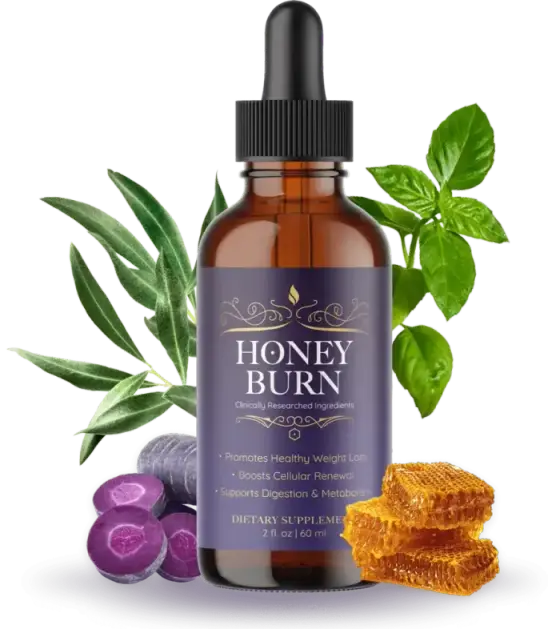
What are the real benefits of HoneyBurn for stored body fat? It works the release side rather than the intake side. A 550 mg royal honey blend of eleven components supports the enzyme that breaks stored fat down, taken as two millilitres from the dropper each morning. No caffeine. Appetite and stress-driven eating shift around weeks 3 to 4.
In This Review:
Reviewed by The Supplement Post Editorial Team, Editorial Review
Updated
1. Product at a Glance
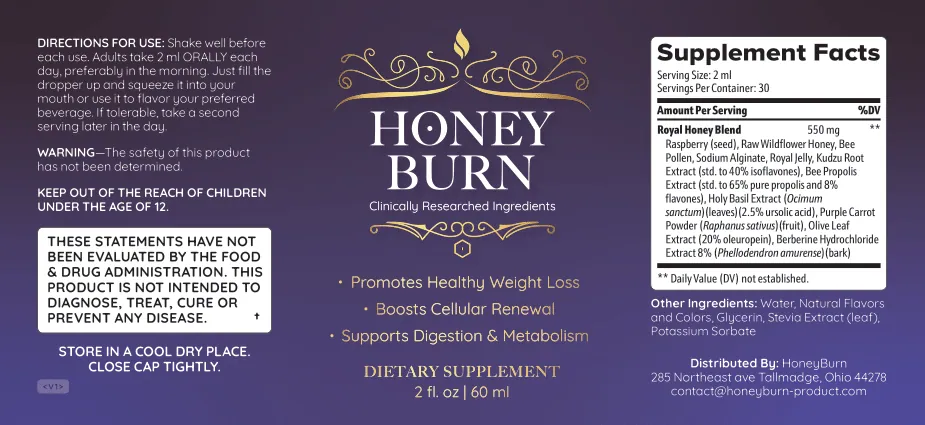
| Key Ingredients | A 550 mg Royal Honey Blend of eleven components aimed at fat-breakdown enzymes. Berberine HCl from Phellodendron amurense bark (std. 8%) and Kudzu root extract (std. 40% isoflavones) lead on the lipase pathway; Olive leaf (std. 20% oleuropein) and Holy Basil (std. 2.5% ursolic acid) cover blood sugar and cortisol; and raw wildflower honey, royal jelly, bee pollen and propolis (std. 65% propolis, 8% flavones) carry their own human research on satiety and metabolic profile. |
| Manufacturing | Distributed by HoneyBurn (Tallmadge, OH). GMP-certified, FDA-registered facility, made in the USA, non-GMO, no stimulants. Sweetened with stevia leaf extract; blend total disclosed on the panel. |
| Guarantee | 60-day money-back |
Quick Verdict
Does boosting lipase actually help you lose fat? Yes, because lipase is the step that unlocks what is already stored. HoneyBurn is sold on one claim: that it boosts lipase, the enzyme that breaks fat down. That claim survives scrutiny better than most in this aisle. Not because of the honey, but because berberine has been shown to increase adipose triglyceride lipase through the AMPK pathway, per a 2026 meta-analysis in the International Journal of Obesity. ATGL is precisely the enzyme that liberates stored fat. The 550 mg Royal Honey Blend carries that berberine standardised at 8%, alongside kudzu at 40% isoflavones, olive leaf at 20% oleuropein and holy basil at 2.5% ursolic acid. A human trial found Pueraria extract reduced BMI through decreased visceral fat. The bee ingredients aren't filler either — royal jelly has human trials on satiety, and honey has systematic reviews in obesity management. Stimulant-free, stevia-sweetened, one dropper each morning, 60-day guarantee. One hard exclusion: the bee pollen, propolis and royal jelly mean anyone with a bee or pollen allergy must skip this entirely.
2. Why Does Fat Go On Easily and Come Off Slowly?
Why does fat go on easily and come off slowly? Because storing it and releasing it are two different jobs, run by different machinery. Storage happens readily. Release depends on an enzyme that breaks stored fat back down, and that side of the system gets quieter with age.
You know the shape of it. The weekend that shows up on Monday and stays through Thursday. The careful fortnight that moves almost nothing. The sense that the same effort used to buy more than it does now.
Here is the part worth knowing: the release side is the half nobody talks about. Most of the aisle is built around eating less or burning hotter, and neither does anything about whether stored fat can be unlocked in the first place.
That is how the formula below is built. HoneyBurn goes at the release side, with a royal honey blend aimed at the enzyme that does the breaking down. Here is how the blend works →
3. What HoneyBurn Does and Benefits
HoneyBurn solves a single problem with whole-body consequences: stored fat that goes in more easily than it comes out. It works the unlocking end rather than the intake end, which is a different job from almost everything on the shelf.
Most of this aisle works one of two levers. Eat less, through appetite suppression, or burn hotter, through thermogenics. Both act on the calories arriving or leaving today. Neither touches the question of whether what is already stored can be released at all.
Here’s the part nobody mentions: a deficit still needs a door. Stored fat is broken down by lipase, and if that step runs slowly the body reaches for muscle and blood sugar before it reaches for the reserve you are trying to spend. The deficit is real either way; what changes is where the body takes it from.
HoneyBurn closes that gap in one move: a 550 mg royal honey blend of eleven components, two millilitres from the dropper each morning. It is aimed at fat-breakdown enzyme support, with appetite and blood sugar handled alongside it. No caffeine, nothing to crash from, and a routine that takes five seconds. Appetite and stress-driven eating shift around weeks 3 to 4. It is metabolic support, not a drug: gradual, and it needs the daily habit to compound. How the blend works →
4. Why We Rate It 4.7 / 5
It works the half of the problem the rest of the aisle skips: getting stored fat back out.
- A lipase claim that actually checks out — berberine raises adipose triglyceride lipase through AMPK, the fat-releasing enzyme.
- Kudzu with a human visceral-fat endpoint — Pueraria extract reduced BMI via decreased visceral fat area in obese adults.
- Five real standardisation specs on one panel: berberine 8%, kudzu 40%, olive leaf 20%, holy basil 2.5%, propolis 65%.
- Berberine has a meta-analysis of randomised controlled trials behind it on obesity parameters.
- Bee ingredients with genuine research — royal jelly human satiety trials, honey systematic reviews in obesity management.
- Covers storage as well as release — olive leaf on blood sugar, holy basil on cortisol.
- Stimulant-free and stevia-sweetened — one dropper each morning, nothing to crash from.
- The honey branding misdirects — the mechanism is the standardised extracts, not the honey itself.
- Bee pollen, propolis and royal jelly make this a hard exclusion for anyone with a bee or pollen allergy.
- Berberine has real interactions — a doctor’s check is genuinely necessary if you take diabetes medication or regular prescriptions.
5. Who Is HoneyBurn Best For?
Best match if you:
- Recognise the blood-sugar pattern — flat energy between meals, weight settling around the middle despite eating sensibly
- Know your eating is stress-driven and want cortisol addressed rather than just appetite suppressed
- Want berberine in a format you’ll actually take daily, without swallowing capsules
- Value standardised extracts over long ingredient lists with no specs
- Have no bee or pollen allergy, and can clear the berberine with a doctor if you take prescriptions
6. How It Compares
Three routes to the same goal — and two of them share the same lead compound, which makes the comparison genuinely useful. Here's how they line up:
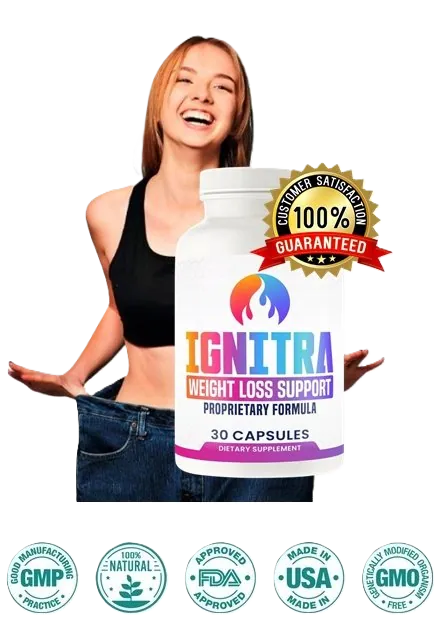
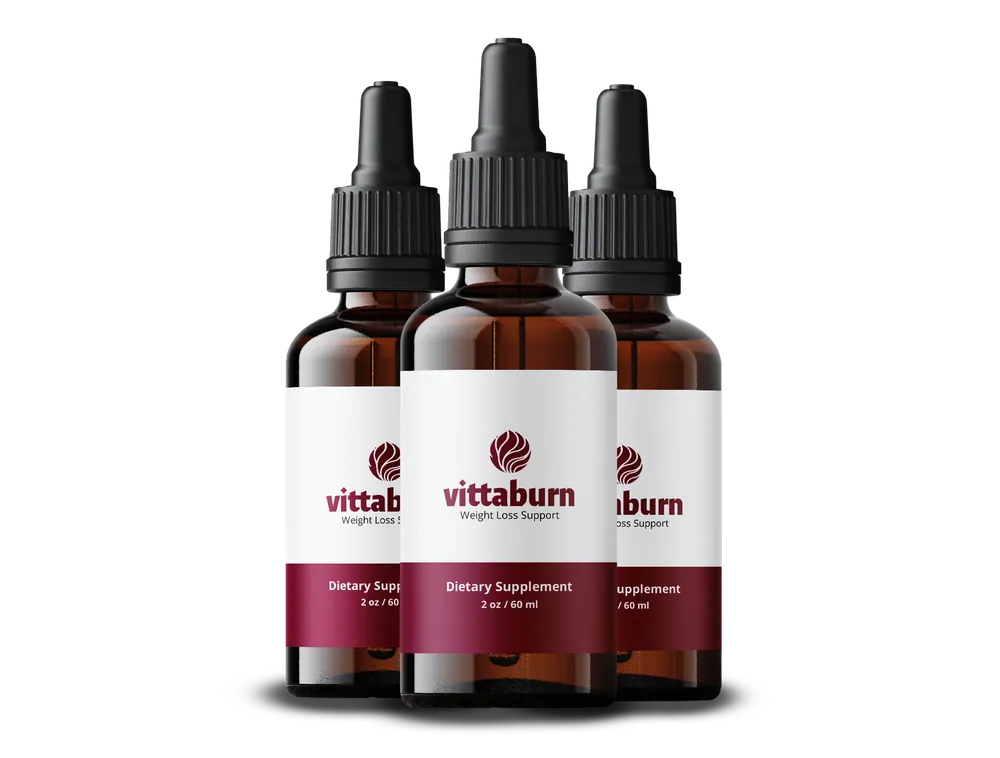
| Criteria | HoneyBurn (this review) | Ignitra | VittaBurn |
|---|---|---|---|
 |
 |
 |
|
| Primary Focus | Lipase release + storage side | Berberine HCL, multi-pathway | Thermogenic botanicals |
| Format | Liquid dropper | Capsule | Sublingual liquid |
| Best Price | $49/bottle | $39/pack | $49/bottle |
| Best For | Fat that won't release | The widest metabolic coverage | Botanical fat metabolism |
| Where to buy | Official Site → | Official Site → | Official Site → |
7. Pricing Options for HoneyBurn
Two millilitres each morning is the whole routine. Steadier energy between meals comes first; appetite and stress-driven eating shift at weeks 3 to 4; and body composition is fairly judged at weeks 8 to 12, the range berberine's own work uses. One bottle covers the first stage. Three bottles at $59 reaches the judging window. Given all of that, six bottles at $49 each is the one we would take.
1 Bottle
30-Day Supply
- Secure Checkout
6 Bottles
180-Day Supply
- 2 Free eBooks
- Secure Checkout
3 Bottles
90-Day Supply
- 2 Free eBooks
- Secure Checkout
Every order is backed by a 60-day money-back guarantee. The official site is the only channel that guarantees an authentic bottle and honors that refund.
8. The Mechanism: Why Lipase Is the Right Target — and Which Lipase Matters
Losing fat is two jobs, not one — release it from storage, then don't put it straight back. This formula is unusual in addressing both, and the release half is where the interesting science sits.
The release layer, and the lipase distinction that matters. "Lipase" isn't a single enzyme. Lipoprotein lipase actually helps store fat, pulling it out of the bloodstream and into fat cells. Adipose triglyceride lipase (ATGL) and hormone-sensitive lipase do the opposite — they break stored triglycerides back down so they can be burned. So "boosting lipase" is only meaningful if it's the right one. Berberine, standardised here at 8% from Phellodendron amurense bark, was found in a 2016 study to increase adipose triglyceride lipase through the AMPK pathway, with a later paper showing it induces lipolysis by activating AMPK. That's the correct enzyme and a specific published mechanism — not a slogan.
The visceral-fat layer. Kudzu root at 40% isoflavones sits alongside it. Pueraria extract reduced body mass index via a decrease in visceral fat area in obese humans, and its isoflavone puerarin has been studied for lipid accumulation and for effects on fat-cell formation. Visceral fat is the hardest to shift and the most metabolically costly, which makes a human endpoint on it worth noting.
The storage layer. Releasing fat achieves nothing if it's immediately restocked. Olive leaf at 20% oleuropein works on blood sugar and lipids; holy basil at 2.5% ursolic acid works on cortisol — the stress hormone that drives cravings and specifically encourages abdominal storage. Most formulas in this aisle address neither, which is why they can suppress appetite and still leave the underlying pattern intact.
The satiety and support layer. This is where the bee ingredients earn their place rather than just naming the product. Royal jelly has human trial data on satiety and lipid profile in overweight adults; honey carries systematic reviews on its role in obesity management. Propolis at 65% with 8% flavones adds antioxidant activity, purple carrot supplies anthocyanins, and sodium alginate is a hydrocolloid with its own satiety literature.
Run together: open the release valve, reduce what gets restocked, quiet the stress signal driving the cravings, and support satiety. Two millilitres, once a day, no stimulants.
Full Ingredient List
A 550 mg Royal Honey Blend with eleven components. The panel gives you the blend total plus five real standardisation specs — so while individual milligrams aren't printed, you can see which extracts are concentrated ones and which are whole foods.
| Ingredient | Pathway | Role in the Formula |
|---|---|---|
| Berberine Hydrochloride 8% (from Phellodendron amurense bark) | Lipase / AMPK | The ingredient that makes the lipase claim more than branding. Berberine activates AMPK — the cellular energy sensor — and a 2016 study found it specifically increases adipose triglyceride lipase in fat cells through that pathway (a 2026 meta-analysis in the International Journal of Obesity), with a separate paper showing it induces lipolysis via AMPK activation (a 2026 meta-analysis in the International Journal of Obesity). That is the correct enzyme: ATGL is the one that breaks stored fat down. Berberine also carries a systematic review and meta-analysis of randomised controlled trials on obesity parameters (a 2026 meta-analysis in the International Journal of Obesity) and human data on insulin sensitivity. |
| Kudzu Root Extract, std. to 40% isoflavones | Visceral fat / adipogenesis | Better evidenced than most people assume, and the second lipase-relevant ingredient. Pueraria flower extract reduced body mass index via a decrease in visceral fat area in obese humans — a human trial with a visceral-fat endpoint. Its isoflavone puerarin has been studied for lipid accumulation in high-fat-fed mice, and kudzu root extract for effects on adipogenesis and lipogenesis during fat-cell differentiation. |
| Raw Wildflower Honey, Royal Jelly & Bee Pollen | Satiety / metabolic profile | Not decoration, and this is where we'd correct the obvious assumption. Honey has a systematic review on its role in obesity management (a 2025 systematic review in Nutrition & Diabetes) and another on controlling obesity and related complications (a 2025 systematic review in Nutrition & Diabetes). Royal jelly has human trials: one on lipid profile, satiety, inflammation and antioxidant capacity in overweight adults, another on body weight and dietary intake. Modest effects, real research. The practical caveat is absolute: bee-derived ingredients mean anyone with a bee or pollen allergy must not take this. |
| Olive Leaf Extract, std. to 20% oleuropein | Blood sugar / lipids | Oleuropein at 20% is the concentrated form used in research, not decorative olive leaf. It sits on the blood-sugar and lipid side of the formula alongside holy basil — the layer that determines how much of what you eat gets directed toward storage in the first place. |
| Holy Basil (Ocimum sanctum) leaf, std. to 2.5% ursolic acid | Cortisol / stress eating | The adaptogen layer, and a well-chosen one. Holy basil is studied for stress and cortisol regulation — and chronically elevated cortisol drives both cravings and abdominal fat storage. The 2.5% ursolic acid standardisation points to a real extract; ursolic acid has its own metabolic literature. |
| Bee Propolis, std. to 65% pure propolis and 8% flavones | Antioxidant / metabolic | The most heavily standardised bee component. Propolis flavonoids are studied for antioxidant and metabolic activity, and bee bread has been reviewed as a source of bioactive molecules. Supporting rather than primary — but the 65% and 8% specs show it isn't there for the label. |
| Purple Carrot Powder, Wild Raspberry Seed & Sodium Alginate | Polyphenols / satiety | Purple carrot supplies anthocyanins — the pigment behind the "purple honey" name and a genuine polyphenol source. Raspberry seed adds further polyphenols. Sodium alginate is a seaweed-derived hydrocolloid with its own satiety literature; the manufacturer positions this pair as the hunger-suppression layer. |
Realistic Week-by-Week Timeline
Two millilitres each morning. Steadier energy between meals tends to come first, cravings and stress eating settle next, and body composition is the slowest layer — berberine's metabolic research runs over weeks to months.
| Timeframe | What to Expect | Driven By |
|---|---|---|
| Week 1-2 | Two millilitres each morning — that's the routine. Steadier energy between meals is usually the first thing people notice, as the blood-sugar layer settles. | Berberine + Olive Leaf |
| Week 3-4 | Appetite and stress-driven eating tend to shift next — the royal jelly satiety data and the holy basil cortisol layer both work on this timescale. | Royal Jelly + Holy Basil |
| Week 8-12 | The window where body composition is fairly judged. Berberine's obesity-parameter meta-analysis and the kudzu visceral-fat trial both ran over weeks to months. | Berberine + Kudzu |
| Month 3+ | Maintenance. Fat-breakdown signalling and blood-sugar handling are ongoing work, and a morning dropper is easy enough to keep up. | Full Royal Honey Blend |
9. Side Effects & Safety
HoneyBurn is generally well tolerated, and being stimulant-free removes the effects most associated with this aisle — no jitteriness, no racing heart, no crash, nothing to disturb sleep. It's a flavoured liquid sweetened with stevia rather than added sugar, so there's no capsule to swallow either.
The bee content is a hard exclusion, not a caution. This formula contains bee pollen, propolis, royal jelly and raw wildflower honey. If you have a bee or pollen allergy, do not take this product — reactions to bee-derived ingredients can be serious, and no bundle discount makes that a risk worth taking.
Berberine's interaction profile is real and deserves a straight answer. It lowers blood sugar, which means it can compound the effect of diabetes medication. It's also metabolised through pathways that affect how the body handles a range of common prescriptions. If you take any regular medication — particularly for diabetes, blood pressure or blood thinning — clear this with your doctor or pharmacist before starting. That's a five-minute conversation and the sensible default here, not an abundance of caution.
Mild digestive adjustment in the first days is the usual early report; berberine can loosen digestion for some people initially, and it generally settles.
Worth a word with your doctor if you:
- You have a bee, pollen or honey allergy — do not take this product at all
- You take diabetes medication — berberine lowers blood sugar and the effects can compound
- You take any regular prescription — berberine affects the pathways several common medications are metabolised through
- You take blood thinners or blood-pressure medication
- You’re pregnant, nursing, or under 18
- Weight change that came on suddenly and unexplained deserves a medical evaluation, not a supplement
If none of that applies to you, there is no medical reason to hesitate — for most healthy adults this is well tolerated at the labeled dose.
10. Final Verdict
Is HoneyBurn worth a daily dropper? Yes, if the problem is releasing stored fat rather than eating less. The trousers you start washing on cold, because surely they shrank. The central claim of HoneyBurn — unusually for this aisle — traces back to a real, specific published finding. "Boost your lipase" could easily be a slogan. But lipase isn't one enzyme, and the distinction matters: lipoprotein lipase helps store fat, while adipose triglyceride lipase breaks it back out. Berberine has been shown to increase ATGL through the AMPK pathway — the enzyme that releases stored fat, not the one that packs it away. That's the right target, and it's the reason this formula deserves a closer look than its packaging invites.
The rest of the panel holds up too. Kudzu at 40% isoflavones has a human trial showing reduced BMI via decreased visceral fat — the hardest fat to shift. Berberine carries a meta-analysis of randomised controlled trials on obesity parameters. Olive leaf and holy basil cover the other half of the equation, blood sugar and cortisol, which most competitors ignore entirely. And the bee ingredients are not the filler they look like: royal jelly has human trial data on satiety, and honey has systematic reviews on its role in obesity management. Modest effects, but real ones.
Two things to settle before you order. If you have a bee or pollen allergy, this isn't for you at any price — the propolis, pollen and royal jelly make that absolute. And if you take diabetes medication or any regular prescription, clear the berberine with your doctor first; its interactions are genuine. Past those, the package math is worth a sentence: one bottle is 30 days, and the trials behind these ingredients run for months, so a single bottle can’t tell you anything — the 3-bottle bundle at $59 a bottle is the smallest fair trial. Our recommendation is the 6-bottle bundle at $49 a bottle — $294 for 180 days, about $1.63 a day, covering the window the research actually runs on. Two millilitres each morning, and judge it at week twelve against how week one felt.
11. Frequently Asked Questions
Is honey actually good for burning fat?
Honey itself is sugar — nutritionally interesting, but not a fat burner, and we'd rather be direct about that than let the branding answer for us. What makes HoneyBurn work isn't the honey; it's what's dissolved in it. The 550 mg blend carries standardised berberine, kudzu at 40% isoflavones, olive leaf at 20% oleuropein and holy basil at 2.5% ursolic acid. The honey is the carrier and the flavour. The berberine is the engine.
What is the "purple honey" in HoneyBurn?
Purple carrot powder, which supplies anthocyanins — the same pigment family that makes blueberries and red cabbage their colour, and a genuine polyphenol source. It's what gives the product its colour and its name. It's a real ingredient with real antioxidant value, but it isn't the reason the formula works.
What's actually inside HoneyBurn?
A 550 mg Royal Honey Blend with eleven components. The ones doing metabolic work are standardised: Berberine HCl (8%, from Phellodendron amurense bark), Kudzu root (40% isoflavones), Olive leaf (20% oleuropein), Holy Basil (2.5% ursolic acid) and Bee Propolis (65% propolis, 8% flavones). The bee ingredients — raw wildflower honey, bee pollen, royal jelly — plus purple carrot, raspberry seed and sodium alginate round it out. You get the blend total rather than per-ingredient milligrams.
Does it contain stimulants or sugar?
No stimulants — there's no caffeine anywhere in it, so nothing to crash from and nothing to disturb sleep. It's sweetened with stevia leaf extract rather than added sugar, though raw wildflower honey is a blend component. At a 2 ml serving the sugar contribution is negligible; the label declares no significant daily values.
How long before I notice anything?
Steadier energy between meals tends to come first, over the first couple of weeks — that's the berberine working on blood-sugar handling. Cravings and stress-driven eating usually settle next. Body composition is the slowest layer: berberine's metabolic trials run over weeks to months, so give it through week twelve. The 60-day guarantee covers most of that window.
When should I talk to a doctor first?
Two specific things here. Berberine has real interactions — it affects blood sugar and is metabolised through pathways that matter for many prescriptions, so if you take diabetes medication, blood thinners or any regular prescription, clear it first. And this product contains bee pollen, propolis, royal jelly and honey: anyone with a bee or pollen allergy should not take it at all. Also check first if you're pregnant or nursing.
INGREDIENT TAGS
FORMAT
Research & Transparency
This content is based on publicly available ingredient research, the product’s supplement facts label, and manufacturer disclosures. We are not affiliated with the manufacturer. Marketing claims not supported by the product’s own label are not repeated here.
(a) Berberine and adiposity in diabetes-free individuals with obesity — randomized clinical trial. JAMA Network Open 2026
(b) The effect of berberine on obesity indices — systematic review and meta-analysis. International Journal of Obesity 2026
(c) Dose-response effects of honey and its derivatives on cardiometabolic outcomes — systematic review. Nutrition & Diabetes 2025
(d) Weight control — the reference we use for what the evidence supports beyond supplementation. MedlinePlus / NIH
(e) Health products compliance guidance — the standard the agency applies to metabolism and weight claims. FTC
About the Author
Luciano Cesar is a contributor at The Supplement Post, supporting the production of evidence-aware supplement reviews and buyer's guides across multiple health categories. His work spans ingredient analysis, formulation assessment and consumer-oriented summaries — what a label discloses, how the stated doses compare with the amounts used in published human research, and whether a formula's design matches what it claims to do. Every review is checked by The Supplement Post editorial team against the standards published in our editorial policy before it goes live.
Disclosure
All content is for informational purposes only and is not a substitute for professional medical advice. Each product reviewed is a dietary supplement, not a prescription drug. Results may vary. This page may contain affiliate links — if you purchase through them, we may earn a small commission at no additional cost to you. Read our Editorial Policy.