
L. Gasseri and L. Rhamnosus: The Two Probiotic Strains With Real Belly-Fat Research
"Take a probiotic for weight loss" is mostly bad advice — most strains do nothing for fat. But two strains are the exception: L. Gasseri and L. Rhamnosus have human trials measuring real abdominal fat reduction. Here's what those studies found, the doses that worked, and why delivery matters as much as dose.

The two probiotic strains with documented belly-fat research — and the trial doses behind them.
In this guide:
Here's the single most important fact about probiotics for weight loss: the strain is everything. "Probiotic" is not a category that helps weight — specific strains do, and most don't. Buying a generic "daily probiotic" expecting belly-fat reduction is like buying a random pill expecting it to lower blood pressure. You need the specific strain studied for the specific outcome.
For belly fat, two strains have the research: Lactobacillus gasseri and Lactobacillus rhamnosus. This is what their human trials actually found.
Why the Specific Strain Matters
The honest version, in 40 seconds
Two probiotic strains have real belly-fat research. L. Gasseri (Kadooka 2013, 10 billion CFU): 4.6% visceral fat reduction measured by CT scan over 12 weeks. L. Rhamnosus (Laval trial, 5 billion CFU): meaningful weight loss in women over 24 weeks. Critically, the strains must survive stomach acid to work — so delivery technology matters as much as the CFU count. Generic probiotics without these specific strains don't deliver the effect.
Probiotic strains are like dog breeds — all the same species umbrella, but with wildly different characteristics. Lactobacillus gasseri and Lactobacillus acidophilus are both Lactobacillus, but they do completely different things in your gut. Only specific strains have been studied for — and shown — weight effects.
This is why "I tried probiotics and nothing happened" is so common. Most people take generic blends that contain none of the weight-relevant strains at none of the studied doses. The two strains below are the exceptions worth seeking out specifically.
L. Gasseri: The Kadooka Trial
Lactobacillus gasseri has the most rigorous belly-fat research of any probiotic. The landmark study — Kadooka et al., 2013, published in the British Journal of Nutrition — is worth knowing in detail because it set the standard.
The design: 210 Japanese adults with abdominal obesity, randomized to L. gasseri (at 10 billion CFU daily) or placebo, for 12 weeks. Crucially, they measured abdominal fat with CT scans — a far more rigorous endpoint than scale weight, which can't distinguish fat from muscle or water.
The result: the L. gasseri group lost an average 4.6% of visceral fat and 3.3% of subcutaneous fat, with reductions in waist circumference and BMI. The placebo group showed no significant change. Notably, when participants stopped taking it, the benefits reversed — suggesting ongoing use is needed to maintain the effect.
The proposed mechanism: L. gasseri appears to reduce dietary fat absorption and modulate the low-grade gut inflammation that drives fat storage. It's the closest thing to a "proven" weight-loss probiotic strain.
L. Rhamnosus: The Laval Trial
Lactobacillus rhamnosus has the second-best evidence, with an interesting gender twist. The key study came from Laval University (Sanchez et al., 2014, British Journal of Nutrition).
The design: 125 overweight adults, given L. rhamnosus (5 billion CFU) or placebo, over a 12-week weight-loss phase plus a 12-week maintenance phase (24 weeks total).
The result: women taking L. rhamnosus lost significantly more weight than placebo (about twice as much) during the weight-loss phase, and — uniquely — continued losing weight during maintenance while the placebo group plateaued. Men showed no significant effect, a gender difference that hasn't been fully explained.
The mechanism is less precisely characterized than L. gasseri, but likely involves appetite regulation and gut-brain axis signaling. For women specifically, it's a well-supported strain.
Why Delivery Matters as Much as Dose
Here's the detail most probiotic marketing ignores: the bacteria have to survive stomach acid to reach the colon, where they do their work. Stomach acid (pH 1.5–3.5) kills most probiotic strains on contact. A label boasting "50 billion CFU" means nothing if 49 billion die in your stomach before arrival.
This is why delivery technology matters as much as the strain and dose. Quality probiotics use:
- Delayed-release capsules (DRcaps) — designed to open in the intestine, not the stomach
- Enteric coating — protects bacteria through the acidic stomach
- Acid-resistant strains — some strains are naturally hardier
When evaluating a probiotic for weight, three things must align: the right strain (L. gasseri, L. rhamnosus), the studied dose (10 billion, 5 billion CFU), and delivery technology that gets them there alive. Miss any one and you've bought an expensive placebo.
How to Get the Studied Strains and Doses
Few products nail all three requirements — the right strains, the trial doses, and protective delivery. The one that's built explicitly around the Kadooka and Laval research:

LeanBiome
Best multi-strain probiotic for belly fatA 9-strain probiotic capsule anchored by L. Gasseri + L. Rhamnosus — for people whose belly fat won't move and suspect the gut microbiome is part of the story.
- 8,500+ verified buyers
- 180-day money-back guarantee
Current pricing and bundle options are shown on the official site.
LeanBiome anchors on L. Gasseri (10 billion CFU, the Kadooka dose) and L. Rhamnosus (5 billion CFU, the Laval dose) in DRcaps delayed-release capsules that survive stomach acid. For the powder format with a broader 9-strain profile, Ikaria Juice is the alternative:
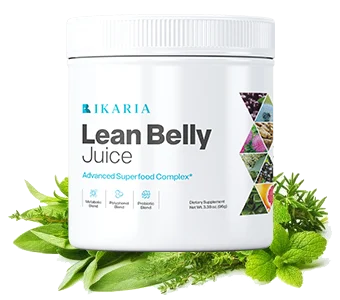
Ikaria Juice
Best polyphenol + 9-strain probiotic powderA morning polyphenol + 9-strain probiotic powder — for people tired of one-more-capsule-bottle who want a 30-second ritual that actually works.
Check the Latest Price →For the full comparison of weight-loss probiotics, see our guide to the best probiotic for weight loss, and for the broader gut-weight connection, our explainer on how gut bacteria affect weight gain.
FAQs
What does L. Gasseri do for weight loss?
Lactobacillus gasseri has the most direct belly-fat research of any probiotic strain. The landmark Kadooka 2013 trial (210 adults, 12 weeks, 10 billion CFU daily) measured abdominal fat with CT scans and found an average 4.6% reduction in visceral fat — a rigorous endpoint, not just scale weight. L. Gasseri appears to reduce calorie absorption and modulate the gut inflammation that drives fat storage.
What does L. Rhamnosus do for weight loss?
Lactobacillus rhamnosus showed weight-loss effects particularly in women. A Laval University trial (125 adults, 24 weeks, 5 billion CFU) found women taking L. Rhamnosus lost significantly more weight than placebo and continued losing during a maintenance phase, while men showed less effect. The mechanism likely involves appetite regulation and gut-brain signaling, though it's less precisely characterized than L. Gasseri.
What's the right dose of L. Gasseri and L. Rhamnosus?
Match the trial doses: L. Gasseri at 10 billion CFU daily (the Kadooka dose) and L. Rhamnosus at 5 billion CFU (the Laval dose). Critically, the strains must survive stomach acid to reach the colon — so delivery technology (delayed-release capsules like DRcaps, or enteric coating) matters as much as the CFU count. A high CFU count on the label means nothing if the bacteria die before arrival.
How long do probiotic strains take to affect weight?
Plan on 8–12 weeks of consistent daily use. Colonization — the strains establishing a stable population in your gut — takes 4–6 weeks. The trials that measured belly-fat reduction ran 12–24 weeks. Early signals (improved digestion, less bloating) show up around week 2–3, but the metabolic and body-composition effects need the longer window to register.
Can I get these strains from yogurt instead of a supplement?
Some yogurts contain L. gasseri or L. rhamnosus, but rarely at the clinical doses (10 billion and 5 billion CFU) and rarely with the specific studied strains. Yogurt is a healthy addition but typically doesn't deliver the targeted, dose-matched amounts the weight-loss trials used. For the specific belly-fat effect, a standardized supplement with the studied strains and doses is more reliable.
Final Thoughts
If you take one thing from this: probiotics for weight loss are a strain-specific game. L. Gasseri and L. Rhamnosus are the two strains with real human trials measuring abdominal fat reduction — L. Gasseri with the rigorous CT-scan Kadooka data, L. Rhamnosus with strong results in women. Generic probiotic blends without these strains don't deliver the effect.
Match the trial parameters: the right strains, the studied doses (10 billion and 5 billion CFU), and delivery technology that survives stomach acid. Give it 8–12 weeks. The microbiome shift addresses a layer of weight regulation that diet and exercise alone simply can't reach.
This connects directly to the best probiotics for weight loss and the gut-bacteria link to weight gain.
Recommended Products
Reviewed by: The Supplement Post Editorial Team, Editorial Review — Last updated:
About Luciano Cesar
Luciano Cesar is a contributor at The Supplement Post, supporting the production of evidence-aware supplement reviews and buyer's guides across multiple health categories. His work spans ingredient analysis, formulation assessment and consumer-oriented summaries — what a label discloses, how the stated doses compare with the amounts used in published human research, and whether a formula's design matches what it claims to do. Every review is checked by The Supplement Post editorial team against the standards published in our editorial policy before it goes live.
Disclosure
All content on The Supplement Post is for informational purposes only and is not a substitute for professional medical advice, diagnosis, or treatment. Each product is a dietary supplement, not a prescription drug; statements about its benefits have not been evaluated by the U.S. Food and Drug Administration (FDA) and the product is not intended to diagnose, treat, cure, or prevent any disease.
Results may vary based on individual health status, consistency of use, and lifestyle. If you are pregnant or nursing, taking medication, or have a medical condition, consult a qualified healthcare professional before using any supplement.
This page may contain affiliate links—if you purchase through them, The Supplement Post may earn a small commission at no additional cost to you. References to third-party sites are provided for convenience; we do not control or guarantee their content.