
Ingredient Check
Baking Soda for Weight Loss: What the Research Actually Says — and the Dose Nobody Mentions
The baking soda shot is the fastest-growing weight-loss search in the country right now — up more than tenfold in three months. The honest answer is not that it is dangerous, and not that it works. It is narrower, more useful, and almost entirely about how much you are putting in the glass.
First — what people are actually doing
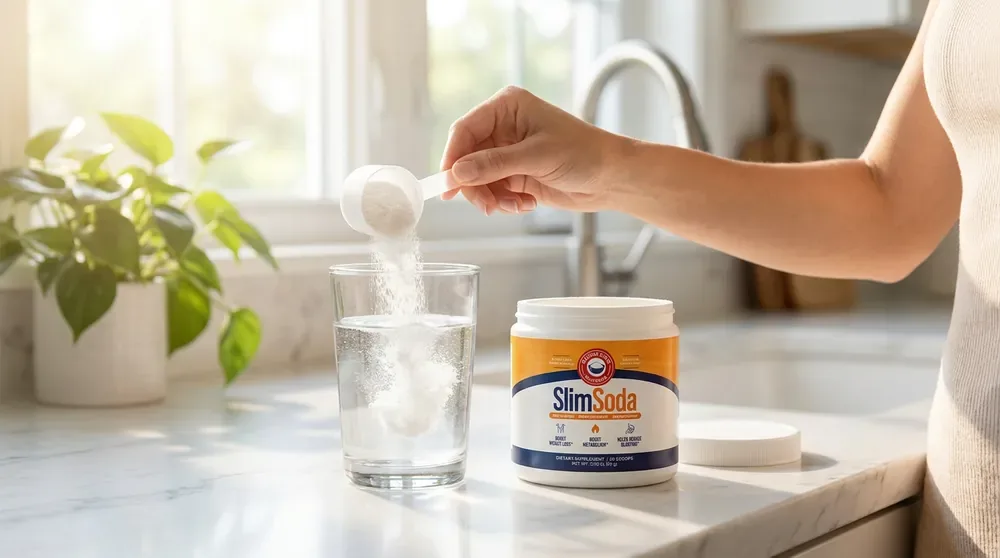
The routine is simple, which is most of why it spread. A spoonful of baking soda stirred into a glass of water, often with lemon, taken first thing in the morning. Searches for the recipe have climbed more than tenfold in three months, and the shape of what people type is the giveaway: recipe, shot recipe, what is the recipe. Nobody is shopping. Everybody is trying to make it at home.
The instinct behind it is not silly. Baking soda is a buffer — it neutralises acid, which is exactly what it does in your stomach and what your own pancreas does after every meal. From there it is a short hop to "if it balances my system, maybe it helps me hold less weight." That hop is where the evidence stops and the internet keeps going.
And there is one part of the ritual that genuinely does something, just not for the reason people think: a large glass of water before eating. That is a real, if modest, appetite effect — and it belongs to the water, not to what you stirred into it.
The key point The question is not whether baking soda is dangerous. It is that a kitchen teaspoon is not a measuring instrument, and sodium is the thing being measured. Luciano Cesar, Content Contributor
By the numbers
27%
of baking soda's weight is sodium — it is a sodium salt, not a neutral powder
~1,260 mg
the sodium in a single level teaspoon
2,300 mg
the full-day sodium limit the FDA advises for adults
0
human trials showing bicarbonate causes weight loss
What the research actually shows about baking soda
Sodium bicarbonate is not an obscure compound. It has been studied in people for decades — just never for the thing it is now going viral for. Here is the honest read:
The Evidence
- There is no weight-loss trial. Searching the human literature for bicarbonate and body weight returns studies of exercise, kidney function and emergency medicine — not weight loss. The absence is the finding.
- Where it is studied, the effect is small. Its established use is buffering acid during hard exercise. A 2025 systematic review with meta-analysis of randomised, double-blind, placebo-controlled trials (Miller et al., J Int Soc Sports Nutr) found negligible benefit for continuous running performance.
- Stomach symptoms are common, not rare. A 2026 systematic review of supplementation protocols (Winter et al., Eur J Sport Sci) catalogued gastrointestinal symptoms across dosing strategies — the discomfort people report is a documented pattern, not bad luck.
- Excess has a documented ceiling. A 2026 case report and literature review in the American Journal of Emergency Medicine (Inokuchi et al.) describes severe metabolic alkalosis and hypernatremia from excessive bicarbonate intake. This is the mechanism that makes "a bit more should work better" the wrong instinct here.
- Two ingredients in the same conversation do have pooled data. A 2025 GRADE-based dose-response meta-analysis assessed ginger against obesity indices in adults, and a 2026 meta-analysis in the International Journal of Obesity did the same for berberine. Modest, gradual — but measured in people, for this outcome.
Put together: the compound everyone is searching for has no weight evidence and a real dose ceiling, while two compounds nobody is searching for have both. That gap is the whole story.
Who should be careful — and why the dose is the whole question
Baking soda is not a controlled substance and it is not poison. It sits in millions of kitchens. The reason care is warranted is arithmetic, not danger:
- You take blood pressure or heart medication. Adding over half a day's sodium before breakfast works directly against what that medication is for
- You have kidney disease — sodium and bicarbonate handling is exactly what compromised kidneys struggle with
- You follow a sodium-restricted diet for any reason at all
- You are pregnant or nursing
- You would be measuring by eye. A heaped kitchen spoon can be twice a level one, and the difference is hundreds of milligrams of sodium you never accounted for
That last one is the ordinary case, and it is the one worth taking seriously. Nobody sets out to overdo it. The recipe circulating online does not come with a scale.
The terms that matter
- Sodium bicarbonate
- The chemical name for baking soda. The "sodium" is not decoration — it is roughly a quarter of the powder by weight, which is why a spoonful counts against the same daily budget as salt does.
- Buffer
- Something that neutralises acid. It is what baking soda does in a cake, in your stomach, and in an athlete's bloodstream during a hard sprint. Useful, well understood, and not the same thing as burning fat.
- Metabolic alkalosis
- What happens when blood becomes too alkaline — the opposite of too acidic. It is the specific risk of taking too much bicarbonate, and it shows up as nausea, muscle weakness, confusion or an irregular heartbeat.
- Hypernatremia
- Sodium in the blood rising above the normal range. It is the second half of the case-report picture, and it is why the sodium content matters more than the taste.
- Obesity indices
- The set of measurements trials use to judge whether something changed body composition — weight, BMI, waist circumference, body fat percentage. When a meta-analysis says an ingredient "improved obesity indices," these are the numbers that moved.
Three routes for someone who came looking at baking soda
If the appeal was a simple daily habit that might help, that instinct is worth keeping — it is the unmeasured spoonful that is the problem, not the routine. Three ways to keep the habit and lose the guesswork. Each names who it fits and who it does not.
SlimSoda Powder
The baking soda route, at a measured dose, with partners that have pooled data
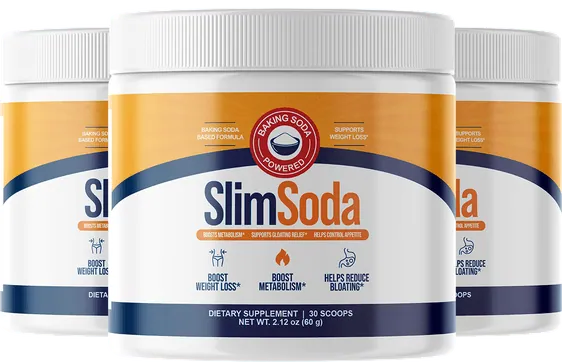
SlimSoda Powder — also written Slim Soda Powder — is the version of that idea with the two problems solved, if the baking soda shot is what appealed to you. The bicarbonate is measured rather than scooped, so the sodium load is a known quantity instead of a guess — and it does not travel alone. Ginger and berberine ride with it, and those two are where the pooled human data on obesity indices actually lives. It is the same daily-drink habit, built so the part with evidence is doing the work.
Look elsewhere if: You do not want a daily drink at all, or you want to test one single compound rather than a combination — a berberine-only format isolates the question better.
HoneyBurn
A studied active, with no drink to mix

If what you actually want is a metabolic active with human research behind it, berberine is the one baking soda is not. HoneyBurn carries Berberine HCl standardised from Phellodendron amurense bark inside a 550 mg blend, taken as two millilitres each morning — no glass to mix, no sodium in the equation.
Look elsewhere if: The morning drink ritual is the part that appeals to you, or you want several mechanisms working at once.
Ikaria Juice
The daily drink habit, without baking soda anywhere in it
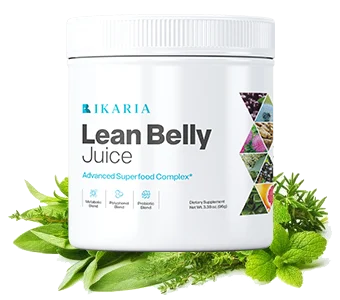
Plenty of people who try the baking soda shot are really after the habit — something you stir into water every morning that feels like it is doing something. Ikaria Juice is that habit built on a multi-ingredient blend rather than on bicarbonate, so the sodium question never comes up. If the drink is the part you liked and the baking soda is the part you are unsure about, this is the straight swap.
Look elsewhere if: The bicarbonate itself is specifically what you wanted to try — then a formula built around it, at a measured dose, is the closer match.
Side-by-side: which route fits you?
Same starting point, three different answers to it. This maps each to what you were actually after.
| What you care about | SlimSoda Powder | HoneyBurn | Ikaria Juice |
|---|---|---|---|
| Contains bicarbonate | Yes — measured | No | No |
| Format | Powder in water, daily | Liquid drops, daily | Powder in water, daily |
| Main evidenced ingredient | Ginger + berberine | Berberine | Multi-ingredient blend |
| Best if you wanted | The baking soda idea, done properly | The active, with no drink to mix | The morning drink, no bicarbonate |
| Money-back window | 90 days | See review | See review |
| Where to buy | Site → | Site → | Site → |
None of these is a runner-up — they answer three different versions of the same question. For the berberine evidence in depth, see whether berberine deserves the "nature's Ozempic" label, and for the daily-drink category, what actually separates the drinks worth keeping.
How much baking soda should you take for weight loss?
So — does baking soda work for weight loss? On the evidence available: there is no trial saying it does, and there is a clear ceiling on how much you can safely take while finding out. That is not a reason to be alarmed. It is a reason to stop guessing at the spoon.
What is worth keeping from the trend is the instinct underneath it — a small daily habit, taken in water, that supports the machinery instead of starving it. Here is where we would start. If the baking soda idea is what drew you in and you want it done at a measured dose, SlimSoda Powder is the one we would reach for first — the bicarbonate is portioned rather than scooped, and it arrives alongside ginger and berberine, the two compounds in this whole conversation that have actually been pooled and measured in people. The 90-day window makes the test a fair one.
This connects directly to how SlimSoda Powder differs from Soda Slim and the Oprah baking-soda water shot.
If you take blood pressure or heart medication, have kidney disease, are pregnant, or follow a sodium-restricted diet, talk to your doctor before adding bicarbonate in any form. And seek care promptly for persistent nausea, swelling, muscle weakness, confusion or an irregular heartbeat after taking it.
Frequently asked questions
Does baking soda actually make you lose weight?
There is no human trial showing that sodium bicarbonate causes weight loss. What has been studied in people is exercise performance, and even there a 2025 meta-analysis of randomised, double-blind, placebo-controlled trials found negligible benefit for continuous running. Any weight change people report from a baking soda shot is more plausibly explained by drinking a large glass of water before eating, and by the diet changes that usually accompany starting a new routine.
Is it safe to drink baking soda every day for weight loss?
The risk is dose, not the substance. Baking soda is about 27% sodium by weight, so a single teaspoon carries roughly 1,260 mg of sodium — more than half the 2,300 mg daily limit the FDA advises, before you have eaten anything. A 2026 systematic review found gastrointestinal symptoms are common at supplementation doses, and a 2026 case report in the American Journal of Emergency Medicine documented severe metabolic alkalosis and hypernatremia from excessive intake. Measured amounts are a different situation from scooping by eye.
How much baking soda is safe to take?
There is no established supplement dose for weight loss, because there is no weight-loss evidence to base one on. The practical problem with the home version is that a kitchen teaspoon is not a measuring instrument, and the sodium adds up fast. If you take blood pressure medication, have kidney or heart disease, or are on a sodium-restricted diet, this is a conversation for your doctor before it is an experiment in your kitchen.
What is the baking soda and lemon recipe for weight loss?
The version circulating online is generally baking soda stirred into water with lemon juice, taken in the morning. The lemon does not change the sodium arithmetic and no trial has tested the combination for weight. If the appeal is the morning-drink habit, that part is genuinely useful — it is the unmeasured bicarbonate that carries the risk, not the routine.
Which ingredients in this category do have human evidence?
Ginger and berberine both do. A 2025 GRADE-based dose-response meta-analysis in Complementary Therapies in Medicine assessed ginger against obesity indices and adipokine profiles in adults, and a 2026 systematic review and meta-analysis in the International Journal of Obesity did the same for berberine. Neither is dramatic, and both work gradually — but unlike bicarbonate, they have been measured in people for this outcome.
When should I talk to a doctor before trying this?
Before starting, if you take blood pressure or heart medication, have kidney disease, are pregnant, or follow a sodium-restricted diet. And promptly if you experience persistent nausea, swelling, muscle weakness, confusion, or an irregular heartbeat after taking bicarbonate — those can be signs of the electrolyte disturbance described in the case literature.