
Evidence Check
The Best Supplements for Brain Fog and Memory — After You Rule Out the Boring Causes
Search this and the first thing you'll hit is a major medical publisher telling you there's no solid proof brain supplements work. That verdict is half right — and the half it gets wrong is the half worth your money. Here's the honest split.

First — the study everyone quotes, and what it actually says
Search this topic and you hit a wall of authority: major medical publishers concluding there is no solid proof brain health supplements work, and that you'd get more benefit from regular aerobic exercise. It sits near the top of the results, it comes from institutions worth trusting, and it stops a lot of people right there.
It's also answering a narrower question than it appears to. That body of research largely examined multivitamins and general "brain health" products in cognitively healthy adults — people with no deficiency and no decline. In that population the finding is unsurprising and almost certainly correct: topping up nutrients you already have enough of does very little.
What it doesn't address is whether specific compounds at studied doses do anything in someone who actually has a complaint. And there the picture is different — far more modest than any sales page admits, but not nothing.
The key point Generic brain supplements in healthy people: the sceptics are right. Specific studied compounds in people who actually have a complaint: a real, small, slow effect. Anyone telling you only one half of that is selling something — including the people selling scepticism. Luciano Cesar, Content Contributor
By the numbers
4
compounds with genuine human trials, out of dozens sold for memory
120 mg
the Bacopa dose used in the trials that showed improved attention
from 12 wks
when the memory layer starts showing — the window most people quit before
1
blood panel that can settle whether you need any of this at all
Before you buy anything: the causes worth ruling out
This is the section most articles in this category skip, because it doesn't sell capsules. It's also the one most likely to actually fix your fog — so it goes first.
Check these first
- Vitamin B12, vitamin D and iron. All three produce genuine cognitive fog when low, and all three are common. A blood panel costs less than three months of supplements — and if one comes back low, correcting it will do more than anything on this page.
- Thyroid function. An underactive thyroid presents almost exactly like brain fog plus fatigue, and it's frequently missed for years. Simple test, treatable condition.
- Sleep — particularly apnoea. Fragmented sleep degrades memory consolidation directly. If you snore, wake unrefreshed, or your partner has mentioned you stop breathing, that's the lead to follow first.
- Your current medications. Antihistamines, some blood-pressure drugs, sleep aids, certain antidepressants and anticholinergics all have documented cognitive side effects. A pharmacist will review your list free, in ten minutes.
- Depression, anxiety and perimenopause. Each causes real, measurable cognitive complaints. Treating the cause works; treating the symptom with a nootropic doesn't.
If one of these turns out to be your answer, you've saved yourself money and months. Supplements are for the fog that remains once these are excluded — not the first thing to try.
The four compounds with real human trials
Once the boring causes are cleared, the field narrows fast. Most "best brain supplement" lists are really vitamin lists — useful only if you're deficient. These four are different: they've been tested as interventions in people with a cognitive complaint.
- Bacopa monnieri — memory consolidation. A meta-analysis of randomised controlled trials found improved cognition, particularly speed of attention. It's also the reason the honest timeline here is twelve weeks: that's how long its trials ran.
- Phosphatidylserine — membrane integrity. A phospholipid forming part of every neuron's outer wall, studied in age-associated memory impairment. One of very few supplement ingredients with an FDA qualified health claim relating to cognitive decline in the elderly.
- Citicoline — acetylcholine and focus. Supports the neurotransmitter most tied to learning and recall. This is the one that shows earliest, and the one that reads as "focus" rather than "memory."
- Lion's Mane — nerve growth factor. Studied for stimulating NGF, the protein that maintains and repairs neurons. It improved cognitive scores in a double-blind, placebo-controlled trial in adults with mild cognitive impairment — the only mushroom in this category with that kind of data.
Two more earn a place as supporting players rather than headliners: Ginkgo biloba for cerebral blood flow, and Huperzine-A, which slows the enzyme that clears acetylcholine away.
The terms that matter
- Acetylcholine
- The neurotransmitter your brain uses most for memory and learning — think of it as the ink you write new memories with. It declines with age, and an enzyme is constantly clearing it away.
- Nerve growth factor (NGF)
- The maintenance crew for your brain's wiring. It keeps existing neurons healthy and helps them repair. When it slows with age the wiring degrades quietly — which is what "just getting older" often actually is.
- Phosphatidylserine
- A fat that forms part of the outer wall of every neuron. Cell walls need maintaining like anything else, and when they degrade, signals pass less cleanly.
- Proprietary blend
- A label that lists ten ingredients under one total, so you can't tell whether the Bacopa is at a studied amount or a dusting. It's the fastest way to judge a brain formula: if the doses are hidden, you cannot check the claim.
- Adaptogen
- A compound that builds slowly rather than hitting like a stimulant. Bacopa and Lion's Mane are both adaptogens — which is exactly why judging them at week two tells you nothing.
Three formulas, three kinds of fog
There isn't one best here, because "brain fog" describes at least three different problems. Match the pick to yours: you want to verify every dose, you want the wiring repaired, or you want focus back this month. Each names the reader it fits and the one it doesn't.
ProMind Complex
The one you can verify — eight ingredients, eight printed doses
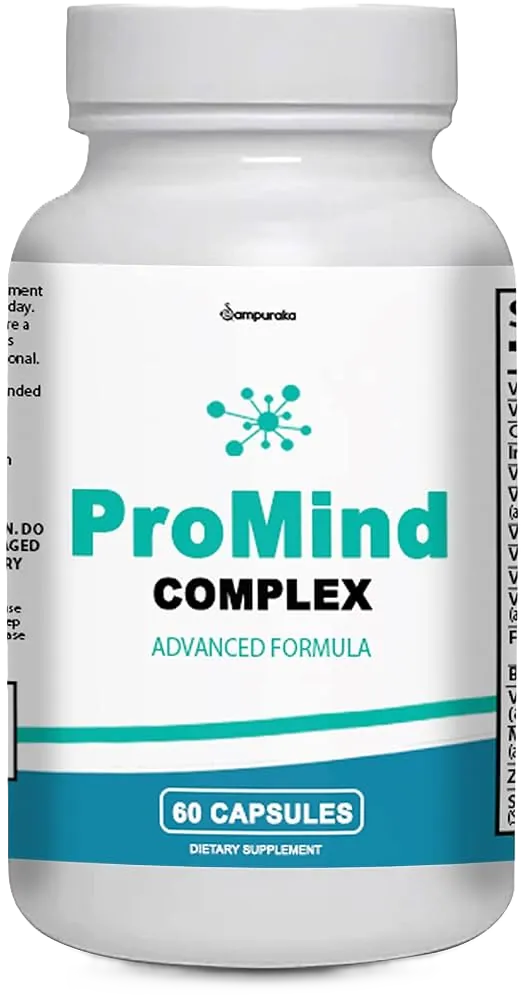
This is the pick if the sceptical research bothers you — because it's the one you can actually check. Eight ingredients, eight exact milligrams, no proprietary blend anywhere on the panel. That means you can take Bacopa at 120 mg, phosphatidylserine at 125 mg and Huperzine-A at 10 mcg and compare each against the published trials yourself instead of trusting a label. The four mechanisms are also the right four: acetylcholine preservation, cerebral blood flow, membrane integrity and mood. It's one capsule a day, which matters more than it sounds — the twelve-week routine you'll actually keep beats the perfect one you abandon in week three.
Look elsewhere if: You take any prescription medication and won't run it past a pharmacist. The St. John's Wort in this formula is well-evidenced for mood, and it interacts with a genuinely long list — antidepressants, birth control, blood thinners.
Vitrafoxin
The repair route — Lion's Mane and nerve growth factor
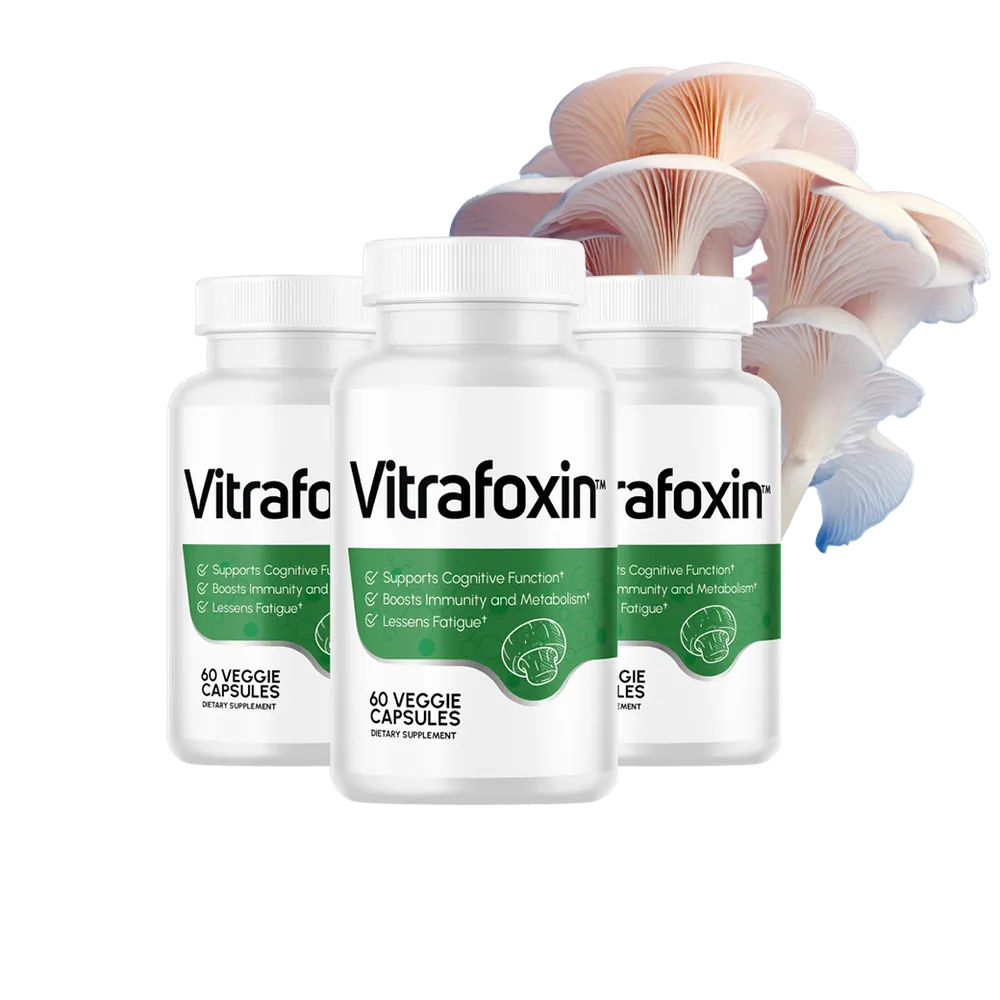
Almost every brain supplement adds signal. This one works on the wiring instead. Lion's Mane is studied for stimulating nerve growth factor — the protein that maintains and repairs neurons — and it's the mushroom with a genuine double-blind cognitive trial behind it. Vitrafoxin prints 266 mg against each of its four hero species, which in a category built on hidden ten-mushroom blends is rare enough to be the deciding factor. The guarantee runs a full year, longer than the biggest bundle lasts, so the slow timeline costs you nothing to test.
Look elsewhere if: You want something you can feel this week. Mushrooms are adaptogens — stamina shifts first, recall much later, and nothing here announces itself. Also an absolute no if you have a mushroom allergy.
Brain C-13
The direct route — Cognizin citicoline for focus and recall
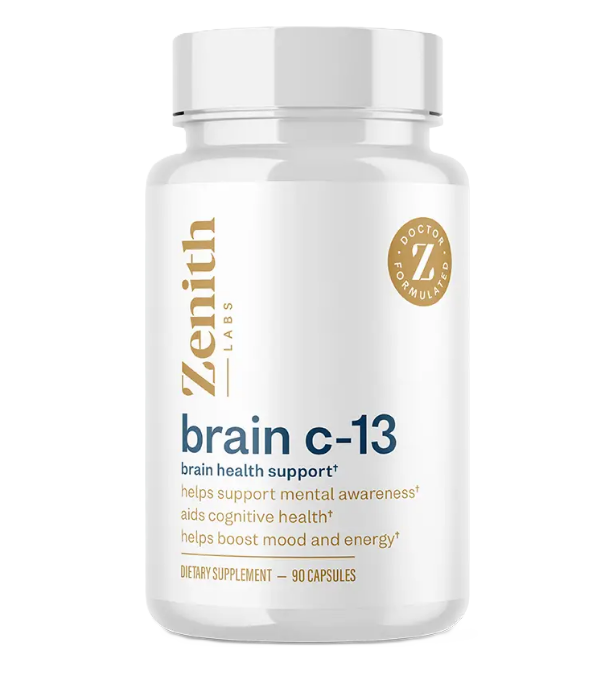
The focused case, and the cheapest of the three at around $33 a bottle. Rather than spreading across ten ingredients, it leans on Cognizin citicoline — one premium, heavily studied compound aimed straight at the neurotransmitter side of memory and attention. If your fog reads as a focus problem more than a decline problem, the concentrated approach is a defensible choice, and the 180-day guarantee is unusually generous at that price.
Look elsewhere if: Your concern is age-related decline rather than day-to-day focus. A single-compound formula covers one lever well; if you want membrane integrity and blood flow covered too, the broader panels above do more.
Side-by-side: which one fits your fog?
Three different theories of what's failing. None of these is a runner-up — they're three sound tools aimed at different parts of the same complaint.
| What you care about | ProMind Complex | Vitrafoxin | Brain C-13 |
|---|---|---|---|
| Primary target | Acetylcholine + blood flow | Neuron repair (NGF) | Acetylcholine (citicoline) |
| Label transparency | All 8 doses printed | 4 hero doses printed | Full disclosure |
| Best for | Verifying every dose yourself | Age-related decline | Focus and recall now |
| When you'd notice | 8–12 weeks | 8–16 weeks | 2–6 weeks |
| Money-back window | 60 days | 365 days | 180 days |
| Where to buy | Site → | Site → | Site → |
All three are sold only through their official websites and ship with a money-back guarantee. The right pick is the one you'll still be taking in week twelve — compliance beats mechanism every time.
What the first twelve weeks actually look like
Most people quit at week three because nothing dramatic has happened. That's the wrong window.
- Week 1–2. Very little, and that's expected. The circulation and acetylcholine ingredients act first — some people notice the afternoon drop-off is less steep. Nothing memory-related yet.
- Week 3–6. Mental stamina shifts before memory does. Longer stretches of focus without the effort; less rereading. This is the window most people mistake for "nothing is happening."
- Week 8–12. The window that matters. Bacopa's trials ran twelve weeks and Lion's Mane's ran eight to sixteen — recall feeling less effortful is the change to look for, not a switch flipping.
- Month 4+. Maintenance. Nerve support is cumulative and the effect holds while you keep taking it — this isn't a course you finish.
When to see a doctor instead
We'd rather lose the sale than have you treat something serious with a capsule. Book an appointment rather than ordering anything if:
- The change came on suddenly, or is getting noticeably worse week by week
- You're losing words mid-sentence, getting lost in familiar places, or others noticed before you did
- It comes with headaches, vision changes, numbness, or difficulty with balance
- You're on multiple medications and the fog started after a prescription changed
- There's a family history of early dementia and you want a proper baseline assessment
Which supplement should you take for brain fog and memory?
The sceptics and the sellers are both overstating their case. Brain supplements will not restore the memory you had at thirty, and anyone promising that is lying. But the blanket conclusion that nothing works comes from studying multivitamins in healthy people — and it doesn't describe what Bacopa, phosphatidylserine, citicoline or Lion's Mane do in someone who actually has a complaint. The real effect is modest, slow, and worth having.
So: get the blood panel first. If B12, vitamin D, iron or thyroid is your answer, you've solved it cheaply and you don't need this page. If everything comes back normal and the fog is still there, ProMind Complex is the one we'd reach for first — because when the science is this modest, being able to verify every dose on the label is the difference between an informed decision and a hopeful one.
Then give it twelve weeks. Not three. The compounds with real evidence are the slow ones, and the single most common reason people conclude "it didn't work" is that they judged it before it had finished arriving.
If your memory change came on suddenly or is worsening, see a doctor first. This page is for persistent fog with no clear medical cause.
Frequently asked questions
Do brain supplements really work, or is that a myth?
Both answers are partly right, and the distinction matters. The widely quoted conclusion that there's 'no solid proof' comes from research on multivitamins and general 'brain health' products in healthy adults — and for that question it's fair. But it's a different question from whether specific compounds at studied doses do anything. Bacopa monnieri has a meta-analysis of randomised controlled trials showing improved cognition and speed of attention. Phosphatidylserine holds an FDA qualified health claim relating to cognitive decline in the elderly. Lion's Mane has a double-blind placebo-controlled trial in adults with mild cognitive impairment. Those aren't nothing — they're just far more modest than the marketing implies.
What supplements help with memory and brain fog specifically?
Four have the strongest human evidence: Bacopa monnieri for memory consolidation, phosphatidylserine for neuronal membrane integrity, citicoline for acetylcholine and focus, and Lion's Mane for nerve growth factor. Ginkgo biloba and Huperzine-A have supporting data for cerebral blood flow and acetylcholine preservation. Note what's missing from that list: most of the vitamins that dominate 'best brain supplement' articles only help if you're actually deficient in them.
How long before a brain supplement does anything?
Longer than most people give it. Bacopa's trials run twelve weeks; Lion's Mane's cognitive research runs 8 to 16. Focus and circulation ingredients like citicoline and ginkgo can show earlier, within a couple of weeks. The practical rule: judge at week twelve against how week one felt, and buy enough to reach that window — most people quit at week three and conclude nothing worked.
Should I take vitamins for memory and brain fog instead?
Test first, then supplement. Vitamin D, B12 and iron deficiencies all cause real cognitive fog, and correcting a genuine deficiency produces a much bigger effect than any nootropic will. But taking them when your levels are already normal does very little — which is precisely what the sceptical research found. A blood panel costs less than three months of supplements and tells you whether you're in that group.
Is brain fog a sign of something serious?
Usually not, but it deserves a proper look before you reach for a supplement. Thyroid problems, sleep apnoea, anaemia, depression, perimenopause and several common medications all produce cognitive fog, and each has a real treatment that works far better than any capsule. See a doctor first if the change came on suddenly, is getting noticeably worse, or comes with headaches, vision changes, or difficulty finding words.
When should I talk to a doctor before starting one of these?
Before starting any of them if you take regular prescription medication — several of these ingredients have genuine interactions, particularly St. John's Wort and Ginkgo. Also if you're pregnant or nursing, have surgery scheduled, or are managing a thyroid or bleeding condition. And any memory change that arrived suddenly or is worsening quickly needs a medical evaluation rather than a supplement.