In This Review:
- 1. Product at a Glance
- 2. Gut & Liver Health After 40: Evidence, Concerns & Trends
- 3. What SlimLeaf Does and Benefits
- 4. Why We Rate It 4.6 / 5
- 5. Who It's Best For
- 6. How It Compares
- 7. Pricing & How to Order
- 8. The Mechanism (3 Strains + Dual Prebiotic)
- 9. Side Effects & Safety
- 10. Final Verdict
- 11. FAQs
Reviewed by The Supplement Post Editorial Team, Editorial Review
Updated
1. Product at a Glance
| Product | SlimLeaf |
| Category | Liver & Gut Health / Gut Microbiome / Akkermansia Synbiotic Capsule |
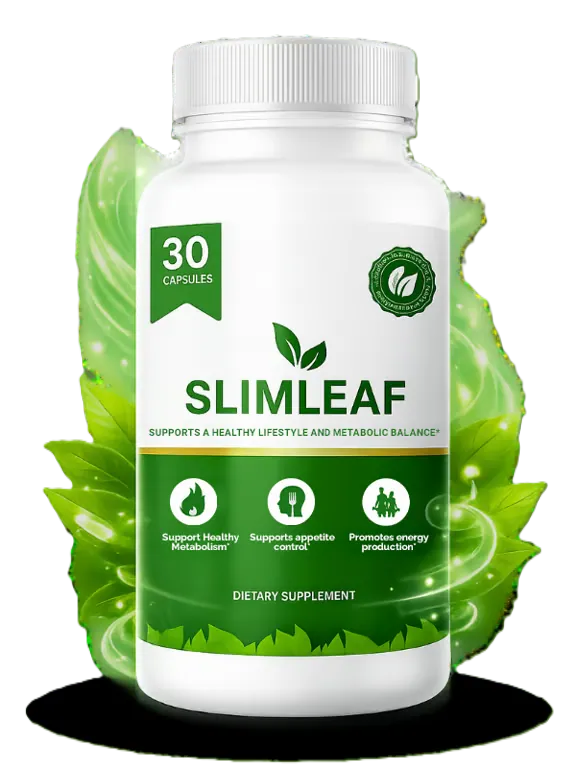
| Format | Capsule (1 daily, vegetarian capsule) — 1 capsule daily with an 8 oz glass of water, preferably with a meal |
| How it works | Rebalances the bacterial mix in your gut by delivering three specific strains — the headline one (Akkermansia) is the bacterium researchers consistently find in lean people and almost never in obese people. Paired with two fibers so each strain has the food it needs to actually colonize. |
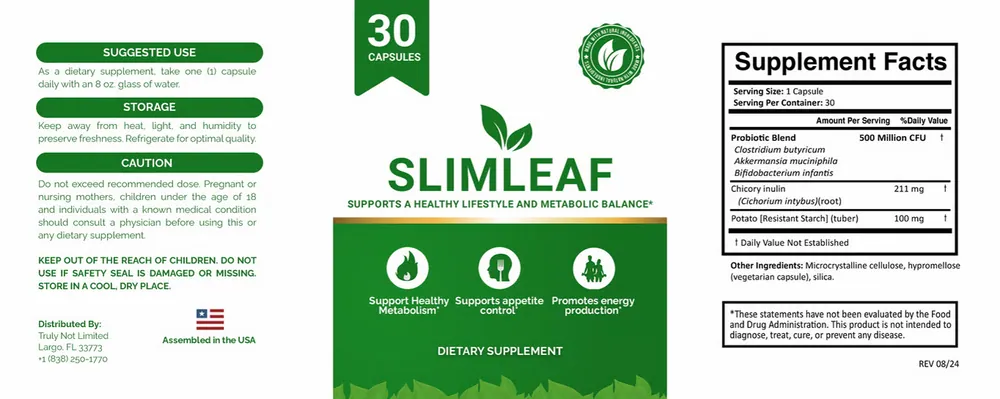
| Key Ingredients | Probiotic Blend 500M CFU (Akkermansia muciniphila + Clostridium butyricum + Bifidobacterium infantis), Chicory Inulin 211 mg, Potato Resistant Starch 100 mg |
| Manufacturing | USA, FDA-registered facility, GMP-certified, vegetarian capsule, gluten-free, non-GMO, dairy-free, egg-free, soy-free, nut-free, crustacean-free, BPA-free, distributed by Truly Not Limited (Largo, FL) |
| Guarantee | 60-day Money-Back Guarantee |
| Our Rating | 4.6 / 5 |
Quick Verdict
Here's the short answer. The bloating, irregular digestion, and chronic low-grade gut discomfort that don't show up in any blood panel — but quietly drive cravings, brain fog, energy crashes, and yes, the stubborn weight at the waistline — start in the bacterial mix living in your gut. SlimLeaf takes a "less is more" approach to rebalancing that mix: one small capsule a day, built around Akkermansia muciniphila, the bacterium that lives in the protective mucus layer of the gut wall and keeps the gut barrier sealed against the inflammation cascade. It's paired with two supporting strains and a dual-fiber food layer that feeds both ends of the gut. The result: a gentle synbiotic that rebalances the microbiome — without the bloating that sends people back to the manufacturer within week one of mega-dose 15-billion-CFU formulas. Downstream effects on energy, cravings, and metabolic balance follow naturally once the gut settles. Clean label, vegetarian capsule, USA FDA-registered facility, 60-day refund window.
2. Gut & Liver Health After 40: Evidence, Concerns & Trends
Before the formula itself, here's what the current evidence, the common concerns, and the market trends actually show about the gut microbiome and the gut-liver axis — and where a targeted synbiotic like SlimLeaf honestly fits.
| The concern / trend | What the evidence shows | What it means for you |
|---|---|---|
| Named strains, not "probiotic," drive the gut-barrier effect | The gut-microbiome effect on digestion, inflammation, and metabolic balance lives at the strain level. Akkermansia muciniphila is the strain with the strongest human data for the mucin layer that seals the gut wall (a 2026 randomized trial in Nutrients: improved body composition and glucose handlingat mass in overweight adults over 12 weeks). Clostridium butyricum is one of the most-studied butyrate producers (Stoeva, Gut Microbes, 2021). Most generic strains do little for the gut barrier. | The genus and species printed on the label matter far more than the word "probiotic" on the front. A formula without named, research-backed strains is buying you diversity, not a gut-barrier mechanism. |
| Concern — will the strains survive stomach acid? | Probiotics are living organisms, and the CFU printed on a label is what's in the bottle — not what arrives alive in the gut. Anaerobic strains like Akkermansia are notoriously fragile, and delivery (capsule shell, storage, prebiotic pairing) decides whether they colonize at all. A synbiotic pairs each strain with the fiber it needs, which the consensus definition used across the probiotic literature tied to better colonization than probiotics dosed alone. | Delivery and prebiotic pairing decide whether a probiotic works. Look for a true synbiotic (probiotic + prebiotic fiber in the same capsule) and a strain panel chosen for survival, not just a big CFU number. |
| Trend — gut-microbiome & gut-liver-axis research is going mainstream (2025+) | The gut microbiome is now one of the fastest-growing areas of metabolic research and one of the most-searched health topics in the U.S. through 2025, with Akkermansia and the gut-liver axis among the most-cited threads — a subject that barely registered in mainstream conversation a decade ago, now backed by peer-reviewed cohort work. | The mechanism is moving from fringe to mainstream-backed, which means more (and better) formulas — but also more bandwagon products. Evidence-matched strains and honest wellness framing are how you separate the two. |
Where SlimLeaf fits: on the evidence-aligned side of the trend. It leads with Akkermansia muciniphila — the strain carrying the strongest gut-barrier research — pairs three named strains with a dual prebiotic to make a true synbiotic, and stays in the wellness lane (gut-barrier and digestive support, no liver-disease claims). The 500 million CFU total is deliberately conservative rather than a mega-dose — a design choice, not a shortfall. Here's what the formula actually does day to day.
3. What SlimLeaf Does and Benefits
SlimLeaf rebalances the bacterial mix in your gut — and the inflammation, digestive friction, and downstream metabolic disorder that follow when that mix tilts the wrong way. Your gut microbiome is its own ecosystem of trillions of bacteria. When the balance is right, you don't think about your digestion at all. When it drifts — typically after 35, after antibiotics, after years of low-fiber eating, or after extended stress — the signals start showing up in places you wouldn't connect to your gut. SlimLeaf delivers three of the strains researchers now associate with a balanced, sealed-barrier gut, in a single capsule taken once a day.
You feel the wrong-bacteria signal in concrete ways that most doctors won't link back to your microbiome. Bloating that won't go away no matter what you cut. Irregularity that flips between constipation and looseness. The 3 pm crash that no amount of coffee fixes. Sweet cravings at 9 pm even after a full dinner. Brain fog that lifts only after you skip lunch. A waistline that creeps upward despite eating "fine." None of these show up in a blood panel as abnormal — but together they're the signal your gut is running on the wrong bacterial mix.
What changes when the right strains take hold: bloating settles first, usually within 3-4 weeks. Bowel regularity normalizes. Cravings get quieter. Energy stops crashing in the afternoon. The scale doesn't drop overnight — it takes 60-90 days for the bacterial composition to actually shift — but the metabolic trajectory turns as the inflammation cascade quiets down.
In practice, that shows up as a sequence of benefits, each on its own clock:
- Less bloating and steadier digestion — usually the first thing users feel (weeks 3–4), as butyrate signals strengthen and the after-meal bloat settles.
- Quieter cravings — especially the late-evening kind, as GLP-1 release starts firing on a healthier rhythm.
- Steadier energy and better sleep — weeks 5–8, as the bacterial composition stabilizes and afternoon crashes ease.
- Visible waistline change — weeks 8–12, the window the 2019 Nature Medicine trial measured, where the effect on fat mass and insulin sensitivity lands.
- Gentler than mega-dose probiotics — the deliberately conservative 500M CFU dose means the bloating and gas that derail bigger formulas mostly don’t show up.
What it does not do — and no honest review should claim otherwise — is act like a drug, melt fat overnight, or override a poor diet indefinitely; it’s gradual, microbiome-driven support. Made in a USA FDA-registered facility, vegetarian capsule, no fillers. How the 3 strains and dual prebiotic actually work together →
4. Why We Rate It 4.6 / 5
SlimLeaf earns 4.6/5 because the formula bets on quality over quantity. Instead of stacking 9-15 strains at mega-doses, it picks three with the strongest research behind them and pairs them with two fibers — one for each end of the gut. The deliberately lower bacterial dose (500 million versus the usual 15 billion in mega-formulas) is what keeps the bloating most probiotics cause out of the picture. Here's what stands out and where it falls short.
What stands out:
- Akkermansia muciniphila — the bacterium with Nature Medicine 2017 + 2019 trials linking it to insulin sensitivity and fat mass reduction in overweight adults over 12 weeks.
- Dual-prebiotic system (Chicory Inulin + Potato Resistant Starch) — feeds both upper-gut and lower-gut bacterial populations; most spectrum-stacking probiotics use one fiber.
- Conservative 500M CFU total — fewer bloating, gas, or adjustment-period side effects than 15B+ CFU mega-dose formulas; tolerable for sensitive guts.
- 1 capsule daily — no powder mixing, no multi-pill regimen; convenient for compliance over the 90-180 day window the microbiome actually needs.
- Clean label credentials — vegetarian capsule, gluten-free, non-GMO, dairy/soy/nut/egg/crustacean-free, BPA-free, USA FDA-registered facility, GMP-certified.
Where it falls short:
- The fiber inside the capsule is just a starter portion — not enough to replace the fiber you'd get from real food. Keep eating vegetables, fruit, and whole grains alongside the capsule to keep the bacteria fed.
- This isn't a one-and-done supplement. The probiotic strains only keep working while you keep feeding them daily — stop for a few weeks and the bacteria fade, and the gut imbalance signals (bloating, irregular digestion, low energy) tend to creep back. Consistency matters more than dose.
Full scorecard across all 6 criteria: SlimLeaf Scorecard →
5. Who Is SlimLeaf Best For?
Best match if you:
- Want Akkermansia muciniphila specifically — the mucin-layer-anchoring bacterium driving most gut-barrier research — in a daily capsule format
- Are dealing with bloating, irregular digestion, gas, or the cravings/brain-fog cycle that follow gut imbalance
- Prefer a conservative-dose synbiotic over 15B+ CFU mega-formulas (history of bloating, gas, or sensitive gut)
- Need a 1-capsule-daily routine you'll actually stay consistent with for 60-90 days
- Want a dual-prebiotic system (inulin + resistant starch) feeding both upper and lower gut, not just a single fiber
- Value clean-label credentials (vegetarian capsule, no soy/dairy/gluten/GMO, USA FDA-registered facility)
6. How It Compares to Generic Mega-Dose Probiotics
The probiotic aisle is dominated by one design philosophy: stack as many strains as possible, push the CFU count as high as possible, and let the volume substitute for strategy. SlimLeaf goes the other direction — fewer strains, lower dose, but each chosen for a specific gut-barrier or metabolic job, plus the prebiotic fiber that feeds them. Here’s how the two approaches differ in practice:
| Criteria | SlimLeaf | LeanBiome |
|---|---|---|
 |
 |
|
| Design philosophy | Minimum effective dose — targeted strains | Named strains chosen for weight and gut balance |
| Strain count | 3 named strains | 9 strains + green tea phytosome |
| Total CFU | 500 million | 39 billion |
| Hero anchor | Akkermansia muciniphila (mucin-layer anchor) | Lactobacillus gasseri, the weight-linked strain |
| Synbiotic? | Yes — dual prebiotic (Inulin + Resistant Starch) | No dedicated prebiotic — built around the strains themselves |
| Bloating in first 1–2 weeks | Rare (500M CFU is gentle) | Possible in the first days, as with any live-strain formula |
| Per-strain quality vs volume | Each strain has its own job + research | Strain-led too, but aimed at weight rather than the gut barrier |
| Daily routine | 1 small vegetarian capsule | 1 capsule daily, no refrigeration |
| Best fit if you… | Want gentle, targeted gut rebalancing — especially with Akkermansia in the panel | Want the weight angle first, with gut balance coming along |
| Where to buy | Official Site → | Official Site → |
Two genuinely different routes to the same goal. SlimLeaf works on the gut barrier itself — the gentle 500M CFU dose with named strains and a dual prebiotic is built to colonize without the adjustment-period bloating. LeanBiome comes at it from the weight side, led by Lactobacillus gasseri, the strain with the weight literature behind it, plus a green tea phytosome. Neither is a runner-up: pick SlimLeaf if what bothers you is digestion and gut comfort, and LeanBiome if the goal is weight with gut balance coming along.
7. Pricing Options for SlimLeaf
Gut microbiome rebalancing is judged at weeks 8 to 12, the window the published Akkermansia and butyrate-strain trials actually measured. Two bottles is sixty days: it reaches the start of that window, not the end of it, so you'll feel the early signals without knowing whether the scale and the mirror actually follow. Three bottles is ninety days, the smallest amount that carries you across the whole window and the smallest fair test. Given all of that, six bottles is the one we'd take: at $49 a bottle, about $120 less than paying the 2-bottle rate for the same six, it carries the shift into the maintenance months that follow instead of running out right as it consolidates — and it's the only tier that adds the 3 free bonus guides.
2 Bottles
60-Day Supply
- Secure Checkout
6 Bottles
180-Day Supply
- 3 FREE Bonuses ($211 Value)
- Secure Checkout
3 Bottles
90-Day Supply
- Secure Checkout
Every order is backed by a 60-day Money-Back Guarantee. The official site is the only channel that guarantees an authentic bottle and honors that refund.
8. The Mechanism: Why 3 Strains + Dual Prebiotic, Not One
Most spectrum-stacking probiotics try the shotgun approach — stack a dozen strains, push the CFU count to 50 billion, and hope volume substitutes for strategy. SlimLeaf goes the other way. Three strains, each chosen for a specific job in a specific part of the gut, plus two fibers to feed them. Less, but better targeted.
Akkermansia muciniphila — the lean-gut anchor. Lives in the mucus layer lining your gut wall and keeps that lining thick and sealed, which prevents the low-grade inflammation that drives insulin resistance and fat storage. People with naturally higher Akkermansia tend to stay leaner; people with obesity tend to have very little of it. A 2026 randomized trial in Nutrients showed daily Akkermansia for 12 weeks reduced fat mass and improved insulin sensitivity in overweight adults.
Clostridium butyricum — the butyrate producer. Lives in the lower colon, where it ferments fiber into butyrate, a fatty acid that triggers your body's natural GLP-1 release (the same satiety hormone Ozempic mimics with a drug). Stronger butyrate signals = quieter hunger between meals.
Bifidobacterium infantis — the inflammation regulator. The adult Bifido strain best-studied for reducing bloating and the chronic low-grade gut inflammation that compounds insulin resistance. The third leg of the stool.
The dual fiber system. Inulin feeds the upper-gut bacteria; resistant starch reaches the colon intact, where Clostridium butyricum needs it. Most spectrum-stacking probiotics use just one fiber — SlimLeaf gives each strain the meal it actually needs.
How it runs together: one capsule delivers three strains and two fibers, each in the gut zone where it works. Over 60-90 days, the bacterial composition shifts — bloating settles, digestion regulates, the gut barrier seals, and the downstream effects on cravings, energy, and metabolic balance start to register.
What these terms actually mean:
- Gut microbiome
- The trillions of bacteria living mostly in your colon. Think of it as a separate ecosystem inside you — when its bacterial mix is balanced toward lean-associated strains, you feel light, energetic, and your cravings stay quiet; when it tilts the other way, you feel heavy, bloated, and the scale stops responding to effort.
- Akkermansia muciniphila (the headline strain)
- A specific gut bacterium that lives in the mucus layer of your gut wall. The reason researchers care about it: studies consistently find that lean people have lots of Akkermansia and overweight people have very little. It works by keeping your gut lining sealed (preventing the low-grade inflammation that drives weight gain) and by triggering your body's natural release of GLP-1 — the same satiety hormone Ozempic mimics pharmacologically. The 2019 Nature Medicine trial showed daily Akkermansia for 12 weeks reduced fat mass in overweight adults. SlimLeaf is built around this strain because it has the strongest weight-related evidence of any probiotic on the market.
- CFU (Colony Forming Units)
- The unit that counts live bacteria. 500 million CFU means there are 500 million viable bacterial cells per capsule. More isn't always better — Akkermansia colonizes at modest doses if the prebiotic environment is right, and ultra-high CFU often causes adjustment-period bloating without adding benefit.
- Butyrate (short-chain fatty acid)
- A fatty acid produced when gut bacteria ferment fiber. It's the primary fuel for colon cells, dampens gut inflammation, and tells your gut endocrine cells to release GLP-1 — the satiety hormone. Higher butyrate signals from your gut = quieter hunger between meals.
- GLP-1 (glucagon-like peptide-1)
- The hormone your gut releases after eating that tells your brain "we're full" and slows stomach emptying. Ozempic and Wegovy are synthetic GLP-1 agonists — drugs that mimic the hormone. Akkermansia and butyrate-producing bacteria stimulate your body to make its own GLP-1 naturally.
- Prebiotic vs probiotic
- A probiotic is the live bacterium itself. A prebiotic is the food that bacterium eats. SlimLeaf is a synbiotic — it delivers both the bacteria (Akkermansia, Clostridium, Bifido) and the food (inulin, resistant starch) in the same capsule.
Full Ingredient List
SlimLeaf is a synbiotic — three targeted strains plus the dual prebiotic that feeds them, all disclosed:
| Ingredient | Type / Dose | Role in the Formula |
|---|---|---|
| Akkermansia muciniphila | Probiotic strain | The lean-gut anchor — lives in the gut-wall mucus layer, seals the gut lining, and triggers natural GLP-1 release. The 2019 Nature Medicine trial showed reduced fat mass over 12 weeks. |
| Clostridium butyricum | Probiotic strain | Butyrate-producing strain that ferments fiber into butyrate, triggering GLP-1 and PYY release from gut endocrine cells. |
| Bifidobacterium infantis | Probiotic strain | The adult Bifido strain with the strongest evidence for bloating reduction and gut-inflammation control (gold-standard for IBS-type discomfort). |
| Chicory Inulin | Prebiotic — 211 mg | Feeds upper-gut bacteria including Bifidobacterium populations. |
| Potato Resistant Starch (type 3) | Prebiotic — 100 mg | Bypasses small-intestine digestion to reach the colon intact and feed Clostridium butyricum for butyrate production. |
Total probiotic dose is a deliberately conservative 500 million CFU — low by mega-formula standards, but Akkermansia colonizes at modest doses when the prebiotic environment is right, and ultra-high CFU often just causes adjustment-period bloating without adding benefit.
Realistic Week-by-Week Timeline
SlimLeaf works by rebalancing the gut microbiome, so it builds in stages. Here’s what to expect, and when:
| Timeframe | What to Expect | What’s Happening |
|---|---|---|
| Weeks 1–2 | A quiet phase — maybe slight digestion shifts as the bacterial mix adjusts. No visible change yet. | Foundation — Akkermansia establishes in the mucus layer; butyrate production begins. |
| Weeks 3–4 | Cravings soften (especially late-evening); after-meal bloating lessens; some steadier afternoon energy. | First signal — butyrate signals strengthen and GLP-1 release finds a healthier rhythm. |
| Weeks 5–8 | The scale starts to move; clothes fit differently; mood feels lighter; sleep often improves. | Full evaluation — Akkermansia stabilizes and insulin sensitivity starts to improve. |
| Weeks 8–12 | Visible belly-fat reduction; cravings much quieter; energy steadier all day. | Peak window — the window the 2019 Nature Medicine trial measured. |
| Months 3–6 | Results hold; the goal shifts from building to maintaining. | Maintenance — continued use keeps the bacterial populations stable. |
When to judge it: weeks 8–12 are the real test window — the phase the Nature Medicine trial measured. Weeks 1–2 feel like nothing; that’s the adjustment phase, not a failure. Daily consistency and a fiber-friendly diet amplify the result.
9. Side Effects & Safety
SlimLeaf is one of the gentlest gut-focused probiotic profiles on the market. The deliberately conservative 500 million CFU dose (vs. the 15+ billion in mega-formulas) means the bloating and gas that derail users on bigger formulas basically don’t show up. Made in a USA FDA-registered facility. Because it works by rebalancing the microbiome, the one common effect is a brief adjustment in the first week.
| Possible Effect | Likely Cause | What to Do |
|---|---|---|
| Mild digestion shifts (first 5–7 days) | Gut microbiome adjusting to three new strains | Almost always resolves on its own by the start of week 2; take with a meal and water. |
| Occasional mild bloating | Prebiotic fiber (inulin, resistant starch) | Rare at this dose; usually settles quickly as the gut adapts. |
Check with your doctor first if you:
- Take prescription antibiotics — they can reduce the probiotic strains’ effectiveness; space dosing and coordinate with your doctor.
- Take immunosuppressants or have a compromised immune system — live probiotics warrant a physician check-in.
- Have severe SIBO (small intestinal bacterial overgrowth) — added prebiotic fiber can worsen symptoms.
- Are pregnant, nursing, or under 18, or manage a major medical condition — get medical guidance before daily use.
As with any supplement, this is metabolic and digestive support — not a treatment for obesity or any diagnosed condition. If any reaction feels severe or unusual, stop and consult your doctor.
10. Final Verdict
How this applies to you. You skip the second helping not because you don't want it, but because you already know how the next two hours will feel. You keep gum or an antacid in your bag for after lunch, just in case. The waistband that fit fine at breakfast is tight by four o'clock, and it has nothing to do with what you ate that day. None of it shows up on a blood panel, and none of it feels urgent enough to bring up at a checkup — which is exactly why it gets carried for years instead of addressed.
That pattern isn't about willpower — it's about which bacteria are running the show in your gut. Akkermansia keeps the mucus layer lining your gut wall thick and sealed, which is what stops low-grade inflammation from leaking out into the rest of the body. Clostridium butyricum ferments the fiber you eat into butyrate, the signal that tells your gut to release its own GLP-1 instead of leaving you hunting for a second helping. Bifidobacterium infantis keeps the whole environment calm enough for the other two to do their jobs, which is why the bloating tends to settle before anything else does. Pull any one of the three out and the others are working against a gut wall, a fiber supply, or an inflammation level that never got addressed, and it's also why the dual-fiber layer travels inside the same capsule instead of being sold separately: strains without food don't colonize. Made in a USA FDA-registered, GMP-certified facility, in a clean vegetarian capsule.
The published trials behind these strains took their measurements at weeks eight to twelve, and that window is what should decide the package, not the sticker price. Two bottles covers sixty days, enough to reach the start of that window and feel the early signals (lighter bloating, quieter cravings), not enough to know whether the scale and the mirror actually follow. Three bottles covers the full ninety days, which makes it the smallest package that actually answers the question. Given all of that, six bottles is the one we'd take — at $49 a bottle, about $120 less than paying the two-bottle rate for the same six, it carries the shift through the window and into the maintenance months that follow instead of running out right as it consolidates. Take one capsule daily with an 8 oz glass of water, preferably with a meal, and stay consistent; the strains only keep working while you keep feeding them.
11. Frequently Asked Questions
How long does SlimLeaf take to work?
Most users report the first signals — quieter cravings, lighter bloating, steadier afternoon energy — within 3-6 weeks of daily use. Measurable changes on the scale and in waistline typically register at 60-90 days, which aligns with the published Akkermansia muciniphila trials (Depommier 2019 was a 12-week study). The gut microbiome doesn't shift overnight; the 6-bottle bundle covers the 180-day window most people need to see the full effect.
What makes Akkermansia muciniphila different from other probiotic strains?
Akkermansia lives in the mucus layer that lines the gut wall — most other strains live in the gut contents. When Akkermansia populations are high, the mucus layer stays thick and the gut barrier stays sealed, which prevents the low-grade inflammation researchers link to insulin resistance and fat storage. The 2017 and 2019 Nature Medicine trials established the metabolic effect in both animal models and overweight humans. It's the bacterium driving the "natural GLP-1" conversation in metabolic research.
Why only 500 million CFU instead of 15+ billion like other probiotics?
The 500M CFU dose works in combination — Akkermansia colonizes effectively at modest doses when the prebiotic environment is right (which is why SlimLeaf includes both Chicory Inulin and Potato Resistant Starch). Higher CFU isn't always better — ultra-high doses often cause adjustment-period bloating and gas without adding benefit. Researchers who want larger CFU concentrations of a single strain should discuss it with a doctor — that's a clinical decision, not a DIY one.
Can I take SlimLeaf with other supplements or medications?
SlimLeaf is generally well-tolerated alongside multivitamins, omega-3s, and most lifestyle supplements. If you're on antibiotics, take SlimLeaf at least 2 hours apart to prevent the antibiotic from killing the probiotic strains. If you're immunocompromised, on immunosuppressants, pregnant or nursing, or managing a chronic GI condition like IBD or SIBO, consult your doctor before starting any probiotic.
Will SlimLeaf cause bloating or gas during the first weeks?
The conservative 500M CFU dose minimizes adjustment-period side effects — most users report no bloating or gas. A small minority (especially those with very sensitive guts) may notice mild gas in the first 5-7 days as the bacterial population shifts; this typically resolves on its own. If it persists past 10 days or causes discomfort, pause and consult your doctor.
When should I talk to a doctor before taking SlimLeaf?
Talk to a doctor before starting if you have inflammatory bowel disease (Crohn's, ulcerative colitis), are immunocompromised or on immunosuppressants (chemotherapy, organ transplant), are pregnant or nursing, have a central venous catheter, or are managing a chronic GI condition like SIBO. Probiotic supplementation is generally safe but isn't risk-free in these populations — it should be a medical decision, not an OTC one.
INGREDIENT TAGS
FORMAT
Research & Transparency
This content is based on publicly available ingredient research, manufacturer disclosures, and product labeling. We are not affiliated with the manufacturer.
(a) Probiotic supplementation for body weight management in adults with overweight and obesity — meta-analysis of randomized trials. Frontiers in Public Health 2026
(b) Probiotics: usefulness and safety — the agency read, including what the evidence does not establish. NIH / NCCIH
(c) Health products compliance guidance — the standard the agency applies to gut health and weight claims. FTC
About the Author
Luciano Cesar is a contributor at The Supplement Post, supporting the production of evidence-aware supplement reviews and buyer's guides across multiple health categories. His work spans ingredient analysis, formulation assessment and consumer-oriented summaries — what a label discloses, how the stated doses compare with the amounts used in published human research, and whether a formula's design matches what it claims to do. Every review is checked by The Supplement Post editorial team against the standards published in our editorial policy before it goes live.
Disclosure
All content is for informational purposes only and is not a substitute for professional medical advice. Each product reviewed is a dietary supplement, not a prescription drug. Results may vary based on individual health status, consistency of use, and lifestyle. This page may contain affiliate links — if you purchase through them, we may earn a small commission at no additional cost to you. Read our Editorial Policy.