
Edited by Michael Anderson, Editor-in-Chief
Updated
Ozempatches Side Effects: 4 Skin Safety Facts to Know
The full safety profile of a transdermal herbal patch — what to expect during the first week of skin adjustment, when to test for sensitivity, who should consult a doctor, and the rotation tips that prevent irritation.
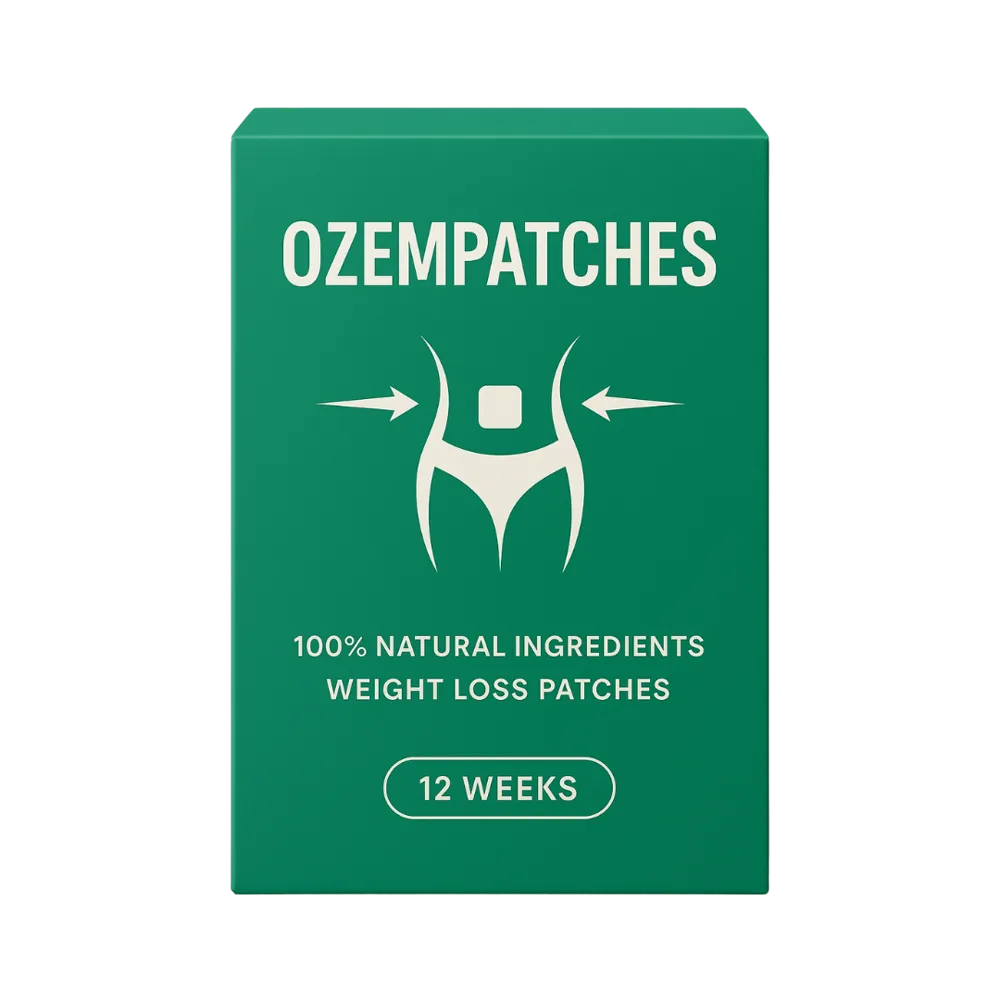
Dermatologist-tested, latex-free, paraben-free — what the safety profile actually looks like.
In This Article
Safety Snapshot
Ozempatches is generally well-tolerated in healthy adults — latex-free, dermatologist-tested, paraben-free, made with 4 clean ingredients (Water, Glycerin, Peony Root Extract, Mineral Oil) and free from harsh chemicals. Daily skin contact means a small subset of users will experience mild redness, itching, or irritation at the application site — particularly if applied repeatedly to the same spot. Rotate application areas daily. Pregnant or nursing women should avoid Peony Root patches (traditional caution during pregnancy). Anyone with sensitive skin, eczema, psoriasis, allergies, or taking medication should test a small area first or consult a physician before starting.
THE CORE PROMISE
Patches earn their dermatologist-tested status by passing skin tolerance testing. Ozempatches is latex-free, paraben-free, and uses only 4 ingredients — exactly the minimal-profile design that makes daily wear genuinely tolerable. The safety profile is the boring, well-documented kind — the main flags are normal patch-category considerations (skin sensitivity, rotation, pregnancy), not unusual safety concerns.
1. Safety Overview — Generally Well-Tolerated
The formula is built around ingredients with long-established topical safety profiles: Peony Root Extract (traditional East Asian use for centuries plus modern paeoniflorin research), Glycerin (one of the most-studied topical humectants — included in everything from baby skincare to medical patches), Mineral Oil (decades of safety data in topical applications), and Water (formulation base).
Manufacturing happens in certified facilities. The product is latex-free (a meaningful exclusion — latex is one of the most common patch sensitizers), dermatologist-tested, vegan, gluten-free, free from parabens and harsh chemicals, and uses no genetic engineering. Daily skin contact through transdermal patches inherently requires this level of cleanliness, and Ozempatches meets the baseline.
2. The Skin Adjustment Phase (Week 1)
In the first 7 days, your skin is getting used to daily patch wear. The most common adjustment effects:
- Mild adhesive residue. Some adhesive residue may remain on the skin after patch removal. Gentle warm water cleans it off; alcohol-based wipes work for stubborn cases.
- Slight pinkness at the application site. A subset of users notice mild pinkness or warmth after removing the patch. This usually fades within 30-60 minutes. If it persists past an hour or develops into a rash, stop use and consult a physician.
- Skin awareness during wear. Some users notice the patch sensation during the first few days, then forget it’s there. This is normal adjustment — the awareness fades as your skin gets used to the daily wear.
- Mild itching at the edges (rare). Very small subset experiences mild itching at the patch edges. Usually resolves within the first week.
None of these are dangerous. They’re the expected adaptation pattern for any daily transdermal product. If any persists past 2 weeks or worsens, stop use and consult a dermatologist.
3. Skin Sensitivity + Allergy Testing
If you have sensitive skin, eczema, psoriasis, or a history of patch/adhesive allergies, do a test patch first. Apply one Ozempatch to a small area (inner forearm works well) and leave it for 4-6 hours. Remove and watch the area for 24 hours. No reaction = you’re good to use the patches normally. Any redness, hives, itching, or burning that doesn’t resolve within an hour of removal = your skin doesn’t tolerate the formula; stop use.
The 4-ingredient blend is intentionally minimal to reduce sensitizer load, but no patch is universally tolerated. Peony Root is the most likely sensitizer in this list (though still rare); Glycerin and Mineral Oil are among the most universally tolerated topical ingredients available.
4. Who Should Avoid Ozempatches
- Pregnant or nursing women — Peony Root is traditionally avoided during pregnancy. Even though transdermal absorption is modest, the precautionary principle applies. Avoid.
- Children under 18 — not formulated or tested for pediatric use.
- Adults with documented patch/adhesive allergies — known allergy to medical patches or adhesive products means the format itself isn’t for you, regardless of the active ingredient.
- Adults with active eczema, psoriasis, or skin conditions on application areas — daily patch contact on already-compromised skin can worsen the condition. Consult a dermatologist first.
- Adults with broken, irritated, or sunburned skin — never apply patches to compromised skin areas. Wait until the skin fully heals.
- Adults taking prescription medication or with chronic medical conditions — consult your physician before any daily wellness patch routine.
Rotation Tips to Prevent Irritation
The single biggest factor in long-term patch tolerance is rotating application sites. Same-spot daily wear causes most patch-related irritation, even for users with no specific sensitivities. Recommended approach:
- Day 1: Lower abdomen (right side)
- Day 2: Upper arm (left)
- Day 3: Lower back (right side)
- Day 4: Thigh (front, left)
- Day 5: Lower abdomen (left side)
- Day 6: Upper arm (right)
- Day 7: Lower back (left side)
This 7-day rotation gives each area roughly a week to fully recover between applications. If you notice any specific area is consistently more irritated than others, skip it from rotation. Always apply to clean, dry, hair-free skin and avoid lotions or oils on the area before patching.
Pricing Options for Ozempatches
Ozempatches is available in three pack options. The 1-pack Starter is the lightest entry (30 patches, 30 days) — useful as a quick test but ending exactly when the manufacturer’s recommended 90-day evaluation window is just starting. The 6-pack Best Value is the longest commitment at $0.67/day (180 patches, 180 days) with free shipping. The 30-day money-back guarantee is shorter than most weight-loss supplements (typically 60-180 days), so plan your bundle around when you can realistically evaluate without commitment pressure.
1x Ozempatch
30 servings (30 days)
- 30-Day Money-Back Guarantee
- 1 pack delivered
6x Ozempatch
180 servings (180 days)
- 30-Day Money-Back Guarantee
- Free US Shipping
- 6 packs delivered
Save $412 vs MSRP
Shop Now3x Ozempatch
90 servings (90 days)
- 30-Day Money-Back Guarantee
- 3 packs delivered
Save ~$186 vs MSRP
Shop NowEvery order is backed by a 30-day money-back. Only available through the official website.
Frequently Asked Questions
Are Ozempatches safe for daily long-term use?
For adults with normal skin tolerance and no allergies to the listed ingredients, yes — the patches are designed for daily wear. The 4-ingredient minimal blend reduces sensitizer load, and rotating application sites prevents most long-term irritation issues. Latex-free + paraben-free + dermatologist-tested are the baseline. Most users in the 20,000+ verified customer base wear them daily without issues. The exceptions are the populations in §4 who should avoid the format entirely.
Can I wear Ozempatches if I have sensitive skin?
Maybe — do a test patch first. Apply one Ozempatch to your inner forearm for 4-6 hours, then remove and watch the area for 24 hours. No reaction = you should tolerate daily use. Any redness, hives, or burning that persists past an hour after removal = your skin doesn’t agree with the formula. The 4-ingredient blend is intentionally minimal but not universally tolerated. Adults with documented eczema, psoriasis, or patch allergies should consult a dermatologist before starting.
What if I notice skin irritation after a few weeks of use?
Most irritation after the initial adjustment period traces to same-spot repetitive use rather than the ingredients themselves. The first fix is to commit to the 7-day rotation pattern in §5 above — give each application area roughly a week to fully recover. If irritation persists even with rotation, stop use and consult a dermatologist. Your skin may have developed a sensitivity that wasn’t present at the start; this happens occasionally with daily patches across the entire category and isn’t unique to Ozempatches.
Continue your research
- Previous: The 4-ingredient herbal blend decoded — understand each ingredient before assessing sensitivity risk
- Then: Ozempatches pricing breakdown — bundle math + best value
- Compare: Metabo Drops — different non-pill format (sublingual drops) with no skin contact considerations
- Deep dive: Transdermal wellness patches explained — how patch safety actually works across the category
Research & Transparency
This content is based on publicly available ingredient research, manufacturer disclosures, and product labeling. We are not affiliated with the manufacturer.
(a) Peony root (Paeonia lactiflora) and paeoniflorin — pharmacological review of anti-inflammatory and analgesic effects. PMC4030608
(b) Transdermal drug delivery — review of skin permeability, formulation factors, and clinical applications. PMC4350892
(c) Glycerin and its uses in topical formulations — humectant properties and skin barrier support. PubMed 18489300
(d) Topical mineral oil for skin barrier function — review of cosmetic and protective uses. PubMed 22844614
(e) Functional transdermal patches in wellness — emerging trends and regulatory considerations. PMC8434434
About the Author
Emily Carter is a contributor at The Supplement Post covering brain and neuro health, blood sugar control, weight loss, and gut-focused formulas. She specializes in evidence-aware summaries of nootropic ingredients, metabolic supplements, and consumer-friendly explanations of how supplementation fits into broader cognitive and metabolic health strategies. Emily Carter is not a medical doctor — she analyzes publicly available research to provide evidence-aware summaries for adults exploring cognitive support, metabolic balance, and gut wellness options.
Disclosure
All content is for informational purposes only and is not a substitute for professional medical advice. Each product reviewed is a dietary supplement, not a prescription drug. Results may vary based on individual health status, consistency of use, and lifestyle. This page may contain affiliate links — if you purchase through them, we may earn a small commission at no additional cost to you. Read our Editorial Policy.