
Edited by Michael Anderson, Editor-in-Chief
Updated
Ozempatches Ingredients: The 4-Ingredient Herbal Patch Decoded
Every ingredient in Ozempatches explained — Water, Glycerin, Peony Root Extract, and Mineral Oil. Why patches use fewer ingredients than capsules, and what each one actually does.
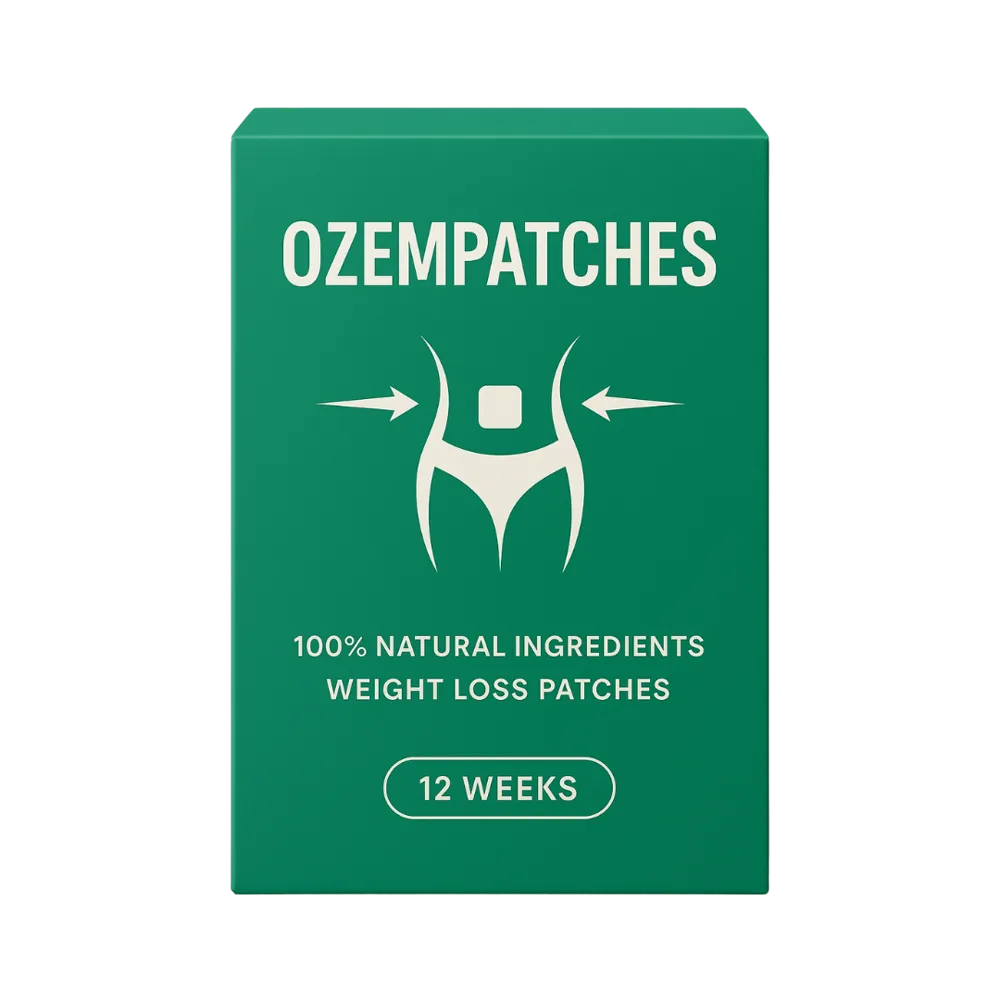
4 ingredients, 1 active botanical, 1 daily patch — the full breakdown.
In This Article
What's Inside
Ozempatches uses an intentionally minimalist 4-ingredient herbal blend: Water (the formulation base), Glycerin (humectant for skin comfort), Peony Root Extract (the active botanical with paeoniflorin glycosides), and Mineral Oil (skin barrier protection). The patch format favors fewer compounds with better skin compatibility over the 11+ stacks of multi-pathway capsules — this is a feature of transdermal formulation, not a flaw. Latex-free, paraben-free, vegan, gluten-free, free from harsh chemicals. The active mechanism rides on Peony Root; the other three support patch wearability and skin comfort.
THE CORE PROMISE
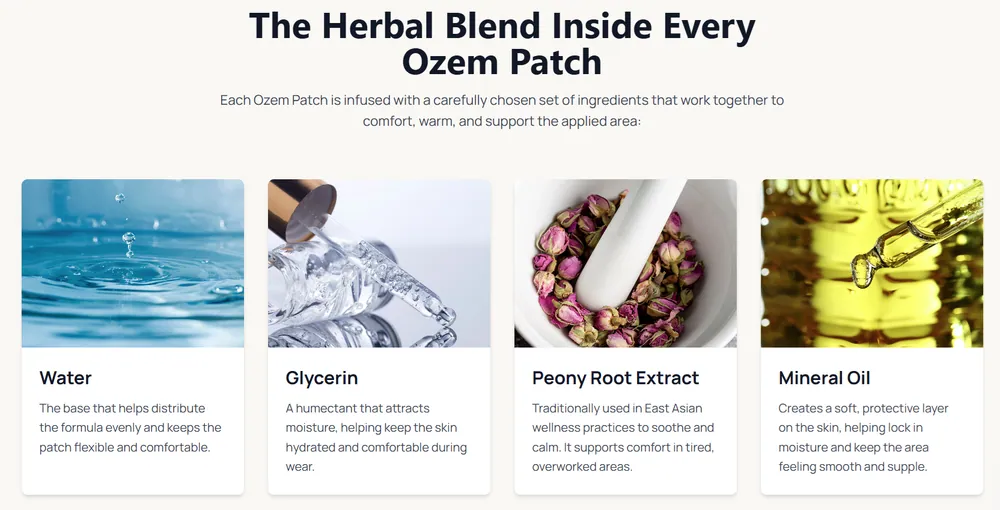
Each Ozempatch is infused with a carefully chosen set of ingredients that work together to comfort, warm, and support the applied area. One active botanical (Peony Root), three base materials that make the patch wearable and comfortable for 4-12 hours of daily wear. That’s the whole promise — simple, clean, and exactly what the format requires.
1. Full Ingredient List
The full 4-ingredient formula. Per-ingredient milligrams aren’t disclosed (proprietary blend — typical in the patch category given the formulation constraints), but every ingredient is listed openly:
| Ingredient | Role | What it does |
|---|---|---|
| Water | Formulation base | Distributes the formula evenly across the patch and keeps it flexible and comfortable |
| Glycerin | Humectant | Attracts moisture; keeps skin hydrated and comfortable during 4-12 hour wear |
| Peony Root Extract | Active botanical | Traditional East Asian use for soothing tension; contains paeoniflorin glycosides studied for mild anti-inflammatory effect |
| Mineral Oil | Skin barrier | Creates a soft, protective layer to lock in moisture and keep the area feeling smooth and supple |
2. Peony Root Extract (The Active Botanical)
Peony root is the only active botanical in the formula — and it’s a genuinely good choice for a transdermal patch. The root contains paeoniflorin and related glycosides, the compounds with documented anti-inflammatory and mild relaxant effects in published literature (PMC4030608). Traditional East Asian wellness practices have used Peony root for centuries to soothe tension, calm overworked areas, and support circulation in tired regions of the body.
In a transdermal patch, the active compounds release slowly through the skin over the 4-12 hour wear period. Honest framing: most of the published Peony research is from oral administration (decoctions, capsules), so the transdermal route is less pharmacokinetically characterized. But the gentle warming + comfort effects users report match the compound’s traditional use case well, and Peony has earned its place as a respected active in functional patches.
3. Glycerin (The Humectant)
Glycerin is one of the most-studied humectants in topical skincare (PubMed 18489300). It attracts moisture to the skin from the surrounding environment, keeps the patch comfortable during long wear periods, and supports the skin barrier under the application area. Standard topical-formulation ingredient — included in everything from moisturizers to wound dressings to medical patches.
The functional role here is wearability: without Glycerin (or a similar humectant), the patch would feel dry, stiff, and uncomfortable against the skin after a few hours. Its inclusion is what makes 4-12 hour daily wear actually tolerable.
4. Mineral Oil (The Skin Barrier)
Mineral oil creates a soft, protective layer on the skin (PubMed 22844614) that helps lock in moisture and keep the application area feeling smooth and supple under the patch. Like Glycerin, it’s primarily a base ingredient supporting patch wearability rather than driving the active mechanism.
Highly refined, cosmetic-grade mineral oil is one of the most-used ingredients in baby skincare, lip balms, and dermatologist-prescribed barrier products — it’s gentle, non-comedogenic in topical patch applications, and has decades of safety data behind it. The combination of Mineral Oil + Glycerin is what makes the patch genuinely comfortable to wear daily without skin irritation or dryness.
5. Water (The Formulation Base)
Water is the formulation base that distributes the active and supporting ingredients evenly across the patch and keeps it flexible during wear. Standard role across virtually all transdermal patches and topical formulations.
Why Patches Use Fewer Ingredients Than Capsules
If you’re used to seeing 11+ ingredient lists in weight-loss capsules, the 4-ingredient panel here might feel sparse. It’s actually the right approach for the format. Three reasons:
1. Skin permeability. Each ingredient added to a transdermal patch needs to pass molecular size, polarity, and skin-barrier compatibility tests. Adding more ingredients increases the chance of one not playing well with the others — or with sensitive skin.
2. Patch formulation constraints. The patch matrix itself can only hold so much volume of active material. Stuffing 11+ compounds into a small patch dilutes each one to functionally meaningless concentrations. Better to deliver fewer ingredients at meaningful levels.
3. Skin tolerance. Every additional ingredient is another potential allergen or irritant. Daily skin contact for 4-12 hours requires a clean, minimal profile. The 4-ingredient design is what makes the patch dermatologist-tested and tolerable for sensitive skin users.
The honest summary: 4 ingredients is what the format requires, not a corner-cutting decision. The hero compound (Peony Root) does the work; the other three make the daily wearing experience actually comfortable.
Pricing Options for Ozempatches
Ozempatches is available in three pack options. The 1-pack Starter is the lightest entry (30 patches, 30 days) — useful as a quick test but ending exactly when the manufacturer’s recommended 90-day evaluation window is just starting. The 6-pack Best Value is the longest commitment at $0.67/day (180 patches, 180 days) with free shipping. The 30-day money-back guarantee is shorter than most weight-loss supplements (typically 60-180 days), so plan your bundle around when you can realistically evaluate without commitment pressure.
1x Ozempatch
30 servings (30 days)
- 30-Day Money-Back Guarantee
- 1 pack delivered
6x Ozempatch
180 servings (180 days)
- 30-Day Money-Back Guarantee
- Free US Shipping
- 6 packs delivered
Save $412 vs MSRP
Shop Now3x Ozempatch
90 servings (90 days)
- 30-Day Money-Back Guarantee
- 3 packs delivered
Save ~$186 vs MSRP
Shop NowEvery order is backed by a 30-day money-back. Only available through the official website.
Frequently Asked Questions
Why does Ozempatches use a 4-ingredient blend when capsules have 11+ ingredients?
It’s a format requirement, not a corner-cutting decision. Transdermal patches have real formulation constraints: each ingredient added needs to pass molecular size and skin-permeability tests; the patch matrix holds limited active material; daily skin contact requires a clean, minimal profile for tolerance. The 4-ingredient design is what makes the patch genuinely dermatologist-tested and wearable for 4-12 hours daily. The hero (Peony Root) does the active work; the other three (Water, Glycerin, Mineral Oil) make the daily wearing experience comfortable.
Is Peony Root Extract actually researched?
Yes. Peony root contains paeoniflorin and related glycosides — compounds with documented anti-inflammatory and mild relaxant effects in published literature (PMC4030608). Traditional East Asian wellness practices have used Peony root for centuries to soothe tension and support comfort. The honest caveat: most of the published Peony research is from oral administration (decoctions, capsules), so the transdermal route is less pharmacokinetically characterized. But the gentle warming + comfort effects users report from the patch match the compound’s traditional use case well.
Any ingredient in Ozempatches that could cause skin irritation?
For most adults, no — the formula is latex-free, paraben-free, and free from harsh chemicals. The patches are dermatologist-tested specifically because daily skin contact requires that baseline. A small subset of users will experience mild redness, itching, or irritation if applied to the same spot repeatedly, or if they have sensitivities to one of the 4 ingredients (Peony Root is the most likely sensitizer in this list, though rare). Standard guidance: test a small area first if you have sensitive skin, rotate application areas, and stop use if irritation persists. Anyone with skin conditions (eczema, psoriasis) should consult a dermatologist before starting.
Continue your research
- Next: Ozempatches side effects + skin safety — full safety profile including the skin sensitivity considerations flagged above
- Then: Do Ozempatches really work? — the science behind transdermal botanical delivery + realistic timeline
- Compare: Metabo Drops — different non-pill format (sublingual drops + coffee) with 6 compounds vs Ozempatches’ 4
- Deep dive: Peony Root and paeoniflorin research — the East Asian wellness science behind the active botanical
Research & Transparency
This content is based on publicly available ingredient research, manufacturer disclosures, and product labeling. We are not affiliated with the manufacturer.
(a) Peony root (Paeonia lactiflora) and paeoniflorin — pharmacological review of anti-inflammatory and analgesic effects. PMC4030608
(b) Transdermal drug delivery — review of skin permeability, formulation factors, and clinical applications. PMC4350892
(c) Glycerin and its uses in topical formulations — humectant properties and skin barrier support. PubMed 18489300
(d) Topical mineral oil for skin barrier function — review of cosmetic and protective uses. PubMed 22844614
(e) Functional transdermal patches in wellness — emerging trends and regulatory considerations. PMC8434434
About the Author
Emily Carter is a contributor at The Supplement Post covering brain and neuro health, blood sugar control, weight loss, and gut-focused formulas. She specializes in evidence-aware summaries of nootropic ingredients, metabolic supplements, and consumer-friendly explanations of how supplementation fits into broader cognitive and metabolic health strategies. Emily Carter is not a medical doctor — she analyzes publicly available research to provide evidence-aware summaries for adults exploring cognitive support, metabolic balance, and gut wellness options.
Disclosure
All content is for informational purposes only and is not a substitute for professional medical advice. Each product reviewed is a dietary supplement, not a prescription drug. Results may vary based on individual health status, consistency of use, and lifestyle. This page may contain affiliate links — if you purchase through them, we may earn a small commission at no additional cost to you. Read our Editorial Policy.