
NeuroPrime Ingredients — Full Formula Breakdown
What is actually inside NeuroPrime, what each botanical, mushroom, and algae does for the brain, and why the liquid delivery format matters for absorption.
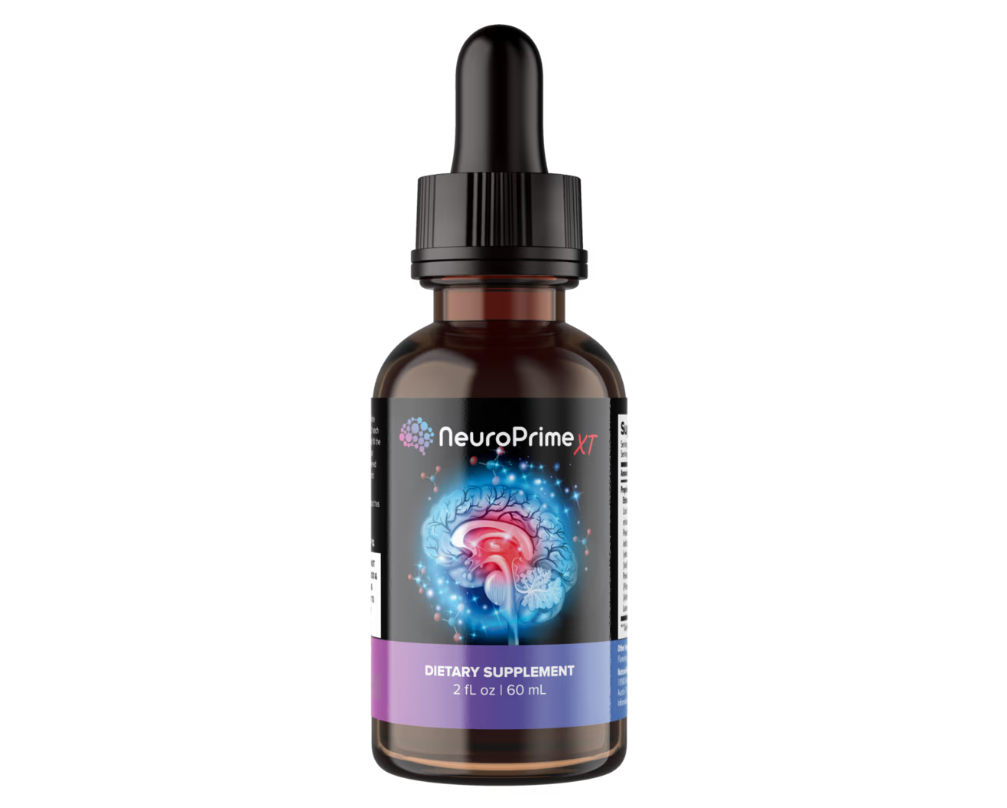
Full ingredient breakdown — what's inside NeuroPrime and how the liquid formula supports the aging brain.
In This Article
Edited by Michael Anderson, Editor-in-Chief
Updated
Quick Answer
NeuroPrime contains nine plant-based actives organized into four functional layers: a neurotrophic mushroom (Lion's Mane), circulation-boosting botanicals (Pine Bark, Ginkgo Biloba), polyphenol-rich antioxidants (Moringa, Tamarind, Neem), and nutrient-dense algae (Chlorella, Spirulina). Bacopa monnieri rounds out the formula as an adaptogen for memory and stress resilience. The liquid dropper format bypasses capsule disintegration, allowing faster sublingual absorption of the bioactive compounds.
1. Formula Overview
NeuroPrime is built around a specific physiological target: supporting the aging brain through neuroplasticity, cerebral circulation, and oxidative defense. The formula uses nine active ingredients organized into four functional layers. The first layer is neurotrophic — Lion's Mane Mushroom, which contains compounds linked to Nerve Growth Factor (NGF) stimulation. The second layer targets cerebral blood flow through French Maritime Pine Bark and Ginkgo Biloba. The third layer delivers polyphenols and antioxidants through Moringa, Tamarind, and Neem. The fourth layer provides micronutrient density via Chlorella and Spirulina.
The liquid dropper format is relevant here. Unlike capsule-based nootropics that depend on gastric disintegration and first-pass metabolism, a liquid can be absorbed partially through the sublingual mucosa and reaches the bloodstream faster. That bioavailability advantage is part of why NeuroPrime is dosed once daily. For a broader look at what this product is and who it targets, see What Is NeuroPrime?
2. Full Ingredient Table
| Ingredient | Functional Layer | Role in the Formula |
|---|---|---|
| Lion's Mane Mushroom (Hericium erinaceus) | Neurotrophic | Contains hericenones and erinacines — compounds studied for their ability to stimulate Nerve Growth Factor (NGF) production. NGF is critical for neuron maintenance, synaptic repair, and neuroplasticity. Effects typically build over 8–16 weeks of consistent use. |
| French Maritime Pine Bark Extract | Circulation & Antioxidant | Rich in oligomeric proanthocyanidins (OPCs) — one of the few antioxidants small enough to cross the blood-brain barrier (BBB). Supports cerebral microcirculation and helps neutralize free radicals directly inside neural tissue. |
| Ginkgo Biloba | Circulation | One of the most researched botanicals for cerebral blood flow. Works via platelet-activating factor modulation and capillary-level vasodilation, increasing oxygen and glucose delivery to brain tissue. Traditional use in memory and focus support. |
| Moringa (Moringa oleifera) | Polyphenol Antioxidant | A nutrient-dense plant loaded with quercetin, chlorogenic acid, and other polyphenols with studied antioxidant and anti-inflammatory activity. Supports the oxidative balance that aging neurons depend on. |
| Tamarind Extract | Polyphenol Antioxidant | Rich in polyphenols and bioactive compounds researched for neuroprotective potential. Complements the broader oxidative defense layer of the formula. |
| Bacopa monnieri | Adaptogen / Memory | An Ayurvedic adaptogen with human trials supporting memory consolidation, learning rate, and stress-related cognitive resilience. Bacopa's bacosides are thought to modulate dendrite density and acetylcholine signaling. |
| Chlorella | Nutrient-Dense Algae | A freshwater green algae rich in chlorophyll, carotenoids, and trace minerals. Supports overall oxidative balance and cellular detox pathways that indirectly reduce systemic burden on neural tissue. |
| Spirulina | Nutrient-Dense Algae | A blue-green algae packed with phycocyanin, carotenoids, and essential amino acids. Contributes antioxidant and anti-inflammatory support relevant to cognitive fatigue and mental stamina. |
| Neem (Azadirachta indica) | Polyphenol Antioxidant | A traditional botanical with a broad antioxidant profile. Included as part of a whole-body support strategy — reducing chronic low-grade stressors that can affect cognitive resilience over time. |
3. How They Work Together
The formula is designed around a concept that matters for aging brains: multi-pathway neurosupport. Rather than push a single stimulant-like effect, NeuroPrime layers mechanisms that address different parts of cognitive decline at the same time.
Layer 1 — Neurotrophic Stimulation. Lion's Mane is the cornerstone of the formula and the reason results build gradually rather than immediately. The hericenones (found in the fruiting body) and erinacines (found in the mycelium) are among the few naturally occurring compounds shown in preclinical research to stimulate Nerve Growth Factor. NGF maintains neuron health, supports synaptic repair, and is involved in neuroplasticity — the brain's ability to form new connections. This is why Lion's Mane benefits typically appear after 8 to 16 weeks of consistent use, not after a single dose.
Layer 2 — Cerebral Circulation. Neurons are metabolically expensive. The brain uses about 20% of the body's oxygen despite being roughly 2% of body weight. If blood flow is suboptimal, even a healthy neuron will underperform. French Maritime Pine Bark and Ginkgo Biloba work this layer from two angles. Pine Bark's OPCs cross the blood-brain barrier and act as antioxidants inside neural tissue while supporting capillary integrity. Ginkgo modulates platelet-activating factor and supports microcirculation, increasing the efficiency of oxygen and glucose delivery at the capillary level.
Layer 3 — Antioxidant & Polyphenol Defense. Moringa, Tamarind, and Neem provide the polyphenol layer. Oxidative stress is one of the most consistently cited contributors to age-related cognitive decline, and polyphenols like quercetin and chlorogenic acid help neutralize the reactive oxygen species generated by normal neural activity. This layer is not about fast results — it is about protecting the brain environment over months and years.
Layer 4 — Nutrient Density & Adaptogenic Support. Chlorella and Spirulina contribute chlorophyll, phycocyanin, carotenoids, and trace minerals that support cellular energy and oxidative balance systemically. Bacopa monnieri rounds out the formula as an adaptogen with direct human-trial support for memory consolidation and stress-related cognitive resilience.
The result is a layered approach: Lion's Mane drives the neuroplasticity pathway, Pine Bark and Ginkgo deliver the fuel, the polyphenols protect the environment, and the algae plus Bacopa support the broader biological context. For a detailed look at what users can realistically expect from this combination, see our Does NeuroPrime Really Work? breakdown.
4. Why the Liquid Format Matters
Most nootropic supplements on the market come in capsule form. For a formula like this one, that matters more than you might think.
A capsule has to survive stomach acid, disintegrate, and then have its contents absorbed through the small intestine and processed by the liver before any active compound reaches systemic circulation. That pathway is called first-pass metabolism, and it can significantly reduce the bioavailability of polyphenols and botanical actives — two of NeuroPrime's main ingredient categories.
The liquid dropper format bypasses part of that problem. A portion of the dose is absorbed sublingually through the mucous membranes under the tongue, entering the bloodstream directly without first-pass metabolism. The remainder follows the standard digestive path. The practical effect is a faster onset and potentially better absorption for compounds that struggle to survive the capsule route.
The other differentiator is honesty about expectations. NeuroPrime is not positioned as a focus stimulant — it does not contain caffeine, L-theanine, or synthetic nootropics. It is positioned as long-term neurosupport, with Lion's Mane and Bacopa doing the heavy lifting on timelines measured in months, not minutes. That matches how the aging brain actually responds to support: gradually, through repair and protection rather than acute stimulation. You can see how these ingredient choices translate into practical benefits on our NeuroPrime benefits breakdown.
Pricing Options for NeuroPrime
NeuroPrime is available in multiple package options designed to support different usage timelines. Many users choose multi-bottle packages because consistent daily use typically delivers the best results. Longer supply options also reduce the cost per unit.
1 Bottle
30-Day Supply
- 365-day (best in class) Money-Back Guarantee
- Secure Checkout
6 Bottles
180-Day Supply
- 365-day (best in class) Money-Back Guarantee
- Free USA Shipping
- Secure Checkout
Save $120
Shop Now3 Bottles
90-Day Supply
- 365-day (best in class) Money-Back Guarantee
- Free USA Shipping
- Secure Checkout
Save $30
Shop NowEvery order is backed by a 365-day money-back (best in class) guarantee. Only available through the official website.
Frequently Asked Questions
Are the ingredients in NeuroPrime backed by research?
The core ingredients — Lion's Mane, Bacopa monnieri, Ginkgo Biloba, and Pine Bark Extract — are among the most studied botanicals and mushrooms in cognitive research. Lion's Mane has preclinical NGF studies and early human trials. Bacopa has human trials on memory consolidation. Ginkgo and Pine Bark have decades of research on cerebral circulation and antioxidant activity. The algae and polyphenol botanicals have a longer tradition of use with a growing body of modern research on their antioxidant profiles.
How long until NeuroPrime ingredients start working?
NeuroPrime is not a stimulant, so there is no immediate "hit." The circulation ingredients (Ginkgo, Pine Bark) may produce subtle clarity changes within 2–4 weeks. The neurotrophic ingredients (Lion's Mane, Bacopa) are the main drivers and typically require 8 to 16 weeks of consistent daily use before memory and processing improvements become noticeable. This is normal for NGF-pathway support.
Does NeuroPrime contain allergens or stimulants?
The formula contains no caffeine, no synthetic nootropics, and no common allergens like gluten, dairy, or soy based on the published label. Users allergic to mushrooms should note the Lion's Mane content, and anyone with algae sensitivities should be aware of the Chlorella and Spirulina inclusion. Always check the most current label on the official website if you have specific sensitivities.
Should I consult a doctor before taking NeuroPrime?
If you are generally healthy and not on medication, most adults can start without an issue. However, because Ginkgo Biloba has mild antiplatelet activity, anyone on blood thinners (warfarin, daily aspirin) should speak with their physician first. Those on immunosuppressants or medications with narrow therapeutic windows should also check with a doctor before adding any new supplement.
Research & Transparency
This content is based on publicly available ingredient research, manufacturer disclosures, and product labeling. We are not affiliated with the manufacturer.
(a) Neurotrophic properties of the Lion's mane medicinal mushroom, Hericium erinaceus. PubMed 24266378
(b) Effects of Bacopa monnieri on human memory: a systematic review. PMC3746283
(c) Ginkgo biloba for cognitive impairment and dementia. PMC7081124
(d) Pycnogenol (French maritime pine bark extract) and its role in cognitive function. PMC3413783
About the Author
Emily Carter is a contributor at The Supplement Post and a research collaborator with the Smart Guide editorial group — an independent team dedicated to conducting deeper evaluations of supplements across major health categories. Her work focuses on cognitive wellness, nootropic research, and evidence-aware supplement analysis for the aging brain. She is not a medical doctor — she analyzes publicly available research to provide consumer-friendly summaries for adults exploring natural memory and cognitive support options.
Disclosure
All content is for informational purposes only and is not a substitute for professional medical advice. Each product reviewed is a dietary supplement, not a prescription drug. Results may vary based on individual health status, consistency of use, and lifestyle. This page may contain affiliate links — if you purchase through them, we may earn a small commission at no additional cost to you. Read our Editorial Policy.