
Edited by Michael Anderson, Editor-in-Chief
Updated
Metabo Drops Ingredients: The 6-Compound Formula Decoded
Every compound in the Metabo Drops formula, what it does, and how the four pathways (fat oxidation, thermogenesis, insulin sensitivity, appetite + focus) work together with your daily coffee.
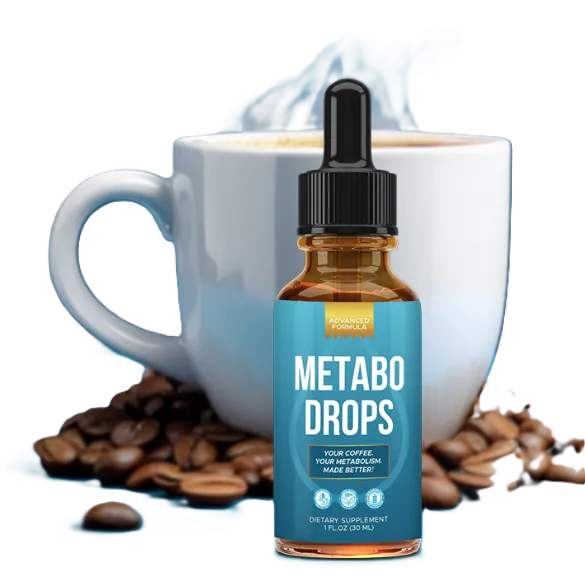
6 compounds, 4 metabolic pathways, 1 drop in your morning coffee — the full breakdown.
In This Article
What's Inside
Metabo Drops is a 6-compound formula organized into four converging metabolic pathways: metabolic core (Chlorogenic Acid + Camellia Sinensis Green Tea EGCG), fat oxidation (L-Carnitine + Chromium), appetite + focus (L-Theanine), and daily baseline (Vitamin Complex). Each compound has published research support; the synergy with caffeine (from your coffee) amplifies thermogenesis beyond what any single compound delivers alone. The honest gap: it’s a proprietary blend — per-compound milligrams aren’t disclosed on the label, so you’re trusting the formulator’s ratios.
THE CORE PROMISE
Every compound in the formula exists to address one of the four metabolic pathways that decline together with age. Most weight-loss drops pick one mechanism. Metabo Drops layers six compounds onto the coffee you’re already drinking — four pathways, one daily drop, no senna or laxatives. That’s the whole promise.
1. Full Ingredient List
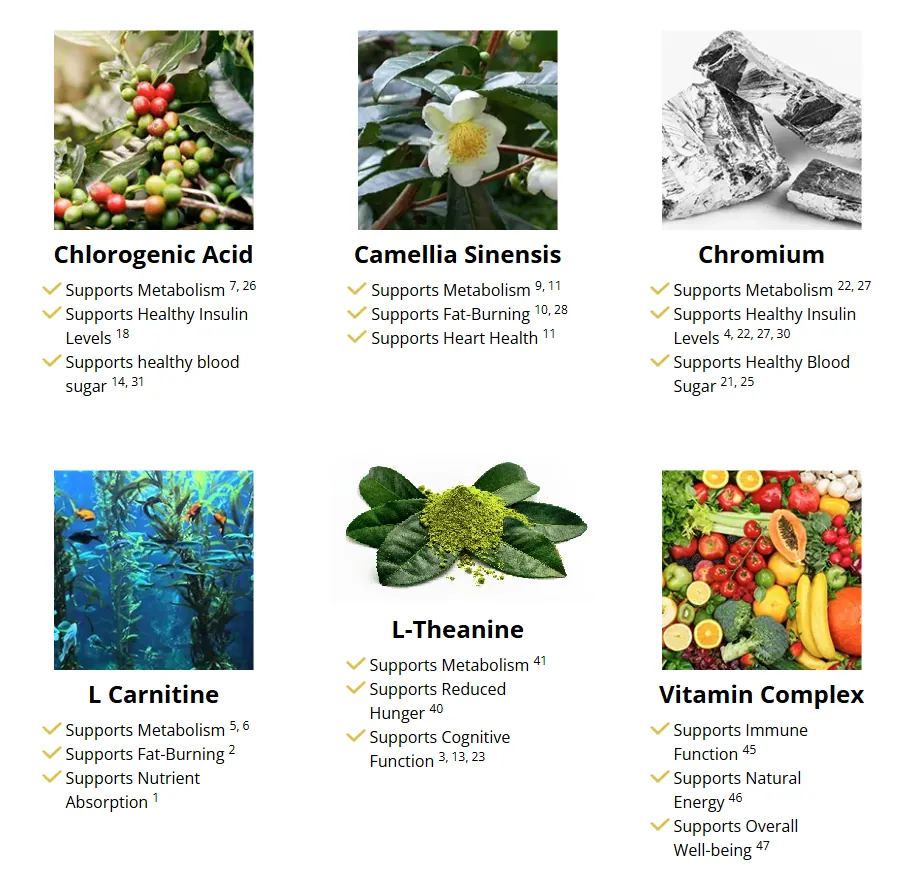
The full 6-compound formula, organized by pathway. Per-compound doses aren’t disclosed (proprietary blend — you trust the formulator’s ratios), but every ingredient is listed openly — no “proprietary detox blend” mask hiding what’s inside.
| Compound | Pathway | Primary role |
|---|---|---|
| Chlorogenic Acid | Metabolic core | The natural metabolic compound in coffee — supports glucose handling and fat oxidation |
| Camellia Sinensis (Green Tea) | Thermogenesis | EGCG catechins for fat oxidation; synergizes with caffeine for potentiated thermogenesis |
| Chromium | Insulin sensitivity | Trace mineral supporting glucose handling + reduced sugar cravings |
| L-Carnitine | Fat oxidation | Transports fatty acids into mitochondria for energy production |
| L-Theanine | Appetite + focus | Smooths the caffeine edge, calm focus, modest appetite suppression |
| Vitamin Complex | Daily baseline | Covers micronutrient gaps that compound into metabolic baseline weakness |
2. The Metabolic Core (Chlorogenic Acid + EGCG)
Chlorogenic Acid is the natural compound in coffee beans that’s actually responsible for the metabolic side of coffee — distinct from caffeine. The catch: brewing destroys most of it (it’s heat-sensitive), which is why coffee delivers maybe 20% of its potential metabolic value in a regular cup. The drops concentrate Chlorogenic Acid back into the brew. Research links it to glucose handling, fat oxidation, and metabolic baseline support — the same molecule behind “green coffee bean extract” products, but at a more reasonable concentration.
Camellia Sinensis (Green Tea Extract) delivers EGCG catechins for fat oxidation — meta-analyses show modest but statistically significant body composition support over 12 weeks of consistent daily intake. The key insight: EGCG and caffeine potentiate each other. The combination raises thermogenesis more than either does alone, which is why pairing the formula with coffee (rather than taking it separately) is the intended use case.
3. Fat Oxidation Layer (L-Carnitine + Chromium)
L-Carnitine transports fatty acids into mitochondria where they’re burned for energy. This is the established “fat metabolism” amino acid — meta-analyses support its role in body composition outcomes, particularly when paired with caffeine and any level of physical activity. The mechanism isn’t controversial; the dose is the proprietary-blend question.
Chromium is a trace mineral with moderate evidence for supporting insulin sensitivity and glucose handling. This is particularly relevant for the 11 a.m. sugar craving and the afternoon energy crash that mark insulin sensitivity declining with age. It’s not a magic compound; it’s a daily contributor to the insulin pathway most adults run worse on after 35-40.
4. Appetite + Focus Layer (L-Theanine + Vitamin Complex)
L-Theanine is the amino acid from green tea that smooths the caffeine edge — produces calm focus instead of jittery focus, and pairs with caffeine for the “alert but calm” state biohackers have been writing about for a decade. It also has modest appetite-suppressing properties documented in the literature. This is the compound most users notice within the first week.
Vitamin Complex rounds out the formula with daily micronutrient support — covering gaps that compound into metabolic baseline weakness. Most adults are mildly deficient in 2-3 micronutrients without realizing it, and even modest deficiency dims background well-being in ways most people don’t recognize until they correct it.
How the 6 Compounds Work Together
Across one drop daily, the four pathways layer rather than compete. The metabolic core (Chlorogenic Acid + EGCG) amplifies what coffee was supposed to deliver. The fat oxidation layer (L-Carnitine + Chromium) makes that thermogenic activity actually translate to fat being burned. The appetite + focus layer (L-Theanine + Vitamin Complex) handles the cravings and the calm focus that lets you stay consistent with whatever nutrition strategy you have.
The honest summary: it’s not a single-ingredient mega-dose. It’s six modest contributors that compound across 60-90 days of daily intake, leveraged by the caffeine you’re already drinking. Whether it works depends on three variables: coffee consumption consistency, baseline metabolic state, and the 60-90 day timeline being respected.
Pricing Options for Metabo Drops
Metabo Drops is available in three bundle options. The 2-bottle Starter is the minimum entry — that’s 60 days of supply, intentionally aligned with the early-signal evaluation window so a real test is possible from day one. Most users choose the 6-bottle bundle because the metabolic + thermogenic pathways need 60-90 days of consistent daily use to register. The 6-bottle bundle locks in $49 per bottle, includes free US shipping, and covers the full evaluation window plus 90 days of maintenance.
2 Bottles
60-Day Supply
- 60-Day Money-Back Guarantee
- Secure Checkout
Save $140 (60%)
Shop Now6 Bottles
180-Day Supply
- 60-Day Money-Back Guarantee
- Free US Shipping
- Best Per-Day Price
Save $888 (75%)
Shop Now3 Bottles
90-Day Supply
- 60-Day Money-Back Guarantee
- Secure Checkout
Save $384 (65%)
Shop NowEvery order is backed by a 60-day money-back. Only available through the official website.
Frequently Asked Questions
Why aren’t the per-compound milligrams listed on the Metabo Drops label?
Proprietary blend — common pattern in liquid-drops formulas. The manufacturer lists the 6 compounds openly but doesn’t disclose how many milligrams of each are in a single drop. The honest framing: you’re trusting the formulator’s ratios. This is the single biggest transparency gap in the product and the main reason the rating is 4.4 rather than 4.6+. Full-disclosure formulas (where every milligram is listed) are the gold standard — see Cardio Slim Tea for that approach.
Is the “patent-pending” claim verifiable?
USPTO patent records are public. The manufacturer claims a patent application is pending, but until granted (which takes 2-5 years for supplement formulas), “patent-pending” is a forward-looking marketing claim, not a quality indicator. The compounds themselves (Chlorogenic Acid, EGCG, L-Carnitine, Chromium, L-Theanine) are all well-known and unpatentable individually — what could be patentable is the specific ratio or delivery format. We treat the claim as marketing context, not a quality signal.
Any compound I should double-check with my doctor before using Metabo Drops?
Three deserve a quick conversation if you take prescription medication: Chromium can affect glucose handling (relevant if you take diabetes medication), L-Carnitine can interact with levothyroxine for some users (thyroid medication), and L-Theanine + caffeine can amplify blood pressure response (relevant if you take BP medication). None are absolute contraindications for healthy adults — they’re a 2-minute physician check-in if you’re on prescription therapy.
Continue your research
- Next: Metabo Drops side effects + interactions — full safety profile including the medication interactions flagged above
- Then: Does Metabo Drops really work? — the science behind each compound + realistic timeline
- Compare: Ikaria Juice — full label transparency formula (different mechanism, same evaluation framework)
- Deep dive: Chlorogenic Acid for metabolism — the coffee compound research in plain English
Research & Transparency
This content is based on publicly available ingredient research, manufacturer disclosures, and product labeling. We are not affiliated with the manufacturer.
(a) Chlorogenic acid and metabolic syndrome — review of glucose and lipid regulation outcomes. PMC3736972
(b) Green tea catechins (EGCG) and body composition — meta-analysis of randomized controlled trials. PMC2855614
(c) Chromium picolinate supplementation in type 2 diabetes — systematic review and meta-analysis. PubMed 24635480
(d) L-Carnitine supplementation for weight management — updated systematic review and meta-analysis. PubMed 31336249
(e) L-Theanine and caffeine cognitive interaction — effects on attention and mood. PubMed 18006208
About the Author
Emily Carter is a contributor at The Supplement Post covering brain and neuro health, blood sugar control, weight loss, and gut-focused formulas. She specializes in evidence-aware summaries of nootropic ingredients, metabolic supplements, and consumer-friendly explanations of how supplementation fits into broader cognitive and metabolic health strategies. Emily Carter is not a medical doctor — she analyzes publicly available research to provide evidence-aware summaries for adults exploring cognitive support, metabolic balance, and gut wellness options.
Disclosure
All content is for informational purposes only and is not a substitute for professional medical advice. Each product reviewed is a dietary supplement, not a prescription drug. Results may vary based on individual health status, consistency of use, and lifestyle. This page may contain affiliate links — if you purchase through them, we may earn a small commission at no additional cost to you. Read our Editorial Policy.