In This Review:
- 1. Product at a Glance
- 2. Memory, Focus & Mental Clarity After 50: Evidence, Concerns & Trends
- 3. What BrainCare Memory and Focus Does and Benefits
- 4. Why We Rate It 4.5 / 5
- 5. Who It's Best For
- 6. How It Compares
- 7. Pricing Options
- 8. The Mechanism + Full Ingredient List
- 9. Side Effects & Safety
- 10. Final Verdict
- 11. FAQs
Reviewed by The Supplement Post Editorial Team, Editorial Review
Updated
1. Product at a Glance
| Product | BrainCare Memory and Focus |
| Category | Brain & Neuro / Memory, Focus & Mental Clarity / Capsule |
| Format | Capsules — 60 per bottle, labelled “Cognitive Brain Formula”. The official page does not publish a serving size or per-ingredient doses. |
| Key Ingredients | Six named nootropics with no doses published: Ginkgo Biloba, Bacopa Monnieri and Acetyl-L-Carnitine carrying the evidence, plus DMAE Bitartrate, Taurine and Glutamine as supporting compounds |
| Manufacturing | GMP certified and made in the USA, with the certification badges shown on the official order page. The page does not publish per-ingredient doses, a serving size, or a third-party testing claim. Returns are 30 days and unopened only. |
| Guarantee | 30-day money-back |
| Our Rating | 4.5 / 5 |
Quick Verdict
BrainCare gets the hardest part right and the easiest part wrong. The hard part is ingredient selection, and here it is genuinely good: Ginkgo Biloba, Bacopa Monnieri and Acetyl-L-Carnitine are three of the most researched cognitive compounds in existence — Ginkgo has a meta-analysis of seven placebo-controlled trials across 2,684 patients, Bacopa has a systematic review showing improved recall, and ALCAR has a Cochrane review behind it. That is a coherent, stimulant-free, classic memory stack rather than a random list. The easy part it gets wrong is the paperwork: no doses are published anywhere — not per ingredient, not as a blend total, not even a serving size. That matters more here than usual, because Ginkgo’s benefit is explicitly dose-dependent in the research, reaching significance at 240 mg a day. Add three supporting ingredients whose cognitive evidence is honestly thin (DMAE, taurine, glutamine), packages labelled “Subscription Plan” without the recurring terms spelled out, and a return policy that is 30 days and unopened only — meaning that once you start the twelve-week course the research calls for, the money is spent. Manufacturing is the reassuring part: GMP certified and made in the USA. The net is a product whose ingredient list we like more than its disclosure. Worth considering if you want a classic Ginkgo-and-Bacopa formula and you decide before you open the bottle.
2. Memory, Focus & Mental Clarity After 50: Evidence, Concerns & Trends
Before the formula itself, here is what the evidence actually shows about memory and mental clarity after 50 — and what the numbers behind these particular ingredients require in order to work.
| The concern / trend | What the evidence shows | What it means for you |
|---|---|---|
| The everyday slips are usually not what people fear | Occasional word-finding trouble and misplaced keys are a normal part of cognitive ageing, and the biggest reversible contributors after 50 are sleep quality, chronic stress, medication effects and nutrient shortfalls (NIA/NIH guidance on age-related memory change). | Genuinely reassuring, and practical: several causes respond to things you can act on. A supplement is one lever among several — a useful one, not the whole answer. |
| Ginkgo has real evidence — and it is explicitly dose-dependent | A meta-analysis of seven randomized placebo-controlled trials in 2,684 patients found the standardized extract improved cognition, daily functioning and quality of life. The effect was dose-dependent and reached significance at 240 mg/day over 22–26 weeks. | This is the single best reason to take a Ginkgo formula seriously — and the single best reason to want the milligrams printed. “Contains Ginkgo” and “contains 240 mg of Ginkgo” are not the same claim. |
| Bacopa is the memory ingredient, on a twelve-week clock | A systematic review of randomized human trials found Bacopa monnieri improved memory recall. Every trial ran 12 weeks at 300–450 mg/day, and standardized extracts are what were tested — not raw powder. | Set your evaluation window at three months, not three weeks. And if you are comparing products, check whether the bacopa is standardized for bacosides. |
Where BrainCare fits: the classic, stimulant-free end of the memory-supplement category, built on the two botanicals with the deepest research behind them. It is a sound recipe. What it does not give you is the ability to check the amounts — and with Ginkgo especially, the amount is the whole story. Here is what the formula actually does.
3. What BrainCare Memory and Focus Does and Benefits
BrainCare goes after the everyday version of the problem: the name that will not come, the thread you lose mid-sentence, the afternoon where everything takes longer than it should. Six named nootropics in a 60-capsule bottle, stimulant-free, taken daily.
Here is the useful way to think about what a formula like this can and cannot address. Cognitive slips after 50 come from two different places. One is circulation and cellular energy — how much oxygenated blood reaches brain tissue and how efficiently those cells turn it into fuel. That responds to Ginkgo and to carnitine, and it moves over weeks. The other is consolidation — how well new information gets filed and retrieved later. That is bacopa’s territory, and it moves over months. A formula that touches both is aiming at the right two targets.
You know the everyday version well enough. Standing in a doorway trying to reconstruct why you came in. The colleague’s name that arrives forty minutes after you needed it. Reading the same page twice because the first pass did not land. None of it is alarming on its own, which is exactly why it goes unaddressed — and why it quietly chips at your confidence in meetings and conversations.
BrainCare’s answer is the classic one: Ginkgo Biloba for cerebral blood flow, Bacopa Monnieri for memory consolidation, and Acetyl-L-Carnitine feeding both mitochondrial energy and acetylcholine, the neurotransmitter most tied to learning. Around them sit DMAE, taurine and glutamine as supporting compounds. It is stimulant-free, so there is no jitter, no afternoon crash and no reason it cannot be taken alongside your coffee.
The honest sequence: weeks 1–2, little to nothing; weeks 3–6, where the Ginkgo and ALCAR side would show if the doses are adequate; weeks 8–12, where bacopa’s memory effect is measured in every trial that found one. And the caveat that runs through this whole review: because the amounts are not published, none of those windows can be predicted from the label — only from how you actually respond. What the six ingredients actually do →
4. Why We Rate It 4.5 / 5
BrainCare earns 4.5 / 5, and the reasoning splits cleanly in two. On the credit side, the ingredient selection is genuinely strong: Ginkgo Biloba, Bacopa Monnieri and Acetyl-L-Carnitine are three of the most thoroughly researched cognitive compounds available, with a meta-analysis, a systematic review and a Cochrane review respectively behind them. They target complementary mechanisms — blood flow, memory consolidation, and cellular energy plus acetylcholine — which is a coherent design rather than a shopping list. It is stimulant-free, which suits the audience, 60 capsules is a sensible format, and manufacturing is clean — GMP certified and made in the USA. What holds it in the regular band is the other half of the formula and the disclosure around it. Three of the six ingredients — DMAE, taurine and glutamine — rest on genuinely thin human cognitive evidence, so the effective formula is narrower than the list suggests. And while we do not mark a product down simply for keeping its ratios private, Ginkgo is the one ingredient where the research itself is dose-dependent: the meta-analysis found significance at 240 mg/day and not below, which makes an unpublished amount a real limitation on what anyone can promise. Judged on what it names, this is a sound classic memory formula. Judged on what it proves, it asks you to take more on trust than the better-documented options in this category do.
- Three genuinely well-researched ingredients. Ginkgo (meta-analysis of 7 RCTs), Bacopa (systematic review) and ALCAR (Cochrane review) are the real thing, not filler.
- Complementary mechanisms. Blood flow, memory consolidation, and mitochondrial energy plus acetylcholine — three different routes rather than one repeated.
- Completely stimulant-free. No caffeine, no jitters, no afternoon crash, and no conflict with your usual coffee.
- Simple format. 60 capsules, one bottle, no protocol or stack to manage.
- Meaningful volume discount. The per-bottle price drops from $52.50 to $42.50 across the buy-X-get-Y-free tiers.
- Direct US customer support listed on the site, with email and published phone hours.
- No doses published anywhere. Not per ingredient, not as a blend total, not even a serving size — so the amounts cannot be checked against the research.
- Ginkgo’s benefit is dose-dependent. The meta-analysis found significance at 240 mg/day; without a number on the label, that threshold is unverifiable.
- Half the list is thinly evidenced. DMAE, taurine and glutamine have little human cognitive research behind them compared with the other three.
- Packages are labelled “Subscription Plan” and the recurring terms are not spelled out on the offer page — read the checkout summary carefully before confirming.
- The 30-day return is unopened only. You cannot try it and send it back — so a formula that needs twelve weeks gives you no way to test it at the seller’s risk.
5. Who Is BrainCare Memory and Focus Best For?
Best match if you:
- Want a classic, stimulant-free Ginkgo-and-Bacopa formula rather than a caffeine-driven focus product.
- Are targeting everyday slips — word-finding, misplaced items, slower recall — rather than acute afternoon focus.
- Can commit to a twelve-week trial, which is the window the bacopa research actually uses.
- Read checkout pages carefully and are comfortable confirming the billing terms yourself before ordering.
- Prefer one simple bottle to a multi-capsule stack or a protocol.
6. How It Compares
Three routes to the same goal, and the honest deciding factor here is how much you want to be able to verify. All three are products we rate well.
| Criteria | BrainCare | Advanced Memory Formula | Neuro Sharp |
|---|---|---|---|
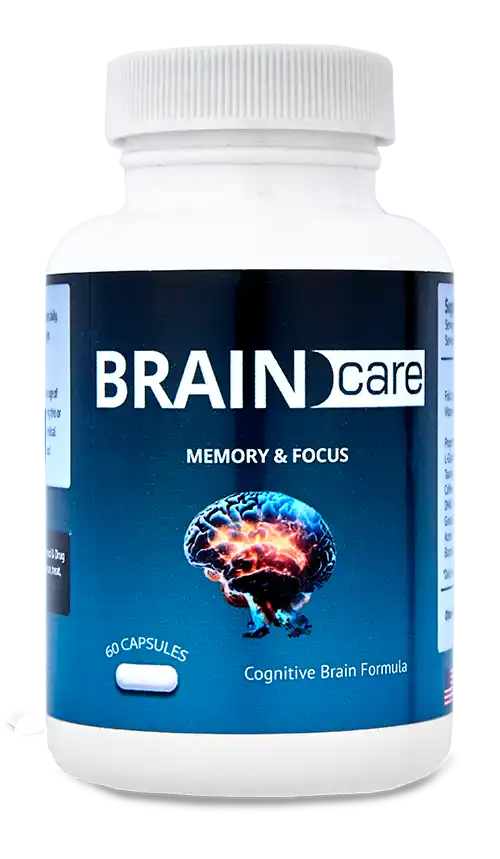 |
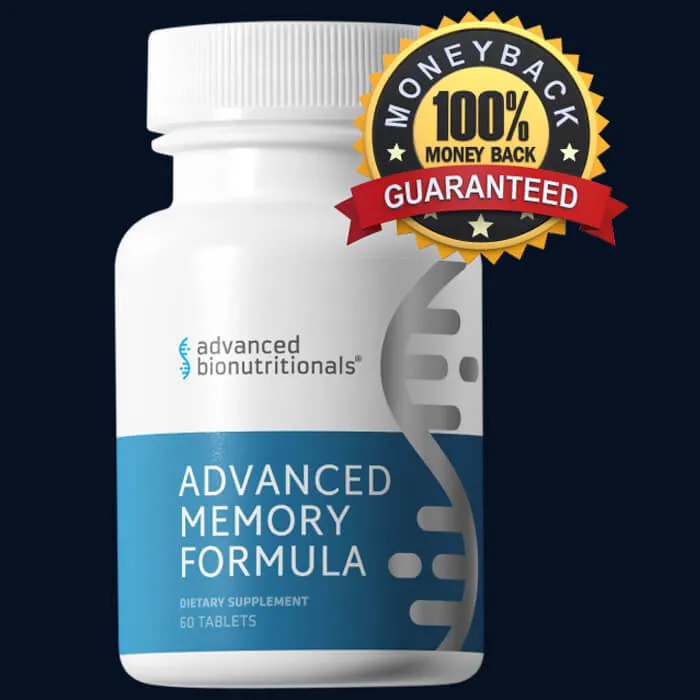 |
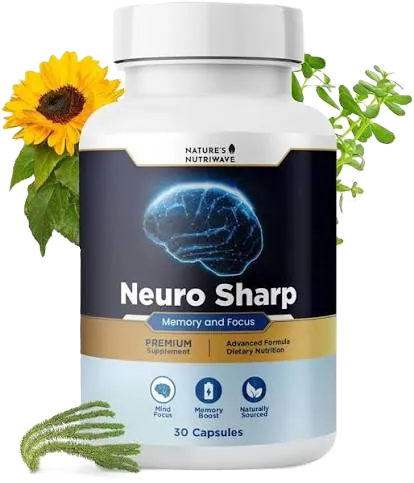 |
|
| Primary focus | Classic memory and clarity stack | Long-term memory and brain nutrition | Evidence-led daily nootropic |
| Doses published | No | Yes — fully open label | Yes — six disclosed |
| Stimulants | None | None | None |
| Best price | $42.50/bottle (7-pack) | See review | See review |
| Best for | A simple classic formula, bought with eyes open | Anyone who wants to check every milligram | Deepest-evidence ingredients only |
| Where to buy | Official Site → | Official Site → | Official Site → |
Advanced Memory Formula is the obvious pick if disclosure is what you care about — a fully open eleven-nutrient label answers precisely the objection we have raised here, and it is stimulant-free too. Neuro Sharp takes the minimalist route: fewer ingredients, all disclosed, chosen for depth of evidence rather than length of list. BrainCare’s own argument is different and still real: it is a classic Ginkgo-and-Bacopa formula, stimulant-free, at a low per-bottle price on the larger tiers. If you already know you want that recipe and you are comfortable buying without a dose panel, it does the job. None of these three is a runner-up — they are three answers to three different priorities.
Full reviews: Advanced Memory Formula · Neuro Sharp
7. Pricing Options for BrainCare Memory and Focus
Ginkgo's circulation effect can show in the first weeks, but Bacopa's recall benefit was measured at twelve weeks in every trial — so that is the mark the order should reach. Three bottles, priced as two, is the entry. Five bottles at $46.50 each carries you past the twelve-week mark with free shipping. Seven bottles at $42.50, priced as four, is the one we would take: it covers the window and the maintenance that follows.
3 Bottles
0-Day Supply
- 3 bottles for the price of 2
- Confirm recurring terms at checkout
- Secure Checkout
7 Bottles
0-Day Supply
- 7 bottles for the price of 4
- Confirm recurring terms at checkout
- Secure Checkout
5 Bottles
0-Day Supply
- 5 bottles for the price of 3
- Confirm recurring terms at checkout
- Secure Checkout
Backed by a 30-day money-back guarantee — note that it covers unopened product returned in its original container. The official site is the only channel that guarantees an authentic bottle and honors that refund.
8. The Mechanism: Why Six Nootropics, Not One
Six ingredients, three of which are doing the real work. Rather than pretend they are equal, here is the honest hierarchy.
Ginkgo Biloba — cerebral blood flow. The most substantial evidence in the bottle. A meta-analysis pooling seven randomized placebo-controlled trials across 2,684 patients found the standardized extract improved cognition, global assessment, daily functioning and quality of life over 22–26 weeks. Two details matter. First, the effect was dose-dependent and reached significance at 240 mg/day. Second, the trials used a standardized extract — typically 24% flavone glycosides and 6% terpene lactones — not generic leaf powder. Both details are invisible on this label.
Bacopa Monnieri — memory consolidation. The best-evidenced memory botanical there is, and the one that would justify a three-month commitment. A systematic review of randomized human trials found improved recall; a separate twelve-week trial in healthy elderly volunteers found gains in working memory and attention. Every one of those trials used 300–450 mg a day for twelve weeks. Bacopa works by accumulation, on the brain’s memory circuitry — there is no fast version of it.
Acetyl-L-Carnitine — energy and acetylcholine. The acetylated form crosses into the brain more readily than plain L-carnitine, and it contributes on two fronts: mitochondrial energy production, and the acetyl group used to build acetylcholine, the neurotransmitter most tied to learning and recall. A Cochrane review covers its use in cognitive decline; trials generally use 1,500–2,000 mg a day. Worth noting honestly: the evidence is stronger in age-related decline than in healthy adults.
DMAE, Taurine and L-Glutamine — the supporting cast. All three have a plausible biochemical story. DMAE is sold as a choline source for acetylcholine; taurine is genuinely important to the nervous system; glutamine is a precursor to glutamate and GABA. But plausible mechanism is not the same as demonstrated benefit, and the human cognitive trials for all three are thin. They are not a problem — they are simply not the reason to buy.
Run together, the design is sensible: open the circulation, feed the cells, and support consolidation. The gap is not the logic. It is that you cannot check whether the amounts match the studies the logic rests on.
What these terms actually mean:
- Standardized extract
- An extract guaranteed to contain a fixed percentage of its active compounds — the difference between orange juice and an orange. Clinical trials use standardized extracts; “powder” on a label does not tell you the strength.
- Dose-dependent
- The effect grows with the amount, and below a threshold there may be no measurable effect at all. Ginkgo behaves this way, which is why the milligrams matter more here than with some other ingredients.
- Acetylcholine
- The brain chemical most involved in learning and recall. Several ingredients here aim at it — ALCAR by supplying acetyl groups, DMAE in theory by supplying choline.
- Consolidation
- Filing a new memory so it can be retrieved later. It is a slow biological process, which is why bacopa trials run twelve weeks rather than twelve days.
Full Ingredient List
Six named ingredients, with no amounts published on the official page. Here is what each contributes, and — where the research is specific — the dose the studies actually used, so you can see what the label is not telling you.
| Ingredient | Pathway | Role in the Formula |
|---|---|---|
| Ginkgo Biloba | Cerebral blood flow | The strongest card in the deck. A meta-analysis of seven placebo-controlled trials in 2,684 patients found the standardized extract improved cognition, daily function and quality of life — and the effect was dose-dependent, reaching significance at 240 mg/day. Which is exactly why the missing dose here matters. |
| Bacopa Monnieri | Memory consolidation | The best-evidenced memory botanical available. A systematic review of randomized human trials found improved recall — in every case at 300–450 mg/day over 12 weeks. Standardization matters too: extracts standardized for bacosides are not interchangeable with raw powder. |
| Acetyl-L-Carnitine (ALCAR) | Mitochondrial energy / Acetylcholine | Crosses the blood-brain barrier more readily than plain L-carnitine and feeds both cellular energy and acetylcholine production. A Cochrane review covers its use in cognitive decline; trials typically use 1,500–2,000 mg/day. Evidence is stronger in age-related decline than in healthy adults. |
| DMAE Bitartrate | Acetylcholine precursor (theoretical) | Widely sold as a nootropic on the theory that it supplies choline for acetylcholine. Honest reading: the human cognitive evidence is thin and largely dated. It is not a reason to buy, and we would rather say so than pad the list. |
| Taurine | Neuroprotection / Calm | A genuinely important amino acid for the nervous system, with real neuroprotective research — but almost all of it is preclinical. Direct human evidence for taurine improving memory or focus is limited. |
| L-Glutamine | Neurotransmitter precursor | A precursor to glutamate and GABA, which is a real biochemical role. Whether supplementing it improves cognition in people who eat enough protein is a different question, and the evidence there is weak. |
Realistic Week-by-Week Timeline
Set expectations honestly on this one: it is a slow formula by design, with no stimulant to produce a same-day effect. The first meaningful window is the Ginkgo side at around three to six weeks, and the memory payoff is a twelve-week question.
| Timeframe | What to Expect | Driven By |
|---|---|---|
| Week 1-2 | Early days. If anything shows up this soon it is likely the circulation side — the Ginkgo — showing as slightly easier concentration. | Ginkgo Biloba |
| Week 3-6 | The window where Ginkgo’s cognitive effect and ALCAR’s energy contribution would become noticeable if the doses are adequate. | Ginkgo + ALCAR |
| Week 8-12 | Bacopa’s territory. Every trial showing improved recall measured it at twelve weeks, so this is the fair point to judge the memory side. | Bacopa Monnieri |
| Month 3+ | Whatever you have by now is what daily use maintains. Worth noting the return window closed long before this point — and it only ever covered unopened bottles. | Maintenance |
9. Side Effects & Safety
The named ingredients are widely used and generally well tolerated. Because no doses are published, the sensible approach is to start with the smallest package rather than committing to a large plan, and to know the two interactions that genuinely matter.
| Possible effect | Likely cause | What to do |
|---|---|---|
| Easier bruising or bleeding | Ginkgo has a mild antiplatelet effect | The most important one here. Speak to your doctor first if you take warfarin, clopidogrel or daily aspirin, and stop well before any scheduled surgery. |
| Stomach upset or cramping | Bacopa is well known for this on an empty stomach | Take the capsules with food. It usually settles within the first week. |
| Headache | Ginkgo, particularly in the first days | Stay hydrated; it typically passes. If it persists, stop and reassess. |
| Vivid dreams or restlessness | Individual response to ALCAR | Take the dose earlier in the day rather than in the evening. |
| Loose stools | Magnesium stearate and carnitine at higher intakes | Take with a meal and full water; usually transient. |
Worth a word with your doctor if you:
- You take a blood thinner — warfarin, clopidogrel or daily aspirin. Ginkgo’s antiplatelet effect is the clearest interaction in this formula.
- You have surgery or a dental procedure scheduled. Ginkgo is routinely stopped in advance for exactly this reason.
- You take an anticonvulsant. Ginkgo has been associated with reduced seizure threshold in case reports.
- You take thyroid medication. Carnitine can interfere with thyroid hormone action.
- Your memory is worsening over time, or others noticed before you did. That pattern needs assessment rather than a supplement — and several causes are treatable when caught early.
- Not for use under 18, or by women who are pregnant or nursing.
If none of that applies to you, there is no medical reason to hesitate — for most healthy adults this is well tolerated at the labeled dose.
10. Final Verdict
The phone lights up with a name you know perfectly well, and for two seconds the face won’t come with it. BrainCare is strong on what it contains, and quieter on what it discloses. The core three — Ginkgo Biloba, Bacopa Monnieri and Acetyl-L-Carnitine — are about as well-researched as cognitive supplement ingredients get, and they cover complementary ground: blood flow, memory consolidation, and cellular energy feeding acetylcholine. It is stimulant-free, simple to take, GMP certified and made in the USA, and priced sensibly on the larger tiers. As a classic memory recipe, the thinking is sound.
We would not be doing our job if we did not say the rest plainly. No doses are published — not per ingredient, not as a total — and Ginkgo is precisely the ingredient where the research says the amount decides the outcome. Three of the six ingredients carry little human cognitive evidence. The return window is 30 days and unopened only, which for a formula measured at twelve weeks means you cannot actually test it and change your mind. And the packages are labelled “Subscription Plan” without the recurring terms set out on the offer page. None of that makes it a bad product. All of it means you should buy it deliberately rather than casually.
Our recommendation — and the honest package math. This formula needs twelve weeks to show what it can do, because that is the window every bacopa trial used. That rules out any thought of a token trial. The 5-bottle plan at $46.50 a bottle ($232.50, free shipping) is the sensible middle and covers the evaluation window with room to spare. The 7-bottle plan at $42.50 ($297.50, free shipping) is the lowest per-bottle price and the one the brand pushes hardest. The 3-bottle tier at $52.50 plus $13.50 shipping is the most expensive per capsule and barely covers the window. Whichever you choose, do one thing first: read the checkout summary and confirm exactly what recurs and when before you enter payment details. With this product that is the single most valuable minute you will spend.
11. Frequently Asked Questions
Does BrainCare Memory and Focus really work?
Three of its six ingredients — Ginkgo Biloba, Bacopa Monnieri and Acetyl-L-Carnitine — are among the best-researched cognitive supplements there are, with meta-analyses and systematic reviews behind them. That is a genuinely sound foundation. The honest limitation is that no doses are published, and for Ginkgo in particular the evidence is explicitly dose-dependent (significant at 240 mg/day). So the ingredients are right; whether the amounts match the research is something the label would have to tell you, and it does not.
What are the ingredients in BrainCare Memory and Focus?
The official page names six: Ginkgo Biloba, Bacopa Monnieri, Acetyl-L-Carnitine, DMAE Bitartrate, Taurine and L-Glutamine. Sixty capsules per bottle. No individual amounts, no blend total and no serving size are published, which is why our formula score reflects the ingredients rather than the dosing.
How long does BrainCare take to work?
Judge it at twelve weeks, not two. That is where Bacopa’s memory evidence sits in every trial, and Ginkgo’s cognitive effect is measured over 22–26 weeks. If anything arrives sooner it is likely the Ginkgo circulation side. One practical consequence worth planning around: the 30-day return window covers unopened bottles only, so it closes long before you will know whether the formula worked for you.
Is BrainCare safe? Any side effects?
The named ingredients are commonly used and generally well tolerated. The interactions worth clearing first are real: Ginkgo can thin the blood, so speak to your doctor if you take warfarin, clopidogrel or daily aspirin, or if you have surgery scheduled. Bacopa can cause stomach upset if taken without food. As always with an undisclosed-dose formula, start conservatively.
Is BrainCare a subscription?
The packages on the official order page are labelled “Subscription Plan” — a 3-, 5- or 7-bottle plan. We would not tell you what recurs and how often, because the page does not spell it out. Read the checkout summary carefully before confirming, and keep the confirmation email. This is the single most important thing to check with this product.
Where can I buy BrainCare Memory and Focus?
Direct from the brand’s own funnel, which asks for your details before showing package selection. Note that a similarly designed “BrainCare” capsule from a different distributor circulates on marketplaces with a different formula — see our pricing page for how to tell them apart.
INGREDIENT TAGS
FORMAT
Research & Transparency
This content is based on publicly available ingredient research, the product’s published ingredient list, and manufacturer disclosures. We are not affiliated with the manufacturer. Marketing claims not supported by the product’s own label are not repeated here.
(a) Ginkgo biloba for cognitive impairment and dementia — Cochrane systematic review. Cochrane Database of Systematic Reviews 2026
(b) Comparative effects of Bacopa monnieri and Ginkgo biloba on cognitive function — systematic review. Phytomedicine 2026
(c) Memory — the reference we use for what normal age-related change looks like and when it warrants a doctor. MedlinePlus / NIH
(d) What we know about healthy aging — the agency read on what actually holds up cognition over time. NIH / NIA
About the Author
Luciano Andreoti is a contributor at The Supplement Post, supporting the production of evidence-aware supplement reviews and buyer's guides across multiple health categories. His work spans ingredient analysis, formulation assessment and consumer-oriented summaries — what a label discloses, how the stated doses compare with the amounts used in published human research, and whether a formula's design matches what it claims to do. Every review is checked by The Supplement Post editorial team against the standards published in our editorial policy before it goes live.
Disclosure
All content is for informational purposes only and is not a substitute for professional medical advice. Each product reviewed is a dietary supplement, not a prescription drug. Results may vary. This page may contain affiliate links — if you purchase through them, we may earn a small commission at no additional cost to you. Read our Editorial Policy.