
Why Menopause Belly Fat Is Different from Every Other Kind You've Carried
The belly fat that shows up during menopause doesn't behave like any fat you've carried before. It's not a willpower failure or a sign you've gotten lazy. Three biological shifts — estrogen decline, gut microbiome change, and cortisol sensitivity — literally rewrite where your body stores fat. Here's what actually changed.
The estrogen, gut, and cortisol shifts that turn stable weight into stubborn belly fat after menopause.
In this guide:
You did the things that always worked. Cut back on the bread, walked more, skipped dessert for two weeks. Before menopause, that would have shown up at the waistline within days. Now the scale doesn't move and the belly — specifically the belly, in a way that feels different from anything before — stays. You're not doing it wrong. The rules changed.
Menopause belly fat is a genuinely different phenomenon from the weight you carried in your 20s, 30s, or even early 40s. Understanding why is the first step to addressing it with strategies that actually match the biology. (If you're past the "why" and want the supplement options, see our guide to supplements for menopause weight gain.)
What's Actually Different About Menopause Belly Fat
The honest version, in 40 seconds
Menopause belly fat is visceral fat (wrapping organs), driven by three shifts that happen independent of calorie intake: estrogen decline redirects fat storage from hips to abdomen; gut microbiome changes alter calorie extraction and inflammation; and cortisol sensitivity rises, parking more fat at the waist. The same diet that kept you stable at 40 stores fat differently at 50. It's biology, not discipline.
Two things make menopause belly fat distinct. First, it's predominantly visceral — the deep fat that wraps around your organs, rather than the subcutaneous fat you can pinch. Visceral fat is metabolically active, harder to lose, and more dangerous (associated with cardiovascular disease, insulin resistance, and metabolic syndrome).
Second, it accumulates through hormonal and metabolic shifts that operate independent of how much you eat. You can be eating exactly what you ate at 40 and still gain belly fat at 50, because the storage rules themselves changed. This is why the old "calories in, calories out" framing fails so many women during this transition.
The Estrogen Shift (Why Fat Moves to Your Middle)
Estrogen does more than regulate reproduction — it directs where your body stores fat. Throughout your reproductive years, higher estrogen favored fat storage in the hips, thighs, and buttocks (the "pear shape"). This was evolutionarily protective for pregnancy and breastfeeding.
As estrogen declines through perimenopause and menopause, that directional signal weakens. Fat storage shifts toward the abdomen — the "apple shape" that's more typical of male fat distribution. This isn't extra fat necessarily; it's the same fat relocating to a more dangerous, more visible, harder-to-lose compartment.
The shift is gradual and often starts in perimenopause (your 40s), years before menstruation actually stops. Many women notice their body "changing shape" before they connect it to hormonal transition.
The Gut Microbiome Shift
Less discussed but increasingly documented: the gut microbiome changes composition during menopause. Estrogen influences the gut bacterial population (there's even a term — the "estrobolome" — for the bacteria that metabolize estrogen). As estrogen falls, the microbiome shifts.
The post-menopausal microbiome tends toward composition patterns that: extract more calories from the same food, promote more low-grade inflammation, and produce less of the beneficial short-chain fatty acids that support metabolic health. Research has linked specific strains — including reduced Akkermansia and Lactobacillus populations — to the menopausal metabolic shift.
This is why probiotic strategies (re-introducing L. Gasseri, L. Rhamnosus, Akkermansia) have emerged as a relevant intervention for menopausal weight specifically — they address a layer that diet and exercise alone don't touch.
The Cortisol Connection
The third shift is cortisol. Menopause is associated with increased cortisol sensitivity and, often, disrupted sleep (hot flashes, night sweats). Cortisol — the stress hormone — specifically promotes visceral fat storage at the abdomen.
It's a vicious loop: poor menopausal sleep raises cortisol, elevated cortisol parks fat at the waist and disrupts sleep further, and the belly fat itself produces inflammatory signals that worsen the whole cycle. Many women find that addressing the cortisol/sleep component — through adaptogens, stress management, and sleep hygiene — unlocks weight loss that diet alone couldn't budge.
Why the Old Diet Stopped Working
Three shifts that happen independent of what you eat:
This is visceral fat wrapping the organs — not the subcutaneous fat the diets that used to work were built around.
What Actually Responds (When Old Diets Don't)
Because menopause belly fat is driven by three distinct mechanisms, the strategies that work are the ones that target those mechanisms rather than just cutting calories:
For the gut microbiome shift, multi-strain probiotic supplements that re-introduce the strains studied for menopausal metabolic health (L. Gasseri, L. Rhamnosus) address the layer that diet can't reach directly:
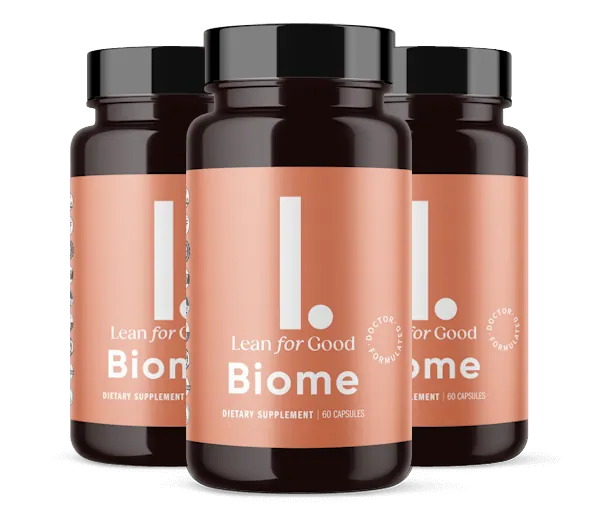
LeanBiome
Best multi-strain probiotic for belly fatA 9-strain probiotic capsule anchored by L. Gasseri + L. Rhamnosus — for people whose belly fat won't move and suspect the gut microbiome is part of the story.
- 8,500+ verified buyers
- 180-day money-back guarantee
Current pricing and bundle options are shown on the official site.
For the cortisol component — if your dominant pattern is stress, ragged sleep, and the sense that tension is keeping the weight on — adaptogenic support helps the stress axis recover:

Nagano Tonic
Best for cortisol belly + stress weightA Japanese-inspired adaptogen + thermogenic powder built around Ashwagandha + Eleuthero + Green Tea — for the cortisol weight that diet alone never moves.
Check the Latest Price →For the full breakdown of supplement options matched to each menopausal pattern — including the brown-fat / visceral approach — see our complete guide to supplements for menopause weight gain. And for the estrogen layer specifically, talk to your physician about whether HRT is appropriate — it's the most-studied intervention for the hormonal driver.
FAQs
Why do I gain belly fat during menopause even without eating more?
Estrogen decline is the main driver. As estrogen falls, your body shifts fat storage from hips and thighs (the estrogen-favored pattern) to the abdomen (visceral fat). This redistribution happens independent of calorie intake — the same diet that kept your weight stable at 40 stores fat differently at 50. Add gut microbiome shifts and increased cortisol sensitivity, and you get the menopause belly fat pattern that doesn't respond to old strategies.
Is menopause belly fat harder to lose?
Yes, for two reasons. First, it's mostly visceral fat (wrapping organs), which is metabolically stubborn and more dangerous than subcutaneous fat. Second, the hormonal environment that's driving it doesn't reverse with standard 'eat less, move more' approaches. It responds to mechanism-targeted strategies — addressing the gut microbiome shift, the cortisol elevation, or the visceral fat pathway directly — rather than generic calorie restriction.
Will hormone replacement therapy (HRT) fix menopause belly fat?
HRT can help with the estrogen-driven component, and studies show it reduces visceral fat accumulation in many women. But it doesn't address the gut microbiome shift or cortisol component directly. Many women use HRT (under medical supervision) for the hormonal layer plus targeted supplements for the metabolic layer. Talk to your physician about whether HRT is appropriate for your situation.
What supplements help with menopause belly fat specifically?
Three approaches with relevant research: probiotic strains (L. Gasseri, L. Rhamnosus) for the menopausal gut microbiome shift; adaptogens (Ashwagandha, Eleuthero) for the cortisol component; and brown-fat activators (Fucoxanthin, Resveratrol) for the visceral fat pathway. The right one depends on which mechanism is most active in your case. Avoid stimulant-heavy fat burners — they worsen menopausal sleep and anxiety.
When should I see a doctor about menopause weight gain?
If weight gain is rapid or unexplained, if menopausal symptoms (sleep, mood, hot flashes) are significantly disrupting your life, or if you have cardiovascular risk factors, see your physician. Rapid visceral fat accumulation is a clinical signal worth evaluating. HRT and other medical interventions are appropriate for more women than the outdated 2002 study guidance suggested.
Final Thoughts
Menopause belly fat is different because the biology that creates it is different. Estrogen decline relocates fat to your middle. The gut microbiome shifts toward calorie extraction and inflammation. Cortisol sensitivity rises and parks fat at the waist. None of these respond to the "eat less, move more" approach that worked before — because none of them are about how much you eat.
The strategies that work target the actual mechanisms: probiotics for the gut shift, adaptogens for cortisol, brown-fat activators for the visceral pathway, and (under medical supervision) HRT for the estrogen layer. You're not failing. The rules changed — and so should the approach.
This connects directly to what actually works for belly fat after 40 and the gut-bacteria link to weight gain.
Recommended Products
Reviewed by: The Supplement Post Editorial Team, Editorial Review — Last updated:
About Luciano Cesar
Luciano Cesar is a contributor at The Supplement Post, supporting the production of evidence-aware supplement reviews and buyer's guides across multiple health categories. His work spans ingredient analysis, formulation assessment and consumer-oriented summaries — what a label discloses, how the stated doses compare with the amounts used in published human research, and whether a formula's design matches what it claims to do. Every review is checked by The Supplement Post editorial team against the standards published in our editorial policy before it goes live.
Disclosure
All content on The Supplement Post is for informational purposes only and is not a substitute for professional medical advice, diagnosis, or treatment. Each product is a dietary supplement, not a prescription drug; statements about its benefits have not been evaluated by the U.S. Food and Drug Administration (FDA) and the product is not intended to diagnose, treat, cure, or prevent any disease.
Results may vary based on individual health status, consistency of use, and lifestyle. If you are pregnant or nursing, taking medication, or have a medical condition, consult a qualified healthcare professional before using any supplement.
This page may contain affiliate links—if you purchase through them, The Supplement Post may earn a small commission at no additional cost to you. References to third-party sites are provided for convenience; we do not control or guarantee their content.