
Trend Check
Baking Soda for Bloating: Does the Glass of Water Trick Really Calm a Swollen Belly After Meals?
The trick is half a teaspoon in a glass of water after a meal. Here is how people do it, and what to add for a belly that stays calm day after day.

How do people use baking soda for bloating?
You came for the method, so it goes first. About half a teaspoon of baking soda is stirred into a glass of water and sipped slowly after a meal. Some people add a squeeze of lemon. That is the whole thing, and it costs pennies.
It is easy to see why it spreads. You know the moment: the plates are cleared, the waistband feels tight and your belly looks a few months further along than it did at noon. A quick kitchen fix you already own is the first thing that sounds worth a try.
Does baking soda in water help a bloated stomach?
Does the glass help a bloated stomach? Yes, it is a habit worth keeping: you stop, you sip, you slow the end of the meal down, and that alone feels better. Bloating also has to do with what gut bacteria do with your food, so the right ingredients build on it.
The key point Keep the slow glass after meals, and add a ten-minute walk after dinner. In the morning, take one capsule of chicory fiber, resistant starch and three gut strains with your glass of water. That is the routine that builds a calmer belly. Luciano Cesar, Content Contributor
By the numbers
1
capsule a day, taken with a glass of water
3
named gut strains, so you know what you are feeding
211 mg
of chicory root inulin, the fiber those bacteria eat
Week 3
when many people notice the first shift
How to boost baking soda for bloating and a calmer gut
How do you boost the baking soda glass for bloating? Start with what the ritual already does. It slows the meal down, it puts water in your hands and it tells your body the day can ease off. All of that stays.
The glass is your after-meal moment. What keeps the belly calm from one day to the next is the fiber and the bacteria, and that is what a good capsule adds.
The fuel. Chicory inulin is a fiber that reaches the lower gut and feeds the bacteria there. A 2024 review of randomized trials in the American Journal of Clinical Nutrition* linked it to better weight management.
The steady supply. Resistant starch, the kind in cooled potatoes and green bananas, is digested slowly by gut bacteria. A 2026 systematic review in Food & Function* looked at its role in feeling full and in gut health.
The bacteria. A 2023 review of 81 randomized trials in Nutrients* found that three probiotic strains and two mixtures eased bloating in adults with irritable bowel syndrome.
The calm. Clostridium butyricum, a strain that helps the gut make its own fuel, was followed for eight weeks in 205 adults with IBS in a 2025 study in Microorganisms*. Their bloating scores improved by more than half.
That is the effect you were reaching for with the glass. We found a supplement that meets our quality criteria and offers exactly this combination of ingredients. Sodatide puts it in one capsule. It combines chicory inulin and potato resistant starch with Bifidobacterium infantis, Clostridium butyricum and Akkermansia muciniphila, taken with a glass of water.
What to add to your after-meal glass
Here is the capsule that goes with your after-meal glass. It keeps the habit you came for and adds the fiber and the bacteria that work on bloating.
Sodatide
The goal behind the baking soda glass: a calmer belly after meals
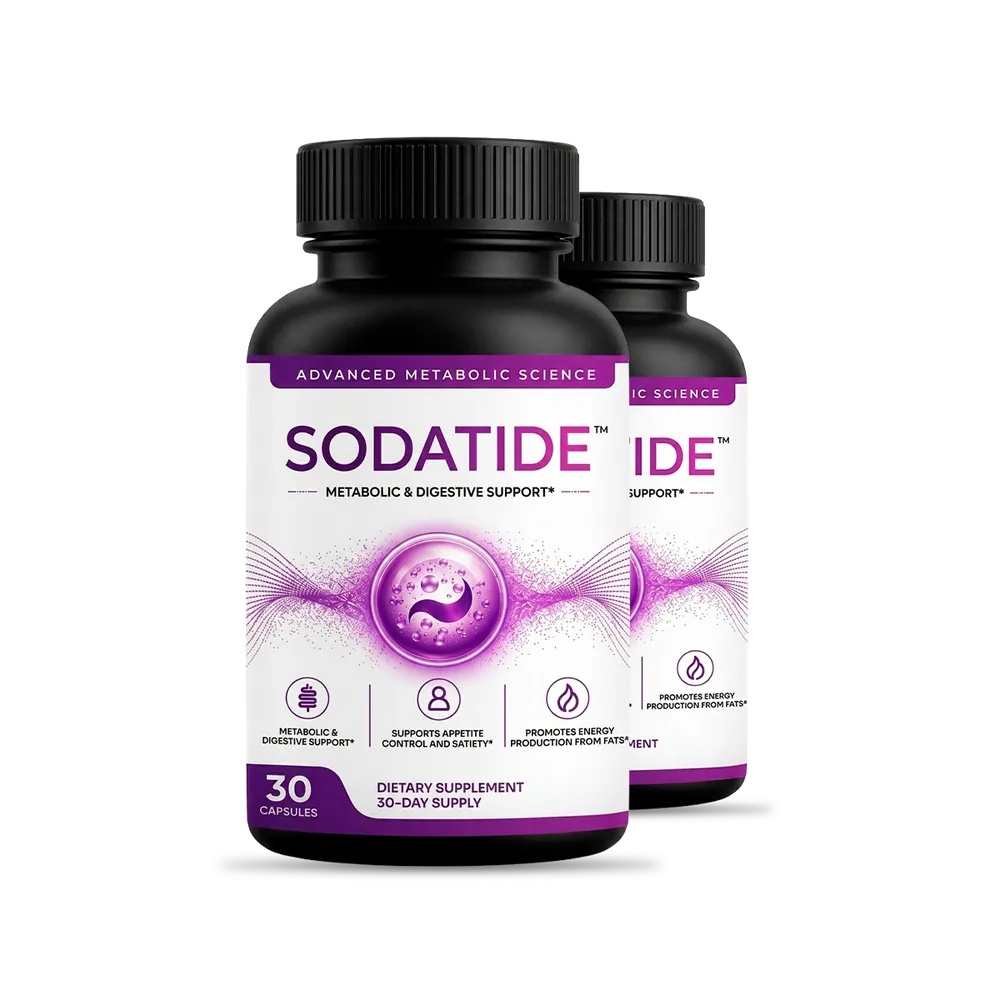
It keeps the glass of water and the small habit around the day. What changes is what goes in. One capsule carries chicory root inulin (211 mg) and potato resistant starch (100 mg), two fibers that feed gut bacteria, plus a 36 mg blend of three named strains: Bifidobacterium infantis, Clostridium butyricum and Akkermansia muciniphila. No stimulants, one capsule a day, no mixing, and sixty days to decide.
Look elsewhere if: You would rather not take a daily capsule. A drink-only routine, with a slow glass of water after meals, fits you better.
Is it worth trying for bloating?
Is it worth trying for bloating? Yes, if you want the goal behind the glass working every day. That means a belly that stays flat after dinner, less gas to plan around and a waistband you stop thinking about.
Picture the jeans that close without a breath held in, the dinner out where you finish the plate, and the evening you only notice later that you forgot to check your stomach. Those are the small wins people describe first.
Keep the slow glass after meals. Add the morning capsule, and the routine works on both ends: the pause that helps you digest, and the fiber and bacteria that keep the gut calm between meals.
It is worth testing because the research is there. The probiotic review in Nutrients* and the Clostridium butyricum study in Microorganisms* followed bloating in adults with IBS. The chicory inulin review in the American Journal of Clinical Nutrition* and the resistant starch review in Food & Function* looked at weight and feeling full. A capsule like this is a daily helper: it adds to what you eat, how you sleep and how you handle stress.
And the pace varies from person to person. Diet, stress, sleep and where your gut starts all shape how quickly the first change shows, and the 60-day guarantee gives you room to notice it.
Frequently asked questions
How do you use baking soda for bloating?
Most people stir about half a teaspoon of baking soda into a glass of water and sip it slowly after a meal. Some add a squeeze of lemon. Keep the glass small, and give it a few minutes before you stand up and move around.
Does baking soda in water really get rid of bloating?
Yes, many people find it a good way to end a meal, and the pause helps. For a belly that stays calm day after day, add what feeds the gut bacteria that work on your food: fiber and probiotic strains.
What causes a swollen belly after eating?
A few things often work together: eating fast, swallowing air, large meals, and gut bacteria breaking down some of what you ate. Slowing down, walking for ten minutes after dinner and keeping the gut bacteria well fed all fit into the same routine.
What is in Sodatide, and what does each ingredient do?
Each capsule carries chicory root inulin (211 mg) and potato resistant starch (100 mg), two fibers that travel to the lower gut and feed the bacteria there. A 36 mg probiotic blend adds three named strains: Bifidobacterium infantis, Clostridium butyricum, which helps the gut make its own fuel, and Akkermansia muciniphila. Take one capsule a day with a glass of water, ideally in the morning before a meal. A 60-day money-back guarantee backs every order.
Is baking soda for bloating safe, and when should I talk to a doctor?
Baking soda is a common kitchen ingredient, and a small glass now and then is fine for most people. If you take medication, have a health condition or are pregnant, check with your doctor before starting any supplement.