
Ingredient Check
Copper Peptides for Hair Growth: Do They Actually Work for Thinning Hair?
You gave biotin its six months. Copper peptides are the next name in every thread about thinning hair, so here is what GHK-Cu actually is, what the research behind it covers, and where a daily scalp serum fits.
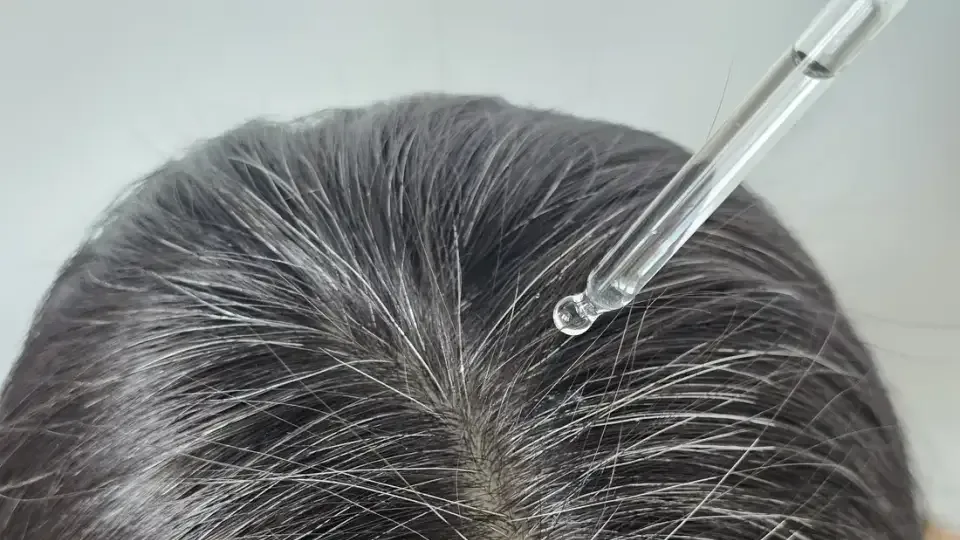
How copper peptides (GHK-Cu) work on the scalp
You noticed it at the part. The line that used to be a line now has width to it, and the ponytail takes an extra wrap of the elastic. You bought the biotin, you took it for months, and the drain looked the same. That is usually the point where someone starts reading about peptides.
GHK-Cu is short for glycyl-L-histidyl-L-lysine bound to copper. It is not a marketing coinage. It occurs naturally in human plasma, and it is one of the signals the body uses while skin repairs itself, asking nearby cells to build collagen and the structural material that holds tissue together.
That matters for hair because a follicle is not a separate organ. It sits inside skin and it is fed by the tissue around it. A follicle that has slowed down is a tissue question before it is a hair question, and a copper peptide speaks the language that tissue already uses.
The key point A copper peptide is a message, not a medicine. It does not force a follicle to grow. It asks the tissue around it to behave the way it does when it is rebuilding, which is why the delivery format matters as much as the molecule. Luciano Andreoti, Content Contributor
By the numbers
4
named actives in the dropper: the peptide, plus three that work on the scalp around it
4,000 mcg
biotin delivered to the scalp with zinc and silica, rather than swallowed
from wk 2
when the first reported change shows up, and it is less loss before it is new growth
90 days
money-back window on the serum, with no return required
What the research on copper peptides actually shows
GHK is well documented — but the file is uneven, and the unevenness is the most useful thing in it. Here is the honest read:
The Evidence
- The decline it's built on is real, and measured. Researchers at the University of Washington reported in 2020 that GHK circulates in human plasma and that the level falls with age — from roughly 200 nanograms per millilitre at twenty to about 80 by sixty. That drop is where the whole idea comes from: put back a signal the body is making less of.
- The strongest evidence is for tissue repair, not for hair. GHK bound to copper has been studied for wound healing and for the collagen and structural material skin rebuilds itself with. That is the body of work a scalp serum borrows from, and it borrows honestly, because a follicle lives in skin — but it is borrowing.
- Putting it on skin is a young field of its own. A 2025 pharmaceutical review in BioImpacts maps what applying GHK to skin does, the formulation problems that come with it, and where the work is heading — and is candid that the clinical file is still being built, even for the uses the molecule is best known for.
- The supporting ingredient is further along than the star. A 2024 review of dermal delivery strategies lists barrier protection among niacinamide's established benefits. In scalp terms that is making sure the ground is in decent condition before you plant anything in it.
That is the fair frame for a hair serum: a mechanism worth trying, rather than a settled result. The molecule is real, the decline is real, and the repair work is real — what is still being written is the part that connects all three to a fuller head of hair.
Copper peptides vs minoxidil and biotin: what actually differs
Three different things get recommended for the same complaint, and they are not the same kind of thing at all.
| Route | What it is | What it is aimed at |
|---|---|---|
| Copper peptide (GHK-Cu) | A signal molecule applied to the scalp and left in | The tissue around the follicle. Drug-free and hormone-free |
| Biotin | A B vitamin, usually swallowed | A nutrient gap, when one actually exists |
| Minoxidil | A pharmacy drug with its own directions | The growth phase, on a schedule you keep to indefinitely |
Biotin is the one most people have already tried, and it is worth knowing why it so often does nothing. A 2026 review in Clinics in Dermatology by Antonella Tosti, one of the field's authorities on hair loss, puts it plainly: vitamins improve hair in people who are genuinely deficient, and benefit in people whose levels are already normal has not been established. If your biotin did nothing, that is the likeliest reason. It was answering a question your body had not asked.
Before you try a copper peptide serum, rule this out first
This is the most useful thing on the page, and nobody selling you a bottle leads with it. A topical serum cannot reach a nutrient problem. If your hair is thinning because your iron stores are low, the serum is working against a headwind it cannot see.
Iron gets missed most often, because a standard blood count can read normal while stores are low. A 2025 cross-sectional study of women at the Sri Ramachandra Institute found ferritin significantly lower in those with telogen effluvium, the diffuse shedding pattern: 24.3 ng/mL against 44.8 in the comparison group.
So ask for three numbers before you buy anything: ferritin, TSH and zinc. It is an ordinary panel, your doctor orders it without drama, and it turns "I don't know why this is happening" into something you can act on. If they come back clean, a serum is a sensible next step and you will know you are treating the right thing. If one of them is off, you have found something a bottle was never going to fix.
What to look for in a copper peptide hair serum
The label tells you most of what you need, if you know which four things to read for.
- It names the peptide. "Copper Tripeptide-1" or "GHK-Cu" tells you exactly what you are buying. "Peptide complex" tells you nothing, and it is the phrase a formula reaches for when there is very little of the real thing.
- It is leave-in, not rinse-off. A shampoo or a conditioner is down the drain in under two minutes. A signal aimed at tissue under the skin has to stay on the skin.
- Something supports the scalp, not just the follicle. An irritated, flaking scalp makes a struggling follicle work harder. Ingredients aimed at that environment earn their place next to the peptide.
- The window is long enough to judge by. Hair grows in cycles measured in months. A thirty-day guarantee closes before the question has an answer.
One thing worth clearing up, because search results mix them together: a scalp peptide serum is not the same category as a nail treatment. Our reviews of ProNail Complex and the Orivelle Fungus Pen cover toenails, and neither is interchangeable with something you leave on your head.
The terms that matter
- GHK-Cu (copper tripeptide-1)
- A chain of three amino acids your body already makes, carrying a copper atom. It acts as a repair signal: where tissue needs rebuilding, GHK-Cu is part of how the body says so. The level in your blood falls steadily from your twenties onward, which is the reason anyone thought to put it back on the outside.
- Anagen and telogen
- The two phases of a hair's life. Anagen is the growing phase, which can run for years; telogen is the resting phase before the hair lets go. Every scalp has hairs in both at once — thinning is what it looks like when the balance shifts toward resting.
- Telogen effluvium
- A temporary shed that happens when stress, illness, childbirth or a crash diet pushes a large batch of hairs into the resting phase at the same time. It looks alarming and usually reverses on its own — which is why it is worth ruling out before you spend months on a serum.
- Niacinamide
- A form of vitamin B3 used topically to keep the skin barrier in working order. On a scalp it is the unglamorous half of the formula: it is not trying to grow anything, it is trying to make the ground less hostile.
- Minoxidil
- The over-the-counter drug most hair products get compared to. It works by a different route — widening blood vessels and extending the growing phase — and it has the clinical file a peptide serum does not. It also has to be used forever, and stopping undoes it.
How Crowned uses GHK-Cu in its daily scalp serum
Crowned is built around the peptide rather than around a vitamin. It is a dropper applied once a day to a dry or towel-dried scalp and left in, with four named actives doing four different jobs.
Copper Tripeptide-1 is the signal aimed at the follicle itself. Niacinamide works on the scalp around it, calming the irritation that makes a slowed follicle work harder. Panthenol keeps fine new growth from snapping before it has any real structure. And biotin at 4,000 mcg, delivered to the scalp with zinc and silica instead of swallowed, is aimed at the strand once it is actually growing.
The timeline the manufacturer describes is modest rather than dramatic, which counts in its favour: less hair in the drain from roughly week two to four, fine new strands from about week four to eight, and density building over the months after that. There is no minoxidil in it and nothing hormonal. Our full Crowned review breaks down each active, the honest limits of the evidence and what the 90-day guarantee actually covers.
Which copper peptide serum is worth trying
Most of what is sold for thinning hair is swallowed, or it rinses off. This is the one we have reviewed that puts a named copper peptide on the scalp and leaves it there.
Crowned Peptide Hair Regrowth Serum
Leave-in GHK-Cu serum, for a widening part and shedding that started after pregnancy, hormonal change or stress
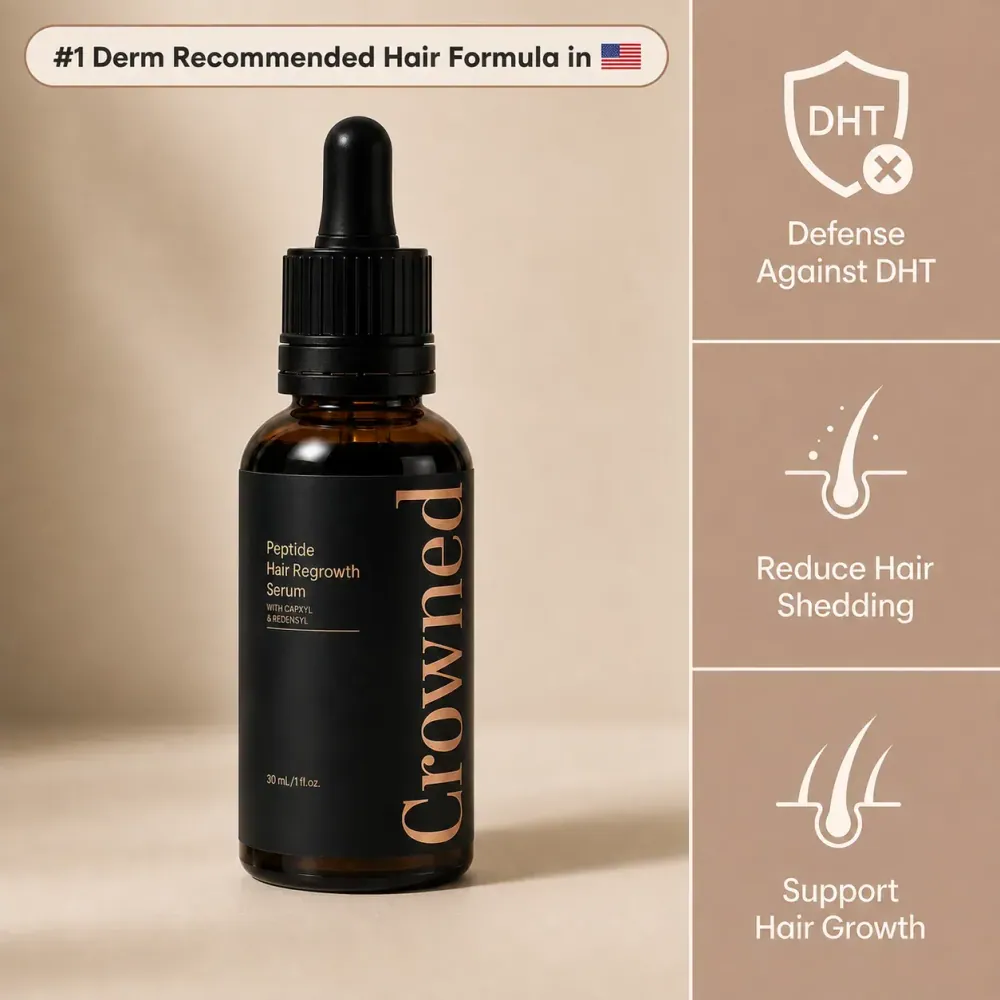
Crowned puts Copper Tripeptide-1 where the follicle actually is, and pairs it with niacinamide for the scalp, panthenol for the new strand, and 4,000 mcg of topical biotin with zinc and silica. It is drug-free and hormone-free, which is the whole point for anyone who does not want a daily pharmacy commitment. The guarantee runs 90 days with no return required, which covers the full window the manufacturer's own timeline describes.
Look elsewhere if: your hair is coming out in defined patches, or the shedding started suddenly and in handfuls. That pattern needs a clinician rather than a serum, and a blood panel will answer it faster.
Is it worth trying copper peptides for hair growth?
Think about what you actually want back. Putting your hair up without turning to check the crown in the second mirror. Sitting under a restaurant's overhead light without doing the maths about it. Getting a photo back from a friend and looking at your face first. None of that is vanity, and none of it needs your hair to be what it was at twenty-two.
Here is the honest frame. A peptide serum is a potentiator, not a switch. It does not overrule your iron, your thyroid or your genetics. What it does is give a follicle that has slowed down a better signal to work with, and keep the scalp around it calm enough to answer. Used that way it tends to earn its place. Expected to behave like a drug, it will disappoint.
What makes it worth the attempt is that the ground is not empty. The Washington group's 2020 work established GHK as something your own plasma carries and makes less of over time. The 2025 BioImpacts review maps what topical application does and where the science is going. The niacinamide beside it has a 2024 dermal delivery review behind its role in barrier protection. None of that was run on one specific bottle. It is enough to say the attempt is informed rather than hopeful.
And the answer is yours, not an average. Hair that thinned after a pregnancy behaves differently from hair thinning on a hormonal slope, and both behave differently from hair that is short on iron. Same dropper, same weeks, different result. That is not a reason to talk yourself out of it. It is the reason to give it the full window before deciding, and the reason the people who see the most are usually the ones who simply kept going.
Frequently asked questions
Do copper peptides actually regrow hair?
Copper peptides are best understood as support rather than as a growth drug. GHK-Cu is a signal your own body uses when tissue is repairing itself, and a scalp serum puts that signal where the follicle sits. The research behind the molecule is strongest in skin repair, so the hair application is mechanism-led: plausible, reasonable to try, and not a promise of regrowth.
Is GHK-Cu the same thing as a copper peptide serum?
GHK-Cu is the specific molecule, glycyl-L-histidyl-L-lysine bound to copper, printed on labels as Copper Tripeptide-1. A copper peptide serum is the product that carries it. If a label says only peptide complex without naming the peptide, you cannot tell which one you are buying.
Can you use a copper peptide serum with minoxidil or biotin?
They work on different levers, so they are not competing for the same job. A copper peptide is a topical signal, biotin is a nutrient, and minoxidil is a drug with its own directions. If you already use a prescribed or pharmacy product, ask the prescriber before layering anything else on the same scalp.
How long before a copper peptide serum shows results?
Hair moves in cycles, so the first change is usually less loss rather than new growth. Manufacturers of leave-in scalp serums typically describe less shedding from around the second to fourth week, fine new strands from roughly week four to eight, and density building over the months after that.
Are copper peptides safe to use on the scalp every day?
Leave-in peptide serums are formulated for daily use and are drug-free and hormone-free, which is a large part of their appeal. As with any new topical, try it on a small area first if your scalp reacts easily, and stop if you get persistent irritation.
When should you see a doctor instead of trying a serum first?
See a clinician if the hair is coming out in defined patches, if it started suddenly or in handfuls, or if it arrived alongside fatigue, weight change or a new medication. Those patterns point to a cause a serum cannot reach, and a simple blood panel answers the question faster than another product will.