
Trend Check
The 'Japanese Cocktail' and 'Pink Salt' Neuropathy Trends: What They Are, and What the Evidence Actually Says
Two DIY recipes are racing around social feeds promising to calm burning, tingling feet. We pulled them apart ingredient by ingredient — the honest version.

First — what is the "Japanese cocktail for neuropathy"?
If your feet burn the second you lie down, you already know the 2 a.m. version of this: you're awake, you're scrolling, and the algorithm has decided you need a recipe. Lately it's two of them. Neither is a cocktail in the bar sense — and, despite the name, the "Japanese" one isn't a traditional Japanese medical remedy. It's a social-media label.
The "Japanese cocktail" is usually a warm morning drink: apple cider vinegar, lemon, a little honey or ginger, often a pinch of turmeric, stirred into warm water. The "pink salt recipe" is warm water with pink Himalayan salt — sometimes with lemon or magnesium added — pitched as an electrolyte or "trace mineral" drink for circulation and nerves. Both come wrapped in the same promise: drink this and the burning, the tingling, the numbness will fade.
Here's the thing worth saying plainly, because it's the whole point of this piece: the ingredients aren't the problem. The promise is. Let's take them apart.
The key point The viral recipes borrow real ingredients — turmeric, magnesium — and wrap them in claims those ingredients have never earned. Enjoy the ritual; don't mistake it for treatment. Luciano Cesar, Content Contributor
By the numbers
breakout
the surge in "japanese cocktail for neuropathy" searches (Google Trends, 2025–26)
+80%
rise in "pink salt recipe for neuropathy" searches over the same window
0
of these recipes proven to treat or reverse neuropathy
2
ingredients in them with genuine nerve research — turmeric and magnesium
What's actually in them — ingredient by ingredient
Strip away the promise and look at each component honestly: what the recipe claims versus what the evidence supports.
| Ingredient | What the recipe implies | What the evidence actually says |
|---|---|---|
| Apple cider vinegar | "Balances blood sugar, calms nerves" | Modest, mixed effects on post-meal blood sugar; no direct evidence it eases nerve pain. |
| Lemon / vitamin C | "Detoxes and repairs nerves" | A mild antioxidant; pleasant, but no nerve-repair evidence. |
| Ginger | "Anti-inflammatory for nerve pain" | Real general anti-inflammatory properties; not studied as a neuropathy treatment. |
| Turmeric (curcumin) | "Heals the nerves" | Genuine anti-inflammatory research + early nerve-pain evidence — but at studied doses and absorbable forms, not a pinch in tea. |
| Pink Himalayan salt | "Trace minerals restore nerves" | It's sodium with trace impurities. No nerve benefit — and a real caution for blood pressure, heart, and kidney conditions. |
| Magnesium (some versions) | "Stops the tingling" | Real basis — magnesium helps calm over-excitable nerves — but the amount and form in a DIY drink is uncertain. |
| Warm water + ritual | "Healing tonic" | Warmth and a calming routine can genuinely feel soothing — that comfort is real, even if it isn't treatment. |
The honest read
- Two ingredients earn a second look — turmeric and magnesium. Both show up in serious nerve-support formulas for good reason. The recipes just deliver uncertain, tiny amounts in poorly-absorbed forms.
- The ritual may genuinely soothe. A warm drink and a calming morning routine can help you feel better — that's not nothing, and it's not a scam. It's just not the same as changing what's happening in the nerve.
- The salt version carries a real risk. Added sodium is the wrong direction for anyone managing blood pressure, heart, or kidney conditions.
Bottom line: the components with any nerve relevance are turmeric and magnesium — and they work far better in the studied forms and doses used in real formulas than as a splash in a viral drink.
Why these trends took off (and why that's not proof)
It's worth naming why these recipes spread, because it isn't stupidity — it's a gap. Millions of people hear some version of "sometimes we never find the cause," walk out with a prescription that leaves them foggy, and are handed no plan for the in-between. That vacuum is where a friendly two-ingredient recipe lands perfectly: it's cheap, it's gentle, it's doable, and it feels like taking your health back into your own hands.
All of that is understandable. None of it is evidence. A recipe going viral tells you it's shareable — not that it works. The honest move is to keep the part that's real (the comfort, the couple of legitimate ingredients) and put your actual hope where the research is.
What actually helps nerve discomfort — the evidence version
If you want the real version of what these recipes are grasping at, here's where the human research actually points:
- Alpha-lipoic acid — the most-studied nerve nutrient, shown to ease burning and tingling at 600 mg a day. Start here: does alpha-lipoic acid really work for nerve pain?
- Turmeric (curcumin) and magnesium — the two legit ingredients from the recipes, in studied forms and doses rather than a pinch in tea.
- B12 — genuinely important when a deficiency is the hidden cause; worth testing for with your doctor.
- The fundamentals — blood-sugar control, daily movement, and good footwear do more for many people than any drink.
Supplements support nerve comfort gradually; they don't replace a diagnosis. Which is the whole difference between a viral recipe and an honest plan.
The terms that matter
- Peripheral neuropathy
- Damage or irritation to the nerves outside the brain and spinal cord, usually felt first in the feet and hands — the burning, tingling, numbness, and pins-and-needles the recipes target.
- Curcumin
- The active compound in turmeric, with real anti-inflammatory research. Notoriously hard to absorb, which is why studied supplements use standardized, enhanced-absorption forms — not raw spice.
- "Sole" water
- The name for the pink-salt-in-water drink. It's a salt solution — meaning it's sodium, which is a reason for caution, not a nerve remedy.
- Anecdote vs evidence
- A single person feeling better after a recipe is an anecdote. Evidence is what's left after you test the same thing against a placebo in many people. Viral recipes are rich in the first and thin on the second.
The evidence-anchored version of what these recipes reach for
If the appeal of the recipes is "a few natural ingredients that support my nerves," the honest upgrade is to take the ingredients that actually have nerve research — in forms and doses that match the studies. That's what a real formula does.
Arialief
The legit ingredients, in studied forms — one capsule a day
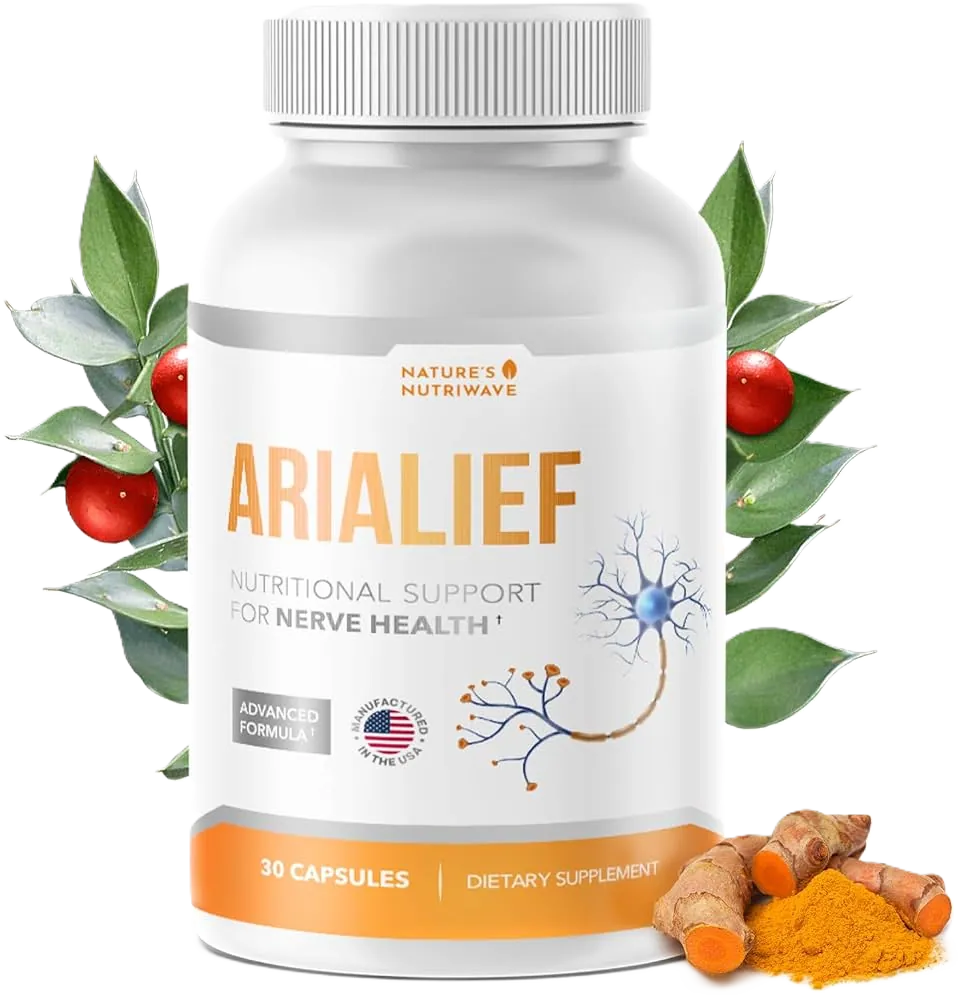
Arialief packages the components the recipes gesture at — turmeric curcumin and magnesium glycinate — and anchors them with alpha-lipoic acid, the most-studied nerve nutrient, plus L-Carnitine, Butcher's Broom, and CoQ10. One capsule a day, made in the USA, 60-day money-back guarantee. It's honest about being gradual support, not a cure. See the full breakdown in our Arialief review.
Look elsewhere if: you'd rather assemble it yourself — a standalone 600 mg alpha-lipoic acid, a magnesium glycinate, and an absorbable curcumin, dosed separately. That's more bottles and more label-reading, but it lets you verify every milligram.
Do the Japanese cocktail and pink salt work for neuropathy?
If a warm morning drink brings you a little comfort, enjoy it — the "Japanese cocktail" is mostly harmless, and the ritual itself can feel soothing. Just skip the pink salt version if you have blood-pressure, heart, or kidney concerns, and don't mistake any of it for treatment. The claims are doing the heavy lifting, not the ingredients.
The parts worth taking seriously — turmeric, magnesium, and the better-evidenced alpha-lipoic acid — deserve to be taken seriously: in real forms, at real doses, given a real window. If you'd rather have those in one honest capsule than a splash in your tea, Arialief is where we'd start — with a 60-day guarantee so you're testing your own response.
Never stop or replace a prescribed medication with a home recipe. If you take medication for blood pressure, diabetes, or your kidneys, talk to your doctor before adding salt drinks or new supplements. Burning, tingling, or numbness that's sudden, one-sided, or worsening should be evaluated by a healthcare professional.
Frequently asked questions
Does the 'Japanese cocktail' cure neuropathy?
No. There's no recipe — 'Japanese cocktail,' pink salt drink, or otherwise — that's proven to cure or reverse neuropathy. Most versions are warm water with kitchen ingredients like apple cider vinegar, lemon, ginger, and turmeric. A couple of those components have real nerve-relevant research, but the drink as a whole is a comforting ritual, not a treatment. See a doctor for burning, tingling, or numbness that's new, one-sided, or spreading.
Is the pink salt recipe safe?
For most healthy adults, a small amount of pink Himalayan salt in water is harmless. But it's still sodium — so if you have high blood pressure, heart failure, kidney disease, or you're on a sodium-restricted diet, adding salt drinks is exactly the wrong move and you should check with your doctor first. Pink salt is not a source of meaningful 'trace minerals' for nerve health, despite the claims.
Are any of the ingredients actually good for nerves?
Two stand out. Turmeric (curcumin) has genuine anti-inflammatory research and some early nerve-pain evidence, and magnesium helps calm over-excitable nerves. The problem isn't those ingredients — it's that the recipes deliver tiny, uncertain amounts in forms your body may barely absorb. The same ingredients, in studied forms and doses, are a far better bet than a viral drink.
What actually helps nerve discomfort?
The evidence points to a few real levers: alpha-lipoic acid (the most-studied nerve nutrient, at 600 mg), magnesium, turmeric done right, and — if you're deficient — B12, alongside the fundamentals like blood-sugar control and daily movement. Supplements support nerve comfort gradually; they don't replace a diagnosis. Start with our guide on whether alpha-lipoic acid really works.
Should I stop my medication and try these recipes instead?
No — never stop or replace a prescribed medication with a home recipe. If gabapentin or another drug isn't working well for you, that's a conversation to have with your doctor about adjusting treatment, not a reason to swap in a viral drink. Supplements and lifestyle support can sit alongside medical care, not instead of it.