
Safety Guide
Penis Pump Side Effects: What to Expect, What's Normal, and When to Stop
Are penis pumps safe? Most side effects are mild, temporary, and tied to pressure and technique — not the device itself. Here's what's normal, what's a warning sign, and how to keep every session comfortable.
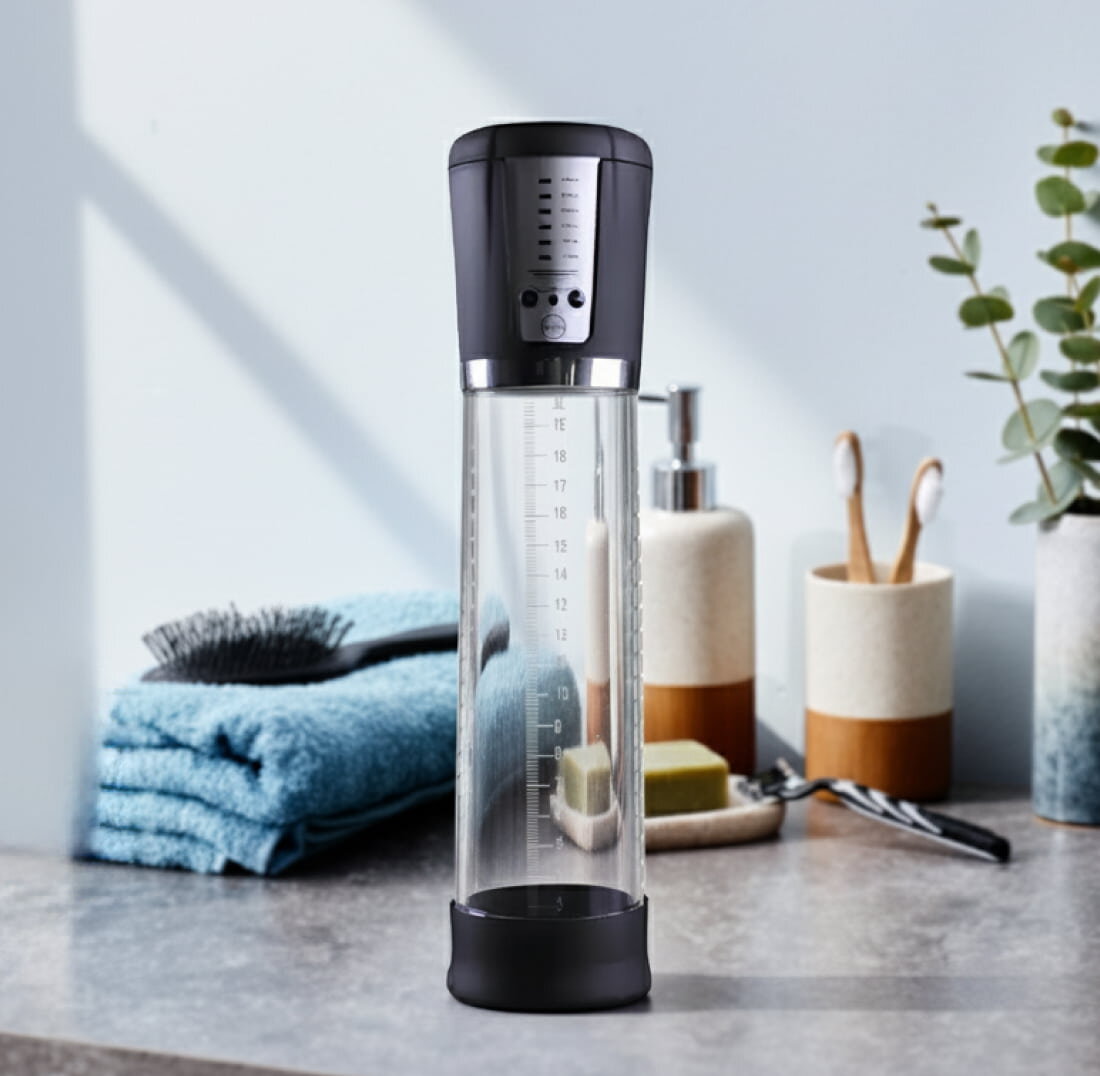
How does a penis pump work on the tissue?
To understand side effects, you first need to understand the mechanism. An erection is fundamentally a vascular event: blood flows into the penile chambers (corpora cavernosa), expands the tissue, and is temporarily trapped to maintain firmness. A vacuum device speeds up part of that process. It creates negative pressure around the penis, which draws blood into the tissue, and an elastic ring holds that rigidity in place temporarily. NIH’s patient guide puts it plainly: the pump pulls blood into the penis, and the ring holds it there (NIDDK).
While this can be effective, it also introduces external force into a system that normally operates through delicate vascular and neurological balance. That's why side effects — when they occur — are usually related to pressure, circulation, or improper handling rather than the device itself.
The key point The main concern doesn't come from the concept of vacuum therapy itself. It comes from how pressure is applied, how long the session lasts, and whether the device is being used with control. Luciano Cesar, Content Contributor
Are penis pumps safe?
In general, penis pumps are considered safe when used correctly and moderately. A 2026 systematic review of vacuum erection devices found the safety profile good enough to recommend them as part of a personalized ED plan (Guillot-Tantay et al.). They are prescribed in real clinical settings, too. One is standard penile rehabilitation after prostatectomy (Pirola et al., 2024). The other is vascular ED that has not responded to first-line medication (Feng et al., 2022). Safety depends less on the device itself and more on how it's used:
- Proper use → temporary support with minimal issues
- Incorrect or excessive use → higher chance of discomfort or minor injury
So the real question isn't "are they safe," but "are they being used in a controlled, informed way?"
What are the common side effects of a penis pump?
Most reported side effects are mild and temporary. NIH’s patient guidance notes that a vacuum device can leave the penis cold, numb, or bruised. The bruising is usually painless, and it clears in a few days (NIDDK). They typically come from too much pressure, sessions that run long, or simply not knowing the device yet.
| Side effect | Cause | Duration |
|---|---|---|
| Mild bruising | Pressure changes in small blood vessels | Temporary, resolves naturally |
| Temporary numbness | Excessive suction or overuse | Temporary, improves with rest |
| Tightness / discomfort | Too-intense suction or long sessions | Temporary, adjust technique |
| Skin irritation | Friction or lack of lubrication | Temporary, improve positioning |
Mild bruising or a reddish tint happens when small surface vessels experience pressure changes, and usually resolves on its own. Reduced sensation is typically linked to excessive suction or overuse and fades once circulation returns. A feeling of tightness is expected to a degree — it becomes a concern when suction feels too intense or sessions run long. And irritation around the base or shaft is usually a friction/positioning issue, most common in beginners.
What causes penis pump discomfort?
Side effects rarely happen "randomly." They usually trace to clear causes: excessive vacuum pressure (pulling too hard, too quickly), long sessions, a poor seal or positioning, lack of lubrication, or inconsistent use patterns. In other words, discomfort is a signal — not a mystery.
Recognizing early warning signs prevents minor issues from becoming serious. Watch for:
- Persistent pain rather than mild pressure
- Significant or worsening discoloration
- Prolonged numbness after use
- Swelling that doesn't subside
- Visible skin irritation or tenderness
If any of these occur, it's usually a sign that pressure, duration, or technique needs adjusting.
How do you use a penis pump safely?
Reducing side effects is less about avoiding the device and more about using it intelligently. Start with lower pressure and increase it gradually. Keep sessions moderate, and make sure the seal is right before you apply suction. Use enough lubrication, and pay attention to how your body responds after each use. These adjustments alone tend to eliminate most common issues. The next section covers how long and how often.
One more that sits upstream of technique: getting the cylinder size right. A cylinder that is too wide will not hold a seal, no matter how careful you are. A seal that keeps breaking is what pushes men to over-pump in the first place. It's part of why Sensselo's standard-proportioned cylinder holds a seal without that workaround.
Some men should use extra caution, or avoid pumps entirely. That includes anyone with a blood clotting disorder, anyone on anticoagulant medication, anyone with severe vascular fragility, or anyone with certain anatomical conditions affecting the penis. In these cases, professional guidance is strongly recommended before use.
How often and how long can you safely use a penis pump?
A pump works in the moment, so there is no course to complete. Use it when you want firmness, and let comfort set the pace. A session of about 10 to 15 minutes is enough for firmness to arrive. Numbness is the signal that a session has run too long.
The constriction ring is the one part with a clock. Take it off by 30 minutes, whatever the result. Build the pressure slowly from the lowest level and stop at comfortable firmness, because bruising comes from pressure that rises too fast.
There is no fixed number of sessions per week. If the skin feels tender or bruised, pause until it clears. Most men find their rhythm within two or three sessions. After prostate surgery, a urologist may set a daily schedule, and that schedule comes first.
Is a pump worth it if you are worried about hurting yourself?
Is a pump worth it if you are worried about hurting yourself? Yes, and the worry is the right instinct. It is what makes a man go slow, and going slow is most of what keeps this safe.
Most men who read a page like this are not browsing. They are tired of planning around a maybe. The evening is going well, and somewhere in the back of your head there is a quiet calculation about whether tonight is one of the good ones.
Pills answer that for some men and not for others. Plenty cannot take them at all, between heart medication, blood pressure, or simply not wanting a prescription sitting in the house.
A pump answers it mechanically, which is why urologists kept recommending the category long before it was easy to buy one at home. The only thing standing between you and a predictable session is knowing how hard to pull. That is a setting, not a skill.
Which penis pump is safest for beginners?
Everything above comes back to one thing: nearly every side effect on this page starts with pulling too hard. Men pull too hard because most pumps give them nothing to go by. You are guessing at pressure with the most sensitive tissue you own. That is the part worth solving before a first session, and it is solved by the device, not by willpower. Our full review of the Sensselo pump's 5 adjustable pressure levels goes through how smart suction takes the guesswork out.
Sensselo Penis Pump
Gauge-guided pressure — controlled use by design
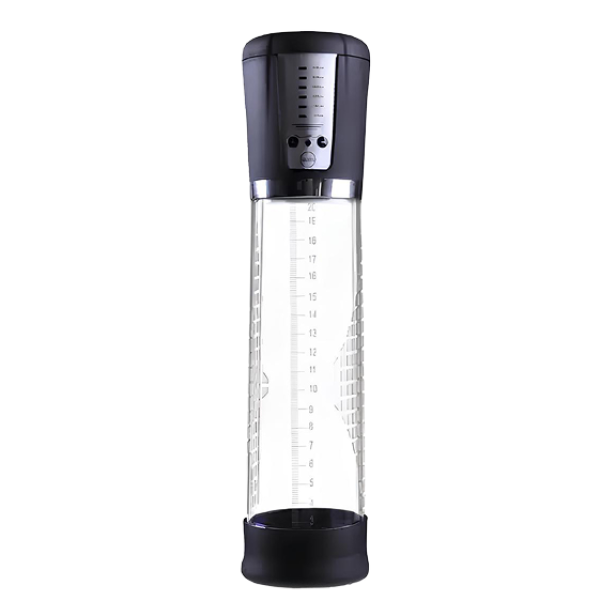
This is the one we point men to precisely because of the guessing problem. The pressure is gauge-guided and adjustable, so "how hard is too hard" stops being a judgement call. It becomes a number you can see, which removes the single most common cause of bruising and numbness before it happens. The cylinder is standard-proportioned, which is what lets a seal hold without over-pumping to compensate. And it is fully mechanical: nothing to charge, nothing to fail mid-session.
Good to know: If you have a blood clotting disorder, take blood thinners, or have persistent ED, talk to a healthcare professional before using any vacuum erection device. It's safe for most men, but pre-existing conditions change the calculation.
Which penis pump side effects mean you should stop?
Which penis pump side effects mean you should stop? Pain that persists instead of easing, discoloration that keeps darkening, numbness that lingers after the session, or swelling that doesn't go down — stop, and reset pressure and time before the next one.
Penis pumps are safe for most men, and what decides it is how they are used. Most side effects are mild, predictable, and avoidable once you understand the mechanics involved. Discomfort is rarely random; it's usually feedback from the body that something needs to be adjusted.
So if you came here to find out whether this is safe enough to try, the answer is yes for most men. The caveat is that "used correctly" is doing real work in that sentence. Two things cover almost all of it: get the cylinder size right so the seal holds without over-pumping. Then follow the safe-use sequence for the first few sessions, until the technique is yours. Do those two and you've removed most of what this page just described.
And if you'd rather not learn pressure by feel at all, that is the argument for a gauge in the first place.
Is a penis pump worth trying for predictable sessions?
Is a penis pump worth trying for predictable sessions? Yes — used with control, it's one of the most predictable options there is.
Most men who read this far aren't chasing anything dramatic. They want a session that ends the same way it started: no bruise to explain, no numbness that lingers, no second-guessing whether that last pull was too hard. That's a reasonable thing to want, and it's a reasonable thing to build toward.
Here's the honest frame. A vacuum pump is a mechanical aid that sits alongside your doctor's plan for what is driving the ED. It works with the vascular response you still have, filling the chambers mechanically instead of waiting on chemistry alone. Used with control, it tends to help. Used to force a result, it produces exactly the bruising and numbness this page describes.
What makes it worth trying is that the ground isn't empty. Guillot-Tantay and colleagues' 2026 systematic review found the safety profile solid enough to recommend as part of a personalized ED plan. Pirola and colleagues documented it as standard rehabilitation after prostatectomy. Feng and colleagues found it useful for vascular ED that hadn't responded to first-line medication. Together they make the approach real and the attempt an informed one.
And the result depends on how it's used, not on the device alone. A man who starts gentle, checks his own reaction, and builds up slowly will have a very different experience. Someone who pulls hard on the first try won't. That's not a caveat to talk you out of it. It's the reason a gauge that shows the number, instead of leaving you to guess, tends to matter more than which brand is on the box.
Frequently asked questions
Are penis pumps dangerous?
They are generally not dangerous when used correctly. Most side effects are mild and temporary. Problems usually arise from excessive pressure, prolonged use, or ignoring early signs of discomfort.
Can a penis pump cause permanent damage?
Permanent damage is rare. However, improper use—especially excessive suction or frequent overuse—can increase the risk of injury. Responsible use significantly reduces this possibility.
Why does bruising happen after using a pump?
Bruising occurs when small blood vessels experience pressure changes. It's typically mild and temporary, resolving on its own without long-term effects.
How can I tell if I'm using too much pressure?
Pain, strong discomfort, or significant discoloration are common indicators. Proper use should feel controlled and manageable, not intense or painful.
Is numbness after using a pump normal?
Mild, temporary numbness can happen, especially with higher pressure. If it persists, it's a sign that adjustments should be made in pressure or duration.
When should I see a doctor about penis pump side effects?
See a doctor if pain, swelling or discoloration doesn't fade within a few days, or if numbness persists after you've stopped using the device. Talk to one before starting if you take blood thinners or have a bleeding disorder. ED that came on suddenly is worth a medical check too, pump or not.