
Buyer's Guide
Over the Counter for Semen Volume: What Options Exist Without a Prescription
Over the counter for semen volume, the options are wider than a pharmacy shelf would suggest. No prescription. No doctor's visit. Just a label you can read before you decide.

That question usually comes up close to a decision — after comparing ingredients, reading reviews, and weighing a few options side by side. Knowing what's actually required to buy removes the last bit of hesitation.
Semen-volume products like Semenax are built from nutrients, amino acids, and botanical extracts rather than pharmaceutical compounds. That's why they sit in a different regulatory lane than a prescription drug, and why buying one doesn't start with a prescription pad. The full Semenax review breaks down what's actually on that label.
Whether a product needs a prescription comes down to how it's classified and regulated. Dietary supplements and prescription drugs sit under different rules, and that difference is exactly why something like Semenax sits on an open shelf instead of behind a pharmacy counter.
Semen Volume Support: Supplement or Prescription?
The reason these products sit over the counter starts with what they legally are. The table below lays out the practical differences between a dietary supplement built for semen volume and a prescription medication.
| Factor | Over-the-Counter Supplement | Prescription Medication |
|---|---|---|
| Requires prescription? | No | Yes |
| Primary purpose | Nutritional and biological support | Diagnose, treat, or prevent medical conditions |
| Ingredients | Nutrients, botanicals, naturally derived compounds | Pharmaceutical-grade synthetic compounds |
| Where purchased | Online, authorized retail channels | Pharmacy with valid prescription |
| Regulatory oversight | Manufacturing and labeling standards (GMP) | Full clinical approval and physician monitoring |
What separates a supplement from a prescription drug: Prescription medications are developed to diagnose, treat, or prevent a specific medical condition. They typically use pharmaceutical-grade compounds that interact directly with a targeted biological system, which is why they require oversight from a licensed provider.
Dietary supplements work differently. Their job is to support normal body processes with nutrients and plant-derived ingredients generally recognized as safe when used as directed. Instead of acting as a targeted treatment, a supplement supports overall biological function, and that's the reason it can be sold without a prescription.
How the FDA treats dietary supplements: The U.S. Food and Drug Administration explains that dietary supplements don't go through the pre-market approval process a new drug does. Manufacturers are responsible for safety before selling, and the agency steps in after the fact if a product turns out to be unsafe or mislabeled. That's the trade-off behind buying one without a prescription: faster access, with the label doing more of the work a pharmacist would otherwise do.
Why some products skip the prescription pad entirely: A product avoids a prescription requirement when its ingredients are considered safe for routine use and it isn't designed to treat a diagnosed disease. Semenax fits that description: it's built around nutrients and botanical extracts aimed at semen volume and reproductive support, not a pharmaceutical intervention.
Recommended Product
Semenax
A dietary supplement built from nutrients and botanicals, sold without a prescription
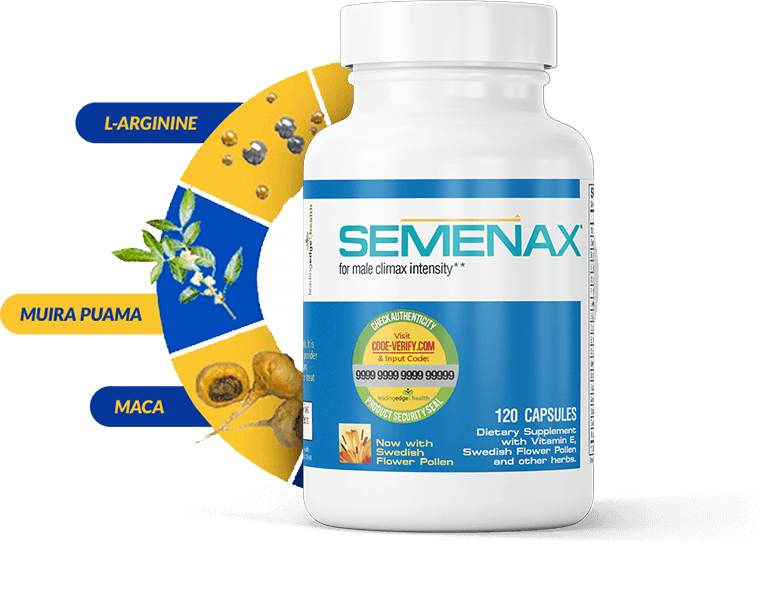
A product avoids a prescription requirement when its ingredients are considered safe for routine use and it isn't designed to treat a diagnosed disease. Semenax fits that description: it's built around nutrients and botanical extracts aimed at semen volume and reproductive support, not a pharmaceutical intervention — and it's backed by more ingredient research than most products on the same shelf. That's exactly why it ships straight to your door instead of through a pharmacy counter.
Talk to a doctor first, or look elsewhere, if: A doctor's involvement matters when symptoms are severe, sudden, or tied to an underlying condition, such as infertility under investigation or a hormonal imbalance confirmed by lab work. In those cases, a supplement is the wrong tool, and a clinical evaluation is the right next step.
How Over-the-Counter Options Differ From Prescription Care
Two different jobs: Prescription treatments are built to address a diagnosed medical condition. Think hormone therapy, fertility medication, or a targeted pharmaceutical, each requiring lab work, physician monitoring, and dosage control.
Over-the-counter formulas do a narrower job: nutritional and botanical support for men who aren't chasing a diagnosis, just a better baseline.
When prescription care makes more sense: A doctor's involvement matters when symptoms are severe, sudden, or tied to an underlying condition, such as infertility under investigation or a hormonal imbalance confirmed by lab work. In those cases, a supplement is the wrong tool, and a clinical evaluation is the right next step.
Why plenty of men choose the over-the-counter route anyway: For most men asking this question, there's no diagnosis on the table, just a want for more. Convenience, privacy, and skipping an appointment for something that isn't a medical emergency are real reasons people reach for a supplement first. A 2025 systematic review and meta-analysis in Nutrients, led by Michaelsen and colleagues, pooled the available trials on dietary supplements and sperm parameters. It found genuine signal for several of the nutrients these formulas use, reason enough to make the over-the-counter route an informed choice, not a guess. For a deeper look at which nutrients carry that evidence, see what supplements can increase semen volume .
Why These Products Don't Require a Prescription
What "over the counter" actually means here: Products classified this way are built to be sold to the general public without a specialist's sign-off. Their ingredients are nutritional or botanical rather than pharmaceutical, so retailers and manufacturers can sell them directly. That's exactly why something like Semenax ships straight to your door instead of through a pharmacy counter.
What the label is actually promising: The National Library of Medicine's MedlinePlus notes that dietary supplements are meant to add to a diet, not replace balanced nutrition or medical treatment. That's a distinction worth keeping in mind before expecting a bottle to do a prescription's job.
Accessibility is part of the design: Manufacturers structure both the formula and the sales channel to keep the product easy to reach while still meeting labeling rules. That combination of a supplement classification and a direct-to-consumer sales model is what makes wide, prescription-free availability possible in the first place.
Where to Buy Over-the-Counter Semen Volume Supplements Safely
Buying online, on purpose: Most of this category, Semenax included, sells almost exclusively online. That's not a red flag — it lets the manufacturer control storage, shipping, and batch tracking more tightly than a shelf full of resellers ever could.
Sticking to authorized channels: An authorized seller works from a supply chain the manufacturer actually controls, which keeps packaging intact, storage conditions correct, and expiration dates current. Buying from anywhere else, a marketplace listing, a reseller, a site with no real manufacturer relationship, tends to be how people end up with a product that isn't what the label promises.
Spotting a legitimate seller before you pay: A reliable source discloses the full ingredient list, states shipping and refund terms plainly, and backs the purchase with the manufacturer's own guarantee — details the full Semenax review covers in one place.
Final Verdict: Over the Counter for Semen Volume
Yes — there's a real, legitimate over-the-counter path here. Semenax is the clearest example of it: a dietary supplement built from nutrients and botanicals, sold without a prescription, and backed by more ingredient research than most products on the same shelf.
It's worth being precise about what that means. A formula like this is a potentiator, not a cure — it gives the glands and pathways behind semen volume better raw material to work with, rather than switching anything on by itself. Taken that way, and taken consistently, it's a reasonable thing to try.
How much any one man notices depends on the usual variables: age, baseline nutrition, sleep, and how consistently the bottle actually gets used. That's not a hedge — it's the honest shape of how supplements work, and it's exactly why giving one the full weeks it needs matters more than the first few days.
Is It Worth Trying an Over-the-Counter Option for Semen Volume?
Picture the moments this is actually about. A night where the finish feels like more than a formality. A partner who notices without you having to mention it. The quiet confidence of not wondering about it beforehand. Most men looking into this aren't dealing with a medical problem — they just want more, and that's a perfectly reasonable thing to want.
An over-the-counter formula like Semenax is a potentiator, not a switch. It hands the prostate, seminal vesicles, and the amino acids your body already uses a better supply to work with. It doesn't override sleep, diet, or hydration — it adds to them.
The reason it's worth the attempt is that the science behind these ingredient categories is real. Michaelsen and colleagues pooled the trial data on dietary supplements and sperm parameters in 2025 and found genuine signal. Chen and colleagues linked seminal zinc levels to fertility measures the same year — zinc being the exact nutrient most of these formulas lean on. None of that is a guarantee on a specific bottle, but it means the attempt is informed rather than hopeful.
What you notice will depend on where you're starting from. A man in his thirties who sleeps well and eats reasonably will read a different result than a man in his fifties managing more variables, same formula, same weeks. That's not a reason to expect nothing; it's a reason to give the full window before deciding, consistency included.
Frequently Asked Questions
Can you buy something over the counter for semen volume?
Yes. Most products marketed for semen volume, including Semenax, are sold as dietary supplements rather than prescription drugs, so no prescription or doctor's visit is required to buy them.
Do over-the-counter semen volume supplements actually work?
Some of the nutrients these formulas use, zinc and amino acids in particular, have real research behind them for semen parameters. Results build gradually and vary from person to person, so it's best treated as a potentiator rather than an instant fix.
Are over-the-counter semen volume supplements regulated?
Yes, though differently from drugs. The FDA holds dietary supplements to manufacturing and labeling standards, but it doesn't approve them before they reach the shelf the way it does prescription medication.
Where is it safe to buy an over-the-counter option like Semenax?
Directly through the manufacturer's official site. That's the most reliable way to get the formula shown on the label and the maker's own guarantee, instead of a resold or expired batch from an unverified seller.
When should you talk to a doctor about semen volume instead of buying over the counter?
See a doctor if the change is sudden, comes with pain, or is tied to a fertility concern. Those situations call for a medical evaluation rather than a self-directed supplement choice.