
Buyer's Guide
What Supplements Can Increase Semen Volume? The Supplements to Increase Semen Volume That Work
Semen volume isn't controlled by one “special” ingredient — it's shaped by prostate fluid, seminal vesicles, circulation, and hormones working together. Here's what actually helps, how it works, and why multi-ingredient formulas tend to win.

What determines semen volume in the body
Here's the encouraging part: what you see at the end is made by four things you can actually reach. Prostate fluid production is the biggest single contributor. Seminal vesicle secretions supply most of the rest. Testosterone keeps those glands active. And blood flow to the reproductive organs decides how forcefully the whole thing moves.
Hydration and recovery sit underneath all four — the reason a man notices thinner output after a hard week, and fuller output after a good one.
The key point Semen output isn't down to one "special" ingredient — it's shaped by prostate fluid, seminal vesicles, circulation, and hormones working together. Support those pathways at once and volume responds — which is exactly why a complete formula beats a single ingredient. Luciano Cesar, Content Contributor
Which nutrients increase semen volume
The clearest read we have comes from a 2025 systematic review and meta-analysis in Nutrients by Michaelsen and colleagues, which pooled the trials on dietary supplements and sperm parameters. Five ingredients show up repeatedly in formulas built for output, each covering a different part of the process:
- Zinc — the nutrient most consistently tied to seminal output. Two separate meta-analyses of seminal trace elements — Chen and colleagues in 2025, then Li and colleagues in 2026 — found zinc levels tracking with male fertility measures.
- Pygeum — the prostate-targeted botanical. Prostate fluid is a major contributor to total volume, which is why formulas aimed at output tend to include it.
- L-Arginine — a nitric oxide precursor. That's the pathway behind blood flow to the reproductive organs, erectile response and ejaculatory intensity.
- Lecithin — rich in phospholipids, and included for the fluid component of semen; men respond differently to it.
- Maca root — the libido and hormonal-balance lever in most volume formulas.
Antioxidants sit one step back: they work on sperm quality rather than on fluid volume. Bakri and colleagues, in a 2025 meta-analysis of randomized trials, found CoQ10 improving semen parameters in idiopathic male infertility, and Febriansyah and colleagues reported the same direction for vitamin E in 2026. Better quality tends to travel with better overall output.
What drives volume — at a glance
Where each factor actually acts, and how much of the total it accounts for.
| Factor | Effect on semen volume |
|---|---|
| Prostate fluid | Major contributor to total volume |
| Seminal vesicles | Produce the majority of seminal plasma |
| Zinc levels | Low levels reduce semen output |
| Circulation | Poor blood flow impairs ejaculatory function |
| Hormonal balance | Testosterone supports gland activity |
Why a complete formula outperforms a single ingredient
The reason multi-ingredient formulas tend to win is simple: semen production runs on multiple glands, hormonal regulation, and circulatory efficiency at once — so a formula that supports several of those pathways together has more ways to help than one that pulls a single lever. Pair it with the basics — good hydration, a balanced diet, quality sleep for healthy testosterone, managed stress, and adequate recovery — and you give that formula the best possible conditions to work. Supplements amplify results; the fundamentals set the stage. For what that looks like in practice, our full breakdown of Semenax's four-pathway formula sets out which ingredient covers which pathway.
What to look for on the label
Most of what sits on the shelf for men isn't built for this. A general vitality formula touches volume the way a multivitamin touches energy — somewhere in the mix, by accident. Four things separate a formula designed for output from one that merely mentions it.
- It names the pathway, not the mood. "Male vitality" and "peak performance" describe a feeling. Prostate fluid, seminal secretion and nitric oxide describe where the formula actually acts — and a label that names them is a label someone thought about.
- Zinc is present in earnest. It's the one nutrient with the most consistent evidence behind it, so a formula built for output puts it in a real amount rather than a trace that lets the word appear on the panel.
- It covers fluid and flow, not one of the two. Prostate and seminal vesicles make the fluid; circulation decides how forcefully it moves. A formula that only does one is doing half the job — which is why the picks below are split along exactly that line.
- The serving is daily and split. Output responds to a steady supply, not a single dose before the moment. Two capsules a day, taken with meals, beats one heavy one.
Full per-ingredient amounts are a welcome bonus when a manufacturer publishes them — and their absence isn't a red flag on its own. A proprietary blend is a formulation choice, often with the producer's own work behind it. What matters is whether the design matches the job.
Which two formulas fit each pathway
The right pick depends on which pathway you most want to support — direct output or circulation. Each names the man it fits and the one it doesn't.
Semenax
Volume-specific — built directly for semen output
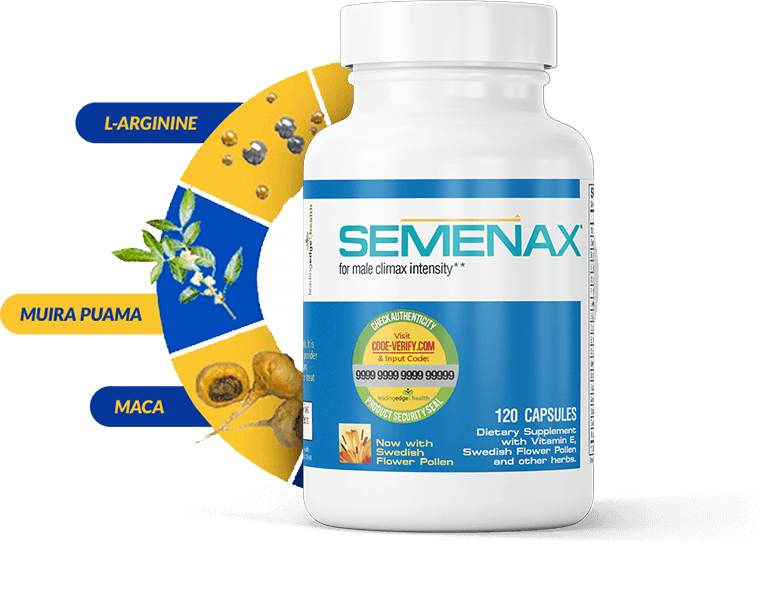
If you'd rather not assemble zinc, amino acids, and libido botanicals one by one, Semenax pairs several of those pathways in a single daily dose built specifically around semen volume and ejaculation intensity. It's the most directly aligned option for the man whose actual goal is output — not a general vitality formula that happens to touch it.
Look elsewhere if: You're mainly after circulation and blood flow — Nitric Boost Ultra targets that angle more directly.
Nitric Boost Ultra
Circulation & performance — indirect volume support
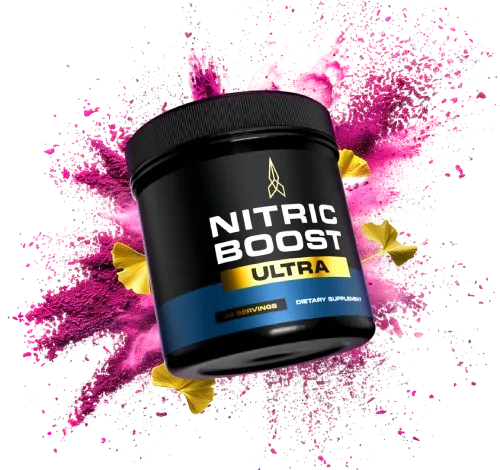
Blood flow drives ejaculatory performance and perceived volume, and Nitric Boost Ultra's dual-pathway nitric-oxide design targets exactly that. It's best understood as complementary support — improving circulation and erection quality rather than directly producing more seminal fluid.
Look elsewhere if: You want direct seminal-fluid support — that's Semenax's lane, not a circulation formula.
Which supplement should you take to increase semen volume?
Which supplement should you take to increase semen volume? If output is the goal, Semenax is the most directly aligned pick. Everything else here is a choice of pathway — direct output, or the circulation behind it.
It's built specifically around semen volume and ejaculation intensity, pairing several of the key pathways in one daily dose. Nitric Boost Ultra is the sensible complement if circulation is where you want to focus.
Is it worth trying for semen volume?
Is it worth trying for semen volume? Yes — for a man who simply wants more at the finish, it's a well-founded thing to try.
Most men who look this up aren't recovering from anything. They just want the finish to be more than it is — the kind that's obvious to both of you, the kind that made twenty-five feel like twenty-five. That's a reasonable thing to want, and it's a reasonable thing to work on.
Here's the honest frame. A formula like this is a potentiator, not a switch. It adds to what your sleep, your meals and your routine already do: it gives the glands that make the fluid a better supply to work with, and lets circulation carry it with more force. Taken that way, it tends to deliver, building over weeks.
What makes it worth the attempt is that the ground isn't empty. Michaelsen and colleagues pooled the trials on supplements and sperm parameters and found real signal; the zinc work from Chen and from Li points the same way; Bakri's group found CoQ10 moving semen quality in randomized trials. Together they make the mechanism real and the attempt an informed one.
And the response is yours, not an average. A man of thirty-eight who sleeps well and spaces things out will read a different result than a man of fifty-five who doesn't — same formula, same weeks. That's not a caveat to talk you out of it. It's the reason to give it the full window before you decide, and the reason the men who see the most tend to be the ones who simply kept going.
Frequently asked questions
What supplement increases semen volume the most?
There is no single best supplement, but combinations including zinc, amino acids, and prostate-support ingredients tend to be the most effective.
Does zinc really increase semen volume?
It is the nutrient with the most support behind it. Two meta-analyses of seminal trace elements, published in 2025 and 2026, found zinc levels tracking with male fertility measures — and the effect is clearest in men who were low to begin with.
How long do supplements take to work?
Most people notice changes within 2 to 4 weeks, depending on consistency and overall health.
Does lecithin increase semen volume?
Lecithin may increase the fluid component of semen, but results vary and are often individual.
Do performance supplements increase semen volume?
Not directly. They may improve circulation and intensity, but they are not designed to increase seminal fluid production.
When should I consult a doctor about low semen volume?
Consult a healthcare professional if you notice a sudden or significant change in semen volume, experience pain during ejaculation, or have concerns about fertility. A medical evaluation can rule out underlying conditions.