
The Best Supplement for Sperm Volume in 2026.
We analyzed what actually matters for restoring semen volume — the reproductive gland support, the amino acid layer, the mineral cofactors, the guarantee. Here's what we found.
See Top Pick — Semenax → Or read the 5-criteria review first ↓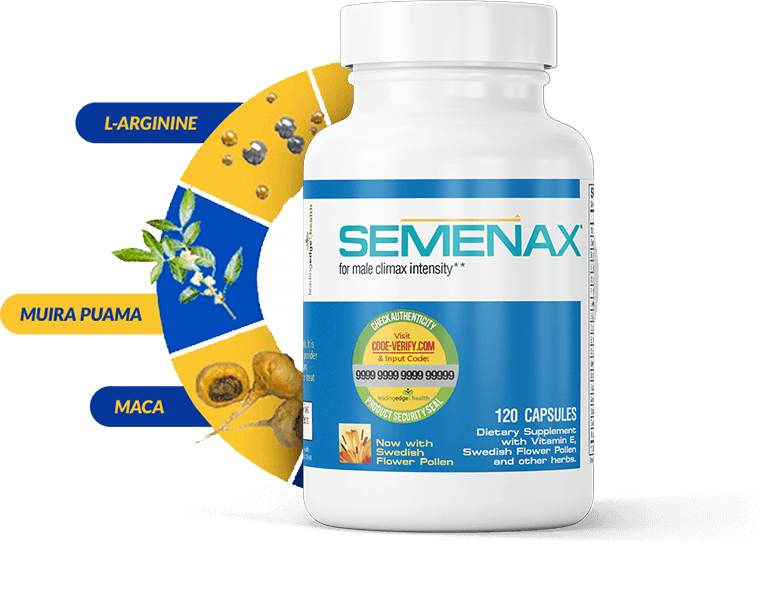
✓ Quick Answer
The best supplement for sperm and semen volume in 2026 is Semenax, a 4-pathway formula combining L-Arginine, L-Lysine, Swedish Flower Pollen, Zinc, and Maca Root. It targets reproductive gland function (where most semen volume is produced), amino acid building blocks for fluid production, mineral status (zinc deficiency directly reduces volume), and reproductive adaptogenic support — backed by a 67-day money-back guarantee that covers a full sperm cycle.
Why This Review (and Not Another One)
This isn't a manufacturer's landing page. We review semen volume supplements based on what the formula actually does, what research supports the doses, and what the guarantee protects against. We earn a commission if you buy through our links — that keeps the site free to read, not who we recommend.
What to Look for in a Semen Volume Supplement
Most 'male enhancement' formulas target libido botanicals — which don't directly affect semen volume. Semen volume comes mostly from accessory reproductive glands (seminal vesicles + prostate fluid), so the formula needs to target gland function, not desire signaling.
The strongest formulas pair Swedish Flower Pollen (with gland-function research) with amino acids (L-Arginine, L-Lysine) and zinc adequacy. For more on the broader semen volume mechanisms, see our semen volume supplements guide; for the zinc-specific evidence, see our Semenax vs zinc analysis.
Why Semen Volume Comes From More Than Just Sperm
Most men think of semen as "sperm" — but it's actually a complex fluid produced by multiple reproductive glands. Seminal vesicles contribute about 70 percent of total volume, the prostate contributes about 25 percent, and only the remaining 5 percent is the sperm-containing fluid from the testes. This means most volume changes reflect gland function, not sperm production directly. A supplement targeting "volume" needs to support seminal vesicle and prostate fluid output — not just sperm count.
The strongest formulas combine reproductive gland support (Swedish Flower Pollen has documented activity here), amino acid building blocks for fluid protein synthesis (L-Arginine, L-Lysine), zinc adequacy (deficiency directly reduces volume), and adaptogenic support for the broader reproductive picture (Maca). Generic "male enhancement" blends without these specific pathway-targeted ingredients typically don't move volume measurably.
✓ Where pathway-targeted volume support fits best
If you've noticed volume changes you'd like to address, if you want a 4-pathway approach instead of generic male enhancement formulas, or if you want a guarantee window that covers a full sperm cycle (60+ days) — Semenax's design is built for this picture.
That said, not all volume supplements are created equal. The next section covers exactly what to look for before you buy.
What Actually Matters in a Volume Supplement
Not all volume formulas are built equally. After looking at the category, these are the 5 criteria that separate a clinically rational formula from a marketing exercise.
Reproductive Gland Support Ingredients
Seminal vesicle and prostate fluid production drive most semen volume. Swedish Flower Pollen has documented activity on reproductive gland function.
Amino Acids for Volume Production
L-Arginine and L-Lysine provide building blocks for protein synthesis in reproductive tissue and support fluid production at the cellular level.
Zinc at Functional Dose
Zinc is the most-studied mineral for male reproductive health. Deficiency directly reduces semen volume and quality. Functional dosing matters more than label inclusion.
Reproductive Adaptogens
Maca Root has documented effects on libido and modest improvements in semen parameters. Adaptogens support the broader reproductive picture beyond pure volume.
Long Guarantee Window
Reproductive system changes take 60 to 90 days to evaluate fairly — sperm production cycles take roughly 64 days. The guarantee period must cover a real cycle.
With these 5 criteria in mind, here's what we recommend.
Our 2026 Recommendation: Semenax
Based on those 5 criteria, Semenax is the volume supplement we recommend for men looking to address semen volume in 2026. Here's how it maps:
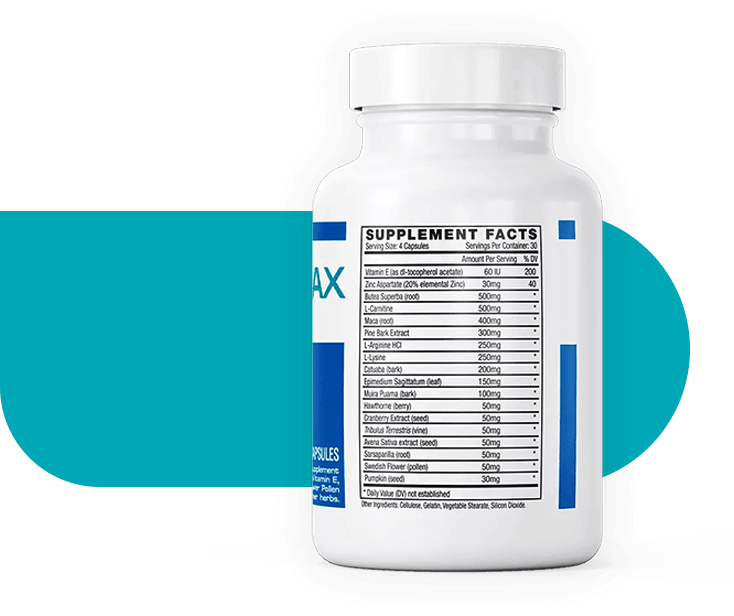
Full supplement facts label — every active ingredient with its exact dose. No proprietary blends.
How Semenax Maps to the 5 Criteria
- Reproductive Gland Support — Swedish Flower Pollen for seminal vesicle and prostate function
- Amino Acids for Volume — L-Arginine and L-Lysine as fluid-production building blocks
- Zinc at Functional Dose — addresses the most-studied mineral deficiency for volume
- Reproductive Adaptogens — Maca Root for the broader reproductive picture
- Long Guarantee Window — 67-day guarantee covers a full 64-day sperm production cycle
A Closer Look at Why Semenax Stands Out
The checklist above tells you Semenax meets the bar. These three details explain why that matters in practice.
Why Swedish Flower Pollen Is the Volume-Specific Lever Most Formulas Skip
Swedish Flower Pollen (Cernitin) has documented activity on prostate and seminal vesicle function in published research — both organs are major contributors to semen volume. Generic "male enhancement" formulas focus on libido botanicals (Tongkat Ali, Tribulus) that don't directly affect volume. Semenax's inclusion of Swedish Flower Pollen targets the actual gland-function lever that determines most of total volume output. The mechanism is specific to the reproductive plumbing rather than the broader vitality picture.
The Amino Acid Layer for Fluid Production
L-Arginine and L-Lysine provide building blocks for protein synthesis in reproductive tissue and seminal fluid production. L-Arginine also contributes to the nitric oxide pathway that supports erectile function — a useful overlap. The amino acid layer addresses the cellular-machinery side of volume production: gland cells need raw materials to produce fluid, and adequate amino acid availability supports that process.
Why Zinc and the 67-Day Guarantee Matter Together
Zinc is the most-studied mineral for male reproductive health, and zinc deficiency directly reduces both semen volume and quality. Most generic formulas include token amounts (5 to 10 mg) that don't move deficiency status; functional dosing matters more than label inclusion. The 67-day guarantee is also strategically chosen: it covers slightly more than a full 64-day sperm production cycle, which means you can run a complete reproductive cycle and still have time to evaluate before the guarantee expires.
What to Expect — Week by Week
Reproductive supplements need a full sperm cycle (~64 days) for fair evaluation. Volume effects build over weeks. Here's the realistic timeline.
| Timeframe | What's Happening | What You Might Notice | What to Track |
|---|---|---|---|
| Week 1-2 | Zinc + amino acids reach reproductive tissue; gland function begins responding | Subtle: occasional volume change noted | Volume estimate (subjective) |
| Week 3-4 | Swedish Flower Pollen supports seminal vesicle and prostate fluid production | More consistent volume on most occasions | Volume frequency observations |
| Week 5-8 | Sperm cycle midpoint; cumulative gland function improvements | Sustained volume changes; orgasm intensity may shift | Volume + orgasm intensity 1-10 |
| Week 8-12 | Full 64-day sperm cycle complete; honest evaluation window | Comprehensive assessment of reproductive support | Compare baseline (week 0) vs current |
Individual response varies — the timeline above reflects the 64-day sperm cycle. Personal pace depends on baseline status, hydration, and consistency of use.
The Honest Verdict — Who Semenax Is For
Semenax is right for you if
- You want to address semen volume specifically (not just libido or erections)
- You want a 4-pathway formula instead of generic male enhancement
- You've tried generic "male enhancement" without measurable volume changes
- You want a guarantee window that covers a full sperm cycle
- You're willing to commit to consistent daily use over 60 to 90 days
Look elsewhere if
- You're trying to conceive — see a fertility specialist for proper evaluation first
- You have hormone-sensitive cancers (medical clearance required)
- You take blood thinners (L-Arginine has mild blood pressure effects)
- You take antibiotics that interact with zinc absorption (timing matters)
- You expect dramatic immediate volume changes (this is gradual support)
For men who fit the first list, Semenax is the most defensible volume formula on the market. The 67-day guarantee covers a full sperm cycle plus margin.
Built for Men Who Want Pathway-Targeted Reproductive Support
Ready to See the Current Offer?
Swedish Flower Pollen for reproductive gland support, L-Arginine and L-Lysine for fluid production, Zinc for deficiency correction, and Maca for the broader reproductive picture — all backed by a 67-day money-back guarantee that covers a full sperm cycle.
Go to Official Site — See Current Offer →
cGMP-certified · 4-pathway reproductive design · 67-day guarantee
Frequently Asked Questions
What's the difference between sperm volume and semen volume?
Semen is the total fluid produced during ejaculation; sperm is the cellular component within that fluid. Most semen volume comes from accessory reproductive glands — seminal vesicles produce ~70 percent, prostate ~25 percent, and only the remaining 5 percent is sperm-containing fluid from the testes. Volume changes mostly reflect gland function, hydration, and reproductive frequency. 'Volume supplements' primarily target gland function and fluid production.
Do supplements actually increase semen volume?
Yes — when the formula targets the right pathways. Supplements with documented effects on reproductive gland function (Swedish Flower Pollen), amino acid availability (L-Arginine, L-Lysine), mineral status (Zinc), and adaptogenic support (Maca) have evidence for improving semen volume in published research. Generic 'male enhancement' blends without research backing typically don't. Volume improvements are typically modest (10 to 30 percent in trial settings) but consistent at clinical doses over 60 to 90 days.
How long does Semenax take to show results?
Sperm production cycles take roughly 64 days, so reproductive supplement evaluations need at least 60 to 90 days of consistent daily use. Some men notice volume changes within 30 days; the full effect typically takes 60 to 90 days. The 67-day guarantee covers slightly more than a full sperm cycle — reasonable for fair evaluation.
Is Semenax safe to take long-term?
Semenax's ingredients have generally favorable safety profiles in published research at the doses included. Zinc above 40 mg daily long-term can interfere with copper absorption — verify Semenax's daily zinc total and consider a copper supplement if you're using it for extended periods. Men with hormone-sensitive cancers, those on blood thinners (L-Arginine has mild blood pressure effects), or men trying to conceive (especially with a partner) should consult a doctor before extended use.
Can Semenax help with fertility?
Volume improvements alone don't directly translate to fertility improvements — fertility depends primarily on sperm count, motility, and morphology, not just total semen volume. That said, Maca and supportive nutrients in Semenax have evidence for modest improvements in some sperm parameters. If fertility is the primary goal, see a fertility specialist for proper evaluation; supplements are best used as a complement to medical treatment, not a substitute.
When should I see a doctor about low semen volume or fertility concerns?
If volume has dropped suddenly, if you're trying to conceive without success after 12 months (6 months if your partner is over 35), or if you experience pain during ejaculation, blood in semen, or other concerning symptoms — see a doctor. Volume changes can reflect treatable conditions (infections, hormonal issues, blockages) that supplements won't fix. For fertility specifically, a urologist or reproductive endocrinologist can evaluate the full picture.
About James Mitchell
James Mitchell is a contributor at The Supplement Post focusing on men's health, circulation, and performance-support supplementation. He covers prostate and urinary flow support, nitric oxide for both vascular and athletic output, mitochondrial energy, and recovery formulas. He specializes in analyzing how ingredients align with cellular bioenergetics and practical buyer considerations — including how to judge a supplement fairly over a realistic timeline. James Mitchell is not a medical doctor. He analyzes publicly available research and regulatory guidance to provide evidence-aware, consumer-friendly summaries for adults exploring vitality, circulation, and performance support options.
Disclosure
All content on The Supplement Post is for informational purposes only and is not a substitute for professional medical advice, diagnosis, or treatment. Each product is a dietary supplement, not a prescription drug; statements about its benefits have not been evaluated by the U.S. Food and Drug Administration (FDA) and the product is not intended to diagnose, treat, cure, or prevent any disease. Results may vary based on individual health status, consistency of use, and lifestyle. If you are pregnant or nursing, taking medication, or have a medical condition, consult a qualified healthcare professional before using any supplement. This page may contain affiliate links—if you purchase through them, The Supplement Post may earn a small commission at no additional cost to you. References to third-party sites are provided for convenience; we do not control or guarantee their content.