
Edited by Michael Anderson, Editor-in-Chief
Updated
Advanced Mitochondrial Formula: Ingredient List and How They Combine
If you've ever flipped a supplement bottle around hoping to see what's actually inside — and walked away frustrated by vague "proprietary blend" listings — this one goes the other direction. Every ingredient and dose is on the label. Here's all 10 of them in plain language: what each does, why it's there, and why the doses sit exactly where they do.
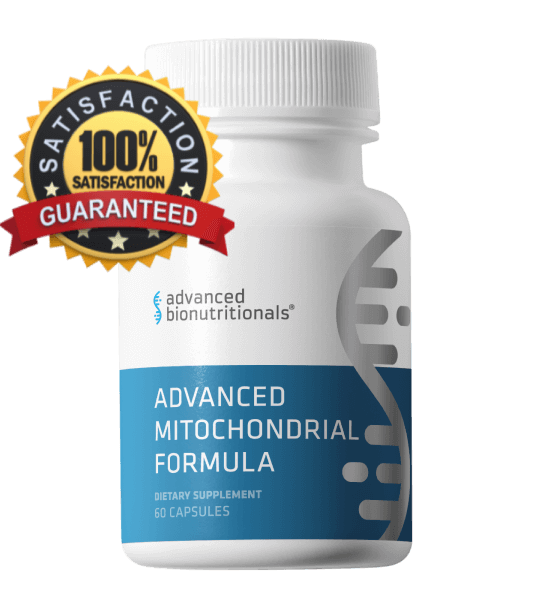
10-ingredient stack with full dose disclosure.
In This Article
What's Inside
10 ingredients. Every single dose on the label. No proprietary blends, no hidden amounts. The headline is Niacinamide at 200 mg — the form of vitamin B3 that rebuilds NAD+, the molecule your mitochondria can't make energy without. Surrounding it: PQQ (grows new mitochondria), Acetyl-L-Carnitine + D-Ribose (fuel and raw materials for energy production), CoQ10 + R-ALA (protect mitochondria from damage), and Curcumin + BioPerine + Quercetin + Resveratrol + Magnesium Malate (anti-inflammatory + absorption boost + longevity-enzyme activation + ATP cofactor). Daily serving is 2 capsules.
1. Formula Overview
The first thing you’ll notice when you read the label: there are no surprises. No “proprietary blends” hiding individual amounts. No vague “energy complex” line that could mean anything. Just 10 ingredients, with their exact doses, organized around four jobs your mitochondria need done every day — rebuild the fuel they use to make energy, grow new mitochondria so your total energy capacity goes up, supply the raw materials so energy production actually happens, and protect mitochondria from the damage that wears them down over time.
That structure is intentional. Most “energy” supplements bet everything on a single ingredient at a high dose. This one trades depth for breadth — no individual ingredient is at peak research dose, but together they cover four mechanisms instead of one. The reasoning: if your fatigue has multiple root causes (typical after 40), a single-mechanism product can only fix part of the picture. Below is the full list of 10 ingredients in the order they appear on the bottle — with their doses and what each one is actually doing inside your cells.
2. Full Ingredient Table
| Ingredient | Dose | Role |
|---|---|---|
| Niacinamide (Vitamin B3) | 200 mg (1,250% DV) | The headline ingredient. Rebuilds NAD+ — the molecule your mitochondria need to convert food into usable energy. Levels drop ~50% after 40, and restoring them is the foundation of fixing cellular fatigue. |
| Magnesium (as Magnesium Malate) | 45 mg (10.7% DV) | An easy-to-absorb form of magnesium. Helps your mitochondria assemble new ATP (energy) molecules — without enough magnesium, the whole process stalls. |
| Curcumin Extract (95% Curcuminoids) | 180 mg | The active compound in turmeric. Calms inflammation at the cellular level — chronic low-grade inflammation is one of the biggest drains on mitochondrial energy after 40. |
| BioPerine (Black Pepper Extract) | 10 mg | The reason curcumin actually works in this formula. On its own, curcumin absorbs at less than 1%. BioPerine boosts that absorption by 20× — a small dose with an outsized job. |
| Quercetin Dihydrate | 65 mg | A plant antioxidant found in onions, apples, and tea. It boosts curcumin's absorption another 146% on top of BioPerine — and supports cellular health on its own. |
| Acetyl-L-Carnitine (ALC) | 190 mg | Carries fat into your mitochondria so they have something to burn for energy. Unlike regular L-Carnitine, this form crosses into the brain — which is why it's linked to mental clarity, not just physical energy. |
| Coenzyme Q10 (CoQ10) | 50 mg | Essential to how your mitochondria produce ATP — without it, the whole assembly line slows down. CoQ10 production naturally declines after 40, especially in people on statins, which is one reason fatigue can feel "age-related." |
| R-Alpha Lipoic Acid (R-ALA) | 50 mg | A rare antioxidant that works in both fat-soluble and water-soluble parts of the cell. That means it protects mitochondria from damage inside and outside — most antioxidants only do one. |
| D-Ribose | 250 mg | A natural sugar your body uses as a direct building block to make new ATP (energy molecules). Despite being a sugar, it doesn't raise blood glucose — it's metabolized differently. |
| Trans-Resveratrol (from Itadori root) | 25 mg | The compound found in red wine that activates "longevity enzymes" called sirtuins — your cells' built-in maintenance and repair signals. One of the few natural compounds shown to flip these switches on. |
| PQQ (Pyrroloquinoline Quinone) | 5 mg | The standout. PQQ is one of the only nutrients shown to trigger your body to grow new mitochondria. More mitochondria per cell = more total energy capacity. This is the long-tail benefit that builds over months. |
3. How They Work Together
Here’s the simple way to think about it: every cellular energy supplement either does one thing well or several things together. This one does four things together — and the pairings aren’t random. Each mechanism feeds and reinforces the others.
Mechanism 1 — Rebuilding the fuel (Niacinamide). Niacinamide is absorbed quickly and converts into NAD+ inside your cells. NAD+ is the molecule your mitochondria absolutely need to convert food into energy. Without enough NAD+, every other ingredient in the formula is working at half-power. This is why it’s the foundation.
Mechanism 2 — Growing new mitochondria (PQQ). PQQ flips a switch your body almost never flips on its own after 40: the signal to create new mitochondria. More mitochondria per cell means more total energy capacity — but this isn’t an overnight effect. Growing new cellular machinery takes weeks. It’s the long-tail benefit that makes the 6-bottle bundle worth thinking about.
Mechanism 3 — Supplying the raw materials (Acetyl-L-Carnitine + D-Ribose). Even with NAD+ available and plenty of mitochondria, your cells still need raw materials to make energy. ALC carries fat into mitochondria so they have something to burn. D-Ribose gives them the building blocks to assemble new ATP molecules. Together they make sure the energy production line never runs out of input.
Mechanism 4 — Protecting the machinery (CoQ10 + R-ALA + Curcumin/BioPerine + Quercetin + Resveratrol). Mitochondria produce free radicals as a side-effect of making energy — the cellular equivalent of factory exhaust. Without defense, that exhaust damages the factory itself over time. CoQ10 and R-ALA neutralize free radicals at the source. Curcumin (made bioavailable by BioPerine + Quercetin) calms inflammation that wears mitochondria down. Resveratrol flips on the sirtuin enzymes that tell cells to repair themselves. The cumulative effect is that your mitochondria stay productive longer.
4. What Makes This Formula Different
Three things separate this formula from the average “energy supplement” sitting on Amazon shelves for $30:
Full dose disclosure, zero proprietary blends. Every ingredient amount is on the label — you can verify Niacinamide is at 200 mg, PQQ at 5 mg, R-ALA at 50 mg. Most “energy” supplements hide individual doses behind a single line like “Energy Complex 500 mg,” which could be 99% one cheap ingredient and 1% the expensive ones the marketing brags about. Full disclosure means you (and reviewers like us) can verify the formula matches what’s being promised.
The BioPerine + Quercetin absorption stack. Curcumin has notoriously poor bioavailability — most curcumin supplements deliver less than 1% absorption, meaning 99% of what you pay for never reaches your cells. This formula pairs Curcumin with BioPerine (20× absorption boost) and Quercetin (146% absorption boost on top of that). The 180 mg dose effectively delivers more bioavailable curcumin than a 1,000+ mg standalone curcumin pill would. Smart formulation.
Breadth over depth, on purpose. Single-ingredient products (a standalone CoQ10, a standalone PQQ) deliver depth on one mechanism. This formula trades that depth for breadth across four mechanisms. It’s a different philosophy with a different best-fit user. If you want one ingredient at peak research dose, look at standalone products. If you want a daily routine that covers cellular energy from four angles in one bottle, this is built for that. For the adjacent angle of vascular energy (circulation, blood flow, NO production), see Nitric Boost Ultra — many users pair both.
Pricing Options for Advanced Mitochondrial Formula
Advanced Mitochondrial Formula is available in three bundle options. Most users choose the 6-bottle bundle because mitochondrial nutrients build cumulative effect over months. The "Biggest Savings" 6-bottle bundle locks in $66.65 per bottle, includes free shipping, and saves $199.80 vs single-bottle pricing.
1 Bottle
30-Day Supply
- 90-day Money-Back Guarantee
- Secure Checkout
6 Bottles
180-Day Supply
- 90-day Money-Back Guarantee
- Free US Shipping
- Instant Savings $199.80
Save $199.80
Shop Now3 Bottles
90-Day Supply
- 90-day Money-Back Guarantee
- Free US Shipping
- Instant Savings $84.90
Save $84.90
Shop NowEvery order is backed by a 90-day money-back. Only available through the official website.
Frequently Asked Questions
Are all 10 ingredients at clinical-relevant doses?
Niacinamide (200 mg), Acetyl-L-Carnitine (190 mg), D-Ribose (250 mg), Curcumin (180 mg + BioPerine), and Magnesium are at functional doses for daily multi-pathway support. CoQ10 (50 mg), PQQ (5 mg), and R-ALA (50 mg) are at lower-end-of-research-range doses — sufficient for stacking benefit but lower than what single-ingredient mega-doses use. The formulation philosophy is breadth, not peak.
Why no proprietary blend?
Full disclosure is editorial choice by the manufacturer (Advanced Bionutritionals). It allows users (and reviewers like us) to verify each ingredient amount independently. Most supplements use proprietary blends to protect formulation secrets; this brand chose transparency. It's above industry baseline for trust.
Can I stack this with a single-ingredient NAD+ supplement like NR?
Yes, technically — Niacinamide and NR (nicotinamide riboside) work through related but distinct pathways. Some advanced users layer them. But for most buyers, the 10-ingredient stack provides sufficient NAD+ support; adding a separate NR product is incremental. Consult your physician before stacking multiple NAD+ products if you take medications.
Continue your research
- Next: Side effects + safety profile — niacinamide tolerance + drug interactions
- Then: Does it actually work? — week-by-week timeline
- Compare: Nitric Boost Ultra — complementary NO + circulation mechanism
- Pricing: Best deal on Advanced Mitochondrial Formula
Research & Transparency
This content is based on publicly available ingredient research, manufacturer disclosures, and product labeling. We are not affiliated with the manufacturer.
(a) Nicotinamide adenine dinucleotide (NAD+) metabolism and cellular function. PMC7236742
(b) Pyrroloquinoline quinone (PQQ) and mitochondrial biogenesis. PMC2906270
(c) Acetyl-L-Carnitine supplementation for fatigue and mitochondrial function. PMC4525130
(d) Coenzyme Q10 supplementation and mitochondrial energy production. PMC8126024
About the Author
James Mitchell is a contributor at The Supplement Post focusing on men's health, circulation, and performance-support supplementation. He covers prostate and urinary flow support, nitric oxide for both vascular and athletic output, mitochondrial energy, and recovery formulas. He specializes in analyzing how ingredients align with cellular bioenergetics and practical buyer considerations — including how to judge a supplement fairly over a realistic timeline. James Mitchell is not a medical doctor. He analyzes publicly available research and regulatory guidance to provide evidence-aware, consumer-friendly summaries for adults exploring vitality, circulation, and performance support options.
Disclosure
All content is for informational purposes only and is not a substitute for professional medical advice. Each product reviewed is a dietary supplement, not a prescription drug. Results may vary based on individual health status, consistency of use, and lifestyle. This page may contain affiliate links — if you purchase through them, we may earn a small commission at no additional cost to you. Read our Editorial Policy.