
Myth Check
Blue Salt Trick for Men: Does It Work? The Same Myth Behind the Baking Soda and Horse Gelatin Versions Too
The "blue salt trick" has cousins — a baking soda version and a horse gelatin drink — and all three promise firmer erections from something already in your kitchen. Here's the sodium fact two of them get backwards, why the third has no mechanism at all, and the two ingredients that actually raise nitric oxide.

What the blue salt, baking soda, and horse gelatin tricks all promise
The pitch is nearly identical across all three. Dissolve a special salt ("blue," pink Himalayan, or plain sea salt) in water before bed, and wake up firmer. Stir half a teaspoon of baking soda into water for what one viral video calls a "30-second hard tonic." Or dissolve unflavored gelatin in warm water or milk, sometimes with honey or maca mixed in, and sip it as a nightly ritual. Different pantry item, same promise: firmer erections, more stamina, sometimes even more testosterone.
Strip away the ritual and the color, and each one reduces to a claim about a single household ingredient improving blood flow. None of the three does.
The key point All three tricks borrow a real idea: what you consume shapes your blood vessels. Each one just points that idea at a pantry item that doesn't do the job. Luciano Cesar, Content Contributor
The terms that matter
- Nitric oxide
- The molecule that actually relaxes and widens blood vessels. Erections are a blood-flow event, so raising nitric oxide is the real lever — the one all three tricks claim to pull without actually pulling it.
- Sodium (table salt and baking soda)
- Table salt is sodium chloride. Baking soda is sodium bicarbonate. Both add sodium to your diet, and in the amounts most men already eat, more sodium raises blood pressure rather than lowering it.
- Dietary nitrate
- Found in beetroot and leafy greens. Your body converts it into nitric oxide through a pathway that has nothing to do with sodium — this is the mineral the tricks are trying, and failing, to imitate.
- L-citrulline
- An amino acid your body converts into nitric oxide through a separate pathway from dietary nitrate. Formulas that pair the two cover both routes at once.
Why salt and baking soda work against blood flow
Erections run on blood flow, and blood flow runs on nitric oxide. To raise nitric oxide you need nitrate or L-citrulline; sodium chloride and sodium bicarbonate do neither. A half teaspoon of baking soda is essentially the same sodium dose as a pinch of salt dissolved in water — it's the identical trick with a different label on the box. And in the quantities most men already eat, extra sodium raises blood pressure and, over time, stiffens the vessel lining that produces nitric oxide in the first place.
A 2026 dose-response meta-analysis by Iwelomene and colleagues confirmed that relationship across hypertensive and at-risk patients: less dietary sodium tracked with lower blood pressure, in a straight line. So both tricks nudge you toward the one thing that erodes circulation instead of helping it.
The horse gelatin drink: a different claim, same missing evidence
The gelatin version, sometimes called the "horse trick," skips the sodium angle entirely. The pitch instead is unflavored gelatin, often with honey or a pinch of salt stirred in, marketed as a fix for stamina and testosterone. Gelatin is collagen protein, and there's no known biological pathway from ingesting it to nitric oxide production.
A search of the published human research on gelatin and erectile function returns nothing to weigh: no trials, no observational data, no proposed mechanism. Any warmth someone feels after drinking it is the ritual and the placebo response doing the work, not the gelatin.
Which trick claims what — and what actually happens
| The trick | What it claims | What actually happens |
|---|---|---|
| Blue salt trick | A pinch of special salt before bed firms things up | Adds sodium, which works against circulation over time — no route to nitric oxide |
| Baking soda trick | Half a teaspoon in water for a same-night fix | The same sodium math as the salt trick, under a different name |
| Horse gelatin drink | A gelatin-and-honey mix restores stamina and testosterone | No known pathway to nitric oxide or hormone production; nothing in the human research to test |
What actually raises nitric oxide for better blood flow
If you want the real version of what all three tricks pretend to be, it's nitric oxide support, and it isn't a secret. Dietary nitrate from beetroot is one proven route. Umaña Mejia and colleagues' 2025 systematic review found beetroot juice improving blood flow in patients with peripheral artery disease. A 2026 meta-analysis by Forster and colleagues found chronic nitrate supplementation lowering blood pressure across randomized trials, the opposite direction from sodium. L-citrulline is the second route: a 2025 meta-analysis by Luo and colleagues tied it to better arterial stiffness and endothelial function in middle-aged and older adults.
Regular exercise helps too, and formulas that combine beetroot and L-citrulline cover both nitric oxide pathways at once. It's gradual support you feel over a few weeks, not an overnight ritual, but unlike the three tricks above, it's grounded in how your body actually makes nitric oxide. For the full formula breakdown, see our full review of Nitric Boost Ultra's dual-pathway design.
The real nitric-oxide route, not a kitchen hack
Skip the salt, the baking soda, and the gelatin, and go straight to what genuinely raises nitric oxide — a dual-pathway formula built on the real chemistry.
Nitric Boost Ultra
The real nitric-oxide route, not a kitchen hack
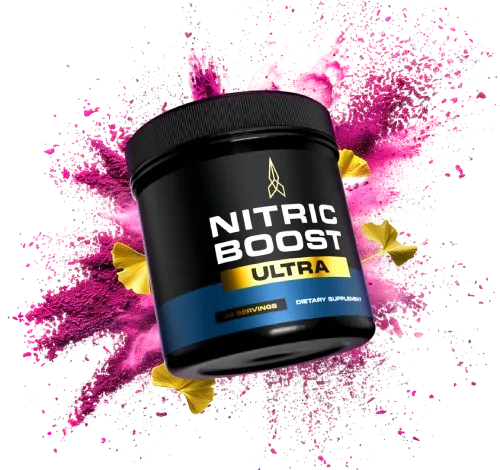
Where the salt, baking soda, and gelatin tricks share no real mechanism, this has two: beetroot's dietary nitrate plus L-citrulline, covering both routes your body uses to make nitric oxide. It's gradual support over a few weeks — grounded in how blood flow actually works, not a viral ritual.
So, does the blue salt trick work?
On its own: no. Neither does the baking soda version, and neither does the horse gelatin drink. None of the three raises nitric oxide, the molecule erections actually run on.
But you weren't really asking about a pinch of salt. You were asking whether there's something you can do about this yourself, tonight, without a prescription. There is, and it has better evidence behind it than any of the three tricks ever did: dietary nitrate and L-citrulline, the two ingredients that actually raise nitric oxide.
Go deeper: the best beetroot supplement for nitric oxide.
This is a supplement, not a medication: it is not intended to diagnose, treat, cure, or prevent any disease. If you have high blood pressure or heart concerns, don't add salt or baking soda to chase any of these tricks. Priviero and colleagues' 2026 review is a useful reminder that erectile difficulty can itself be an early signal of cardiovascular disease. That's worth a doctor's look, not a kitchen fix, especially if it's new or getting worse.
Is it worth trying for better blood flow?
Picture three moments instead of one. The morning after good sleep, when things work the way they're supposed to without a ritual attached to it. The night you don't spend deciding which pantry item to try next. The plain confidence of knowing what you're taking is actually doing something, instead of hoping a kitchen-cabinet trick pays off. That's a reasonable thing to want, and it's a reasonable thing to work on.
Here's the honest frame. A nitric-oxide formula like this is a potentiator, not a switch. It doesn't override your health status or your habits. Instead, it gives your body's two real nitric-oxide pathways more raw material to work with: the amino-acid route and the dietary-nitrate route. That's what makes blood flow easier, not a switch flipping on. Taken that way, it tends to deliver; expected to act like a pill taken twenty minutes before, it will disappoint, because that was always the trick's promise, not the supplement's.
What makes it worth the attempt is that the mechanism has real backing, unlike anything above. Forster and colleagues found dietary nitrate lowering blood pressure across randomized trials — the opposite of what sodium does. Umaña Mejia's team found beetroot juice improving blood flow in peripheral artery disease. Luo and colleagues tied L-citrulline to better arterial stiffness and endothelial function in older adults. None of that is a guarantee for a specific bottle, but it says the pathway is real and the attempt is informed rather than hopeful.
And how much you notice depends on where you're starting. A 35-year-old who sleeps well and isn't managing blood pressure will read a different result than a 58-year-old on medication, over the same several weeks. That's not a reason to expect nothing — it's the reason to give it the full window, instead of judging it after a few days the way the salt trick invites you to.
Frequently asked questions
Does the blue salt trick for men actually work?
No. There is no mechanism by which a pinch of table salt (pink, blue, or any color) raises nitric oxide or improves erections. If anything, excess sodium works against circulation by raising blood pressure and stiffening blood vessels over time. The trend borrows the language of "minerals matter for blood flow" and misapplies it to table salt.
Does the baking soda trick work any better than the salt trick?
No, it's the same sodium math under a different name. Table salt is sodium chloride and baking soda is sodium bicarbonate; a half teaspoon of either delivers a real dose of sodium, and sodium is what works against blood flow, not for it. Neither one converts into nitric oxide.
Does the horse gelatin drink help with erections or testosterone?
There's no known pathway from ingested gelatin to nitric oxide production, and a search of the human research turns up no trials on gelatin and erectile function or testosterone. Gelatin is collagen protein; any effect people report is more plausibly the ritual itself, or a placebo response, than a physiological one.
What actually boosts nitric oxide for better erections?
Two proven routes: dietary nitrate from beetroot and the amino acid L-citrulline, which your body converts into nitric oxide. Regular exercise helps too. Formulas that combine beetroot and L-citrulline cover both pathways at once, a real, evidence-based way to support blood flow, unlike any of the three kitchen tricks. It's gradual support over weeks, not an overnight fix.
Are the salt, baking soda, or gelatin tricks dangerous?
For most people, a one-off try of any of the three won't cause harm. A nightly sodium habit (salt or baking soda) is a different story, especially with high blood pressure or heart concerns, where added sodium is exactly what a doctor would tell you to cut. The bigger cost of all three tricks is that they distract from things that actually work.
When should I see a doctor?
See a doctor if erectile problems are sudden, severe, persistent, or come with chest pain — erectile dysfunction can be an early warning sign of cardiovascular disease. Supplements, and certainly kitchen tricks, are not a substitute for evaluation when something changes quickly.